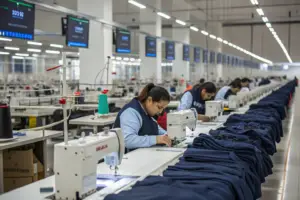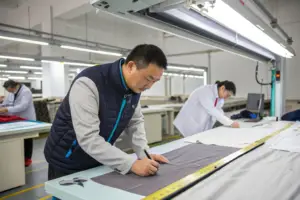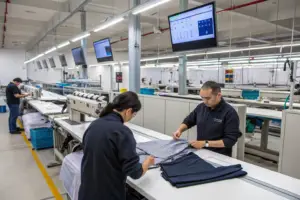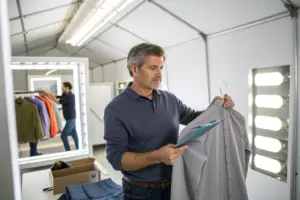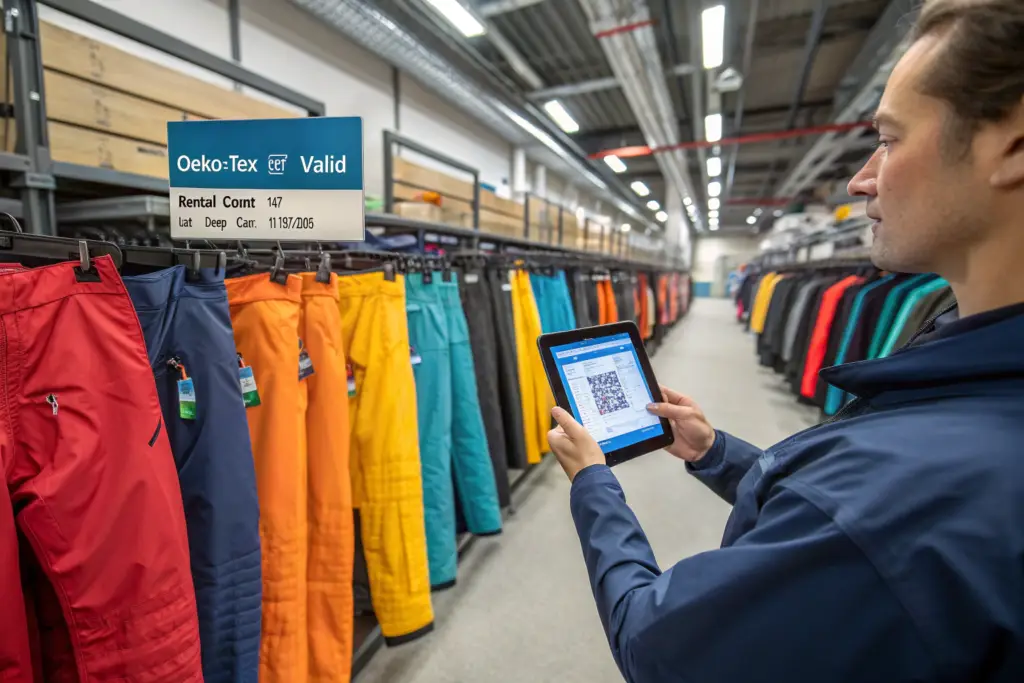
Building a rental fleet of ski pants involves a unique set of procurement challenges that go beyond standard retail sourcing. The garments are not just products; they are high-turnover capital assets that must withstand industrial cleaning, constant wear, and diverse user bodies while maintaining safety, performance, and appearance. Adding the requirement for OEKO-TEX® certification elevates the complexity, demanding a supply chain built for durability, compliance, and repeatable quality at scale. Sourcing for rental is fundamentally about total cost of ownership and risk management over asset life, not just the lowest upfront unit cost.
To source OEKO-TEX® certified ski pants for rental fleets, you must prioritize suppliers with a proven system for durability engineering, full-component traceability, and the ability to provide consistent, batch-after-batch certification across high-volume orders. The focus shifts from seasonal styles to building a long-term partnership with a manufacturer capable of being your dedicated, compliant asset factory. This requires a strategic, checklist-driven approach that evaluates a supplier's process controls as critically as their price sheet.
At Shanghai Fumao, we developed a dedicated "Rental Fleet Program" for a European ski resort operator in 2023. Their requirement was for 5,000 pairs of OEKO-TEX® STANDARD 100 certified ski bibs, with an expected lifecycle of 200+ rentals per pair. Beyond certification, they needed reinforced seams, extra-durable face fabric (especially in the seat and knee), PFAS-free DWR, and a modular repair system. We didn't just sell them a product; we co-engineered a solution. This included creating a digital "passport" for each production batch linking all material certificates, providing a repair kit with matching certified fabric patches and thread, and establishing a re-order protocol for identical replacements. This systemic approach reduced their first-year repair and replacement costs by an estimated 40% compared to their previous, non-certified supplier.
What Are the Non-Negotiable Specifications for Rental Fleet Pants?
The technical specification sheet for rental pants must be radically more detailed and durability-focused than for retail. OEKO-TEX® certification is one layer within a multi-layered durability requirement.
Non-negotiable specs include: OEKO-TEX® STANDARD 100 certification (with full component traceability), industrial wash durability (colorfastness, seam integrity), reinforced high-wear zones, PFAS-free DWR, repair-friendly construction, and standardized sizing with robust adjustments. Each spec must be verifiable and tied to a test method.
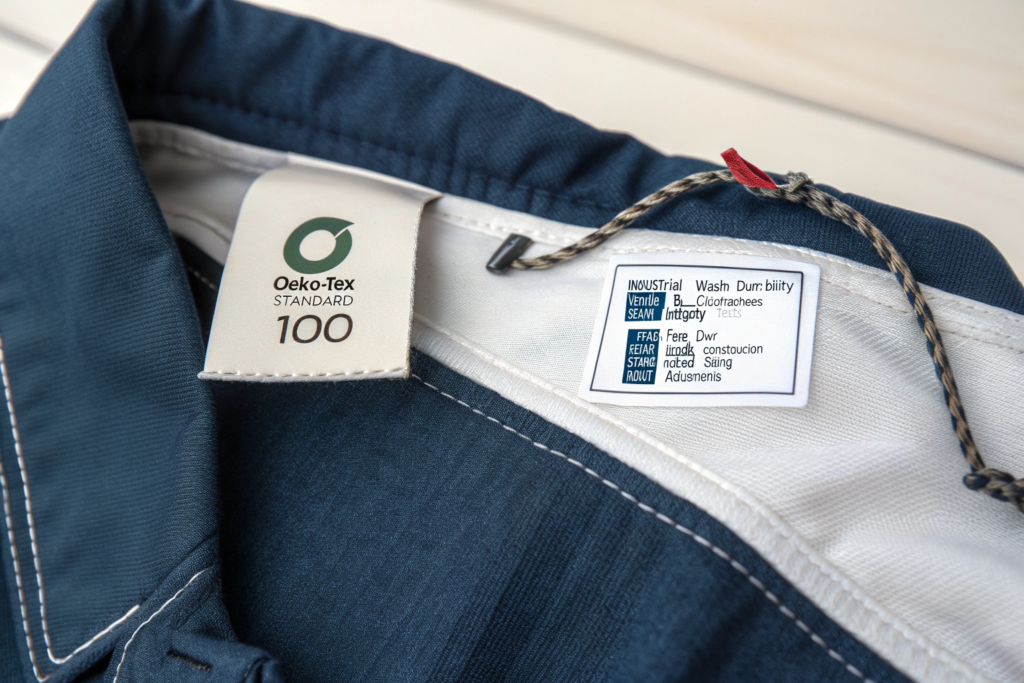
The Critical Spec Checklist:
| Category | Specification Requirement | Why for Rental? | Verification Method |
|---|---|---|---|
| 1. Core Certification | Full OEKO-TEX® STANDARD 100 certificate for finished pant. All components (fabric, membrane, lining, zippers, thread, webbing) must have upstream certificates. | Legal liability, customer trust, hygiene assurance. | Valid certificate in your company name; chain of custody docs from manufacturer. |
| 2. Fabric Durability | Face fabric: Minimum 15,000 cycles Martindale abrasion resistance. High denier (e.g., 70D or higher) in seat & knees. | Withstands chairlift friction, falls, and countless sits. | Mill test report (ISO 12947-2). |
| 3. Waterproofing | PFAS-free DWR. Minimum 15,000mm hydrostatic head (HH). Warranted performance after 20+ industrial washes. | Avoids regulatory obsolescence (PFAS bans). Maintains performance through harsh cleaning. | Lab test report (ISO 811). DWR compliance statement from mill. |
| 4. Construction Durability | Bar-tacked stress points (belt loops, buckle attachments). Felled or bound seams in crotch and inseam. Double-stitched main seams. | Prevents blowouts during active use. Withstands industrial washer/dryer torque. | Pre-production sample destruction test. Review of factory seam spec sheets. |
| 5. Cleanability/Hygiene | Lining fabric must be smooth, non-absorbent (e.g., taffeta, not mesh). Anti-odor treatment must be OEKO-TEX® compliant and durable to washing. | Allows for thorough cleaning between users. Prevents odor entrapment. | Material specification review. Wash test evaluation. |
| 6. Repairability | Design that allows for easy patch repair (e.g., simple knee panel). Supplier must stock and supply matching, certified repair materials (fabric, thread). | Extends asset life dramatically. Lowers total cost of ownership. | Agreement in master supply contract. |
Your manufacturer must not only agree to these specs but must demonstrate how their production system guarantees them at the scale and pace you require.
How to Vet and Select the Right Manufacturing Partner?
The choice of manufacturer is the single most important decision. For rental fleets, they are a strategic asset management partner, not a seasonal vendor.
Vet manufacturers by assessing their vertical control over certified materials, their in-house quality engineering for durability, their willingness to provide transparent documentation and submit to audits, and their financial stability to support a multi-year partnership. A factory that primarily serves fast-fashion retail is likely a poor fit.

Key Vetting Questions and Red Flags:
Ask These Questions:
- "Can you show me OEKO-TEX® certificates for the specific shell fabric, lining, and waterproof membrane you propose, and explain how you ensure batch-to-batch consistency?"
- "What is your in-house process for testing seam strength and abrasion resistance on production samples?"
- "Do you have a dedicated production line or capacity for high-durability, certified goods, and how do you prevent mix-up with lighter-duty products?"
- "Can you provide a repair material supply agreement and a guaranteed re-order window for identical materials for the next 3-5 years?"
- "What is your social compliance audit status (e.g., SMETA, BSCI)?" (Important for your own ESG reporting).
Red Flags:
- Cannot provide component-level certificates, only a final garment certificate.
- Resists the idea of reinforced construction due to "higher labor cost."
- Has no existing clients in rental, B2B, or uniform sectors.
- Unwilling to sign a contract that includes penalties for certification or spec failure.
A partner like Shanghai Fumao, with experience in technical wear and B2B programs, will have ready answers and see your fleet as a valuable long-term account, not a one-off order.
What Does the Ordering and Logistics Process Look Like?
Ordering for a fleet is a phased, programmatic activity rather than a single purchase.
The process involves a pilot order for field testing, phased bulk delivery to match seasonal ramp-up, integrated quality assurance holds, and logistics planning for efficient receipt and distribution. Rushing this process risks receiving 5,000 defective pants right before ski season.

Recommended Phased Approach:
-
Development & Pilot Order (Months 1-3):
- Finalize specs with manufacturer.
- Produce 50-100 pilot units.
- Subject them to accelerated lifecycle testing: 50+ industrial wash/dry cycles, abrasion tests, and real-world wear by resort staff.
- Use feedback to finalize specs.
-
First Bulk Order with In-Line QC (Months 4-6):
- Place first major order (e.g., 2,000 pants).
- Contract a third-party inspection company to conduct in-line and final random inspections (FRI). Key checkpoints: certification label placement, seam integrity, waterproof testing on samples.
- Implement an AQL (Acceptance Quality Level) of 1.5 or stricter for critical defects.
-
Staggered Delivery & Integration:
- Schedule delivery in batches to your warehouse or directly to resort locations.
- Each shipment must include the corresponding OEKO-TEX® certificates and mill test reports.
- Have a process to scan/log each batch into your asset management system upon receipt.
How to Manage Certification and Compliance Over the Asset's Life?
Certification is not a one-time event at purchase. You must maintain the legal and marketing right to claim it throughout the pants' service life.
Manage ongoing compliance by securing perpetual licensing for the certificate in your name, maintaining impeccable digital records of all certificates and test reports, and implementing a care and repair protocol that does not introduce non-certified materials. If you patch a pant with non-certified fabric, you may void the certification for that item.

The Rental Operator's Compliance Kit:
- Digital Certificate Repository: Cloud folder with all OEKO-TEX® certificates, lab reports, and supplier statements. Link this to each asset's ID in your management software.
- Care Protocol Manual: Specify industrial washing detergents and temperatures that are compatible with the DWR and do not degrade the fabrics or chemistry.
- Approved Repair Protocol: Document exactly how repairs are to be made, using only supplied certified materials. Train your repair staff.
- Retirement/Resale Documentation: When pants are finally retired and sold, having the original certificate adds value and provides safety assurance to the second-hand buyer.
What Is the Realistic Total Cost of Ownership (TCO) Model?
The decision must be based on TCO, not unit price. A cheaper, non-certified pant that lasts 80 rentals is more expensive than a certified one that lasts 200.
Build a 5-year TCO model that includes: upfront purchase price, expected repair costs, expected replacement rate (attrition), customer compensation costs for failures, and administrative cost of managing compliance/quality issues. The OEKO-TEX® and durability premium should lower costs in the latter categories.
Simplified TCO Comparison (Per 1,000 Pants):
| Cost Factor | Non-Certified, Standard Pant | OEKO-TEX® Certified, Rental-Optimized Pant |
|---|---|---|
| Purchase Price | $40,000 ($40/unit) | $60,000 ($60/unit) |
| Annual Repair/Replacement (20% vs 10% attrition) | $8,000/year | $6,000/year |
| Avg. Rentals Before Retirement | 80 | 200 |
| 5-Year Replacement Cost | $40,000 (replace all once +) | $30,000 |
| Estimated Liability/Compliance Admin | $5,000 | $1,000 |
| 5-Year Total Cost | $93,000 | $91,000 |
| Cost per Rental | $0.23 | $0.09 |
This model illustrates how the higher upfront investment is quickly offset by longer life and lower operational costs, resulting in a far lower cost per rental—the key metric for profitability.
Conclusion
Sourcing OEKO-TEX® certified ski pants for a rental fleet is a complex but highly rewarding strategic procurement exercise. It requires shifting from a product-centric to a systems-centric mindset, where the manufacturer becomes an extension of your operations team. By prioritizing durability engineering, full supply chain transparency, and a long-term partnership, you build a fleet that is safer for customers, easier to manage, and more profitable over its lifespan.
The right pants protect your customers from the elements and your business from hidden risks. They are not an expense; they are a high-utilization asset that generates predictable returns.
Ready to build a rental fleet on a foundation of certified durability? Partner with Shanghai Fumao. Our dedicated B2B program is designed to be the reliable, compliant asset factory for your ski rental operation. Contact our Business Director Elaine to start engineering your fleet: elaine@fumaoclothing.com.