Sourcing a ski jacket with genuine OEKO-TEX certification should simplify your life, not create more risk. Yet, the market is flooded with suppliers waving PDFs that turn out to be worthless. Last season, one of our now-clients nearly placed a 5,000-piece order with a factory that presented a perfect OEKO-TEX certificate. A 10-minute verification check we did for them revealed the certificate number was valid—but for a different company producing kitchen towels. The factory had simply copied and edited the document. This near-miss cost our client two months of development time. Let's equip you with the detective skills to separate the credible partners from the counterfeiters.
To source genuine OEKO-TEX certified ski jackets and avoid fake certificates, you must adopt a verification protocol that combines digital database checks, physical document scrutiny, on-site or virtual factory audits, and a deep understanding of what a legitimate certification for a complex garment like a ski jacket must cover. It's a process, not a single step.
Trusting a supplier's word is not a strategy. In today's market, verifying their proof is your core responsibility. This guide will walk you through the actionable steps, from the first click to the factory floor, ensuring your next order is built on rock-solid credibility.
Step 1: The Digital First Line of Defense – The OEKO-TEX Database
Every real OEKO-TEX STANDARD 100 certificate has a unique number. This is your most powerful tool. The moment a supplier mentions certification, ask for this number.
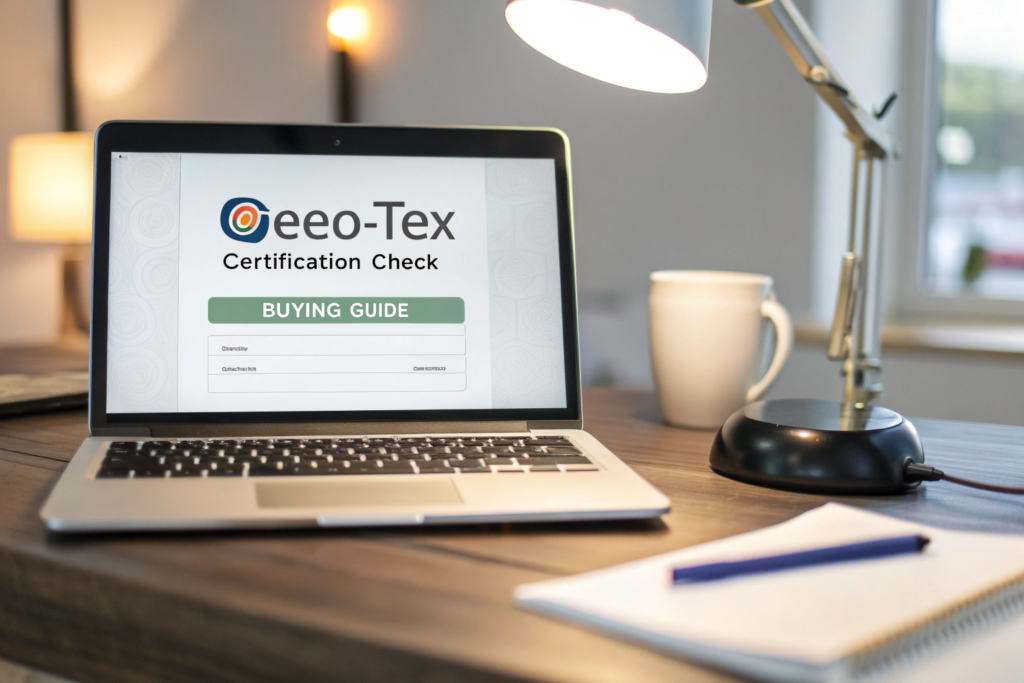
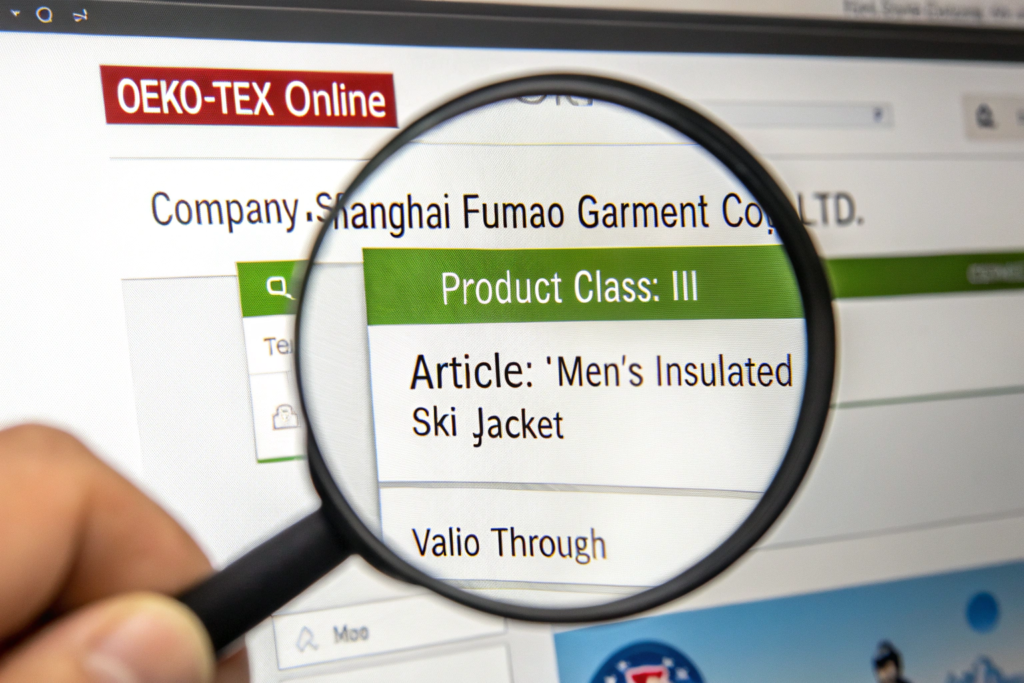
Immediately go to the official OEKO-TEX "Certification Check" or "Buying Guide" database online. Enter the certificate number. This free public tool will show you the current status (valid, suspended, expired), the certified company's legal name, the product class, the specific article description, and the validity dates. Any discrepancy here is an absolute deal-breaker.
What Exact Matches Must You Confirm in the Database?
- Company Name: It must match the exporting entity you are contracting with exactly. If the certificate is under "XYZ Trading Co.," but you're dealing with "ABC Garment Factory," you have a problem. The certificate holder is legally responsible.
- Product Class & Article Description: A ski jacket is a finished garment in prolonged skin contact. It should be Class II. The article description should logically match, such as "jacket," "ski wear," or "functional outerwear." A certificate for "polyester fabric" or "knitted cloth" does not certify a finished, assembled jacket with zippers, membranes, and prints.
- Validity: Certificates expire yearly. Ensure it is current and shows a history of renewal, indicating an ongoing commitment.
Step 2: Scrutinizing the Certificate Document – Spotting the Red Flags
Once the database checks out, analyze the PDF certificate they provide. Fraudulent certificates often fail on subtle details.
A genuine certificate is a formal, structured document. Key elements include: the OEKO-TEX and issuing institute logos (e.g., Hohenstein, TESTEX) in high resolution, the unique certificate number, the certified company's address, a detailed list of certified articles with internal codes, the standard version (e.g., STANDARD 100 by OEKO-TEX), and clear issue/expiry dates. Poor image quality, mismatched fonts, or blurred seals are major warnings.
What Are the Tell-Tale Signs of a Forged PDF?
- Pixelated or Recreated Logos: Official logos are vector-based and sharp. Fakes often look blurry.
- Inconsistent Dates: The validity period on the PDF must match the online database exactly.
- Vague Article List: Legitimate certificates list specific, identifiable articles (e.g., "Style #SKI2024-MJ"). Lists that say "all products" or "all garments" are invalid.
- Missing Institute Details: The certificate is issued by a specific member institute. Their name and logo must be present.
In our audit practice at Shanghai Fumao, we've seen forgeries where only the company name was changed in the PDF, but the embedded metadata and original certificate number linked back to the true owner. Always cross-reference with the database.
Why Does the "Standard Version" Matter?
OEKO-TEX updates its test criteria and limit values annually. The standard version (like "06.2023") on the certificate tells you under which set of rules the product was tested. You want the latest or a very recent version to ensure compliance with current scientific and regulatory knowledge. An expired certificate or an old version may not meet today's stricter standards.
Step 3: Verifying Scope – Does the Certificate Cover YOUR Specific Jacket?
This is the most critical and often overlooked step. A factory may have a valid certificate for a jacket, but not for the jacket you are buying.
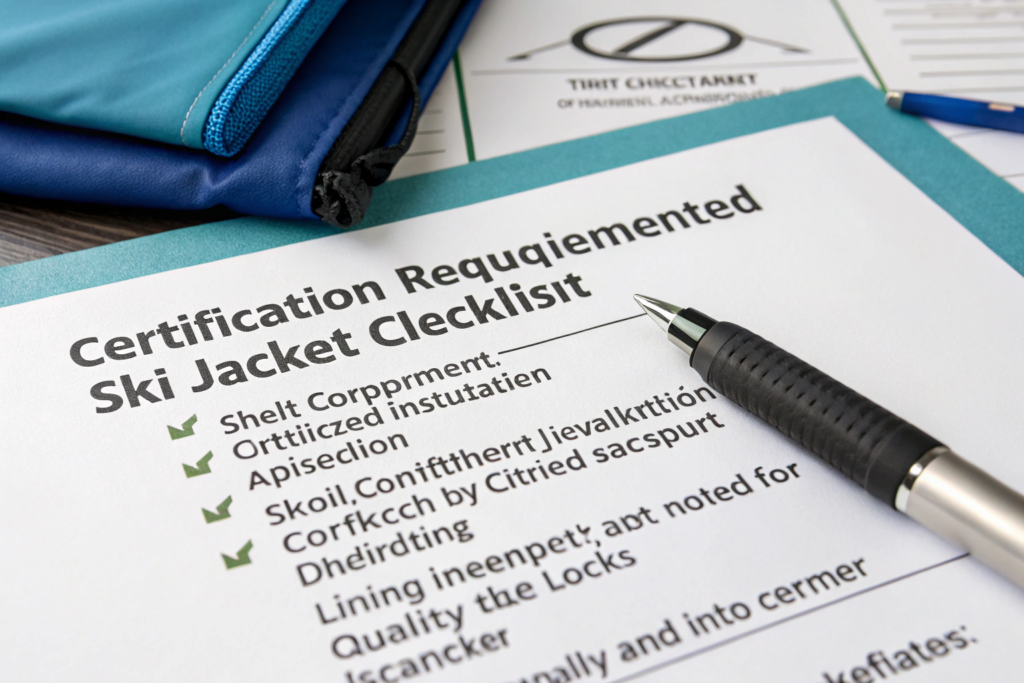
You must confirm that the exact style you are ordering is covered by the supplier's existing certification or that a new certification will be obtained for it. For a ski jacket, this means every component (shell, membrane, insulation, lining, zippers, cordlocks, etc.) in your specific bill of materials must be certified, and the final assembled garment must be tested and listed.
How to Conduct a "Component Audit" with Your Supplier?
Ask for a breakdown. Request: "Please provide the OEKO-TEX component certificates or transaction certificates for the 20K waterproof nylon, the recycled polyester insulation, the YKK zippers, and the laminated branding prints you will use in our model #AdventurePro."
- If they cannot provide these, their final garment certificate is likely not legitimate for your product.
- If they can, cross-check the article codes on those component certificates against the final garment certificate listing.
A professional factory like ours maintains a digital library of all component certificates, making this audit smooth and transparent for clients.
What About Custom Designs and New Developments?
If you are creating a new jacket from scratch, the factory must apply for a new OEKO-TEX certificate for that specific article. The process takes several weeks and involves submitting samples of all components and the final product for testing. Factor this into your timeline and cost. A supplier who claims "our factory is certified, so your product is automatically certified" for a new design is either misinformed or being dishonest.
Step 4: The Factory Audit – Seeing is Believing
For large or recurring orders, due diligence must extend to a physical or virtual audit. This moves verification from documents to processes.
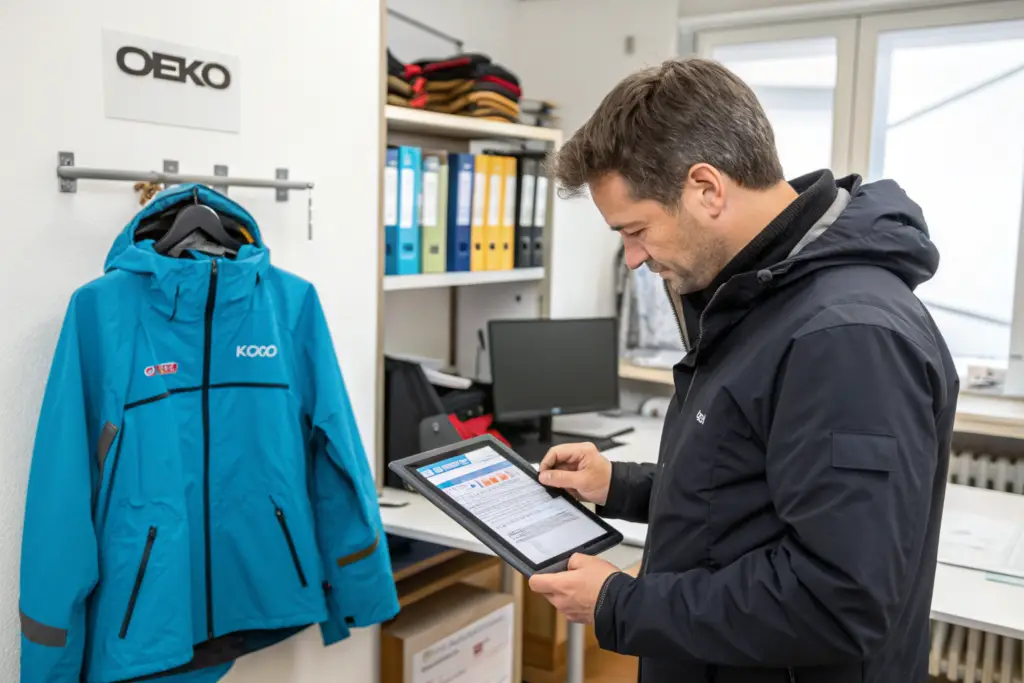
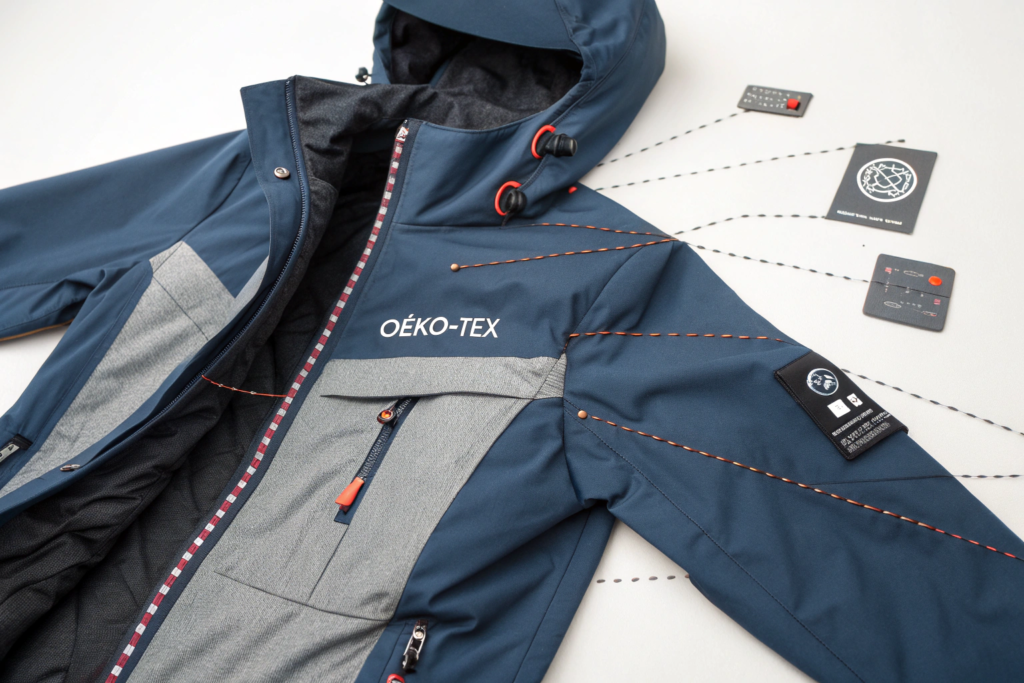
Visit the factory or conduct a detailed video audit. Ask to see the OEKO-TEX certificate physically posted. Observe their material warehouse: do they segregate certified and non-certified fabrics? Interview their quality control manager about how they maintain certification—their answers will reveal real understanding versus scripted talking points.
What On-Site Evidence Proves Real Compliance?
- Material Segregation: Certified fabrics should be stored separately or clearly labeled. This shows they manage the risk of contamination.
- Chemical Management: Inquire about their DWR (Durable Water Repellent) finishes and other chemical treatments. Do they use OEKO-TEX ECO PASSPORT certified chemicals?
- Record-Keeping: A factory with a real certification system will have organized files of test reports, supplier certificates, and audit records.
During our client tours at Fumao Clothing, we demonstrate our in-house lab for preliminary tests and show the audit reports from our OEKO-TEX STeP certification, which covers sustainable and safe production processes.
How to Handle the Audit If You Can't Travel?
Request a live video walkthrough. Ask the supplier to:
- Show you the posted certificate in their office.
- Walk you to their fabric warehouse and show certified material rolls with labels.
- Introduce you to their QC lead for a brief Q&A.
Their willingness and ability to do this transparently is a strong positive signal.
Step 5: Building Verification into Your Contractual Terms
Finally, make verification a formal part of your business relationship. This legally protects you and sets clear expectations.
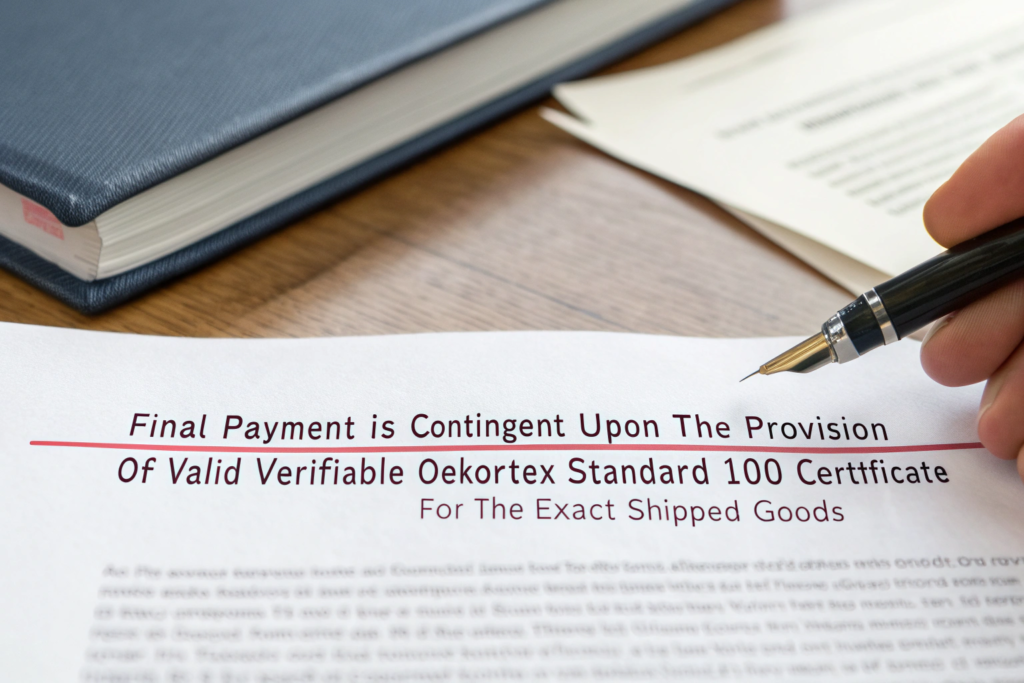
In your purchase order or contract, include a clause stating that final payment is contingent upon the provision of a valid, verifiable OEKO-TEX STANDARD 100 certificate for the exact shipped goods, with the certificate number to be provided prior to shipment for verification. Specify that the certificate must be in the name of the manufacturing entity.
What is the Final Pre-Shipment Check?
Before you approve shipment and release payment, do one last check:
- Take the certificate number they provide for the shipment batch.
- Verify it once more in the online database.
- Confirm the article description matches your goods and the quantity is within the certified range.
This final gate prevents last-minute substitution with uncertified goods.
Conclusion
Sourcing OEKO-TEX certified ski jackets is an exercise in systematic verification, not blind trust. By combining the power of the official database, a keen eye for document details, a thorough understanding of scope, on-site validation, and contractual safeguards, you transform certification from a marketing claim into a managed, verifiable supply chain asset.
This process filters out unreliable suppliers and aligns you with professional partners for whom certification is an integral part of their quality system, not a sales trick. It is the most effective way to protect your brand, ensure product safety, and deliver on your promise to your customers.
If you seek a partner where this verification process is welcomed and streamlined, where transparency is standard practice, we are built for this. At Shanghai Fumao, we provide our clients with direct database links, full component certification dossiers, and open invitations for audit. Let us show you how true compliance partnership works. Contact our Business Director Elaine at elaine@fumaoclothing.com to begin a verified, secure sourcing relationship.