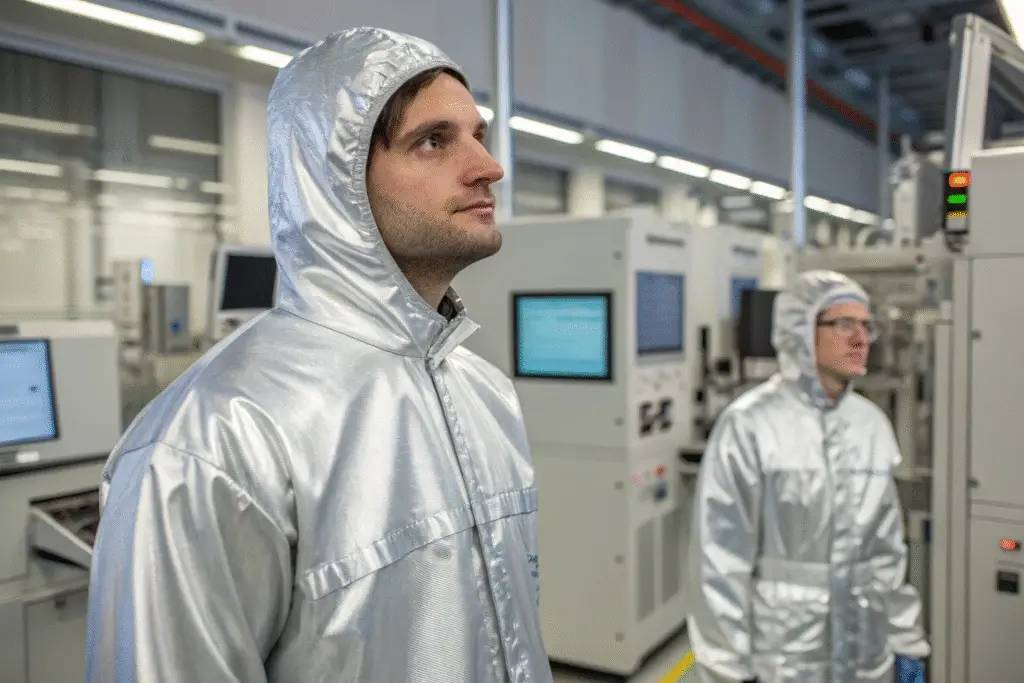
In industries that rely on highly sensitive instruments—such as aerospace research, medical imaging, or semiconductor testing—small amounts of electromagnetic interference (EMI) can have serious consequences. A single spike of interference might distort a microchip’s testing results, cause errors in MRI scans, or disrupt satellite communication systems. Conventional cotton or polyester lab coats offer no barrier against these invisible disturbances, leaving workplaces exposed to costly risks.
The best approach to sourcing EMI-shielding lab coats is to identify specialized suppliers, evaluate shielding materials thoroughly, and confirm customization options that align with industry standards and branding needs. By doing so, companies not only protect their equipment but also project professionalism and compliance in highly regulated environments.
This article explains why EMI-shielding lab coats are important, how different fabrics compare, where to find reliable suppliers, and why customization can enhance both function and identity in technical workplaces.
Why Are EMI-Shielding Lab Coats Important?
Electromagnetic interference can travel through air, power lines, or nearby devices. In a laboratory filled with sensitive electronics, even low-level interference can compromise experiments or halt production lines. Imagine an electronics lab testing pacemaker circuits: without shielding apparel, stray EMI from smartphones or wireless routers could alter readings and delay FDA approvals.
EMI-shielding lab coats are important because they protect data integrity, safeguard expensive instruments, and create controlled testing environments. Their use is especially critical in industries that cannot afford errors, such as aerospace engineering, where the smallest malfunction could cost millions.
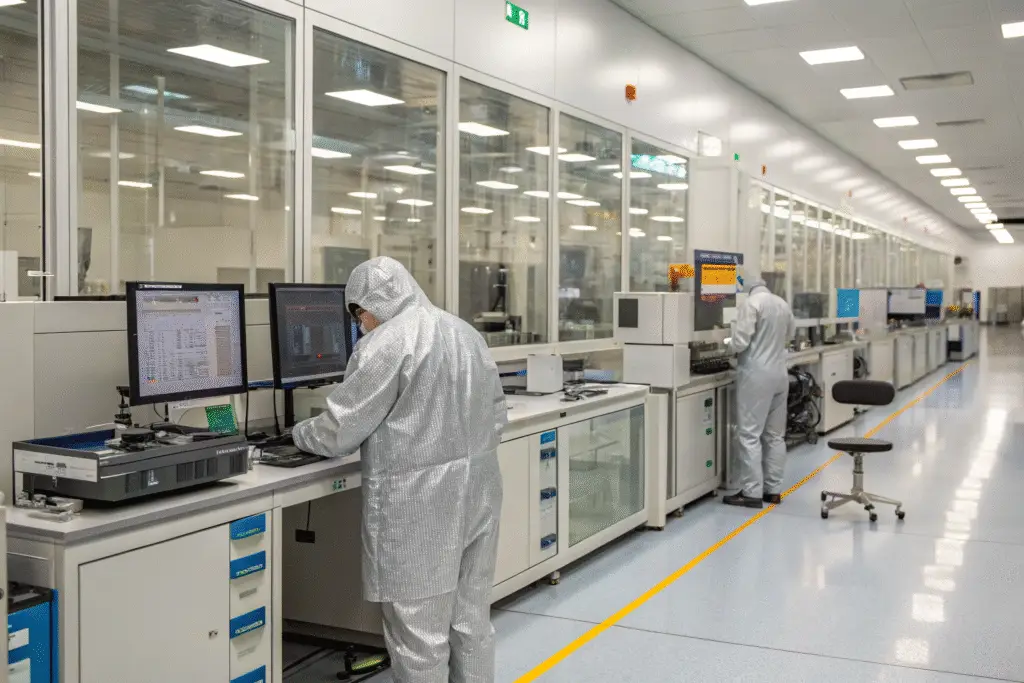
How Does EMI Affect Laboratory Work?
Electromagnetic interference may cause test signals to fluctuate, introduce background noise into circuits, or even reset devices under evaluation. According to RF Globalnet, EMI is among the most common challenges faced in RF and microwave testing environments. In healthcare, the FDA reports that EMI can disrupt imaging quality, which directly affects diagnosis accuracy.
Are EMI Garments Required By Industry Regulations?
In defense and aerospace, EMI protection is often a contractual requirement. Agencies demand compliance with IEEE and MIL-STD standards to prevent electromagnetic leaks. Similarly, hospitals with advanced imaging centers may require staff apparel that meets shielding specifications to ensure safety during delicate procedures. For buyers, understanding these regulations ensures that sourcing decisions match compliance obligations.
What Fabrics Provide EMI Shielding?
The performance of an EMI-shielding lab coat comes down to its fabric. Unlike standard textiles, these garments rely on conductive fibers woven into their structure. The fabric either reflects electromagnetic waves or absorbs and dissipates them, keeping interference out.
Common shielding fabrics include silver-coated nylon, copper-infused polyester blends, and hybrid textiles with nickel or stainless-steel filaments. Each option offers a distinct balance of shielding effectiveness, comfort, and cost, which buyers must weigh carefully.

Why Is Silver-Coated Nylon Popular?
Silver is one of the most conductive metals, capable of reflecting and grounding electromagnetic waves effectively. When applied as a coating to nylon fibers, it creates lightweight fabrics that block EMI while remaining flexible and breathable. Companies like Shieldex provide silver fabrics with shielding effectiveness rated up to 60 dB across wide frequency ranges. Beyond shielding, silver offers natural antimicrobial benefits, reducing bacterial growth on garments—ideal for hospital laboratories where hygiene matters.
How Do Copper and Polyester Blends Compare?
Copper is also highly conductive and more affordable than silver. When blended with polyester, it creates a fabric that balances cost-efficiency with comfort. Such blends are common in large-scale industrial labs where budgets are strict but performance cannot be compromised. According to Laird Performance Materials, copper-based fabrics can block frequencies between 30 MHz and 1 GHz, making them suitable for electronics assembly lines and testing environments.
How To Find Reliable Suppliers?
Sourcing EMI-protective apparel requires precision. Not every garment factory can handle conductive textiles or meet strict compliance standards. Reliable sourcing depends on selecting suppliers with experience in both technical fabrics and apparel production.
Reliable suppliers should provide material test reports, proof of compliance with ISO or MIL standards, and flexibility in customization for different industries. Buyers who partner with experienced suppliers minimize risks of underperforming garments and compliance failures.
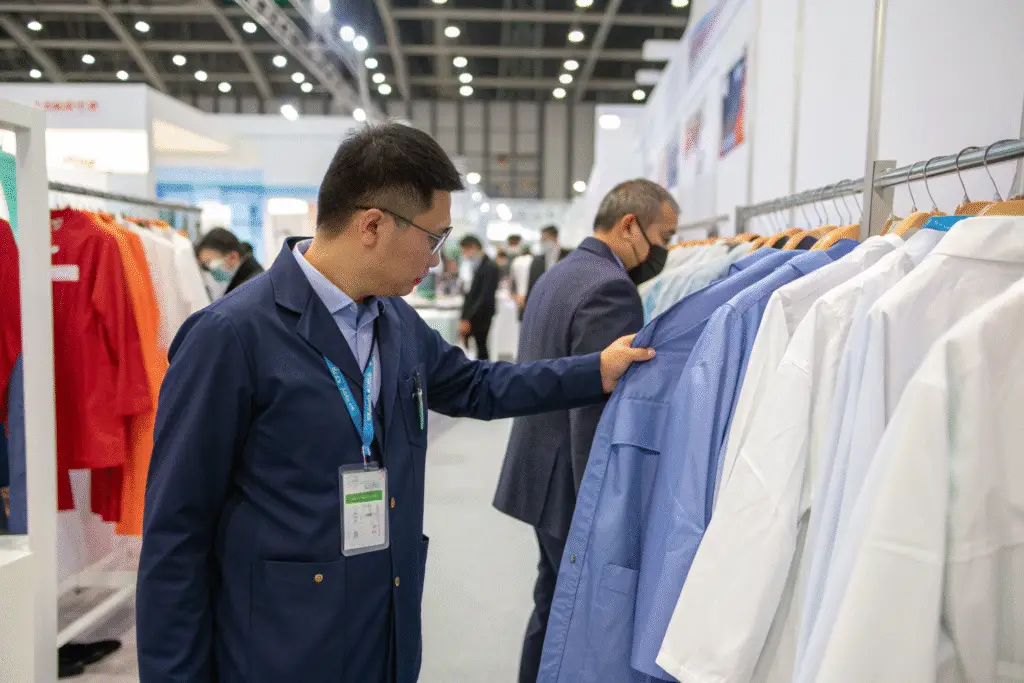
Where Can Buyers Source EMI-Protective Apparel?
Global sourcing platforms like Alibaba list multiple EMI clothing suppliers, but trade shows remain a powerful tool for verification. Events like the International Microwave Symposium or MEDICA in Germany often feature protective apparel manufacturers. For North American buyers, directories like ThomasNet provide vetted supplier listings, while Asian factories offer competitive pricing for high-volume orders.
What Certifications Should Suppliers Provide?
Certifications provide transparency and confidence. At minimum, suppliers should deliver EMI attenuation test data. ISO 9001 certification indicates consistent manufacturing standards, while specialized certifications such as IEC 60601 for medical environments may also apply. Independent test reports add credibility, ensuring garments perform as advertised.
Why Customization Adds Value?
Protective functionality is non-negotiable, but customization adds another layer of value. For organizations, a lab coat is also a uniform that represents identity, professionalism, and workplace culture.
Customization allows companies to integrate logos, adjust pocket designs for instruments, and even match coats with industry-specific requirements. This blend of safety and branding ensures employees feel protected while representing the company’s image.
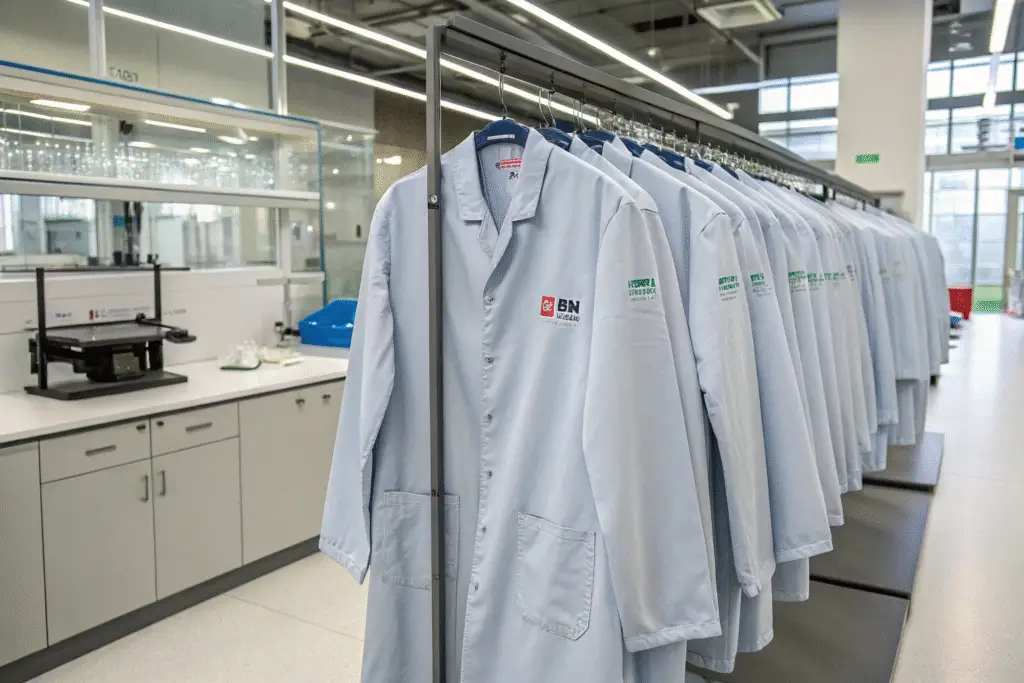
How Can Branding Be Applied Without Affecting Shielding?
Branding is carefully applied in non-critical areas of the garment. Logos can be embroidered onto outer shell pockets or heat-transferred with non-conductive materials. For instance, 3M has demonstrated ways to integrate branding into safety gear while maintaining full protective performance. Buyers should confirm that decoration methods do not compromise shielding integrity.
Are Bulk Custom Orders Feasible?
Yes. Many suppliers accept large-scale custom orders, with minimum order quantities ranging from 200 to 500 pieces depending on complexity. For hospitals or semiconductor facilities with hundreds of staff, this scalability is essential. Long-term contracts often allow buyers to negotiate lower unit costs, making customization feasible even for specialized garments.
Conclusion
Sourcing customizable EMI-shielding lab coats is more than just a procurement task—it is a strategic decision that safeguards equipment, ensures compliance, and reinforces brand identity. By understanding fabric technologies like silver-coated nylon and copper blends, carefully selecting certified suppliers, and exploring customization, buyers can secure garments that balance safety with professionalism.
At Shanghai Fumao Clothing, we bring expertise in technical apparel manufacturing and export logistics. We partner with companies that require advanced solutions like EMI-shielding lab coats and ensure products meet international performance standards.
If you are ready to develop protective garments tailored to your industry’s requirements, contact our Business Director Elaine at elaine@fumaoclothing.com. Together, we can design, produce, and deliver EMI-shielding lab coats that protect your workplace and strengthen your brand.