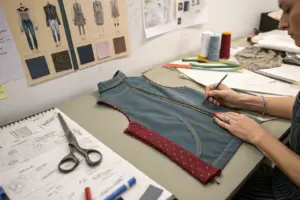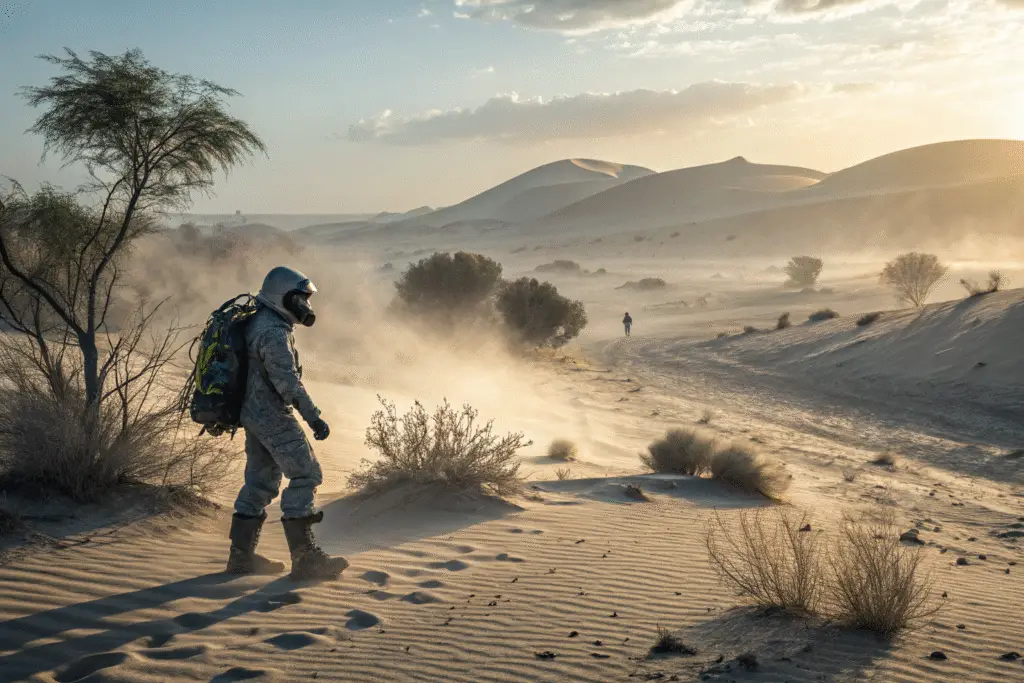
Desert fashion—well, it isn’t just about sun protection anymore. To be honest, survival gear and style are starting to overlap in surprising ways. Actually, fog-harvesting textiles are a perfect example of this merging. Personally I think we’re witnessing a new chapter where apparel doubles as a life-support system.
Customizable desert fog-harvesting clothing uses hydrophilic-hydrophobic meshes, advanced coatings, and engineered seams to capture airborne water droplets, channel them, and store them for later use. Not only practical, but also symbolic—fashion that saves lives and conserves resources.
So… how do we source such garments? Let’s break down the essentials.
What Materials Enable Fog-Harvesting Fabrics?
Fog-harvesting materials are unusual—rarely do fabrics act like machines. Hydrophilic fibers pull water in, hydrophobic zones direct it away. And between them… droplets slide into storage.
Actually, these fabrics come as woven meshes, coated synthetics, or even biomimetic nanostructures inspired by desert beetles.
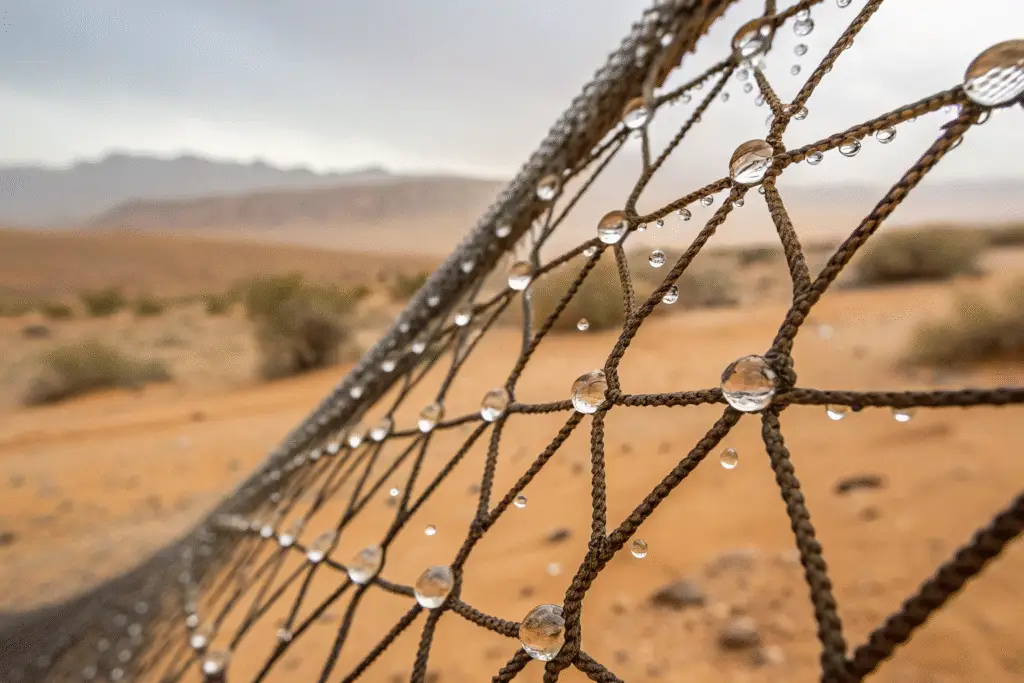
Which materials matter most?
- Polyester meshes with coatings: cheap, proven in FogQuest field projects.
- Nanostructured polypropylene: better droplet capture efficiency.
- Beetle-shell inspired coatings: see Nature’s beetle study.
Why stitch them into clothes?
Because wearables move with the body. Imagine a cape that gathers water as you walk at dawn—fashion, function, and survival in one.
Where To Find Reliable Suppliers
Suppliers? Not your everyday garment mills. To be honest, they come from water tech or filtration industries. Actually, it takes cross-sector partnerships to build these garments.
Reliable partners will provide efficiency data, patents, and prototypes—not just fabric rolls.
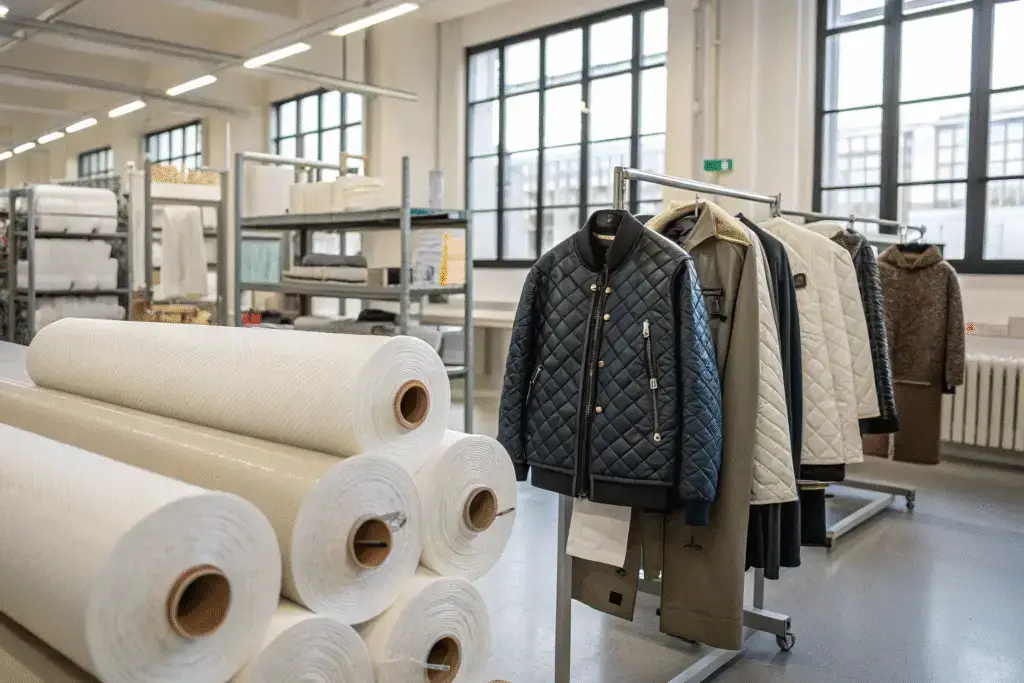
Where should you search?
- FogQuest NGO connects projects to suppliers.
- Alibaba fog mesh lists industrial meshes.
- Academic work, like MIT’s fog fabric research.
What questions must be asked?
- What’s the daily yield (liters/m²)?
- How long does coating last under UV?
- Can they laminate onto apparel fabric without losing breathability?
Quality & Testing Considerations
Clothing is mobile; deserts are harsh. Personally I think lab claims mean little without desert testing.
Actually, durability, UV resistance, and abrasion from sandstorms are as important as water yield itself.
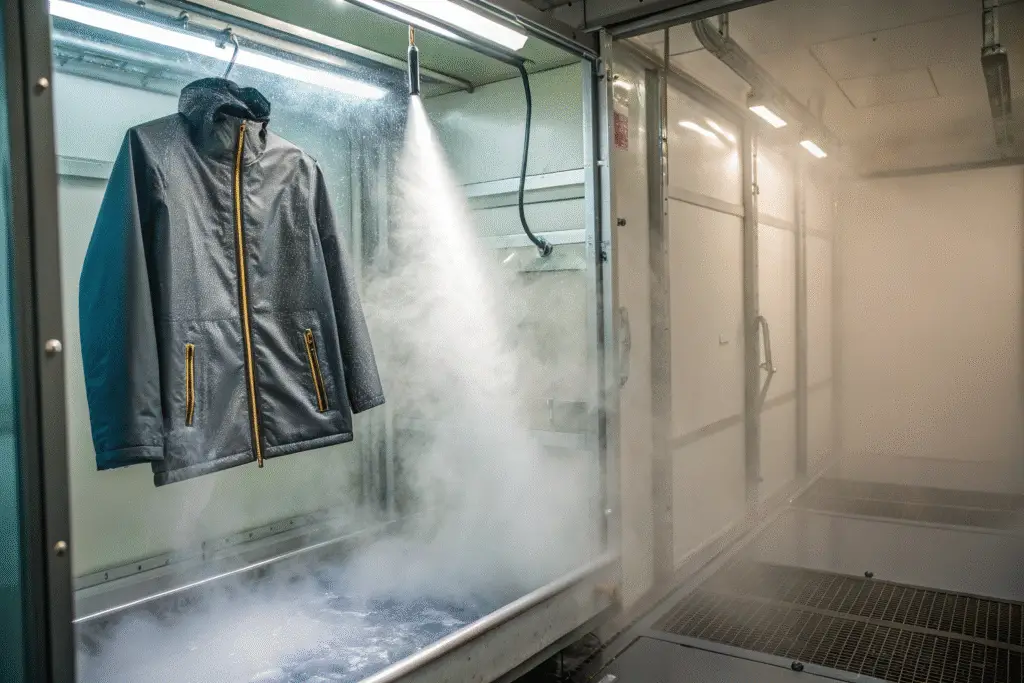
Which tests matter most?
- Collection efficiency: liters per m² per day in fog chamber.
- UV resistance: simulated per ASTM G154.
- Abrasion: sand and wind cycles.
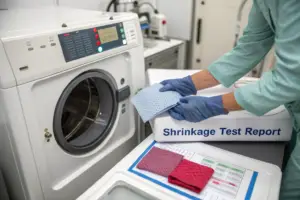
- Washability: coatings tested for longevity.
How do you measure output?
Simple—track collection rate in controlled trials. Compare with FogQuest project benchmarks.
Design & Customization Options
Style still matters. To be honest, no one wants survival gear that looks like lab equipment. Actually, customization makes desert fog apparel wearable in both survival and lifestyle contexts.
Personally I think modular jackets—with detachable reservoirs—are the future.
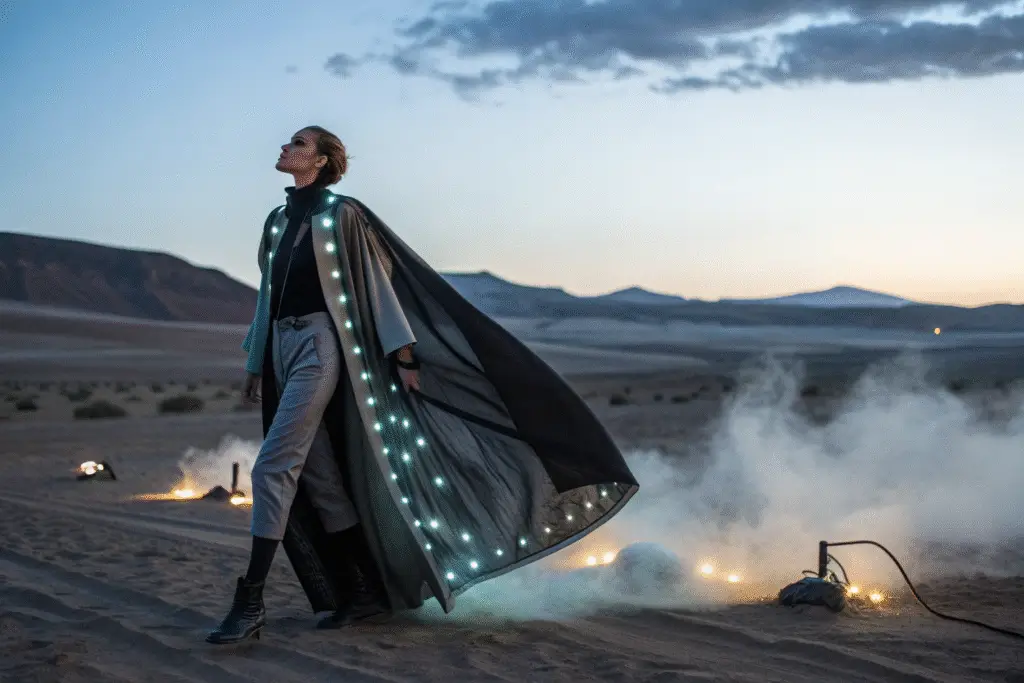
What design tricks work best?
- Layered panels on back and shoulders.
- Hidden seam channels guiding droplets into pockets.
- Clip-on reservoirs for storage.
Can it look good?
Yes—minimalist desert-inspired fashion can integrate fog mesh elegantly. See Pinterest desert survival fashion for inspiration.
Logistics & Market Positioning
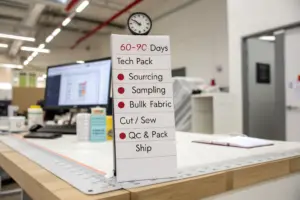
Sourcing takes patience. To be honest, these are not mass-production yet. Actually, they require dual sourcing—garment factories and fog-mesh suppliers.
The market pitch? Eco-survival fashion that delivers both utility and story.
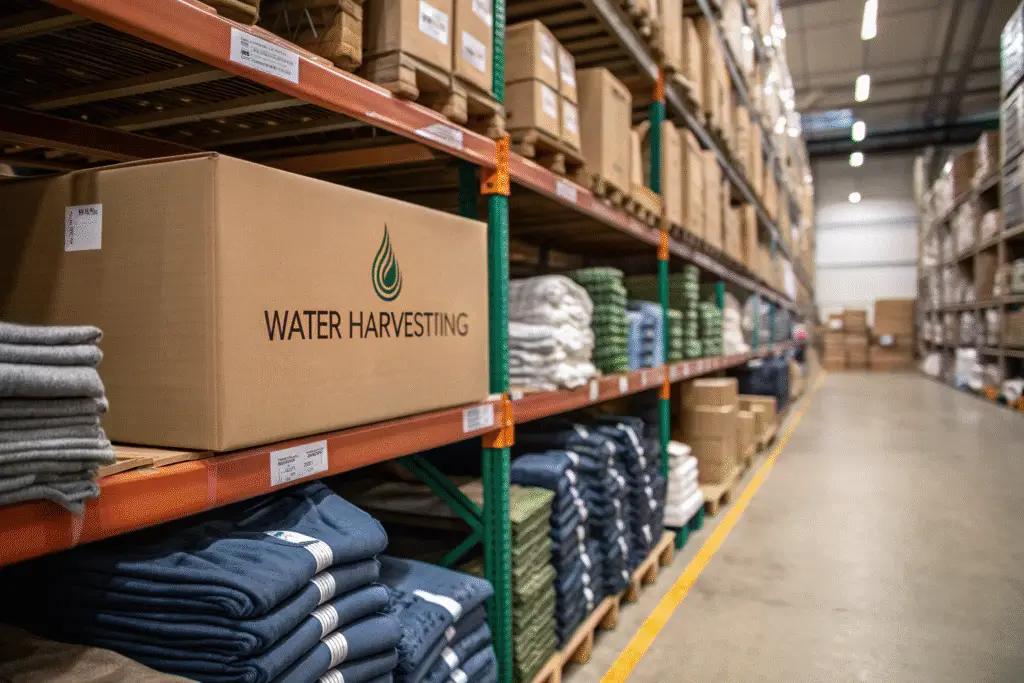
How about MOQs?
Small labs may accept 100 units; big mesh producers prefer 1000+. Expect higher costs.
What’s the branding advantage?
Tie to sustainability. Position alongside UN SDG 6: Clean Water. Survival plus eco-awareness equals premium story.
Conclusion
Fog-harvesting apparel may sound futuristic, but it’s becoming real. To be honest, sourcing is complex—but innovation is always messy. Actually, the reward is garments that provide not just shade, but life-sustaining water.
At Shanghai Fumao Clothing, we already experiment with eco-textiles and survival-inspired fashion. Personally I think brands should start small—pilot runs, desert testing, and then scale with marketing around sustainability. If you’d like to co-develop fog-harvesting apparel, contact our Business Director Elaine at elaine@fumaoclothing.com or visit shanghaigarment.com.