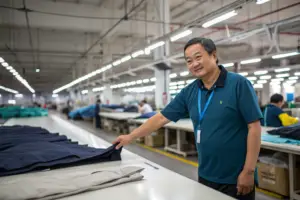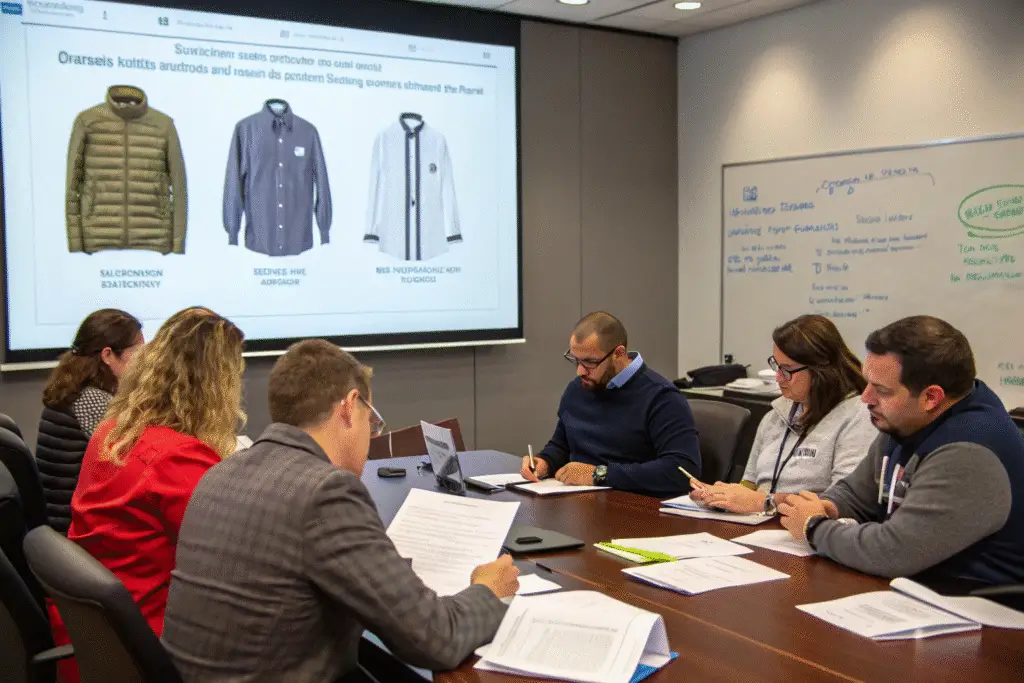
Starting a new clothing line brings excitement and opportunity, yet one critical meeting often determines the success of your entire production run. The initial kick-off meeting with your garment manufacturer establishes the foundation for quality standards, production timelines, and collaborative partnership dynamics. Getting this meeting right isn't just beneficial—it's absolutely essential for bringing your vision to life while avoiding costly mistakes.
A clothing production kick-off meeting serves as a strategic alignment session where brands and manufacturers synchronize on all quality standards, specifications, and expectations before manufacturing begins. This meeting forms the crucial foundation for preventing defects, avoiding expensive delays, and ensuring final garments perfectly match your vision while meeting customer expectations. Without conducting a thorough and detailed kick-off meeting, brands risk miscommunication, inconsistent quality, and potentially missing their key selling seasons entirely.
Many fashion entrepreneurs understandably rush through this initial phase, eager to see physical samples and tangible progress. However, investing proper time and attention during this stage ultimately saves significant resources later in the production cycle. Throughout my career, I've consistently observed that partnerships flourish and products excel when comprehensive quality standards are firmly established from the very beginning.
What Are The Key Quality Topics To Cover?
Creating a comprehensive agenda for your kick-off meeting ensures no critical detail goes overlooked. This meeting represents your first and best opportunity to prevent misunderstandings that could compromise your product's quality.
Focus your discussion on the fundamental elements that define your product's quality character. These core components include raw material specifications, construction methodologies, and finishing details that collectively determine the final product's excellence. Clearly defining these aspects provides your manufacturer with a precise blueprint to follow throughout production.

How Do You Define Fabric Quality and Material Specifications?
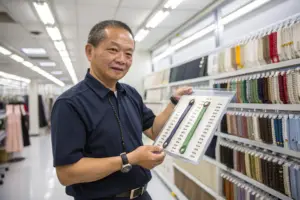
Fabric selection fundamentally shapes your garment's character, directly influencing comfort, durability, and perceived value. Begin by specifying the exact fabric composition, utilizing internationally recognized standards like Oeko-Tex Standard 100 to ensure materials remain free from harmful substances. Move beyond vague descriptions like "cotton knit" by specifying precise yarn count, GSM (grams per square meter), and specific knit types such as single jersey or rib. Providing your manufacturer with approved fabric swatches and reference samples creates tangible benchmarks that prove more effective than verbal descriptions alone. Additionally, discussing raw material sourcing origins ensures consistency and verifies ethical sourcing practices. Establishing a collaborative fabrics library with your manufacturer can significantly streamline this process for future production cycles.
What Construction Details Ensure Garment Durability?
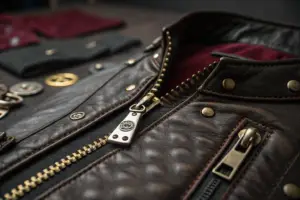
Construction quality directly determines a garment's longevity and fit precision. Detail every construction aspect comprehensively, including specific stitch types (such as overlock for seams and coverstitch for hems) alongside stitches per inch (SPI) measurements. Generally, higher SPI indicates stronger seam construction. Specify thread quality and preferred brands to prevent color fading and seam breakage issues. Identify high-stress areas like armholes and pockets that require reinforcement. Discuss all component specifications including interlinings, elastics, and zippers—for instance, YKK zippers represent an industry reliability benchmark. Thoroughly review the garment's technical package during your meeting, ensuring every seam, dart, and pleat receives clear illustration and annotation to eliminate interpretation errors.
Understanding construction quality requires breaking down its critical components systematically. A common mistake involves assuming factories automatically understand your preferred sewing techniques without explicit guidance.
| Critical Stitching Standards | Stitch Type | Common Use Case | Recommended SPI |
|---|---|---|---|
| Overlock (504) | Seaming knit fabrics | 12-14 SPI | |
| Lockstitch (301) | Topstitching, zippers | 10-12 SPI | |
| Coverstitch (406) | Hems on t-shirts | 10-12 SPI |
Beyond stitching, you must address trim and accessory quality requirements. Buttons should withstand washing without cracking, while prints must resist peeling. Establish physical approval processes for all components before mass production commences.
How To Communicate Your Quality Expectations Clearly?
Effective communication bridges the gap between creative vision and manufacturing execution, transforming abstract ideas into concrete, measurable standards that factories can consistently implement.
Ambiguity represents quality's greatest enemy. Utilizing visual aids and quantifiable metrics ensures all parties operate with shared understanding and aligned expectations, essentially creating a common language for discussing and evaluating quality.
Why Is A Golden Sample Non-Negotiable?
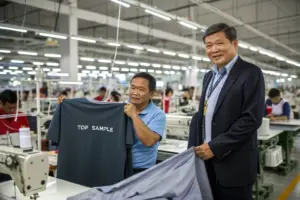
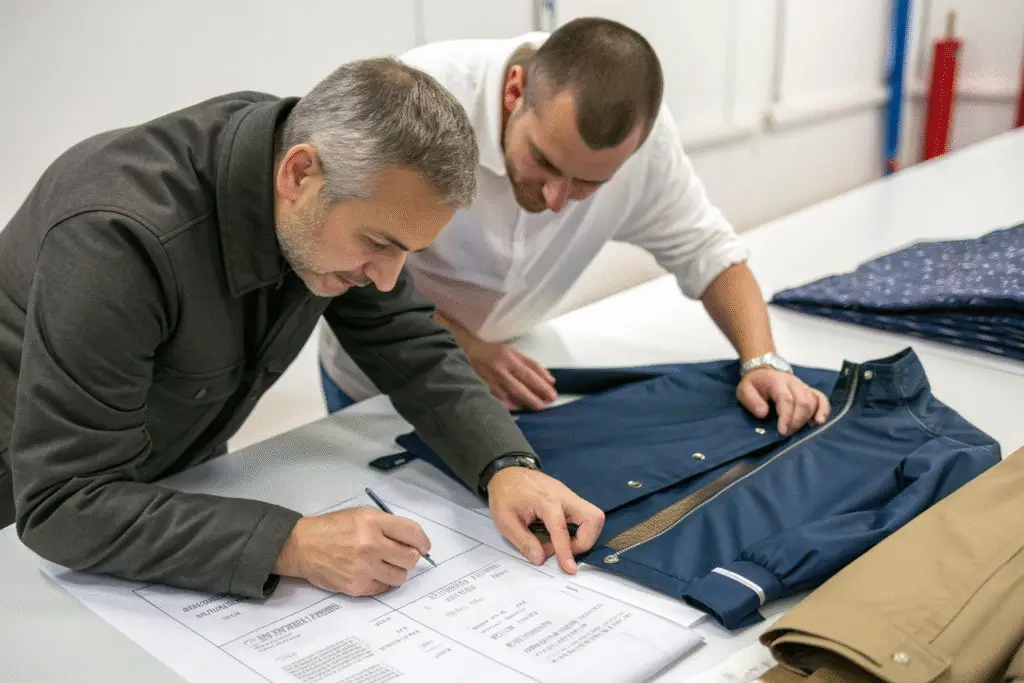
The golden sample—also called a sealed sample—functions as the ultimate quality reference point. This approved and signed-off sample serves as the factory's benchmark for evaluating all production units. Never proceed without this critical reference point. This sample physically embodies all agreed-upon standards regarding fit, fabric, color, and construction quality. During your meeting, establish clear timelines for creating and approving this sample, while also defining procedures for addressing situations where production pieces deviate from the golden standard. This typically involves halting production until resolution occurs. This practice safeguards your brand identity while ensuring consistency across thousands of manufactured units.
What Are Effective Ways to Define Tolerances and AQL?
Mass production perfection operates within acceptable ranges rather than single points. You must define permissible tolerances for variations, such as specifying color shade tolerances using Pantone plates or approved lab dips. For measurements, establish allowable variances—for instance, +/- 1 cm for a garment's chest width. Subsequently, align on appropriate AQL (Acceptable Quality Level) standards for final inspection. This international sampling procedure determines inspection quantities and maximum defect allowances. For apparel, AQL 2.5 for major defects represents the industry standard. Establishing this statistical standard removes emotional judgment from final inspections while providing clear, objective pass/fail criteria.
Successful quality communication requires recognizing the two-way nature of effective dialogue. You must actively listen to your manufacturer's technical feedback regarding large-scale production feasibility.
Sometimes, desired design details present consistent execution challenges in mass production. Quality manufacturers will suggest alternative techniques that achieve similar aesthetics with higher consistency. Foster collaborative environments where such problem-solving discussions are encouraged. This partnership approach becomes crucial for innovating and resolving issues before they escalate into costly problems.
How To Align on Logistical and Compliance Standards?
Quality extends beyond the physical garment to encompass handling procedures, shipping protocols, and certification requirements that collectively determine whether products arrive intact and legally compliant.
Logistical mishaps can compromise perfectly manufactured garments, while compliance failures may prevent border clearance. Aligning on these standards during kick-off meetings constitutes essential risk management.

What Packaging and Shipping Protocols Protect Quality?
Inadequate packaging risks damaging garments during transit. Specify every packaging layer comprehensively, including poly bags, carton boxes, and palletization requirements. For example, require individual garment folding and poly bag packaging with securely attached hang tags. Define carton ply strength and piece quantities per box to prevent crushing damage. For shipping, clearly establish Incoterms like DDP (Delivered Duty Paid) that clarify responsibility and cost allocation between partners. Reliable manufacturers maintain robust logistics networks ensuring smooth customs clearance and timely delivery, thereby protecting products throughout their journey to your warehouse.
Which Certifications and Documentation Are Essential?
Certifications verify that products meet specific safety, quality, and ethical standards, serving as your due diligence evidence. Discuss market-specific certification requirements—for the U.S., this may include CPSC (Consumer Product Safety Commission) compliance. For sustainability claims, you might require GRS (Global Recycled Standard) certification for recycled materials. Verify your manufacturer's ability to provide genuine, audited certificates. Additionally, align on necessary shipping documents including commercial invoices, packing lists, and certificates of origin. Since falsified certificates represent genuine concerns, build trust by partnering with transparent manufacturers who welcome audit verification.
Ensuring smooth processes requires systematic documentation management. Creating kick-off meeting checklists proves immensely helpful for maintaining organizational clarity.
Essential Documentation Checklist
- Tech Pack: The master design blueprint
- Purchase Order (PO): The commercial contract
- Quality Manual: Document outlining AQL levels, inspection points, and tolerance rules
- Testing Reports: Fabric performance verification (colorfastness, shrinkage)
- Compliance Certificates: As previously discussed
Systematic checklist review eliminates surprises while creating accountability paper trails for both parties.
How To Establish a Long-Term Quality Partnership?
Kick-off meetings should transcend transactional interactions, instead launching strategic partnerships focused on continuous improvement and mutual growth.
Manufacturers who feel like genuine partners invest deeply in your success, proactively solving problems and driving innovation beyond basic order fulfillment.

Why Is a Single Point of Contact Vital?
Inefficient communication represents a major industry pain point. You need one dedicated manufacturer representative who comprehensively understands your account. This person—typically a Merchandising Manager or Business Director—becomes your primary contact for updates, issues, and questions. They streamline communication, prevent message loss, and ensure accountability. At our company, we assign dedicated key account managers to every partner, eliminating the frustration of repeating information to multiple sales representatives while providing clear escalation paths that ensure your voice is always heard and concerns promptly addressed.
How Can You Build a Feedback Loop for Continuous Improvement?
Quality represents an ongoing journey rather than a final destination. Establish structured feedback mechanisms from the beginning, scheduling regular update calls after kick-off meetings—particularly following key milestones like fabric sourcing, sample approval, and production phases. After order completion, conduct post-mortem reviews discussing successes and improvement opportunities for future collaborations. This proactive approach demonstrates your long-term partnership commitment while helping manufacturers better understand your brand aesthetic and preferences over time, ultimately increasing efficiency and enhancing quality with subsequent orders.
Embedding continuous improvement requires appropriate tool utilization. Modern collaboration extends beyond basic email communication.
Utilize cloud platforms for sharing large technical package files and facilitating real-time commentary. Some manufacturers offer proprietary product development portals enabling order stage tracking. This transparency builds trust—when both parties access identical information, friction decreases while creating scalable partnership foundations that adapt alongside brand growth.
Conclusion
Establishing quality standards during clothing kick-off meetings involves deliberate, detailed processes encompassing material definition, construction specifications, expectation communication through visual aids and measurable standards, logistical and compliance alignment, and ultimately, framework construction for lasting partnerships. Mastering this initial meeting transforms manufacturers from basic vendors into genuine team extensions. This methodology protects your brand reputation, delights your customers, and ensures your clothing line achieves seasonal success consistently.
If you seek a manufacturing partner who understands detailed kick-off meetings' critical importance and commits to being your reliable, high-value extension, let's connect. We at Fumao Clothing dedicate ourselves to transforming apparel visions into market-ready success stories. For direct conversations about managing your next production order, please contact our Business Director, Elaine, at elaine@fumaoclothing.com.