Seasonal rental fashion is a timing game—bring items in too early, they sit idle. Too late, and you miss the wave.
Efficient seasonal rotation requires forecasting demand accurately, setting calendar-based schedules, pre-planning transitions, and maximizing garment life cycles through modular design and targeted promotions.
At Fumao, we’ve worked with clients across industries to streamline seasonal garment flow. The right strategy turns short-term pieces into long-term revenue.
Best Scheduling Strategies for Seasonal Inventory Rotation
Managing rental fashion across seasons isn’t just about swapping racks—it’s about timing, planning, and movement coordination.
To rotate seasonal inventory effectively, schedule stock-in and stock-out windows based on past performance data, climate cycles, and garment prep time.

What’s the ideal timeline for preparing, launching, and retiring seasonal rental stock1?
Here’s a rental-friendly seasonal rotation calendar:
| Season | Prep Timeframe | Launch Window | Phase Out |
|---|---|---|---|
| Spring | Jan – Feb | March – May | Late May |
| Summer | March – April | June – August | Early Sept |
| Fall | July – Aug | Sept – Nov | Late Nov |
| Winter | Sept – Oct | Dec – Feb | Early March |
Prep includes:
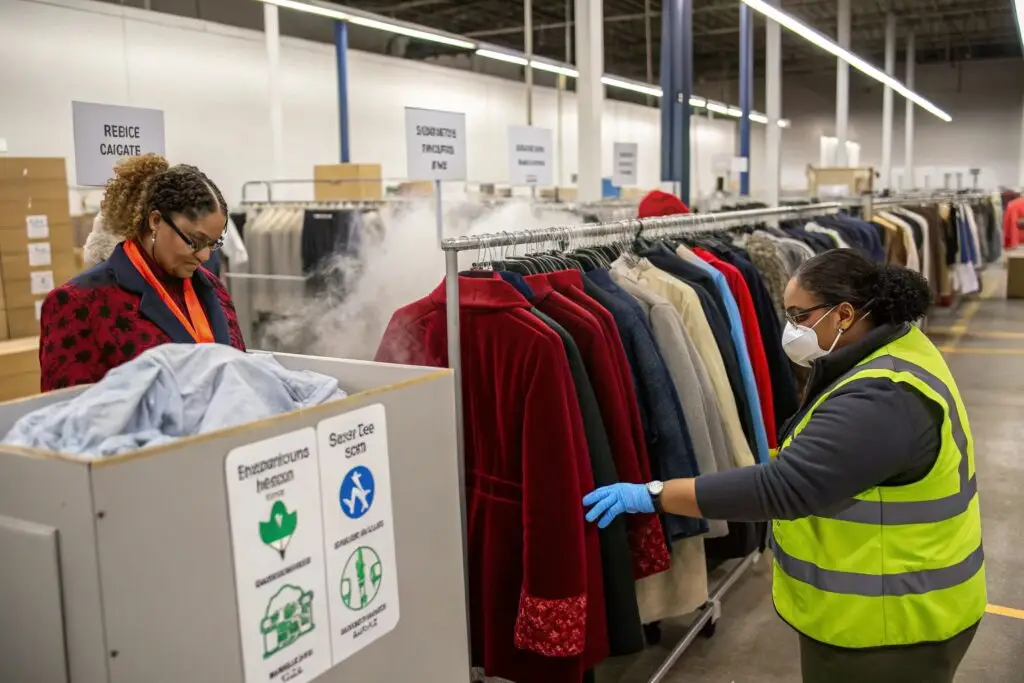
- Inspection and steaming
- Sizing and relabeling
- New promotional photos
- Slotting SKUs into marketing campaigns
At Fumao, we help clients use Gantt charts2 and Trello-style dashboards3 to manage the rotation stages by garment type.
How should returns and maintenance be scheduled within this seasonal flow?
- Start maintenance 2–4 weeks before pull date
- Create buffer zones: overlapping old and new seasonal items for 1–2 weeks
- Reserve space for repairs during transition (peak return weeks often = repair peaks)
- Assign rotation bins: e.g., “Spring Returns – Inspection Pending”
This reduces lag, warehouse clogs, and late-season shortages.
How do we forecast demand for seasonal rental garments?
Guessing means wasting. Forecasting means scaling with precision.
Forecast demand for seasonal rental garments by analyzing past checkouts, weather patterns, regional events, and product-specific velocity metrics.

What data points matter most for predicting seasonal rental demand?
At Fumao, we base forecasts on:
- YOY usage data4: What rented well last year in the same season?
- Geolocation trends: Warm vs. cold regions shift timing by up to 4 weeks
- Event calendars: Weddings, corporate seasons, holidays
- Weather trends: Delayed spring? Push rotation one week.
- Return frequency: Higher return = higher wear rate
For example, one of our clients used 2023’s spring rental data to place their 2024 spring PO in January. By layering Google Trends5 (search volume for “linen dress,” etc.) with their Shopify checkout log, they predicted demand within 10% accuracy.
What tools or methods support better seasonal forecasting?
| Method | Tool or Resource Used |
|---|---|
| YOY Comparison | ERP export + Excel charts |
| Google Trend Overlay | Google Trends + SKU log |
| Booking-Based Forecast | Hospitality/venue calendars |
| Weather Impact Analysis | Region-specific forecast API |
If digital tools aren’t available, even a color-coded spreadsheet can give visibility into seasonal usage trends.
Tips to Maximize ROI on Limited-Time Fashion Pieces
Seasonal items are risky—short shelf life, trend pressure, weather dependency. But they can still earn big.
To maximize ROI on seasonal rental pieces, shorten prep and turnaround times, offer style bundles, promote early, and build in end-of-season exit plans.
How can rental companies increase the usage rate of seasonal garments?
- Launch early with pre-season promotions6 (e.g., spring capsule in late Feb)
- Use stylized bundles to increase item count per order
- Automate reminders to return before season ends (reduces loss)
- Double wash cycles per week to keep garments rotating
One client we worked with introduced “Spring Essentials” bundles—3 coordinated pieces rented together. This boosted average order size by 35% without expanding SKUs.
What’s the best way to handle unsold or under-rented seasonal stock?
- Flash-rentals7 near end-of-season with discounts
- Offload to wholesale partners (we help arrange B2B resale channels)
- Convert to alternate roles (e.g., spring dresses become spa uniforms)
- Tax-deductible donation of clean, unsold garments
We recommend a “seasonal exit checklist8” for each garment group, reviewed every 90 days.
Using Data to Plan Seasonal Rental Transitions Smoothly
Seasonal chaos isn’t a given—it’s a system problem. Data can fix that.
Use rental frequency, damage rates, return timelines, and repair data to plan smooth seasonal transitions and avoid bottlenecks.
%[Fashion team analyzing digital performance dashboard in studio](https://shanghaigarment.com/wp-content/uploads/2025/05/a-fashion-logistics-team-in-a-modern-workspace-an-1024x683.webp "Apparel trend and logistics data_)
What inventory metrics help guide smooth seasonal handoffs?
| Metric | Why It Matters |
|---|---|
| Rental frequency9 | Prioritizes top performers |
| Damage return % | Flags repair time needs |
| Avg. time in circulation10 | Estimates prep-to-return window |
| Size shortages | Guides new PO by size ratio |
| Cleaning cycle length11 | Helps schedule maintenance |
At Fumao, we provide a transition dashboard showing:
- Top 10 spring garments by wear count
- Average wash and repair turnaround
- Deadstock alerts (no rental in 30+ days)
This helps clients prepare incoming inventory while clearing outgoing stock in sync.
How can teams coordinate warehouse, laundry, and sales across seasons?
- Set rotation calendar in shared tools (Google Sheets, Notion)
- Color code bins by season or capsule
- Schedule transition huddles 1 month ahead
- Create capsule rotation boards for visual clarity
One client used magnetic whiteboards with season stickers for each garment group. Their warehouse went from 15% late orders in peak season to under 3%.
Conclusion
Seasonal rental rotation isn’t just about swapping inventory—it’s about planning smarter, moving faster, and maximizing every piece before its season ends. At Fumao, we help you stay ahead of the calendar and ahead of the market.
-
Understanding seasonal rental stock can help optimize your rental strategy and improve inventory management. ↩
-
Gantt charts are essential for visualizing timelines and managing tasks effectively in seasonal rental operations. ↩
-
Trello-style dashboards enhance organization and efficiency, making them ideal for managing seasonal rental tasks. ↩
-
Understanding YOY usage data can enhance your rental demand predictions significantly. Explore this link to learn more. ↩
-
Google Trends provides valuable insights into consumer behavior, making it essential for accurate demand forecasting. Check it out! ↩
-
Explore this link to discover innovative strategies that can help rental companies boost their seasonal garment usage effectively. ↩
-
Learn about flash-rentals and how they can help rental companies quickly offload unsold stock while maximizing revenue. ↩
-
Find out how a seasonal exit checklist can streamline inventory management and improve profitability for rental businesses. ↩
-
Understanding rental frequency can help optimize inventory turnover and improve profitability. Explore this link for deeper insights. ↩
-
Average time in circulation is crucial for estimating inventory turnover and planning. Discover more about its impact on efficiency. ↩
-
Cleaning cycle length directly influences inventory availability and maintenance scheduling. Learn more about its significance here. ↩