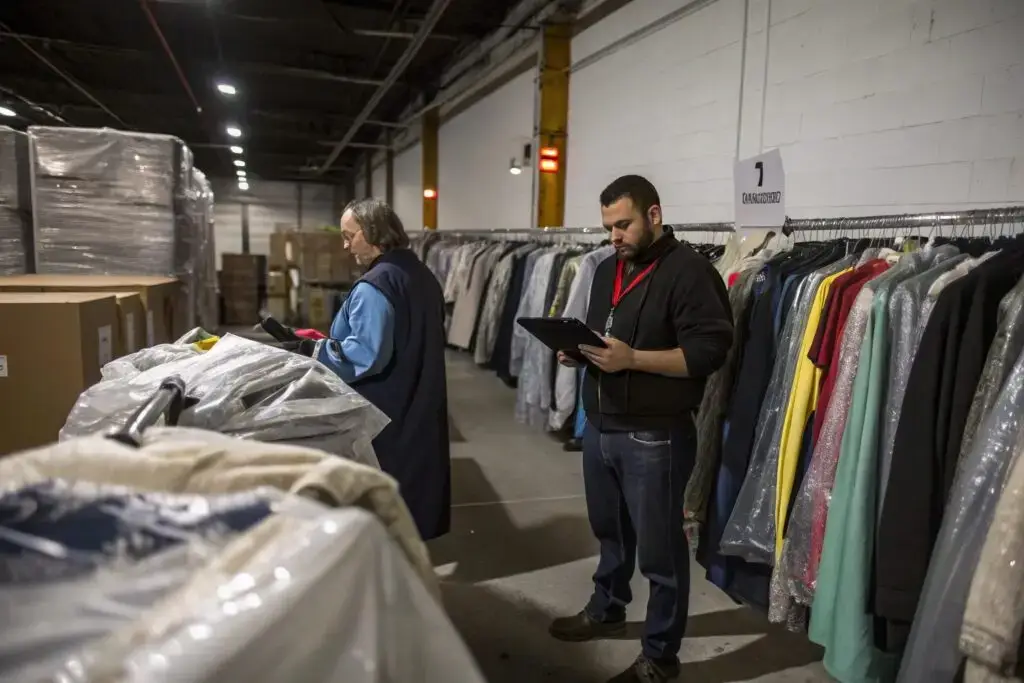
In rentals, every unsold, unused, or returned item sitting idle is silently eating into your profit margin.
To reduce inventory waste in rental models, use accurate demand forecasting, flexible SKUs, real-time tracking, and smart exit strategies for aging or slow-moving stock.
At Fumao, we help rental clients streamline their inventory by designing versatile products and setting up data-driven systems that reduce stock losses and improve turnover rates.
How do you solve inventory waste?
Most inventory waste isn’t caused by bad products—it’s caused by lack of planning, visibility, and exit strategies.
Solving inventory waste starts by tracking usage per SKU, minimizing overproduction, and creating liquidation or rotation plans before garments expire.

What are the primary causes of inventory waste in rental clothing?
We’ve seen four main causes across rental partners:
- Over-ordering trend items1 with short life cycles
- Incorrect size distribution2—e.g., too many XS, not enough L/XL
- No offboarding plan for dated or damaged items
- Low data visibility3—not tracking returns, usage, or damage properly
One eventwear client stocked 2,000 embellished dresses in anticipation of summer weddings. When pandemic restrictions hit, they used just 25%. Without a recovery plan, they faced $50,000 in dead stock.
We helped them resell some via B2B wholesale, repurpose others for hospitality clients, and donate damaged goods for tax write-offs. Over 80% of the stock found a second life.
What practical steps can rental businesses take to prevent future waste?
- Track real-time usage by SKU
- Create capsule collections with maximum match potential
- Build seasonal forecasting models
- Implement regular stock audits
At Fumao, we encourage “waste alerts” in ERP or Excel—triggered when an item hasn’t been rented in 90+ days or has a return damage rate above 30%.
What would be an effective countermeasure for inventory waste?
Inventory waste can’t be eliminated—but it can be minimized with proactive systems and flexible inventory structures.
Effective countermeasures include predictive analytics, seasonal buying caps, SKU consolidation, resale channels, and garment lifecycle monitoring.

How does predictive planning4 help rental companies prevent overstock?
Using historical rental data, seasonality, and local event calendars, we help buyers model future demand. For example, for uniform clients in cold regions, we set weighted forecasts based on weather shifts and year-over-year usage.
We recommend adjusting stock orders quarterly:
- 60% based on base demand
- 30% on growth forecast
- 10% for experimental styles
It’s also smart to use rolling size packs5—e.g., pack 20 tops as 5S, 5M, 6L, 4XL—based on historical size movement, not guesswork.
What stock recovery options6 work well when garments can no longer be rented?
| Waste Type | Recovery Method | Benefit |
|---|---|---|
| Lightly Used | Discount resale or wholesale | Recoup partial value |
| Damaged | Upcycle as rags/aprons | Reduce disposal cost |
| Outdated Styles | Donate for tax deduction | CSR + financial benefit |
| Overstock SKUs | Rebox as emergency backups | Create safety inventory bank |
We’ve seen clients reduce waste loss by up to 40% with these combined approaches.
How to reduce excess inventory?
Excess inventory ties up capital, consumes space, and leads to markdowns or disposal. The best solution? Stop it before it starts.
To reduce excess inventory, limit SKU expansion, track sales velocity, plan seasonal exits, and negotiate shorter lead times with suppliers.

Why is SKU control7 critical in avoiding stock build-up?
Every new style increases complexity. If each variant has its own size range and seasonality, excess stock builds quickly.
We helped a retail staff uniform client cut 120 SKUs down to 45 by:
- Removing underused colors (brown, teal)
- Merging overlapping fits
- Limiting seasonal styles to 1 drop per year
Result? Inventory turnover rose 35%, and warehouse space dropped by one-third.
What forecasting tactics help keep inventory levels aligned with real demand?
- Use ABC inventory classification8 (A = fast, C = slow movers)
- Apply minimum order triggers9 tied to average usage
- Run “what-if” demand simulations for trend items
- Review check-out frequency by size every 30 days
At Fumao, we build SKU velocity charts to guide client reorders. If an item moves less than once per month, we flag it for review.
How to account for waste in inventory?
Even the best systems won’t stop all waste. That’s why rental businesses must account for it transparently.
Inventory waste should be tracked using loss codes (damage, shrinkage, obsolescence), logged in ERP, and tied to financial write-downs or recovery plans.
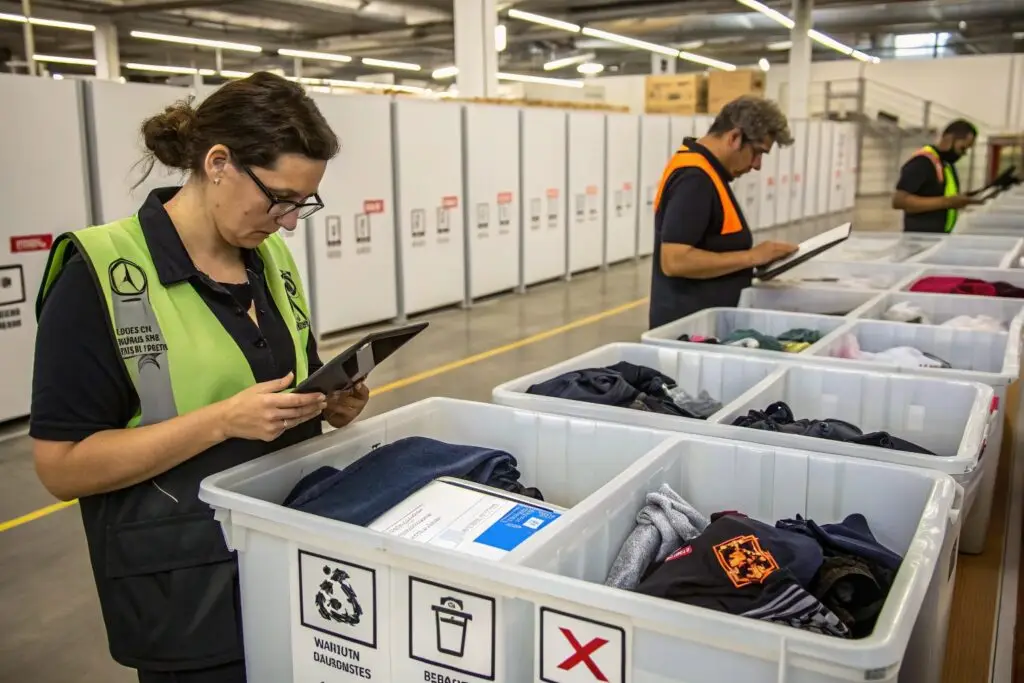
What systems help track and report waste accurately?
We recommend setting up waste categories10 in your inventory software:
- W1 = Damaged during use
- W2 = Unreturned items
- W3 = Retired due to fading/shrinkage
- W4 = Overstock or no demand
Each return or retirement is tagged with a reason. Over time, you’ll see patterns—and stop waste at the source.
Here’s a waste report example11 we generate for clients:
| SKU | Total Issued | Returns with Damage | % Loss | Recovery Action |
|---|---|---|---|---|
| UNI-BLK-SL | 1,000 | 150 | 15% | Downcycled to aprons |
| APR-NVY-ST | 800 | 35 | 4.3% | Repaired and restocked |
| VEST-GRY-XL | 600 | 0 | 0% | Maintained in rotation |
How can buyers turn waste data into smarter sourcing?
Once you know why things fail, you can:
- Improve materials (e.g., stronger seams, anti-shrink finishes)
- Eliminate weak SKUs or designs
- Avoid suppliers with high return rates
- Build cost into pricing to protect margins
At Fumao, we always encourage clients to review loss-to-turnover ratios12 quarterly. The lower the loss, the healthier the stock.
Conclusion
Inventory waste is silent profit loss. With better planning, tracking, and rotation strategies, you can cut it down and keep your rental business lean. At Fumao, we build apparel—and systems—that last longer and waste less.
-
Understanding the impact of over-ordering can help rental businesses optimize their inventory management and reduce waste. ↩
-
Exploring this topic can provide insights into better inventory strategies and customer satisfaction in rental clothing. ↩
-
Learning about data visibility can enhance decision-making processes and improve overall efficiency in rental operations. ↩
-
Explore how predictive planning can optimize inventory management and enhance profitability for rental companies. ↩
-
Learn about rolling size packs and their effectiveness in aligning stock with actual demand, minimizing waste. ↩
-
Discover various stock recovery options that can help rental companies minimize losses and maximize value from unsold inventory. ↩
-
Understanding SKU control can help businesses optimize inventory, reduce costs, and improve turnover rates. ↩
-
Exploring ABC inventory classification can enhance your inventory management strategies and improve efficiency. ↩
-
Learning about minimum order triggers can help you maintain optimal stock levels and prevent overstocking. ↩
-
Understanding waste categories can help streamline inventory management and reduce losses significantly. ↩
-
Exploring waste report examples can help you implement effective tracking and reporting systems in your business. ↩
-
Analyzing these ratios can provide insights into stock health and improve sourcing strategies. ↩