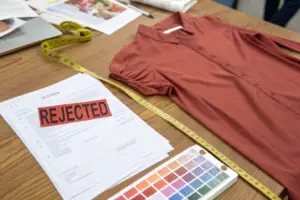
If your garments arrive wrinkled, torn, or faded, renters lose trust—and your costs spiral with every return.
Rental brands reduce damage complaints by using protective packaging, durable fabrics, strict inspections, and renter-friendly care instructions that extend garment life.
Let’s face it—damage complaints are costly. But more than that, they tell your customers that quality control isn’t a priority. Here’s how to fix that, before it ruins your brand reputation.
Best Packaging Practices to Prevent Garment Damage
Packaging isn’t just a box—it’s your garment’s armor during its journey.
The best packaging practices protect rental garments from wrinkling, moisture, rough handling, and in-transit contamination—delivering a clean, ready-to-wear product every time.
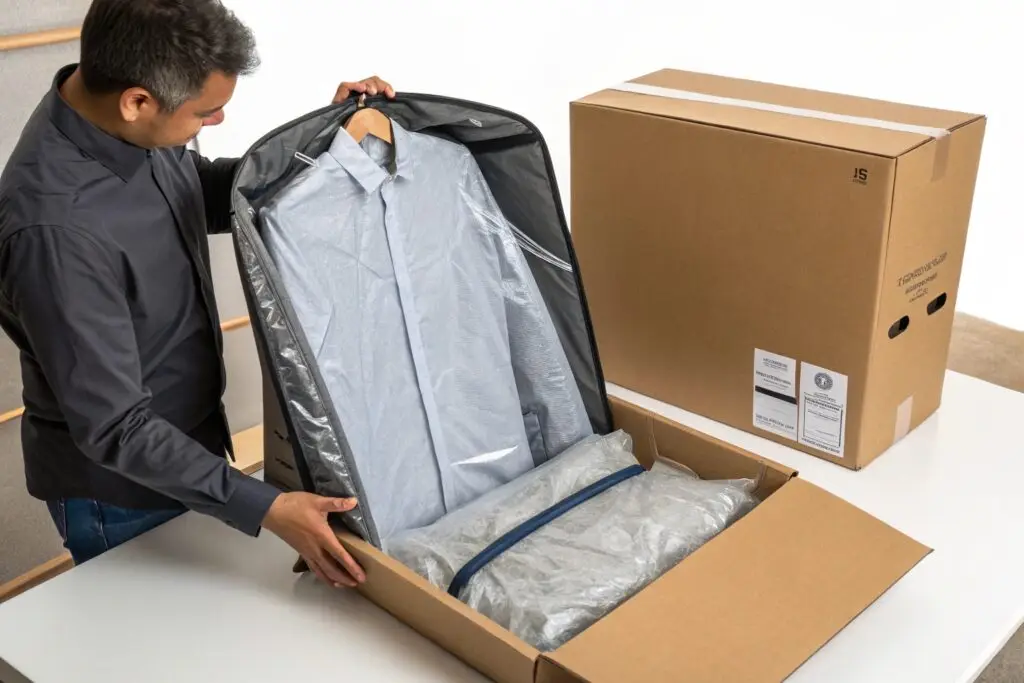
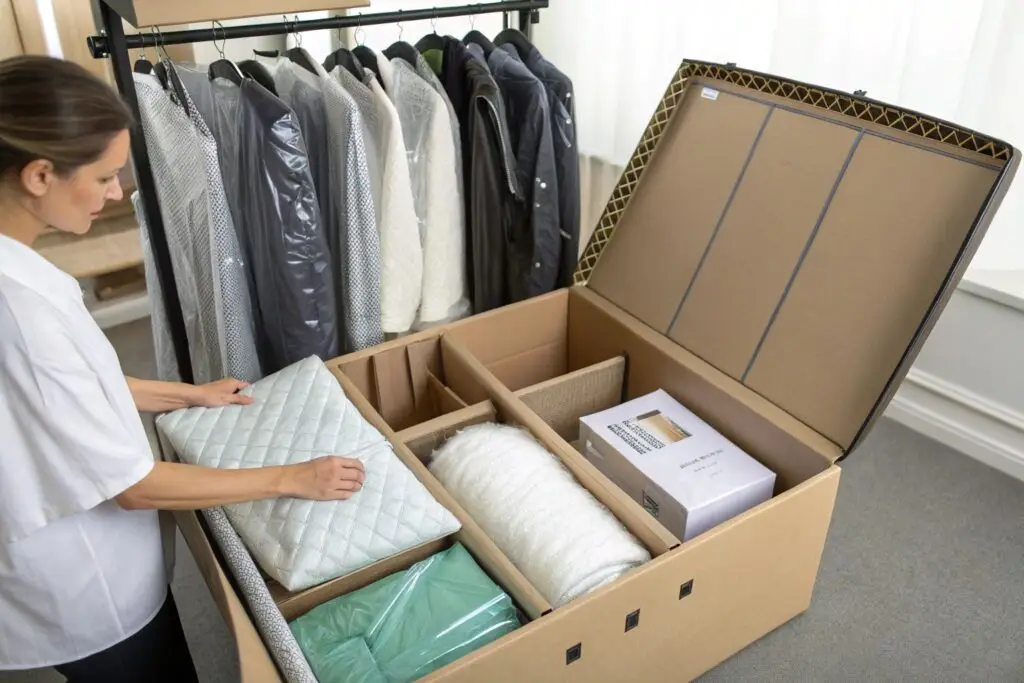
How can garment packaging reduce risk of wrinkling, tearing, or moisture damage in transit?
At Fumao Clothing, we’ve helped clients improve packaging that cut their damage complaints in half. One of the first changes we recommend is switching from cheap plastic mailers to water-resistant, padded garment pouches1.
Here’s what works best:
- Inner polybag with air holes: Keeps the garment clean but prevents mildew
- Folding boards or garment rolls: Prevent deep crease lines and friction damage
- Reinforced box corners: Stops pressure collapse on soft garments like knits
- Silica gel packets: Absorbs excess moisture without leaving residue
We also test our client’s packaging systems with vibration simulations and moisture exposure. That lets us catch weak points before renters do.
Premium doesn’t have to be expensive. A reusable zippered garment bag or a matte-finish mailing envelope not only protects better—it looks like luxury. And that matters.
One of our B2B rental partners added branded tissue paper2 and a protective neckband wrap. The garment arrived feeling cared-for. Complaints dropped. Renter photos increased. These extras reduced contact friction that used to cause pilling around the neckline.
Here’s a breakdown of affordable packaging upgrades:
| Upgrade | Benefit | Avg. Cost per Unit |
|---|---|---|
| Zippered garment bags | Reduces folding, protects shape | $0.25–$0.50 |
| Branded tissue wraps | Prevents surface scuffs | $0.10 |
| Neckband foam rolls | Stops collar bending/wear | $0.08 |
| Return bag sleeve | Prevents mixing clean/used items | $0.12 |
We manufacture packaging at scale for clients who want consistent protection and unboxing experience. This isn’t fluff—it’s damage control that pays for itself.
Top Fabric Choices That Withstand Repeated Rentals
Even the most stylish design fails if the fabric can’t survive a third wear.
Rental brands should choose fabrics that resist pilling, retain shape, withstand high-temperature washes, and stay colorfast across many use cycles.
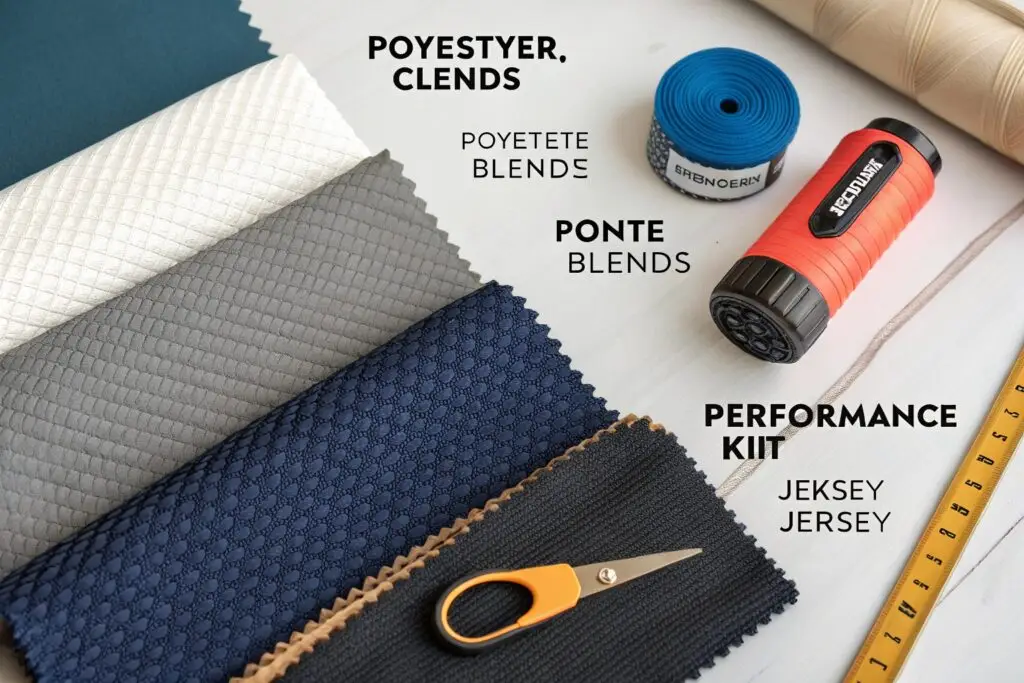
What materials perform best under repeated laundering and high-use conditions?
When building for rentals, fashion alone isn’t enough. Durability3 becomes your #1 concern. We recommend blends and weaves that handle friction, sweat, and professional cleaning cycles.
Here’s a quick list of fabrics we’ve tested and recommend:
| Fabric Type | Strengths | Ideal Uses |
|---|---|---|
| Polyester-Spandex Blends4 | High stretch recovery, no shrinkage | Dresses, trousers |
| Twill Weaves | Resists wrinkles and tearing | Workwear, pants |
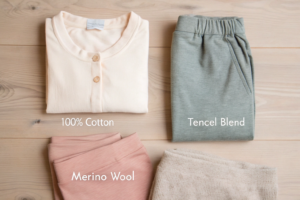
| Tencel Modal | Soft feel, good color retention | Blouses, lounge sets |
| Nylon Blends | Excellent abrasion resistance | Outerwear, skirts |
| Brushed Rayon | Comfort + mid-level durability | Maternity, casual tops |
One client in Europe sourced pure viscose for rental. It looked great—but shrank horribly in cleaning. We swapped to a modal-poly blend that maintained drape but handled steam pressing. Complaints vanished.
How does smart fabric sourcing reduce long-term inventory replacement costs?
Every complaint costs time and money. But switching to more durable fabrics reduces that pain at the source. Over time, you gain back ROI by extending garment lifespans.
We often use a Garment Wear Simulation Protocol5 for our clients:
- Simulate 20 wash cycles (industrial and standard)
- Measure color retention, pilling, seam stretch, and fabric recovery
- Rank final grade against visual and tactile standards
This lets clients forecast whether a garment can survive 10, 20, or 30 uses. When a blouse survives 3x more cycles, your margins improve—even if fabric cost is slightly higher.
Rental is a durability game. You’re not just choosing fabric—you’re choosing risk protection.
How Inspection Protocols Reduce User Complaints
Even great garments can cause issues if they’re sent out with overlooked damage.
Thorough inspection protocols catch stains, tears, odor, and missed repairs—preventing damaged items from reaching renters and tanking customer satisfaction.
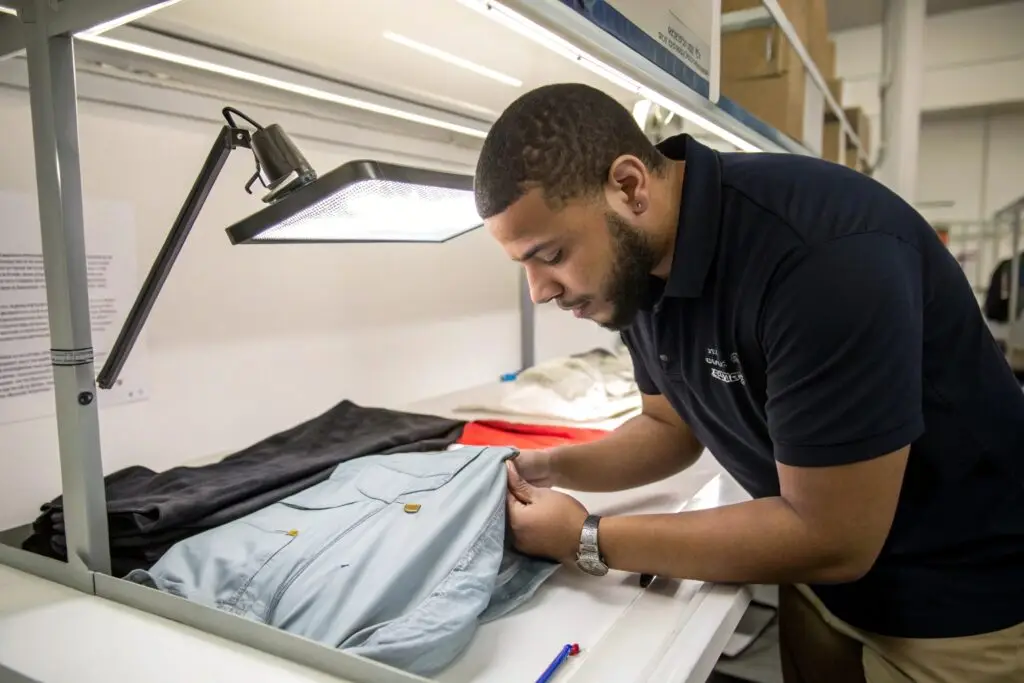
What are the key steps in a high-efficiency garment inspection process?
Speed matters—but so does consistency. We recommend a 3-layer inspection6 method:
-
Visual Surface Scan
Under good light, check for pilling, fading, or visible stains. Use lint rollers to clean as needed. -
Structural Check
Tug gently at seams, zippers, waistbands. Look for loose threads, broken fasteners, or warped linings. -
Scent + Texture Test
Smell test for mustiness. Rub fabric between fingers to detect rough patches from over-wear.
Each returned item should be rechecked before it re-enters rotation. One U.S. brand we advised added UV scanners7 to catch invisible stains on white dresses. Their refund rate dropped 15%.
Why do rushed inspections create long-term damage to rental reputation?
Every missed defect adds up. Renters assume a garment that smells bad or has a loose button is poorly managed—not just a one-off. That perception spreads.
We’ve worked with clients who were losing renters due to 1–2% of garments slipping through checks. That’s all it takes. Rental isn’t just about volume—it’s about precision. By installing standardized checklists8 and training warehouse teams, we helped them stabilize complaint levels fast.
Garment-by-garment consistency builds trust. And trust builds repeat business.
Educating Renters: Care Instructions That Actually Work
Your customers aren’t experts. But they can help protect your product—if you teach them right.
Clear, visual care instructions help renters avoid accidental damage, extending garment life and reducing complaints and replacements.
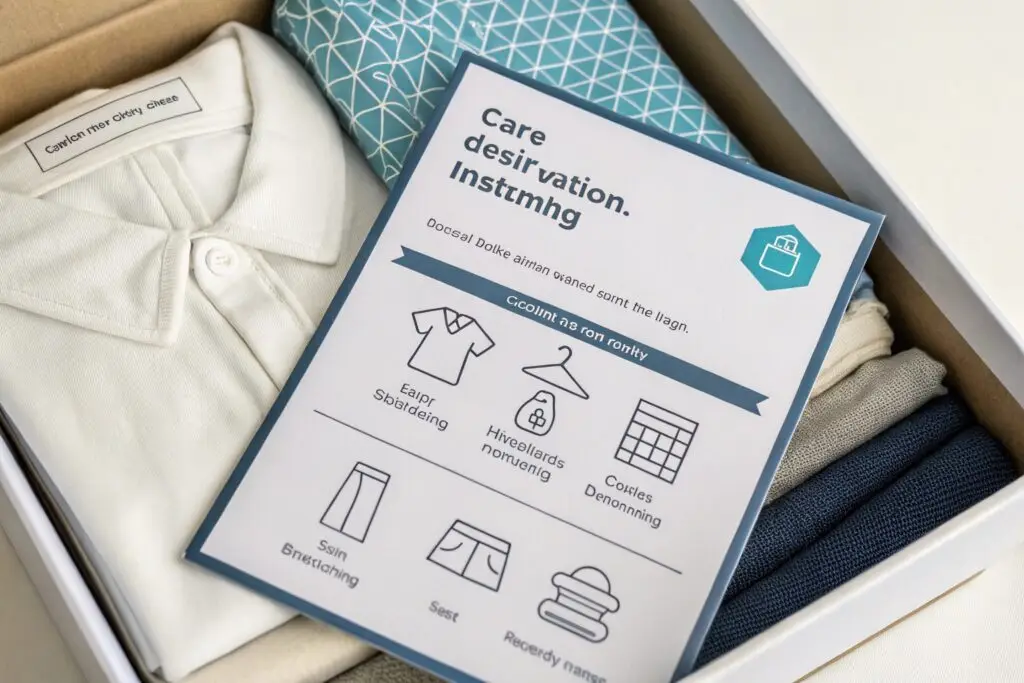
What renter behaviors cause the most avoidable garment damage?
The biggest issues usually come from well-meaning mistakes:
- Using high-heat irons on synthetic fabrics9
- Hanging knitwear (which stretches shoulders)
- Washing “by accident” when they weren’t supposed to
- Using home stain removers that bleach fabric
We include icons and red-flag alerts for these on our garment tags. Many renters don’t read long text—so visuals are better. Our most effective care tag format includes:
- A “Do” and “Don’t” column
- QR code to short video demo
- Contact number for urgent care tips
We even worked with one brand to create animated IG stories that show “How to care for your rental.” It became a hit—and cut damage claims by 22%.
How can brands encourage renters to treat garments responsibly without sounding strict?
No one likes being scolded. But renters will protect garments if it feels like shared responsibility. Use soft, empowering language like:
“Help us keep this beautiful—for you and the next renter.”
Include perks like “Perfect Return Points” that unlock discounts or badges for clean returns. Gamify care, and customers respond.
You’re not just delivering clothes—you’re inviting renters into your ecosystem. The better you guide them, the better they’ll treat your garments.
Conclusion
Rental damage complaints don’t start with careless renters—they start with careless systems. Fix your packaging, fabric, inspection, and communication—and the complaints will stop.
-
Explore how these pouches can significantly reduce damage during transit, ensuring your garments arrive in perfect condition. ↩
-
Discover the impact of branded tissue paper on customer perception and garment protection, making your packaging feel premium. ↩
-
Explore this link to understand how durability impacts fabric choice and longevity in high-use environments. ↩
-
Discover the advantages of Polyester-Spandex blends, especially their durability and stretch recovery, ideal for high-use garments. ↩
-
Learn about this protocol to see how it helps in predicting fabric performance and longevity, crucial for rental businesses. ↩
-
Explore this resource to understand the effective 3-layer inspection method that enhances garment quality and reduces defects. ↩
-
Learn how UV scanners can detect invisible stains, improving garment quality and customer satisfaction in rental services. ↩
-
Discover how standardized checklists can streamline inspections and enhance consistency in garment quality management. ↩
-
Understanding the impact of high-heat irons on synthetic fabrics can help prevent garment damage and ensure proper care. ↩