If your garments shrink, they don’t fit—and rental clients won’t forgive that twice.
To prevent shrinkage in rental apparel, choose preshrunk fabrics, test with industrial wash cycles, and engineer seams and finishes that resist high-heat deformation.
At Fumao, I’ve had to fix shrinkage issues for clients in hospitality, logistics, and food service. These issues always lead to complaints, returns, and lost contracts—unless handled before production.
How do you prevent clothes from shrinking?
Shrinkage starts long before the first wash—it begins at fabric selection and ends with the final rinse cycle.
To prevent shrinking, use blended fabrics with low cotton content, preshrink all textiles, and apply heat-stable construction techniques during garment production.
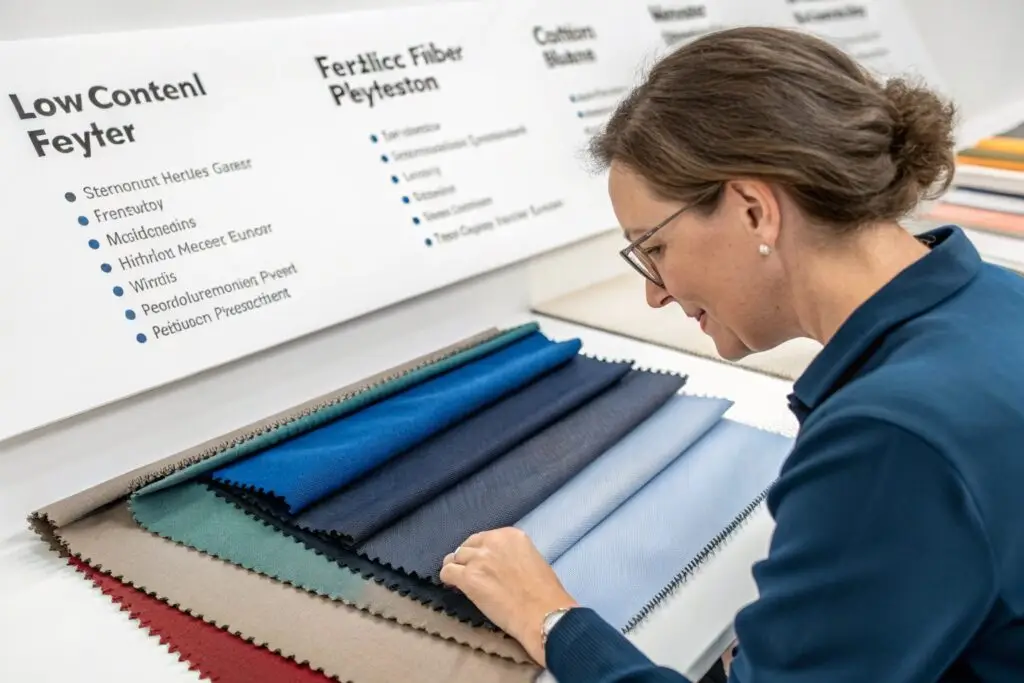
Why does shrinkage1 often appear in the first few washes, and how can manufacturers eliminate this risk?
Shrinkage mostly happens because of mechanical and heat stress applied to unstable fibers. Cotton is a natural fiber that tightens under heat and moisture. Polyester and nylon resist this because they are thermoplastic.
Here’s what we do at Fumao to reduce shrinkage complaints:
- Use pre-compacted or sanforized fabrics2
- Steam-set fabrics before cutting
- Test prototypes with ISO 5077 washing3
- Use differential feeding during sewing to balance tension
We also ask our mills to supply shrinkage specs with every batch. If shrinkage exceeds 3% after five washes, we reject it outright.
How do buyers test shrinkage during sample review?
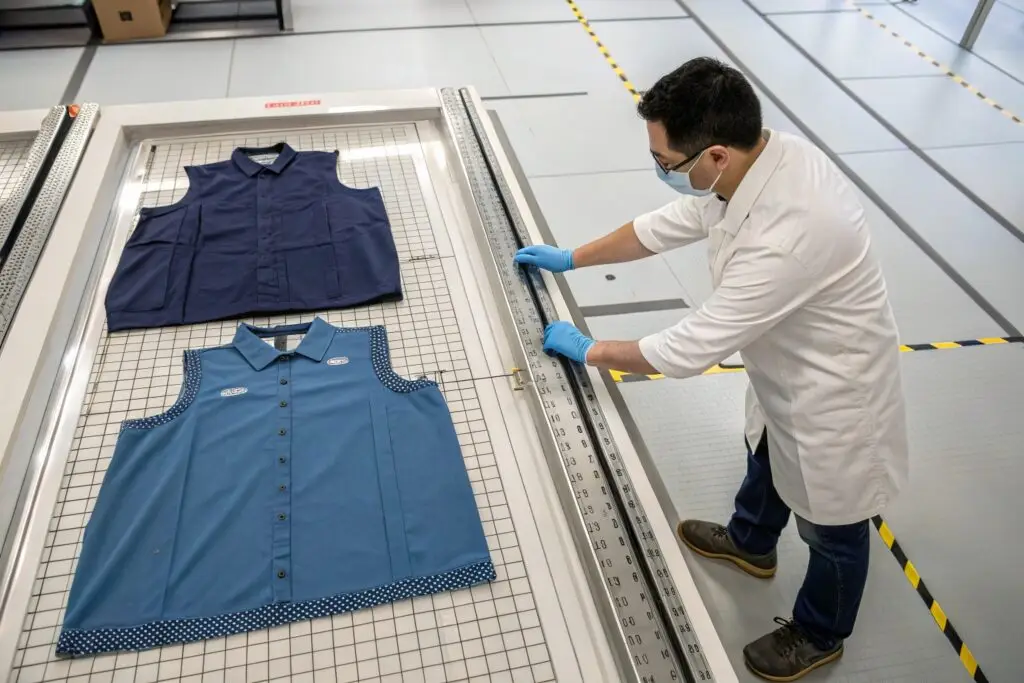
Don’t wait for your customers to test it for you. You can simulate shrinkage in-house:
- Measure garment dimensions before washing
- Wash at 60°C, tumble dry high
- Re-measure dimensions
- Compare percentage of change
If body length or width changes more than 3%, that’s a red flag for rental garments. Always get this tested before bulk orders.
How to reverse clothing shrinkage?
Let’s face it: sometimes shrinkage happens. Can you fix it?
Most shrinkage is permanent, but mild size loss from cotton blends may be partially reversed using warm water and manual stretching.
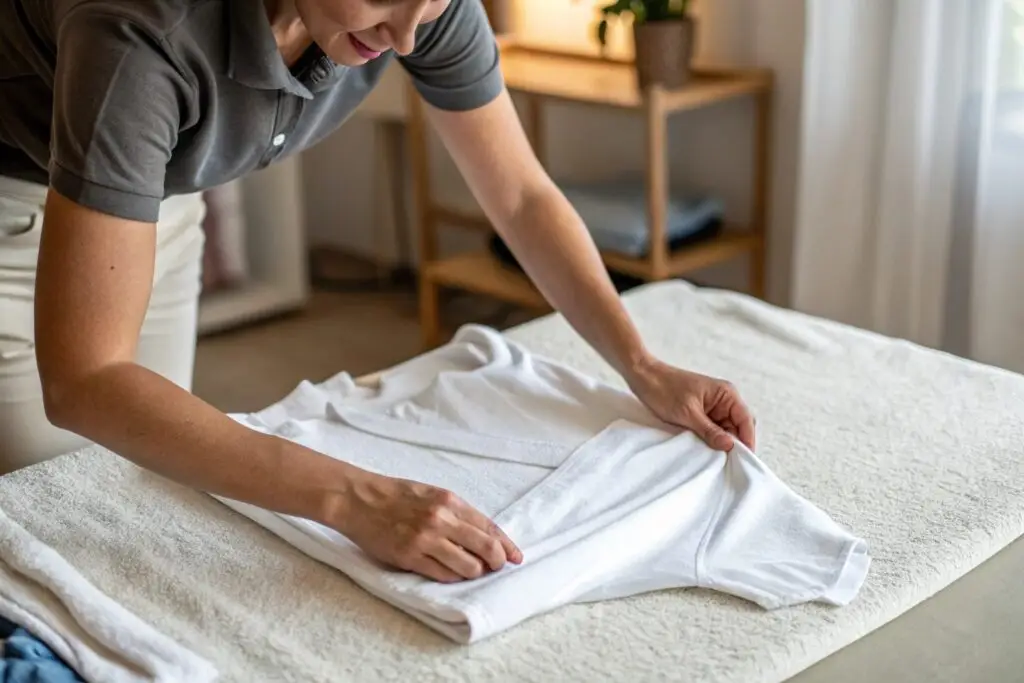
Why is reversing shrinkage4 difficult in most commercial garments?
Once fibers contract from heat and moisture, they lose elasticity. Polyester doesn't shrink easily, but when cotton fibers5 tighten, they rarely go back.
Rental garments are often sewn with heat-set threads and interfacing. Once those elements warp, the garment becomes permanently altered.
Here’s what a buyer can try in minor shrink cases:
- Soak in lukewarm water with fabric softener (30 mins)
- Lay flat and stretch manually
- Air dry under tension (clip to a flat surface)
But this doesn’t scale. Your best move is prevention—because no client will steam and stretch 500 uniforms.
When should buyers replace vs. attempt to reshape shrunk garments?
If shrinkage causes a garment to misfit its size range by over 1.5 inches in body length or chest, replace it.
We worked with a spa chain that used high-cotton robes. After 10 washes, the sleeves were too short. Staff looked mismatched. We replaced with 60/40 cotton-poly robes and never heard complaints again.
Can you prevent 100% cotton from shrinking?
Cotton shrinks—it’s natural. But that doesn’t mean you can’t control it.
Yes, you can minimize shrinkage in 100% cotton by using sanforization, enzyme washing, and proper preshrinking during the fabric processing phase.
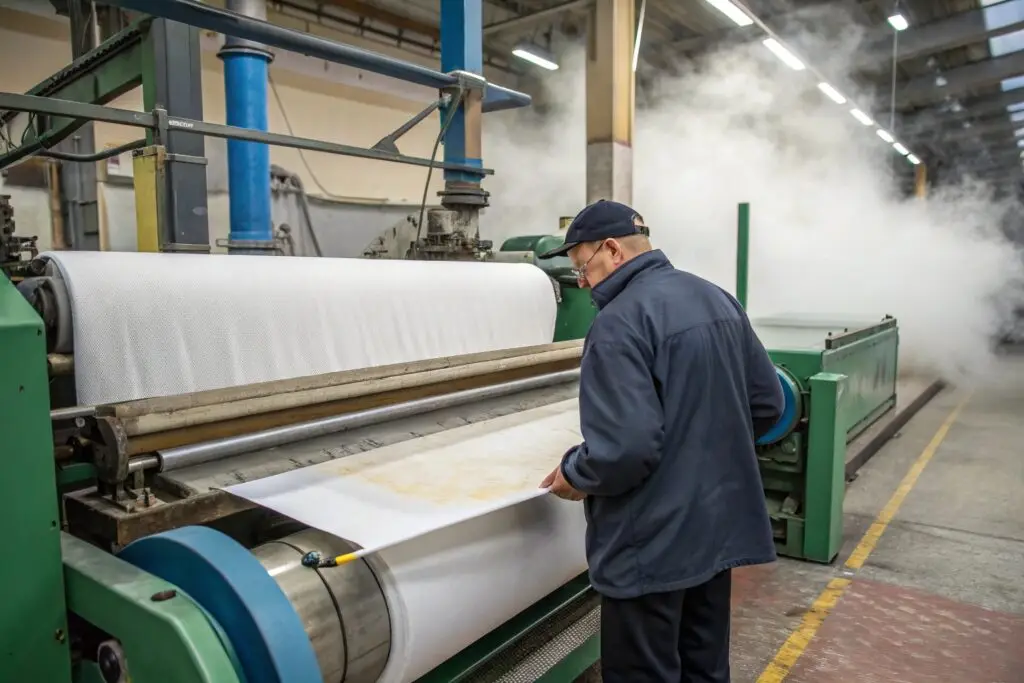
What finishing treatments help 100% cotton survive commercial laundering?
Cotton will always shrink more than synthetics. But the finish determines how much.
At Fumao, we use the following for our cotton-heavy orders:
- Sanforization6 – compresses the fabric mechanically
- Enzyme Wash7 – softens and relaxes fibers before cutting
- Mercerization – improves fiber strength and dye bonding
A hotel buyer once ordered 100% cotton sheets. We insisted on enzyme + sanforized finish. After 50 commercial washes, they shrank only 2%. Without those treatments, they would have lost 5–6% easily.
When should buyers choose blends over pure cotton in rental garments?
If you don’t want to worry about shrinkage at all, go for blends. A 65/35 poly-cotton mix8 offers:
- Higher shape retention
- Less ironing
- Faster drying
- Shrinkage under 2%
Unless you’re selling luxury or organic positioning, blended fabrics give rental operations more control and fewer losses.
Will 60 degrees shrink clothes?
Heat is your biggest enemy in rental laundering if you're not prepared for it.
Yes, 60°C (140°F) can shrink garments made of cotton, rayon, and unpreshrunk blends—but heat-stabilized synthetics and treated fabrics can survive it well.
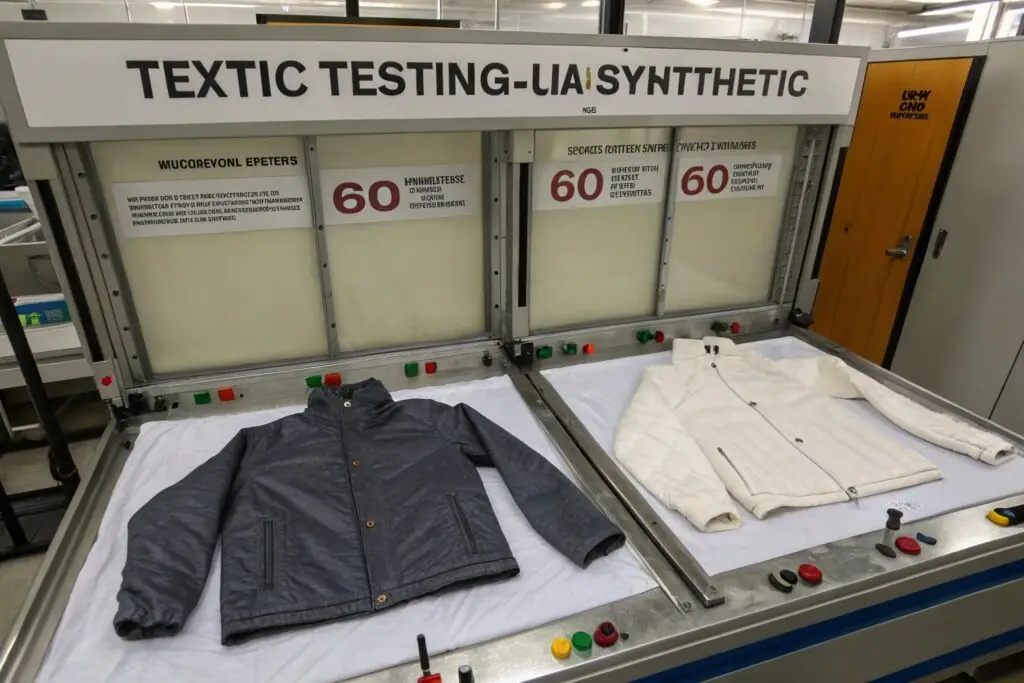
Why is 60°C9 the most common temperature in industrial laundering—and what risks does it pose?
60°C is hot enough to disinfect most pathogens, making it ideal for healthcare, kitchens, and high-turnover garments. But here’s the catch: it can deform poorly built garments.
We tested common blends in our lab at 60°C wash + 80°C dry:
| Fabric Type | Shrinkage (%) | Color Fade | Fiber Damage |
|---|---|---|---|
| 100% Cotton (no finish) | 5.8% | High | High |
| Cotton-Poly 60/40 | 2.3% | Low | Low |
| 100% Polyester | 0.5% | Very Low | Very Low |
| Rayon | 6.5% | Medium | High |
So yes, 60°C will shrink the wrong fabric. But with the right construction, it’s the safest way to clean.
How do we prepare rental garments to survive 60°C without visible damage?
We:
- Use preshrunk or blended fabrics10
- Build seams with polyester-core thread11
- Set dyes at high temperature
- Add bar tacks at shrink-prone zones (necklines, cuffs)
One spa chain asked for 100% cotton towels that could be boiled. We recommended switching to 80/20 cotton-poly with a low-lint finish. They got the softness and the strength—no shrinkage after 60°C washes.
What temp is best for not shrinking clothes?
Not all clothes need heat to be clean—and lower temperatures can protect your garments.
The safest temperature to avoid shrinking most garments is 30–40°C (86–104°F), paired with gentle detergent and low-speed spins.

Why does low-temperature washing12 reduce shrinkage and extend garment lifespan?
Hot water expands and contracts fibers—especially natural ones. But with low temps:
- Less mechanical stress
- Gentler on seams
- Less dye bleed
- Lower energy use
We advise rental clients to sort garments by fiber type. For example:
| Garment Type | Ideal Wash Temp | Reason |
|---|---|---|
| Poly Uniform Shirts | 30–40°C | No shrink, keeps shape |
| Cotton-Rich Aprons | 40°C | Minimal shrink, degreasing |
| Chef Coats | 60°C | Needs disinfection |
| Stretchwear | 30°C | Protects elastane |
How can rental buyers adjust laundry protocols to protect size integrity without losing hygiene?
Use lower temp detergents with higher enzymatic power13. Modern detergents clean well at 30–40°C. Also, avoid tumble drying unless essential.
Ask your supplier to tag garments with recommended settings. At Fumao, we include care instructions optimized for rental use14—simple icons, big print, and high-visibility tags.
Is it better to wash at 60 or 40?
Sometimes the question isn’t about avoiding shrinkage—it’s about balancing shrink control and sanitation.
For general rental garments, 40°C offers safer shrinkage protection, while 60°C is better for hygiene-critical applications like healthcare or food service.
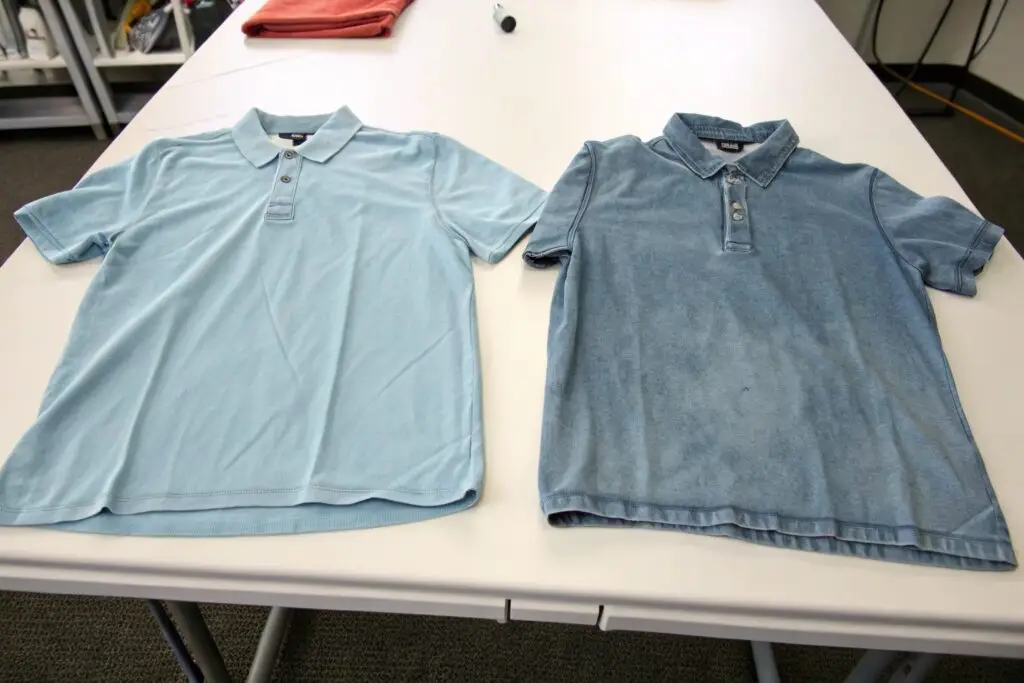
How should rental businesses decide when to use 60°C and when 40°C is enough?
It depends on the garment's purpose. Here’s a breakdown:
| Application | Recommended Temp | Why |
|---|---|---|
| Healthcare15 | 60°C | Kills bacteria and viruses |
| Hotel Bed Linens16 | 60°C | Removes body oils |
| Warehouse Uniforms17 | 40°C | Less soiling, protects fabric |
| Front Desk Uniforms | 30–40°C | Low contact, appearance-driven |
You don’t need to boil every garment. Train your staff or clients to sort by category. Your garments will last longer—and so will your contracts.
Can garments be designed to survive both 40°C and 60°C washes?
Yes—if you engineer them right. We use:
- Dyestuff rated for high-temp washes
- Pre-set seams
- Core-spun thread
- Coated buttons that won’t deform
That way, even if your client washes everything at 60°C, your garments will stay in spec. No shape loss, no complaints.
Conclusion
Shrinkage ruins fit and trust. At Fumao, we build rental garments that stay the same—wash after wash—because consistency is what keeps your clients loyal.
-
Understanding the causes of shrinkage can help you choose the right fabrics and care methods to prevent it. ↩
-
Learn about these fabric treatments to ensure your garments maintain their size and fit after washing. ↩
-
Discover the importance of ISO 5077 in evaluating fabric performance and preventing shrinkage issues. ↩
-
Understanding garment shrinkage can help you make informed decisions about fabric care and garment selection. ↩
-
Learn about cotton fibers' properties to better manage your garments and prevent shrinkage issues. ↩
-
Explore this link to understand how Sanforization enhances cotton durability, especially in commercial laundering, ensuring longevity and quality. ↩
-
Discover the advantages of Enzyme Wash in cotton treatment, which softens fibers and reduces shrinkage, crucial for maintaining fabric quality. ↩
-
Learn why a poly-cotton blend is ideal for rental garments, offering benefits like shape retention and reduced shrinkage, perfect for commercial use. ↩
-
Understanding the significance of 60°C in industrial laundering can help you make informed decisions about fabric care and maintenance. ↩
-
Exploring the advantages of these fabrics can enhance your knowledge of garment durability and care, especially in high-temperature washes. ↩
-
Learning about polyester-core thread can provide insights into its strength and benefits for garment longevity, especially under high heat. ↩
-
Exploring this resource will provide insights into how low-temperature washing can enhance garment care and longevity. ↩
-
Understanding the science behind enzymatic detergents can help you choose the best products for effective cleaning at lower temperatures. ↩
-
This link will guide you on how to effectively communicate care instructions to ensure garment longevity and customer satisfaction. ↩
-
Explore the importance of high-temperature washing in healthcare to ensure hygiene and safety for patients. ↩
-
Learn how washing at higher temperatures can enhance cleanliness and guest satisfaction in the hospitality industry. ↩
-
Discover effective washing techniques that protect fabric and maintain the appearance of warehouse uniforms. ↩