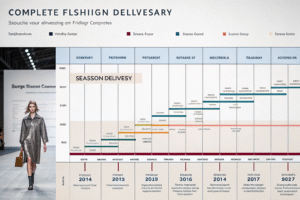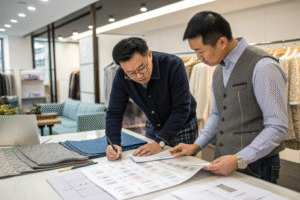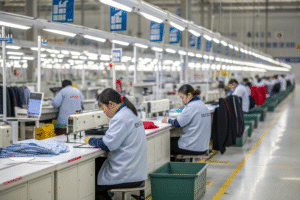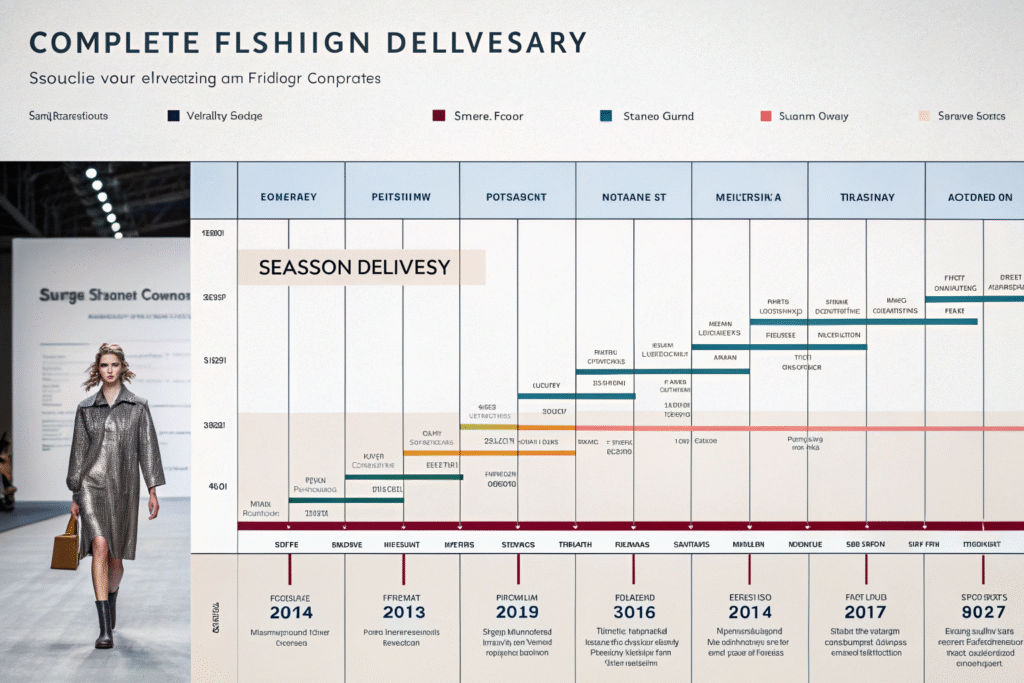
You've created a beautiful collection for the upcoming season, but have you accounted for the realistic timeline from design to delivery? Understanding and planning around production lead times is the difference between capitalizing on seasonal opportunities and missing them entirely.
Successful fashion season planning requires working backward from your launch date and accounting for 12-20 weeks of production time, plus additional buffer for unexpected delays. Brands that master production timing achieve 40% better sell-through rates by aligning delivery with peak demand periods and maintaining optimal inventory levels. The most effective planning breaks down the entire process into manageable phases with clear dependencies and decision points.
This comprehensive guide provides a strategic framework for planning your fashion seasons around realistic production timelines while maintaining flexibility for market opportunities.
What Are The Critical Phases In Fashion Production Timing?
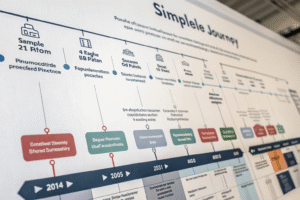
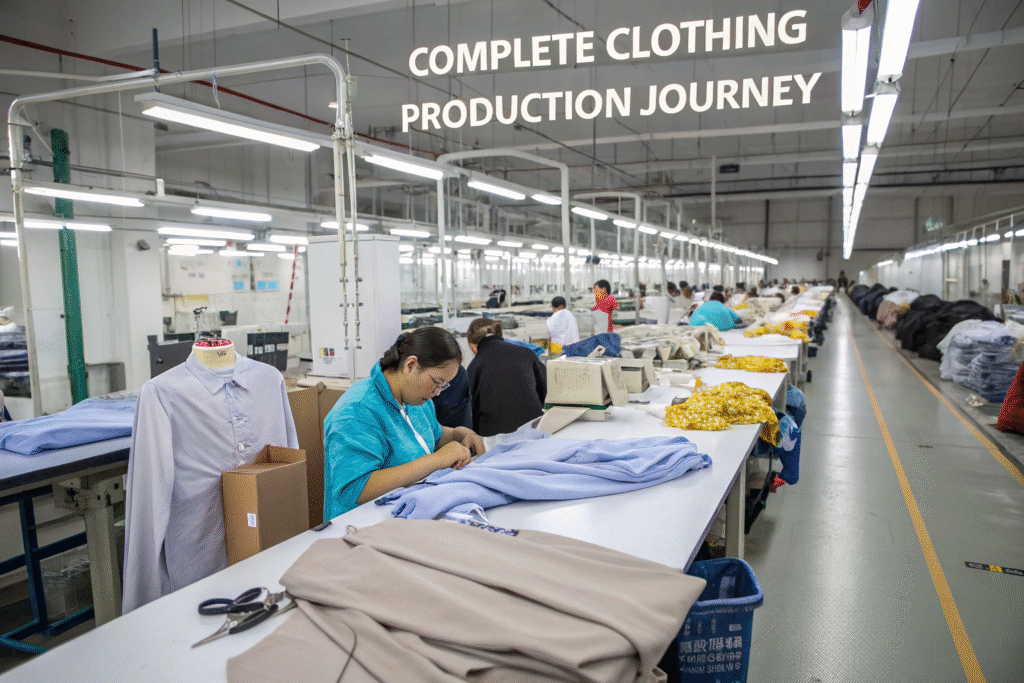
Understanding the complete production journey helps you identify where time can be saved without compromising quality, and where rushing creates costly mistakes. Each phase has natural dependencies that must be respected for successful execution.
Breaking down the timeline into distinct phases allows for better management and more accurate forecasting of your seasonal planning.
How long does design and development typically take?
The creative phase requires:
- Concept development and trend research: 2-4 weeks
- Technical design and spec creation: 2-3 weeks
- Fabric sourcing and testing: 3-6 weeks
- Sample development and fitting: 4-6 weeks
- Final pre-production approval: 1-2 weeks
A contemporary brand reduced their development time from 16 to 10 weeks by overlapping fabric sourcing with design finalization and using digital prototyping for initial approvals. This parallel processing approach accelerated their timeline without sacrificing creativity. At Shanghai Fumao, we help clients streamline this phase through established supplier relationships.
What is the realistic bulk production timeline?
Manufacturing duration depends on:
- Order quantity and factory capacity
- Garment complexity and construction requirements
- Raw material availability and lead times
- Quality control requirements and inspection protocols
- Shipping method and customs clearance
When a sportswear brand planned their production around 8-week manufacturing windows instead of optimistic 4-week projections, they eliminated costly air freight expenses and maintained their margin targets. This realistic production planning demonstrated the value of accurate timeline forecasting.
How To Create A Reverse Timeline From Launch Date?
Working backward from your intended launch date is the most effective approach to seasonal planning. This method ensures all activities are aligned with your critical market dates and identifies the true deadlines for each production phase.
Reverse timeline planning transforms abstract dates into actionable milestones with clear accountability.
What are the key milestones in reverse planning?
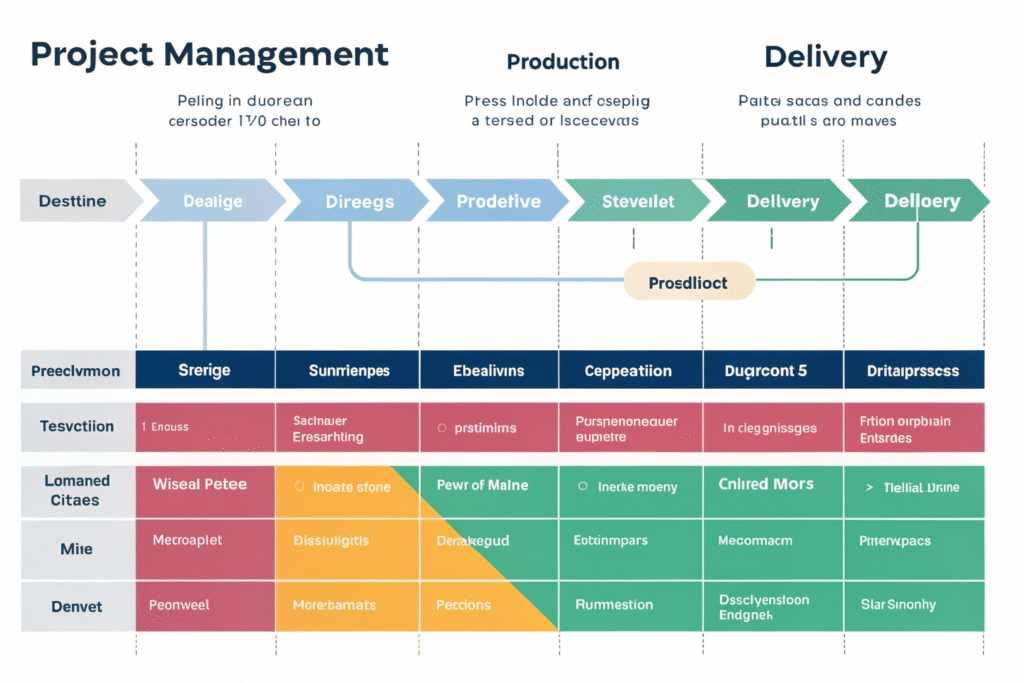
Essential backward planning steps include:
- Launch date minus marketing and distribution time
- Delivery to warehouse accounting for shipping and customs
- Production completion including quality control and packing
- Raw material arrival at factory for production start
- Sample approval and production readiness
- Design finalization and tech pack completion
A denim brand successfully launched their holiday collection by working backward from November 1st retail delivery, which meant completing production by August 15th and finalizing designs by April 30th. This reverse planning discipline ensured they captured the full selling season.
How much buffer time should you include?
Strategic buffer allocation:
- Design phase: 1-2 weeks for revisions and approvals
- Sampling: 1 week for additional fit iterations
- Production: 1-2 weeks for potential delays
- Shipping: 1-3 weeks for customs and logistics
- Total buffer: 4-8 weeks distributed across the timeline
When unexpected fabric delays threatened a spring collection, a women's wear brand's 2-week production buffer prevented missed deliveries and preserved retailer relationships. The strategic buffer planning demonstrated the value of building flexibility into timelines.
How Do Different Product Categories Affect Timing?
Not all garments require the same production timeline. Understanding how product complexity impacts lead times helps you sequence your production and allocate resources effectively across your collection.
Categorizing your products by production complexity enables more accurate planning and resource allocation.
What are the typical timelines by product type?
Production duration varies significantly:
- Basic knits (tees, sweaters): 8-12 weeks total
- Woven shirts and blouses: 10-14 weeks
- Denim and bottoms: 12-16 weeks
- Tailored clothing: 14-18 weeks
- Technical outerwear: 16-20 weeks
- Complex eveningwear: 18-22 weeks
A lifestyle brand optimized their production flow by starting complex outerwear first, then woven shirts, and finally basic knits, creating a staggered delivery that matched their phased marketing campaign. This category-based sequencing improved their operational efficiency.
How should you sequence different product categories?
Strategic production sequencing:
- Start with longest lead time items first
- Group similar fabrications to optimize material purchasing
- Coordinate with marketing calendar for launch sequencing
- Balance factory capacity across product types
- Align with sales forecasts for priority items
By starting their leather jackets 6 weeks before other categories, an contemporary brand ensured their high-margin items arrived in sync with their marketing campaign despite the category's extended production time. This strategic sequencing maximized their sales potential.
What Seasonal Considerations Impact Production Planning?
Each fashion season presents unique timing challenges and opportunities. Understanding these seasonal patterns helps you anticipate bottlenecks and capitalize on manufacturing availability.
Seasonal awareness transforms production planning from a generic process to a strategically timed operation.
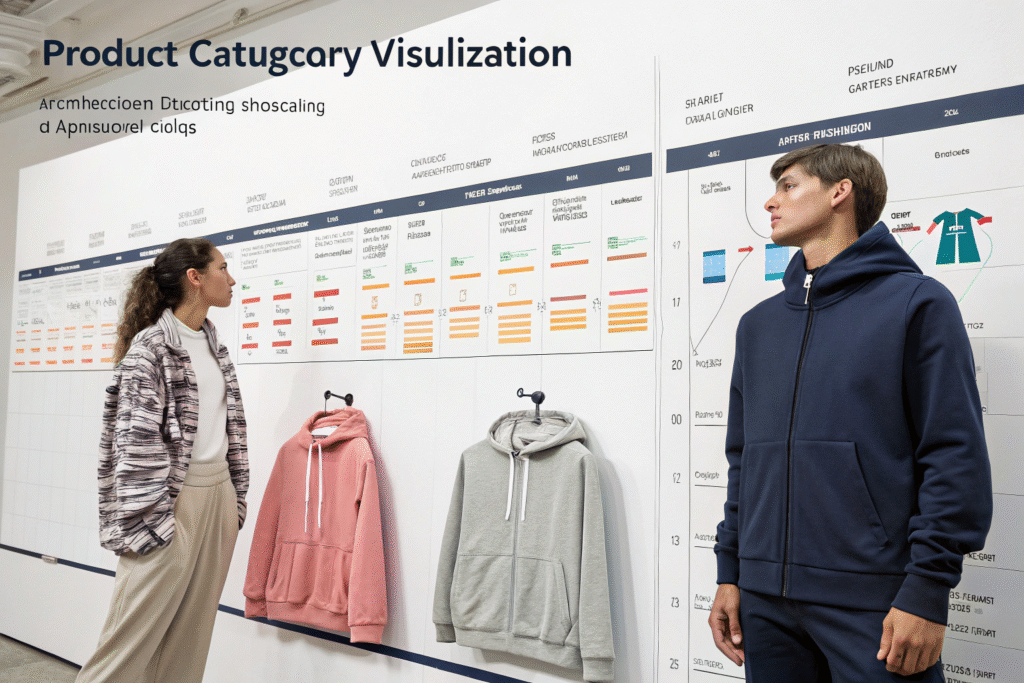
How do seasonal peaks affect factory capacity?
Capacity planning must account for:
- Chinese New Year closures (January/February)
- Summer holiday periods (July/August)
- Global shipping peaks (August-October)
- Raw material availability fluctuations
- Labor availability during harvest seasons
A fast-fashion brand avoided production delays by completing their Spring 1 production before Chinese New Year and using alternative regions for Spring 2 deliveries. This seasonal capacity planning maintained their rapid turnaround expectations.
What are the critical dates for major seasons?
Key seasonal deadlines:
- Spring delivery: Production complete by December
- Summer delivery: Production complete by February
- Fall delivery: Production complete by June
- Holiday delivery: Production complete by August
- Resort delivery: Production complete by October
When a boutique brand missed the August completion date for holiday delivery, they faced 35% higher shipping costs and missed the crucial Black Friday selling period. Understanding seasonal deadlines is essential for profitability.
How Can Technology Improve Production Timing Accuracy?
Leveraging technology throughout the production planning process provides data-driven insights that improve timing accuracy and enable proactive problem-solving. The right tools transform timing from guesswork to science.
Digital tools provide the visibility and analytics needed to optimize production scheduling and identify potential delays before they impact your timeline.
What digital tools enhance timeline management?
Essential planning technologies include:
- Product Lifecycle Management (PLM) systems
- Supply chain visibility platforms
- Real-time communication tools
- Data analytics for historical performance
- Digital sampling and approval systems
A growing brand reduced their timeline variations by 42% after implementing a PLM system that provided visibility into each production phase and automated milestone tracking. The technology investment delivered rapid returns through improved planning accuracy.
How does data analytics improve forecasting?
Historical data enables:
- Accurate phase duration predictions based on past performance
- Bottleneck identification before they cause delays
- Resource allocation optimization based on historical needs
- Risk assessment for potential timing disruptions
- Continuous improvement through performance analysis
By analyzing three years of production data, a menswear brand identified that complex woven shirts consistently required 18% more time than initially planned, allowing them to adjust their timelines and improve on-time delivery from 68% to 92%. This data-driven planning transformed their operational reliability.
Conclusion
Mastering fashion season planning around production lead times requires a disciplined approach that combines backward planning from launch dates, understanding product category timelines, accounting for seasonal factors, and leveraging technology for accuracy. The most successful brands treat production timing as a strategic capability rather than an operational detail, recognizing that precise timing directly impacts sales performance, inventory efficiency, and customer satisfaction.
By implementing a structured approach to production planning with realistic timelines and appropriate buffers, you can ensure your collections arrive when your market is ready to buy, maximizing your seasonal opportunities. If you're looking to optimize your fashion season planning with a manufacturing partner that understands timing criticality, Shanghai Fumao has helped numerous brands align production with seasonal requirements through accurate timeline forecasting and reliable execution. Contact our Business Director, Elaine, at elaine@fumaoclothing.com to develop a production calendar that ensures your next collection arrives precisely when it should.