You’ve decided OEKO-TEX® certification is non-negotiable for your brand. You find a qualified manufacturer, but their quote is 20-30% higher than non-certified factories. The sticker shock is real. Do you push back on price and risk compromising the very standards you seek? Or do you accept the quote and sacrifice your margin? There is a smarter way to navigate this critical conversation.
Negotiating pricing with OEKO-TEX® certified manufacturers requires shifting the discussion from pure unit cost to total value and shared efficiency. The goal is not to cheapen the certification, but to find areas within the production process where both parties can optimize without sacrificing integrity. A successful negotiation recognizes the real costs behind certification and collaboratively seeks to reduce other friction points.
Let's move beyond haggling and into strategic partnership building. Here’s a practical framework for achieving a fair price that respects the value of certification and protects your profitability.
What Are the Real Cost Drivers Behind an OEKO-TEX® Quote?
Before you utter a word in negotiation, you must understand what you’re paying for. A higher quote from a certified factory isn’t arbitrary; it’s built on concrete, justifiable costs. Attacking the price without this understanding will damage the relationship and signal that you don’t value their investment.
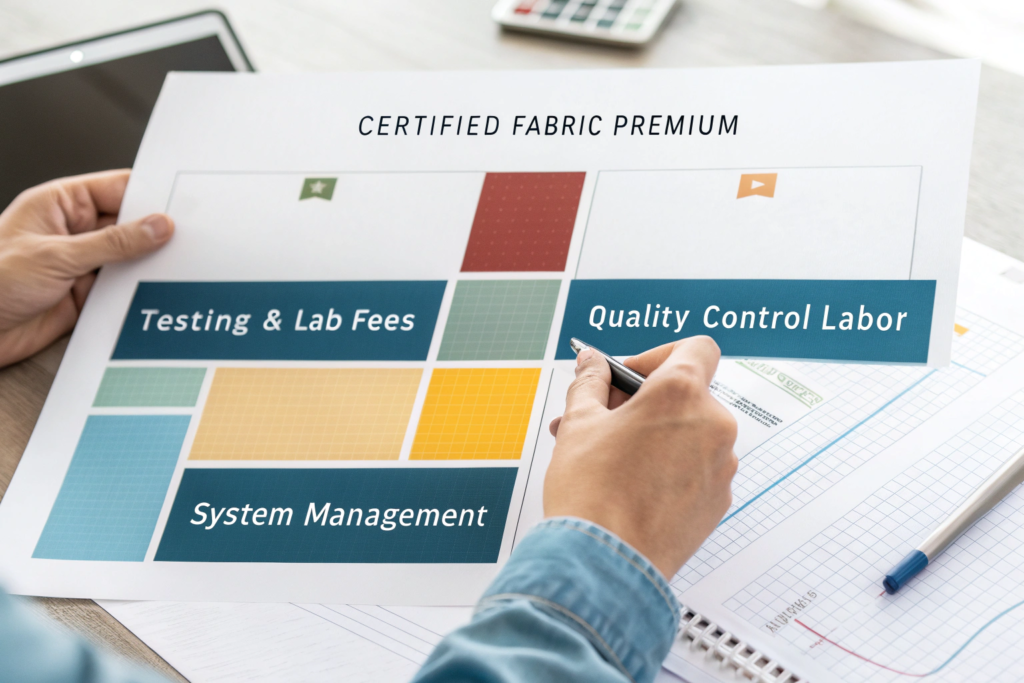
The cost drivers are multi-layered: Certification Fees (annual lab testing and licensing), Premium Raw Materials (certified fabrics and trims that cost 5-15% more), Enhanced Production Protocols (segregated inventory, stricter QC, documented processes), and Skilled Labor. A certified factory has invested in systems, training, and supply chain relationships that a generic factory has not. Their quote reflects this operational integrity.
How much do certification fees actually add per unit?
The per-unit impact is often less than perceived. For a factory with steady volume, the annual certification fee is amortized across millions of garments. The larger cost is the premium for certified raw materials. For example, OEKO-TEX® certified polyester fabric may cost $1.50/yard versus $1.35/yard for uncertified. On a polo shirt using 1 yard, that’s a $0.15 fabric cost increase. Understanding this breakdown allows you to ask smart questions like, “Can we explore alternative certified fabric sources with similar performance at a better price point?”
Why can't a certified factory match a non-certified price?
It’s structurally impossible if both are operating ethically. Matching the price would require the certified factory to either:
- Absorb the material and systemic costs (eroding their margin to unsustainable levels).
- Cut corners somewhere (using uncertified trims, falsifying documents), which defeats your purpose and introduces immense risk.
As a brand owner, your goal should be to move away from factories where such price matching is possible, as it indicates underlying risk.
How to Frame the Negotiation Around Value, Not Just Price?
The most powerful word in this negotiation is “we.” Position the discussion as a collaborative problem-solving session to achieve a mutually workable price, rather than a zero-sum confrontation.
Frame the conversation around total cost of ownership and long-term partnership. Acknowledge the value of their certified systems (e.g., “We understand your STeP certification ensures fewer production errors and consistent quality, which saves us time and money on rejects”). Then, explore areas where you can bring efficiency to the table to help them reduce costs elsewhere.
What language shifts the dynamic from adversarial to partnership?
Use phrases like:
- “We value the assurance your certification provides. To make this partnership work within our budget, how can we structure our order to be more efficient for your production planning?”
- “We see the cost in fabric is a major component. Would you be open to us proposing a couple of alternative certified fabric mills for your evaluation?”
- “If we commit to a longer-term contract with forecasted volumes, can that provide you with the stability to offer more favorable terms?”
What are your strongest leverage points in this discussion?
Your leverage is not just your order size, but your behavior as a client. Certified factories prioritize clients who:
- Provide clear, timely tech packs and decisions (reducing their admin time).
- Commit to realistic lead times (allowing efficient production scheduling).
- Consolidate orders into fewer, larger runs (improving their machine efficiency).
- Offer prompt payment (improving their cash flow).
Promising these behaviors is a tangible form of currency you can use in negotiation.
What Specific Terms Can You Adjust for a Better Overall Deal?
Instead of bluntly asking for a lower price per piece, negotiate on the commercial terms and order structure that affect the factory’s cost to serve you. This is where you can find win-win adjustments.
Focus on terms like payment schedule, order consolidation, logistics responsibilities, and development fees. Small changes here can significantly impact your total landed cost without asking the factory to cut into their material or labor margins.
Can payment terms impact the unit price?
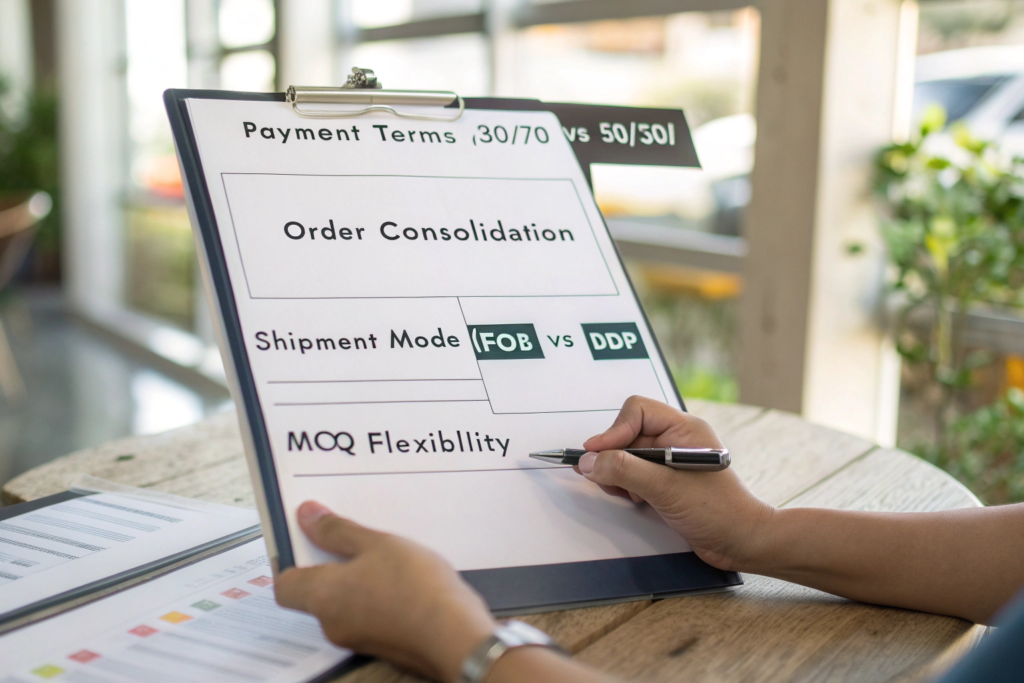
Yes, significantly. Standard terms might be 50% deposit, 50% before shipment. Proposing 30% deposit, 70% against copy of bill of lading (or even a small percentage after delivery) reduces the factory’s financial risk and working capital burden. In return, they may be more flexible on the unit price. For a $50,000 order, improving their cash flow by holding $10,000 longer can be more valuable than a $0.50/unit price cut.
How does choosing FOB over DDP affect negotiations?
This is a major leverage point. DDP (Delivered Duty Paid) is a full-service option where the factory manages all logistics, insurance, and duties to your door. It’s convenient but includes their markup and risk premium. If you have your own freight forwarder or are willing to manage logistics, opting for FOB (Free On Board) port can reduce your cost by 10-20% on the shipping line item. You can say, “We are happy to handle logistics under FOB terms. Can we reflect those savings in our negotiated price?” This directly addresses their cost structure without touching production margins.
What Are the Biggest Mistakes to Avoid in This Negotiation?
Certain approaches will instantly undermine your credibility, label you as a high-risk client, and may lead the factory to quietly deprioritize your order or even reject it. Avoiding these pitfalls is as important as employing good tactics.
The cardinal sins include: demanding price matching with uncertified suppliers, asking for the certificate without understanding its cost, being inflexible on lead times, and changing designs repeatedly after production has begun. These actions signal that you do not respect the value of their system and will be a costly partner to manage.
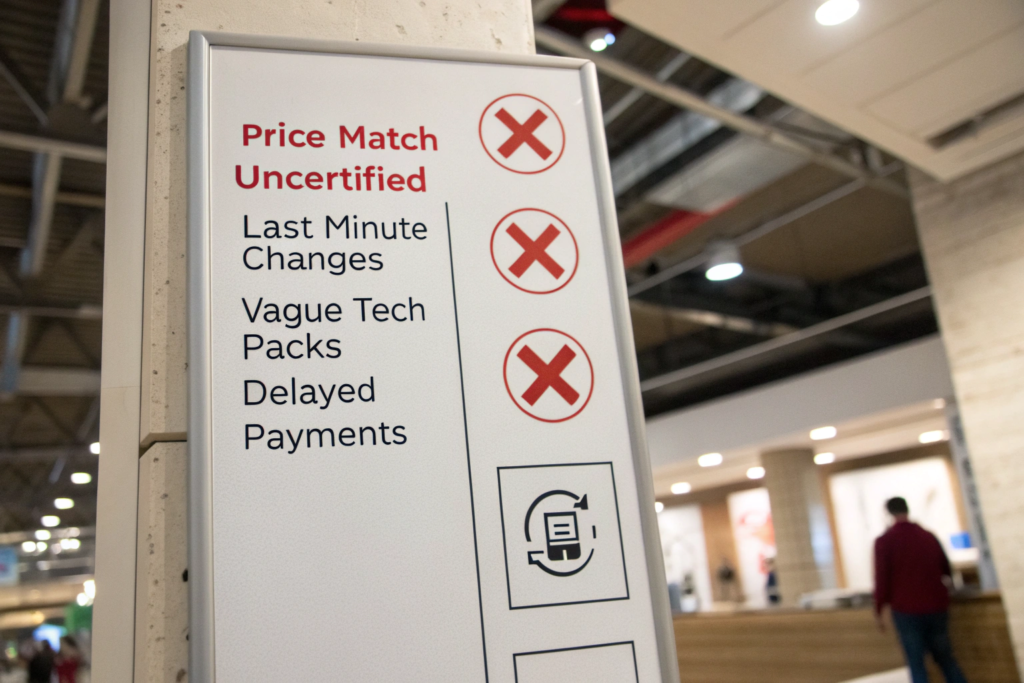
Why is "price matching" a relationship killer?
It demonstrates a fundamental misunderstanding of the product. It’s like asking an organic farm to match the price of conventional produce. The factory will conclude you are not a serious buyer for certified goods and that future collaboration will be fraught with conflict over value. They may provide a price match by secretly sourcing uncertified materials, putting your brand at enormous risk. A better approach is to ask, “Can you help me understand the cost breakdown so I can better communicate the value to my customers?”
How do frequent changes increase your costs?
Every change order—after fabric is cut, after samples are approved—creates disruption, waste, and admin work. Factories build a “risk premium” into their quotes for clients with a history of this. Demonstrating that you have a disciplined, decisive product development process makes you a lower-risk, more profitable client for them, which can translate into better initial pricing. At Shanghai Fumao, we offer a 5% discount on repeat orders for clients who hit all their milestone decision dates, rewarding good behavior with better pricing.
How to Build a Long-Term Partnership for Better Pricing?
The ultimate goal of your first negotiation is not just to get the best price on Order #1, but to establish a partnership where pricing improves over time through trust, volume, and mutual efficiency gains.
Express your intention for a long-term relationship from the outset. Discuss how you can work together to reduce costs in future seasons through fabric standardization, order planning, and process refinement. This forward-looking approach aligns both parties’ incentives.
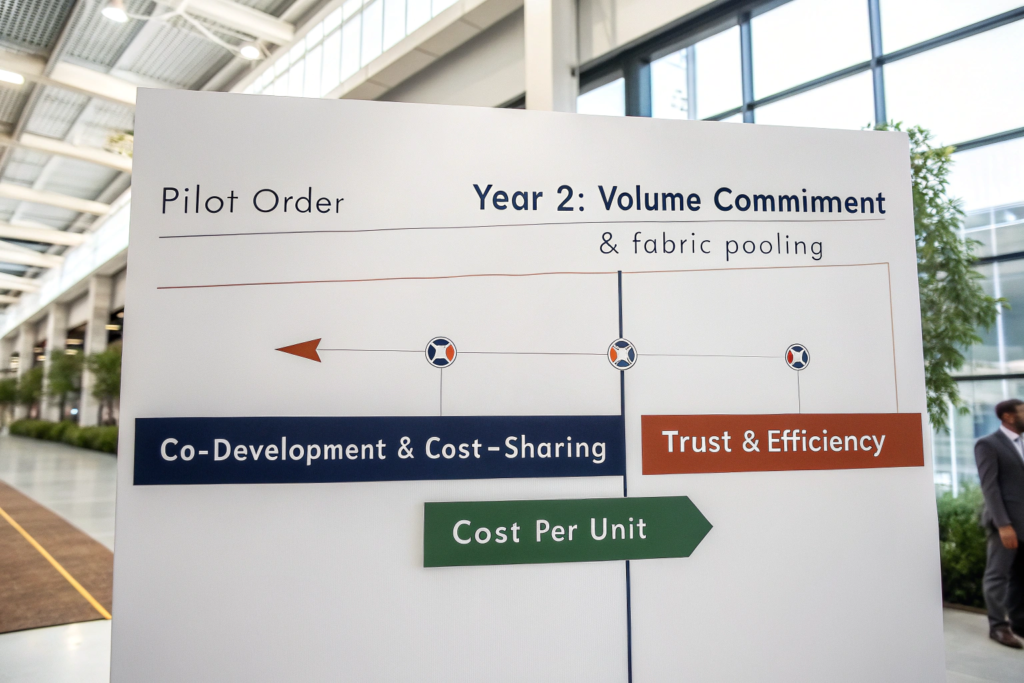
What does a "cost-down roadmap" look like?
Propose a plan: “For this first season, we accept the quoted price to ensure quality. If we achieve our sales targets, we commit to a 30% larger order for next season. In preparation, can we work with your fabric team in the off-season to source equally certified but more cost-effective base fabrics for Spring 2025? We’ll share the cost savings.” This shows strategic thinking and gives the factory a concrete reason to invest in optimizing for you.
Why is transparency about your business goals effective?
Sharing your growth plans (e.g., “We aim to launch in 50 pro shops next year”) allows the factory to see your potential volume. They are more likely to offer competitive introductory pricing if they see a path to a lucrative, stable future business. It transforms the transaction from a one-off to an investment in a shared future. This is how partnerships with manufacturers like Shanghai Fumao yield the most sustainable advantages—through aligned growth.
Conclusion
Negotiating with OEKO-TEX® certified manufacturers is an exercise in value alignment, not just cost reduction. Success comes from understanding their cost structure, framing the discussion around partnership and total value, negotiating smart commercial terms, avoiding destructive mistakes, and laying the groundwork for long-term collaboration.
The right partner will respect a professional, informed negotiation and will work with you to find a feasible price point. The wrong partner will agree to anything, which is the biggest risk of all.
Ready to negotiate from a position of knowledge and partnership? Shanghai Fumao welcomes professional discussions with brands who understand the value of certified manufacturing. We are transparent about costs and eager to build efficient, long-term partnerships. To start a constructive conversation about your next certified collection, contact our Business Director, Elaine, at elaine@fumaoclothing.com. Let’s build a deal that works for both of our businesses.