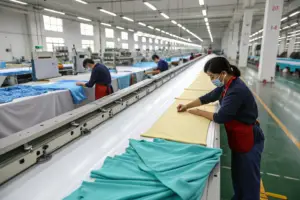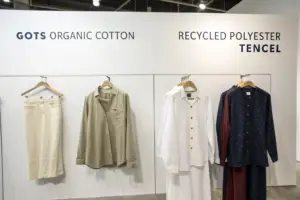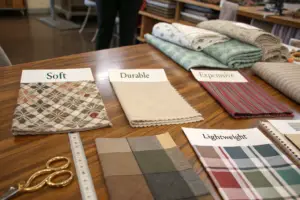
Entering negotiations with an OEKO-TEX® certified manufacturer can feel like a different ball game. The quotes often come in higher than those from non-certified suppliers, and the rationale can seem opaque—buried in technicalities of chemical compliance and supply chain audits. For brands committed to quality and safety, this premium is an investment, not a cost. However, savvy negotiation is still essential to ensure you receive maximum value and a sustainable partnership. The goal shifts from merely driving down the unit price to optimizing the total cost of ownership and securing a partnership that protects your brand's integrity.
To negotiate pricing effectively with an OEKO-TEX® certified manufacturer, you must understand and separate the core costs of certification, demonstrate long-term partnership value, and collaborate on value-engineering the product without compromising the certified standard. This requires moving from a transactional "price-per-piece" haggle to a strategic dialogue about risk management, efficiency, and shared growth. The most favorable terms go to brands that approach the table as informed, reliable partners, not just price shoppers.
At Shanghai Fumao, some of our most successful and enduring partnerships began with transparent price negotiations. A key example is a startup ski brand that came to us with a detailed 3-year product roadmap. Instead of negotiating hard on their first, small order of 500 certified jackets, they presented their forecast and asked, "Based on our planned growth, what cost efficiencies can we achieve together over time?" We were able to structure a tiered pricing model, offer better terms on fabric commitments, and dedicate a production line for their future batches—all because they framed the discussion around mutual long-term value. Their per-unit cost on their third order was 22% lower than the initial quote, without ever cutting corners on materials or certification.
What Are the Legitimate Cost Drivers in an OEKO-TEX® Quote?
Before you can negotiate, you must understand what you are paying for. A higher quote from a certified manufacturer isn't arbitrary; it reflects tangible investments and processes.
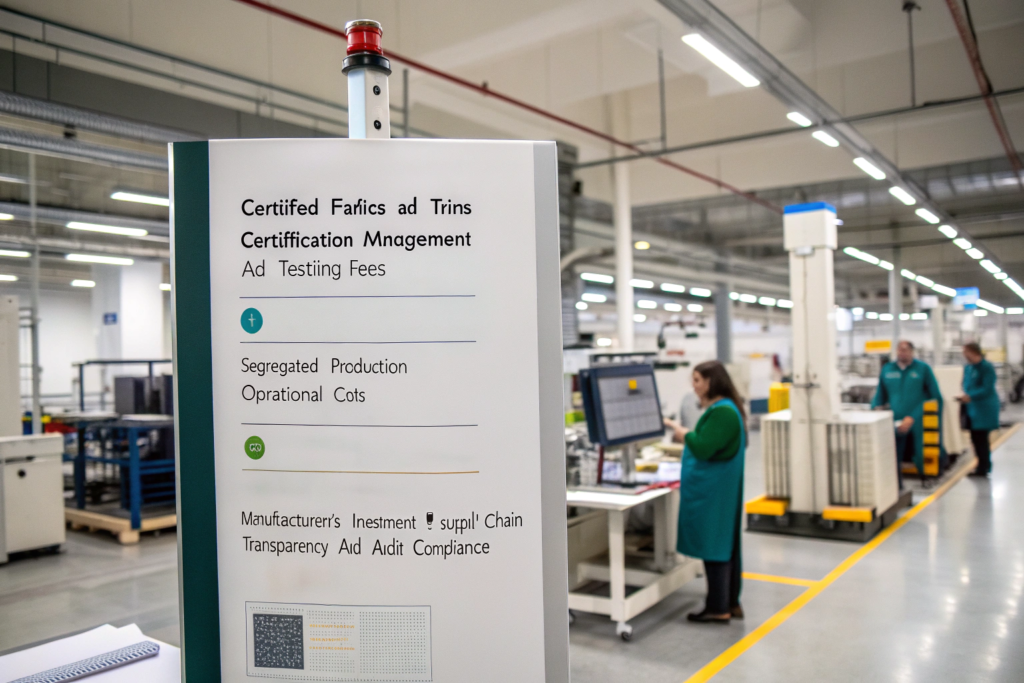
The legitimate cost drivers include material premiums for certified fabrics and trims, fees for certification management and testing, operational costs for segregated production, and the manufacturer's investment in supply chain transparency and audit compliance. Dismantling the quote into these components is your first strategic move.
Here is a breakdown of typical cost drivers:
| Cost Driver | What It Covers | Negotiation Leverage Point |
|---|---|---|
| Certified Material Premium | The increased cost of OEKO-TEX® certified yarns, fabrics, dyes, threads, zippers, etc., from audited suppliers. | Bulk commitment, using in-stock fabrics, accepting standard-color options. |
| Certification Management Fee | The manufacturer's administrative cost of maintaining the certification system, managing documentation, and facilitating audits. | Often a fixed or per-order fee. Can be negotiated down over multiple/repeat orders. |
| Testing & Audit Fees | Costs for third-party lab testing of materials/final products and the annual audit fees paid to the certification body. | Shared if you require a unique, non-standard material that needs new certification. |
| Segregated Production Cost | Efficiency loss from dedicating lines, cleaning between runs, and managing separate inventories for certified vs. non-certified goods. | Minimized by grouping your orders into larger, less frequent production runs. |
| Quality Control Overhead | Enhanced QC checks specific to certification compliance (e.g., label verification, trim checks). | Standard part of their service; highlights their value in preventing costly errors. |
When you receive a quote, ask for it to be itemized. A professional manufacturer like Shanghai Fumao will provide a breakdown that separates the "base manufacturing cost" from the "certification-related costs." This transparency is the foundation of trust and intelligent negotiation.
How Can You Assess If a Premium Is Justified?
Compare apples to apples. A quote for a certified garment should be compared to a quote for the exact same specifications from a non-certified manufacturer, not to a cheaper, lower-spec garment.
Ask yourself: Does the certified manufacturer's quote include:
- Higher-grade fabric with verified performance data?
- Full-package service (sourcing, logistics)?
- Detailed documentation and a certificate in your brand's name?
- A robust quality management system that reduces your risk?
If the non-certified quote is lower but lacks these elements, the price difference isn't a "premium"; it's the cost of risk mitigation and service you are not receiving. Frame this in negotiations: "I understand your price includes X, Y, and Z which lower my brand's risk. How can we optimize around these core value drivers?"
What Are "Soft Costs" You Might Be Avoiding?
The certified manufacturer's quote internalizes costs that an uncertified supplier externalizes onto you. These include:
- Your time spent chasing supplier audits and material data sheets.
- Legal risk of non-compliance with regulations like EU REACH.
- Financial risk of a customs rejection or product recall.
- Reputational risk of a consumer safety incident.
A good negotiation acknowledges this value: "Your system saves us an estimated [X] staff hours and [Y]% in potential compliance risk. That allows us to invest more in our partnership with you."
What Are the Most Effective Negotiation Strategies and Levers?
With an understanding of cost drivers, you can employ targeted strategies that create win-win outcomes. The key is to offer value in return for cost reduction.
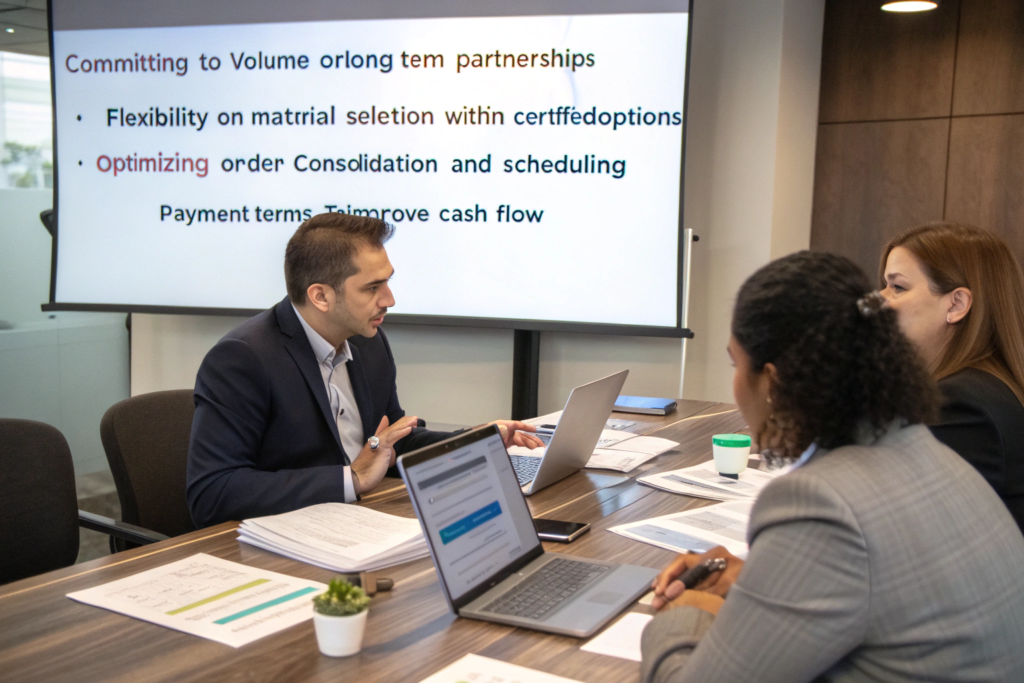
Effective strategies include committing to volume or a long-term partnership, being flexible on material selection within certified options, optimizing order consolidation and scheduling, and discussing payment terms that improve cash flow for both parties. Avoid ultimatums on unit price alone; instead, propose trade-offs.
Strategy 1: Leverage Volume Commitments and Forecasts
This is the most powerful lever. Even if your initial order is small, presenting a realistic 12-24 month forecast allows the manufacturer to plan and invest in efficiency.
- Tiered Pricing: Propose a pricing schedule where the cost decreases at 1,000, 5,000, and 10,000 units. This locks in future savings and gives the manufacturer confidence to allocate resources.
- Fabric Commitment: Agree to use the same certified fabric across multiple styles or seasons. The manufacturer can then buy the fabric in larger bulk, passing on some of the savings.
- Blanket PO: Issue a blanket purchase order for the year with scheduled releases. This secures production capacity and often better pricing.
Strategy 2: Collaborate on Value Engineering
Work with the manufacturer's technicians to design a product that meets performance and safety standards in the most cost-effective way.
- Material Optimization: "Can we achieve the same warmth with 80gsm of this certified insulation instead of 100gsm?" or "Is there a certified fabric in your stock portfolio with a similar hand-feel but a better price?"
- Trim Rationalization: Reduce the number of unique, low-volume trims. Each new zipper or button type requires separate certification verification. Standardizing saves time and cost.
- Simplified Construction: Ask if certain complex seams or panels can be simplified without affecting fit or function, reducing labor time.
This collaborative approach shows you respect their expertise and are invested in a mutually efficient outcome. At Shanghai Fumao, our technical designers actively engage in this process with clients.
Strategy 3: Optimize Logistics and Payment Terms
Operational efficiencies can be shared.
- Consolidated Shipping: Plan your production so multiple styles or colors ship together in full containers, reducing per-unit freight costs.
- Favorable Payment Terms: While large deposits are standard, negotiating a slight shift (e.g., 40% deposit instead of 50%, with balance on shipment copy documents rather than pre-shipment) can aid your cash flow. In return, you could offer a slight premium or guarantee faster payment upon document receipt.
- Lead Time Flexibility: If you can accept a longer lead time, the factory can schedule your order during a slower period, potentially reducing rush fees.
What Should You Never Compromise On During Negotiations?
While finding cost savings is important, certain elements are non-negotiable cornerstones of a certified partnership. Sacrificing them turns a value-add into a ticking time bomb.
Never compromise on the validity of OEKO-TEX® certification documentation, the use of pre-certified materials from audited suppliers, the manufacturer's internal segregation and control processes, or the issuance of a final product certificate in your brand's name. These are the pillars that justify the premium and protect your brand.
Red flags during negotiation include:
- The supplier suggests using a "similar" non-certified fabric for inner layers "to save cost."
- They are hesitant to provide or delay providing current component certificates.
- They propose skipping the final product certificate to "save the fee."
- They cannot clearly explain their process for preventing material mix-up.
If these issues arise, walk away. The cost of a failed audit or recalled product will dwarf any upfront savings. A reputable partner will be firm on these points because their business integrity depends on them.
How to Verify Promises Made During Negotiations?
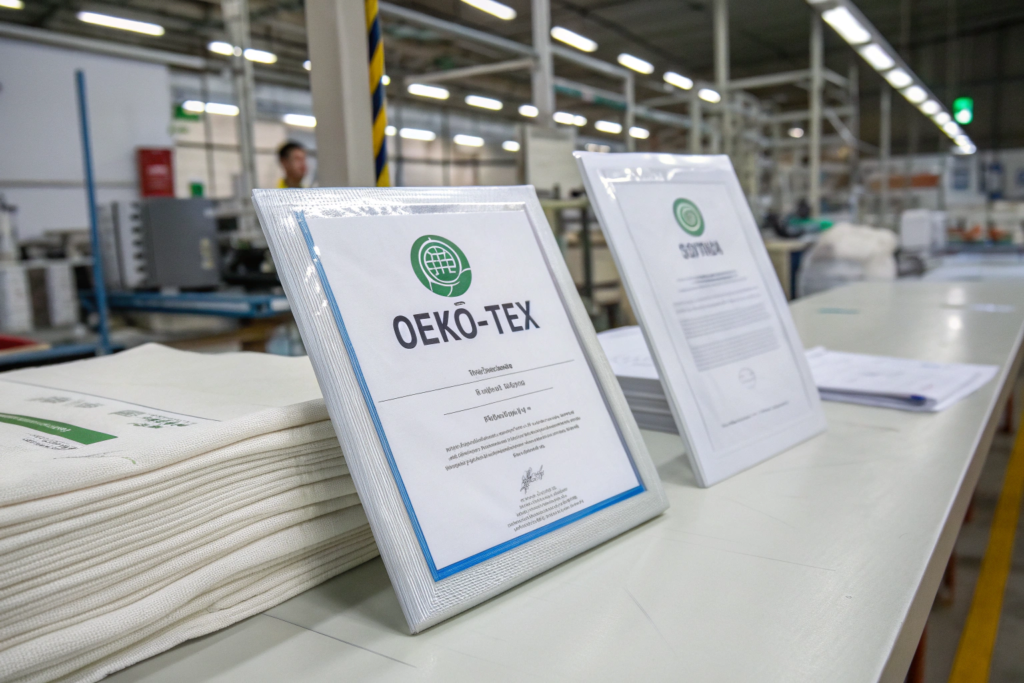
Get it in writing. Key negotiated terms should be included in the formal purchase agreement or a separate quality agreement.
- Specification Sheet: The final, signed tech pack must list all materials with their OEKO-TEX® certificate numbers or required standard (e.g., "Fabric must meet OEKO-TEX® STANDARD 100, Class II").
- Certificate Clause: The contract should state, "Supplier will provide a valid OEKO-TEX® STANDARD 100 certificate for the finished goods in Buyer's company name prior to final payment."
- Audit Rights: Reserve the right to audit or have a third-party inspect the production of your certified goods. A confident manufacturer will agree to this.
How to Build a Partnership for Long-Term Cost Efficiency?
The most significant cost benefits are realized over time, through a stable, improving partnership.
Build a long-term partnership by establishing clear communication channels, sharing business forecasts, conducting joint performance reviews, and collaboratively investing in process improvements. Treat your manufacturer as a strategic extension of your team.
Actions that foster this:
- Appoint Single Points of Contact on both sides to streamline communication.
- Schedule Quarterly Business Reviews to discuss performance, challenges, and upcoming opportunities for efficiency.
- Share Customer Feedback about the product's performance, which can inform material or construction improvements.
- Be a Reliable Partner: Pay on time, provide clear briefs, and minimize last-minute changes. This reliability reduces the manufacturer's operational friction and risk, which can translate into better pricing over time.
A manufacturer like Shanghai Fumao values partners who are stable and growth-oriented. We are more inclined to invest in efficiency measures (like custom tooling or dedicated line setups) for a client we see as a long-term ally, knowing that investment will pay off for both of us over multiple seasons.
Conclusion
Negotiating with an OEKO-TEX® certified manufacturer is not about fighting over a price list; it's about aligning on value and collaboratively engineering efficiency. By understanding the real cost drivers, employing strategic levers like volume commitments and value engineering, and steadfastly protecting the non-negotiable pillars of certification, you can secure pricing that supports both your margins and your brand's integrity. The outcome should be more than a number—it should be the foundation of a resilient, transparent partnership that grows in efficiency and value with every order.
The lowest price that carries hidden risk is the most expensive invoice you'll ever pay. The right price from the right partner is an investment in your brand's future.
Ready to negotiate a partnership that delivers certified quality and sustainable value? Contact our Business Director Elaine at Shanghai Fumao. We are prepared for informed, collaborative discussions to build your OEKO-TEX® certified ski apparel line with transparency and mutual success: elaine@fumaoclothing.com.