I have sat on both sides of the negotiation table more times than I can count. I started my career as a buyer for a European brand, flying to Asia to negotiate with factories. Now, I own a factory, and I negotiate with buyers every single day. This unique perspective has taught me one undeniable truth: the way most buyers try to negotiate prices actually hurts their chances of getting a good deal.
I see it all the time. A buyer walks in, or joins a video call, and the first words out of their mouth are about price. They tell me they need a 20% discount. They tell me they have a cheaper quote from another factory. They think this aggressive approach shows they are tough negotiators. In reality, it shows they do not understand how manufacturing works. It puts me on the defensive immediately. It makes me wonder if they will be a difficult partner.
The secret to negotiating better prices with clothing manufacturers without losing quality is to stop negotiating on price alone. You must negotiate on the total package. This means having honest conversations about order volume, payment terms, delivery schedules, and product specifications. When you understand what drives costs in a factory, you can make adjustments that lower your price without ever asking the factory to accept less profit. A factory that makes a fair profit is a factory that will invest in the quality of your product.
Let me share with you the strategies I have seen work best over the years. These are approaches used by my most successful clients. They get better prices, they maintain excellent quality, and they build partnerships that last for years.
I remember a new client from Boston who contacted me about producing a line of high-end men's shirts. He sent me a sketch. That was it. Just a drawing. He then asked for my best price. I could not give him one. I did not know what fabric he wanted. I did not know what kind of buttons. I did not know how many pieces. I asked him for more details. He seemed annoyed, as if I was being difficult.
This happens constantly. Buyers want a price before they have fully designed the product. They think they are protecting themselves, getting a low number they can hold me to. But this approach backfires. A price based on incomplete information will either be too high, because I am guessing at your specifications, or it will be too low, and I will have to come back later asking for more money when I understand the real requirements.
The most powerful negotiating tool you have is a complete and detailed tech pack. When you send me a tech pack with all measurements, fabric specifications, trim details, and construction notes, I can give you an accurate price immediately. More importantly, I trust that you know what you are doing. I am willing to be more competitive because I know there will be no surprises later. A complete tech pack signals that you are a professional worth investing in.
The Boston client eventually sent us more details. It turned out he wanted a specific Italian fabric and mother-of-pearl buttons. These were premium materials. Our initial estimate, based on his vague sketch, was too low. We had to give him a higher price. He was disappointed. But if he had shared his specifications from the start, he would have had a realistic number immediately. He could have then decided if those premium materials were worth the cost or if he wanted to adjust. Now, we always ask new clients to review our tech pack requirements guide before we discuss pricing.

How does sharing your target price help the factory help you?
Tell us your target price. Many buyers hide this, thinking it weakens their position. It does the opposite. If I know you need to be at $15 per unit, I can tell you honestly if that is achievable. If it is not, I can suggest alternatives. Maybe a different fabric blend. Maybe a simplified pocket design. Maybe a different trim. You get to decide what to trade off. Without a target, I am just guessing.
Be very careful with this. Saying "Factory X quoted me $10" often makes me suspicious. I wonder if Factory X is real, or if they are using lower quality materials to hit that price. Instead, ask me, "Can you help me understand the gap between your quote and another I received?" This invites a conversation about value, not a price war.
How can adjusting your order volume or timing lower your costs?
I have a client in Chicago who has been with us for seven years. When he started, he ordered one style at a time. He would wait until those sold out, then order the next style. Every order was a new setup for us. New patterns. New fabric sourcing. New trim ordering. The costs were higher, and his prices reflected that.
About three years ago, he changed his approach. He started planning his entire year at once. He committed to six styles across two seasons. He did not order them all at once, but he gave us a forecast. This changed everything for us. We could plan our production capacity. We could order fabric in larger quantities across multiple styles. We could schedule his orders during our slower months when we had extra capacity.
Order volume is the biggest lever you have for lowering prices, but it is not just about total pieces. It is about consistency and predictability. When you can commit to a volume over time, we can optimize our purchasing and production. We can negotiate better prices with our fabric mills because we are buying more. We can keep our lines running consistently, which reduces our overhead per unit. These savings flow directly to you. A single 1000-piece order is good. A commitment to 6000 pieces over a year is much better.
The Chicago client now gets better pricing than many buyers who order larger quantities but do so sporadically. His consistency is valuable to us. We also work with him on timing. He allows us to produce some of his orders during January and February, which are traditionally slower months for us. We give him a discount for this flexibility because it helps us keep our workers employed year-round. This is a win-win that only comes from open communication about production planning and capacity.
What is the ideal order quantity to get the best pricing?
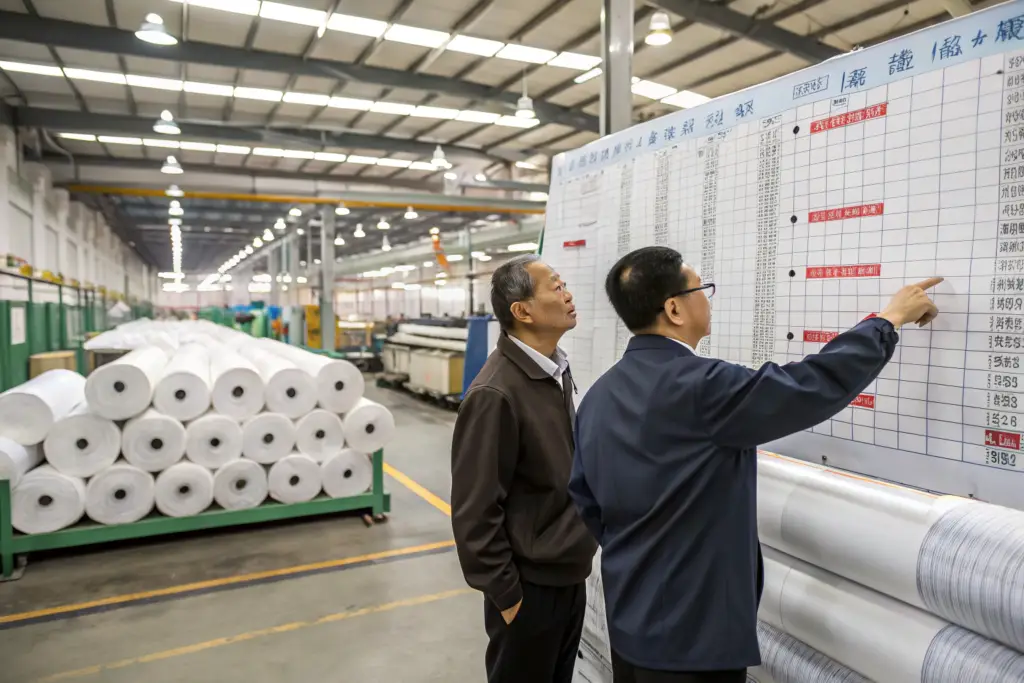
This varies by product, but generally, pricing improves as you move from 500 pieces to 1000 pieces, and again from 1000 to 3000. The biggest jump is often between sample quantities and production quantities. The key is to find the sweet spot where your per-unit cost is acceptable without tying up too much cash in inventory. We can help you model different scenarios.
How do slower production months affect pricing?
Factories have fixed costs. We pay rent and salaries whether we are busy or not. If you can place orders during our slower periods, you are helping us cover these costs. We are happy to share some of that benefit with you through lower pricing. Ask us about our seasonal production calendar and where your orders might fit best.
What role do payment terms play in negotiating better prices?
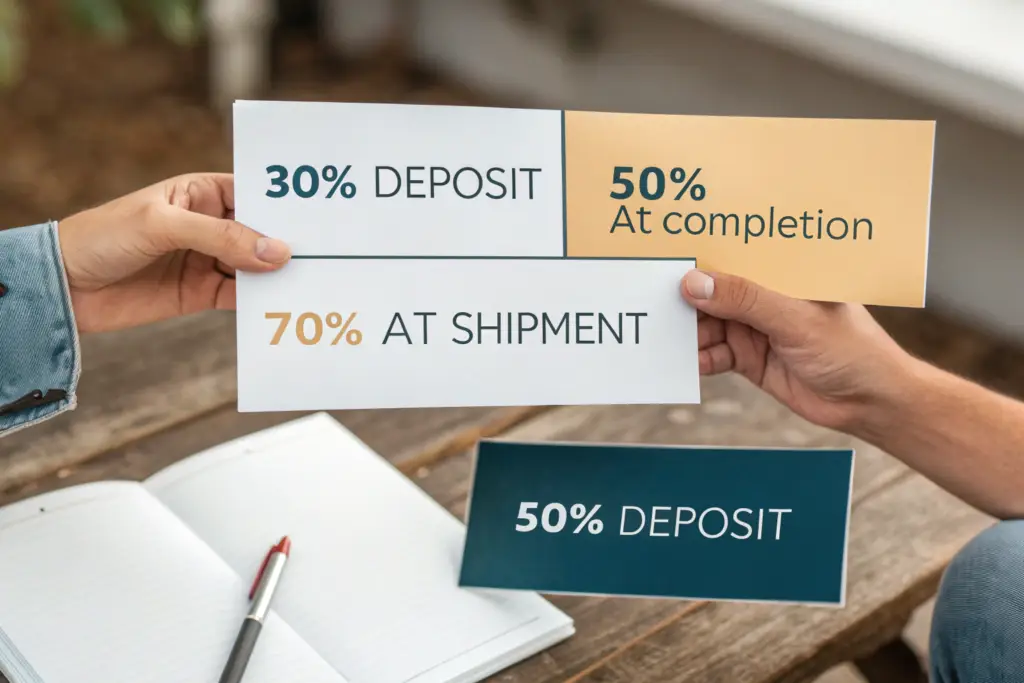
I have a long-term partner in Seattle who produces a large volume of activewear with us. We have a relationship built on trust over many years. When we first started, he paid the standard terms: 30% deposit before production, 70% balance before shipment. This is how most factories protect themselves. It ensures they are not left with unpaid inventory.
About four years ago, he asked if we could consider better pricing. He had grown significantly and was ordering more than ever. I sat down with my team. We looked at his payment history. He had never been late. He had never cancelled an order. We decided to offer him a different arrangement. In exchange for a small price reduction, he agreed to increase his deposit to 50% and to pay the balance upon completion, before shipment, rather than waiting until the ship was leaving.
Payment terms are a form of risk for the factory. Standard terms protect us from buyers who cancel orders or delay payments. When you demonstrate reliability over time, or when you offer more favorable terms upfront, you reduce our risk. We are often willing to reflect that reduced risk in your pricing. A 50% deposit instead of 30% means we have less capital tied up in your materials. Payment upon completion, rather than at shipment, means we get our money weeks earlier. These things have real value to us, and we can share that value with you.
The Seattle client got his price reduction. It was not huge, maybe 2%, but on his volume, it added up. More importantly, it deepened our partnership. He showed he was willing to invest in the relationship, and we responded. We now offer flexible payment options to clients who have earned our trust. This is a conversation worth having after you have established a track record. Understanding international payment methods in trade can help you structure offers that factories find attractive.
How does a larger deposit help you negotiate?
A larger deposit tells us you are serious and financially stable. It reduces our risk significantly. With a 50% deposit, we can order all your materials without worrying about our own cash flow. This security is valuable, and we are often willing to adjust pricing to secure it, especially for new clients where trust is still being built.
What are the risks of asking for extended payment terms?
Extended terms, like paying 30 days after shipment, are difficult for most factories. We have to pay our workers and our material suppliers long before you pay us. This strains our cash flow. If you ask for extended terms, expect higher prices to compensate for this cost. Only large, trusted buyers with long histories can usually negotiate this without a price increase.
How can simplifying your designs reduce manufacturing costs?
I worked with a brand from Los Angeles that designed beautiful, intricate dresses. They were works of art. But they were incredibly difficult to produce. One dress had seven separate pattern pieces where a simpler design would have used three. It required hand-stitched details that took an experienced operator an hour to complete. The dresses were beautiful, but they were expensive to make, and the brand struggled to hit their target margins.
We sat down with their designer. We did not tell her to make ugly clothes. We asked her to work with us to understand the cost drivers. We showed her that each additional seam added cutting time, sewing time, and quality inspection points. We showed her that a small design change, moving a pocket from a curved shape to a straight shape, saved 15 minutes of labor per garment with almost no visual difference.
Design simplification is the most powerful way to reduce cost without affecting the look and feel of your garment. A good factory partner will work with you to identify construction details that add cost without adding value to your customer. Maybe a particular stitch type can be changed. Maybe a separate facing can be integrated into the lining. These changes are invisible to the end consumer but can reduce your cost by 10% or more. The key is to make these changes during development, not after sampling.
The LA brand worked with us to simplify their designs. They kept their aesthetic completely intact. But they reduced the number of pattern pieces, standardized their stitch types, and eliminated a few decorative elements that added no real value. Their costs dropped by about 15%. They hit their margin targets and grew their business. We now offer all clients a design for manufacturability review as a standard part of our development process. This review identifies cost-saving opportunities before you ever commit to production.
What are the most common design features that add unnecessary cost?
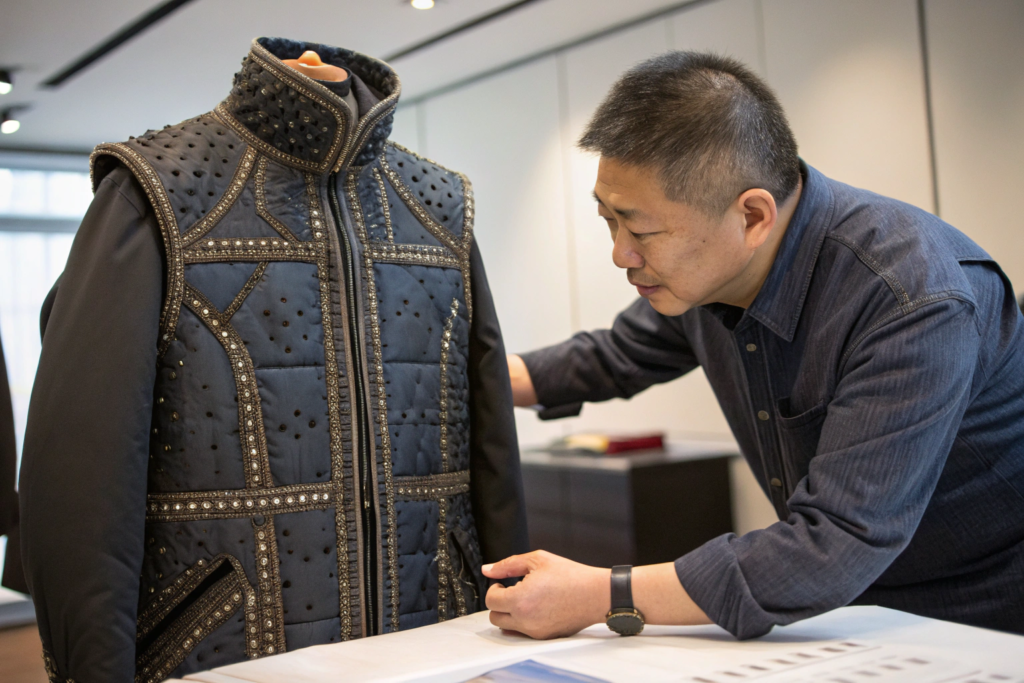
Complex pocket constructions, unnecessary linings, non-standard stitch types, and decorative elements that require handwork are common culprits. Also, using multiple different trims when one would work, or specifying a rare fabric when a similar standard option exists. Every unique element adds cost somewhere in the supply chain.
How early should you involve the factory in design discussions?
As early as possible. Ideally, involve us during the design phase, not after the design is finalized. We can guide you toward choices that are both beautiful and manufacturable. This saves you the heartbreak of falling in love with a design that is too expensive to produce profitably.
Conclusion
Negotiating better prices with clothing manufacturers is not about demanding discounts. It is about building a partnership where both sides understand each other's needs and constraints. You get better prices by sharing complete information, allowing us to give accurate quotes from the start. You get better prices by committing to consistent volume and flexible timing, helping us optimize our production. You get better prices by offering favorable payment terms, reducing our risk and improving our cash flow. And you get better prices by simplifying your designs, removing cost without removing value.
At Shanghai Fumao, we believe in transparent, honest negotiations. We want you to succeed because your success is our success. We are happy to open our books and show you exactly what drives your costs. We will work with you to find creative ways to hit your target prices without ever compromising the quality that protects your brand's reputation.
If you are ready to have a real conversation about pricing, not just a negotiation, I invite you to reach out. Let us discuss your goals and find a path forward together. Contact our Business Director, Elaine, directly at strong>elaine@fumaoclothing.com</strong. Tell her about your project, and let us build a partnership that works for both of us.