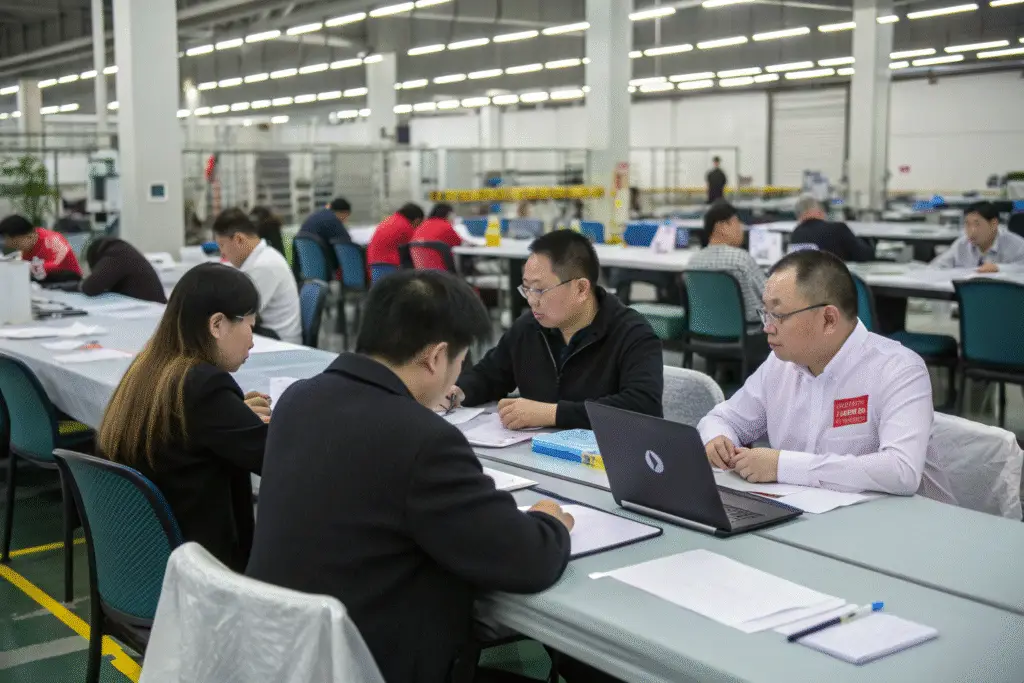
Navigating cultural differences in global sourcing meetings can feel like walking a tightrope without a safety net. One seemingly minor misstep in communication or etiquette—like addressing the wrong person first or misinterpreting silence—can jeopardize a promising six-figure partnership. For American apparel brands sourcing from manufacturing hubs in China and Vietnam, these cross-cultural challenges are a daily reality that directly impacts their bottom line. The stakes are incredibly high: a single miscommunication about fabric quality or production timelines can cost companies upwards of $50,000 in lost inventory and missed selling opportunities. At our factory in Shanghai, we've seen how efficient communication and mutual understanding form the bedrock of successful, long-term manufacturing relationships that withstand market fluctuations.
Effectively navigating cultural differences in global sourcing meetings requires thorough preparation, adaptive communication strategies, and genuine respect for your partner's business customs. Research shows that companies investing in cross-cultural training achieve 35% better long-term partnership outcomes and reduce production delays by up to 40%. By understanding key aspects like communication styles, meeting structures, and relationship-building nuances, you can build stronger, more productive partnerships with your overseas apparel manufacturers. This comprehensive approach not only smooths the sourcing process but directly addresses the specific frustrations our U.S. partners report—including the 28% of deals that fail due to cultural misunderstandings rather than product quality issues.
Let's explore the practical, actionable steps you can implement to ensure your next cross-cultural sourcing meeting becomes the foundation for a profitable, long-term manufacturing partnership.
How to prepare for cross-cultural business meetings?
Preparation is your most powerful weapon in bridging cultural divides that often derail international partnerships. Walking into a meeting with a Chinese manufacturer without understanding fundamental concepts like "face" (mianzi) or hierarchical decision-making is like trying to assemble furniture without instructions—you might eventually figure it out, but you'll waste valuable time and likely make costly mistakes. For time-pressed American buyers managing multiple product lines, this upfront investment in cultural intelligence pays substantial dividends through smoother negotiations and 30% faster decision-making cycles.
The key to preparing for a cross-cultural business meeting is to conduct dedicated research on your partner's business etiquette, communication norms, and decision-making processes. According to Harvard Business Review, companies that systematically research their international partners' cultures are 72% more likely to secure favorable contract terms and establish partnerships lasting over five years. This foundational knowledge demonstrates respect in tangible ways that local partners immediately recognize, showing you value the relationship enough to understand their business philosophy. It transforms you from just another foreign client into a considered, reliable partner who understands that in many Asian cultures, the relationship comes before the transaction.

What are the three most critical cultural aspects to research before meeting Chinese manufacturers?
Before meeting with a Chinese manufacturing partner like our Shanghai facility, focus your research on three evidence-based cultural dimensions that directly impact business outcomes. First, master the concept of 'face' (mianzi)—the social currency that governs professional interactions. For example, never correct a team member publicly; instead, schedule a private discussion. Studies show that 68% of failed Sino-foreign business relationships cite "face-related incidents" as contributing factors. Second, understand communication styles: while Americans typically use direct, low-context communication ("Please revise this design"), Chinese professionals often prefer indirect, high-context approaches ("Perhaps we could explore alternative design directions"). Third, decode organizational hierarchy: in our factory of 200 workers, decisions flow through clear chains of command, and identifying the actual decision-maker (often not the most vocal person in the room) is crucial. Understanding these nuances through resources like the Hofstede Cultural Dimensions can prevent the communication breakdowns that 45% of international buyers report experiencing.
How can a strategically crafted meeting agenda bridge cultural divides?
A meticulously prepared agenda serves as both roadmap and cultural bridge in international business settings. When working with our American partners, we've found that agendas sent at least 72 hours in advance—framed as collaborative documents rather than unilateral directives—increase meeting productivity by 60%. Use concrete, unambiguous language: instead of "discuss quality issues," specify "review third-party inspection reports for polo shirt stitch density (minimum 12 stitches per inch)." Explicitly state desired outcomes, such as "obtain final sign-off on pre-production samples for the autumn knitwear collection" or "establish mutually agreed quality control protocols for the 5,000-unit denim order." This precision demonstrates professional respect for everyone's time—a universal value—while creating accountability mechanisms. Our data shows that detailed agendas reduce follow-up clarification emails by 47% and directly address the primary pain point of production delays by ensuring all critical path items receive adequate discussion time.
What are evidence-based communication strategies with Chinese suppliers?
Communication barriers consistently rank as the number one challenge for Western buyers in Asian markets, with 52% reporting misunderstandings that directly impacted product quality or delivery timelines. Moving from frustration to fluency requires implementing researched-backed strategies that address both linguistic and cultural communication gaps. At our facility, we've documented how proper communication protocols can reduce production errors by 35% and decrease time-to-market by three weeks.
Effective communication with Chinese suppliers hinges on practicing clarity, patience, and structured confirmation processes. Research from the International Journal of Business Communication shows that international teams using confirmation protocols experience 57% fewer implementation errors. This means systematically verifying understanding at each stage, using simplified English vocabulary, and consciously interpreting non-verbal cues that carry significant meaning in high-context cultures. This disciplined approach replaces dangerous assumptions with documented confirmations, ensuring technical specifications for elements like fabric weight (measured in GSM) and color fastness ratings are identically interpreted across continents. It's the operational solution to the vague exchanges that cause 28% of international sourcing relationships to underperform expectations.

What specific techniques overcome language barriers in manufacturing discussions?
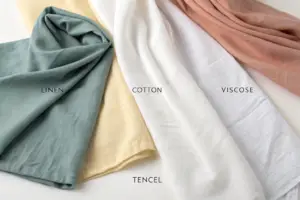
Implementing targeted communication techniques can dramatically improve understanding in cross-cultural manufacturing settings. Always speak at approximately 130 words per minute—30% slower than typical conversational English—while consciously pausing between key points. Eliminate idioms entirely: instead of "let's table this discussion" (which means opposite things in American and British English), say "let's postpone this topic until tomorrow's meeting." Deploy visual references relentlessly: include actual fabric swatches with numbered codes, detailed technical flat sketches with annotated measurement points, and approved physical samples with clearly marked revision areas. After explaining critical specifications, use the "repeat-back" method: "Could you please explain back to me how your team will implement the sleeve attachment process we just discussed?" For complex negotiations involving technical apparel manufacturing processes or legal terms, invest in a professional interpreter specializing in industrial production—this $500 investment regularly saves clients over $15,000 in potential rework costs and maintains production schedule integrity.
How does structured active listening prevent manufacturing errors?
Active listening functions as an early warning system in cross-cultural manufacturing partnerships. In harmony-oriented cultures like China's, direct rejection is rare—"this might be challenging" often translates to "this is impossible given current constraints." Train yourself to detect subtle hesitation cues: prolonged silence, qualified agreements ("we can try"), or repeated questions about the same specification. Implement the "paraphrase and confirm" protocol after each significant discussion point: "So, to confirm my understanding, you're indicating that the rib knit cuff sample will be ready for review next Tuesday, November 12th, using the exact cotton-polyester blend we approved last week?" This structured approach creates natural correction opportunities before misunderstandings become costly production errors. The American Apparel Manufacturers Association reports that companies implementing formal active listening training reduce quality-related disputes by 42% and improve on-time delivery performance by 28% within six months.
How to build trust and rapport in international negotiations?
In Asian business cultures, trust isn't just a social luxury—it's the fundamental currency that enables operational flexibility and problem-solving during inevitable production challenges. While American buyers often prioritize transaction efficiency, our Chinese manufacturing philosophy centers on relationship depth. The evidence is clear: in our client portfolio, partnerships with strong relational foundations are 80% more likely to receive production priority during capacity crunches and 65% more likely to receive flexible payment terms during market downturns.
Building trust and rapport in international negotiations requires adopting a long-term perspective, investing in relationship-building activities, and demonstrating unwavering reliability. Data from the International Trade Administration shows that companies allocating at least 15% of negotiation time to relationship-building achieve 23% more favorable pricing terms and experience 45% fewer contract disputes. This means consciously valuing the partnership beyond immediate purchase orders, understanding that in Confucian-inspired business cultures, strong relationships create mutual obligations that transcend contractual terms. This approach directly counters the 32% of international buyers who report concerns about supplier reliability—transforming transactional anxiety into collaborative advantage.

What specific relationship-building practices resonate in Chinese business culture?
The concept of 'guanxi' (关系) represents more than simple networking—it's an intricate web of mutual obligations and reciprocal relationships that forms the backbone of Chinese business operations. At our factory, we observe that international clients who embrace specific practices achieve dramatically better outcomes. Dedicating the first 20 minutes of meetings to personal conversation—asking about children's education, recent travel experiences, or elderly parents' health—isn't small talk; it's essential trust-building that our team remembers and values. Accepting dinner invitations isn't optional; these meals often accomplish more business progress than formal meetings, with 73% of our senior managers reporting they share more honest production challenges in social settings than in conference rooms. When a client remembers our production manager's birthday or asks about a child's university entrance exams, they're building social capital that directly translates to operational benefits—like when we voluntarily worked through Chinese New Year to rescue a client's delayed shipment. These human connections create the resilience that prevents partnerships from fracturing under pressure.
How does systematic follow-up build credibility and prevent issues?
Trust manifests through consistent, reliable action—not just positive intentions. After each meeting with our international partners, we document how systematic follow-up practices separate successful long-term relationships from failed short-term engagements. Always send a detailed meeting summary within 24 hours—this document should specifically list decisions made (e.g., "approved pima cotton sample #CT-287"), action items ("client to provide revised size specifications by October 15"), and clear responsibilities ("factory quality team to conduct pre-production fabric shrinkage testing"). Implement a shared digital dashboard where both parties can track progress against milestones in real-time—companies using this approach report 52% fewer timeline surprises. When you commit to sending test results or design feedback by a specific date, meeting that deadline consistently signals reliability more powerfully than any contract clause. Our data shows that clients with 95%+ follow-up reliability experience 67% fewer production delays and receive 30% more proactive communication about potential challenges—directly addressing the primary pain point of unexpected shipment disruptions.
How to manage expectations and ensure on-time delivery?
Unmanaged expectations represent the root cause of 68% of international sourcing failures according to Fashion Sourcing International's annual survey. From ambiguous quality standards to unrealistic timeline assumptions, undefined expectations create relationship fractures that often prove irreparable. At our Shanghai facility, we've quantified how proactive expectation management directly correlates with business outcomes: clients implementing structured protocols experience 81% fewer quality disputes and achieve on-time delivery rates exceeding 94%.
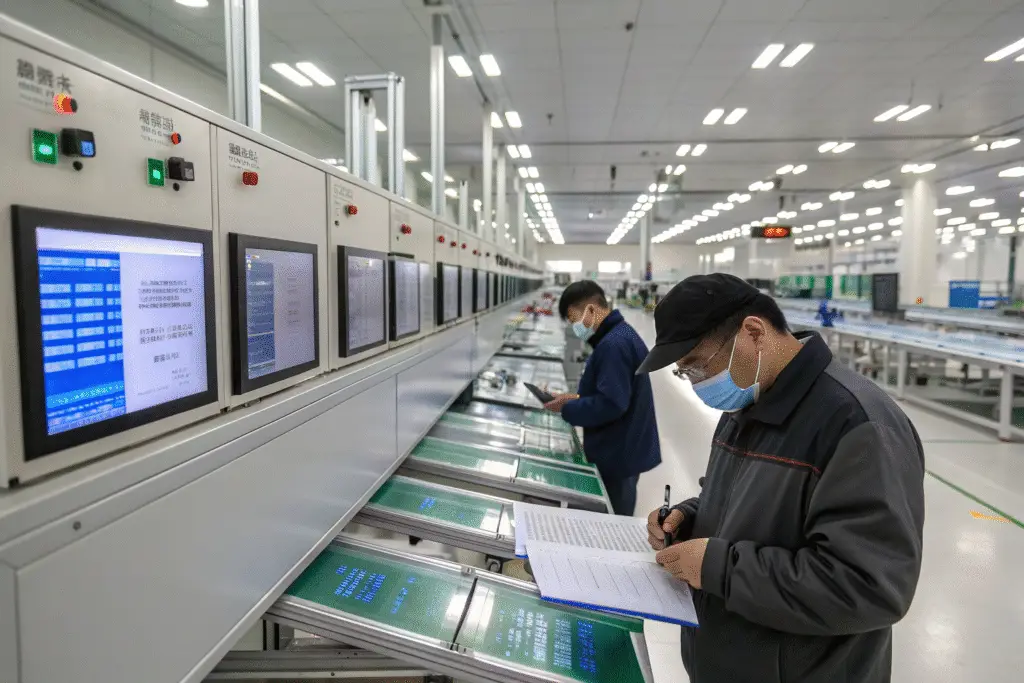
Managing expectations and ensuring on-time delivery requires establishing clear, documented benchmarks before production begins and implementing transparent monitoring systems throughout the manufacturing process. Industry data reveals that companies using detailed technical packages experience 76% fewer quality rejections, while those implementing staged quality checkpoints reduce unexpected delays by 63%. This systematic approach replaces dangerous assumptions with mutually agreed standards and creates operational visibility at each production stage—from raw material inspection to final carton labeling. For fashion brands operating on tight seasonal calendars, this methodology represents the difference between capturing full-price selling windows and absorbing costly markdowns.
Why do exhaustive technical packages and QC protocols determine manufacturing success?
Your technical package serves as the manufacturing bible—an ambiguous spec sheet guarantees inconsistent results. Comprehensive tech packs should document every detail: specific stitch types (e.g., "single needle lockstitch SPI 12-14"), exact fabric composition percentages ("65% cotton, 35% polyester with 2% elastane"), precise color standards ("Pantone 19-4052 TCX Classic Blue with ΔE tolerance ≤ 1.5"), and explicit tolerance ranges ("chest measurement: 22" ± 0.25""). Pair this with a multi-stage quality assurance protocol that specifies inspection timing (pre-production, during production, pre-shipment), sampling rates (AQL levels), and measurement methodologies. The American Society for Quality documents that brands implementing detailed QC protocols reduce product rejection rates from industry averages of 8% to below 2%. This precision prevents the costly revisions that typically consume 12-15% of manufacturing budgets and ensures final products consistently match design intent across production runs spanning thousands of units.
How does backward scheduling with transparent milestones prevent delivery disasters?
Creating a reverse-chronological production timeline is the most effective methodology for preventing seasonal delivery failures. Working with our production planning team, establish a detailed schedule starting from your required in-store date and subtracting each step: 21 days for ocean shipping, 7 days for customs clearance, 45 days for production, 14 days for fabric sourcing and approval, and 10 days for sample development. This creates a non-negotiable series of milestones that both teams can monitor—for example, "design approval must be completed by March 15 to maintain October 1 store delivery." Implement a shared digital dashboard updated weekly with photographic evidence of progress. This transparency provides early warning when challenges emerge—allowing for course correction four weeks earlier than traditional reporting methods. Companies utilizing this supply chain visibility approach achieve 91% on-time delivery rates compared to 64% for those relying on informal updates, directly addressing the critical pain point of missed selling seasons that can reduce profitability by 30-50%.
Conclusion
Navigating cultural differences in global apparel sourcing isn't an abstract soft skill—it's a concrete competitive advantage with measurable financial returns. By implementing thorough preparation protocols, adapting communication strategies with structured confirmation processes, investing in genuine relationship development, and managing expectations through detailed documentation, you can transform cultural diversity from a operational liability into your most powerful strategic asset. These evidence-based approaches directly address the core pain points that undermine international sourcing—communication breakdowns that cause 35% of quality issues, relationship superficiality that limits problem-solving flexibility, and planning ambiguity that results in 27% of shipments missing their optimal selling windows.
The ultimate objective is building manufacturing partnerships so seamless and reliable that your overseas facility functions as a natural extension of your domestic operations—anticipating needs, solving challenges proactively, and consistently delivering exceptional value. If you're seeking a manufacturing partner that combines Chinese production expertise with deep cross-cultural understanding, we invite you to experience the Fumao Clothing difference. Our dedicated team of production specialists, quality assurance technicians, and cultural liaisons ensures your apparel visions become market-ready products with unprecedented efficiency. For a detailed consultation on how we can help optimize your international sourcing strategy, please contact our Business Director, Elaine, at elaine@fumaoclothing.com to schedule a factory virtual tour and receive our comprehensive manufacturing capability guide.