In the fast-paced apparel industry, managing multiple production lines is both a competitive necessity and a potential headache. One faulty batch can derail a season’s worth of planning, especially if you're exporting to quality-sensitive markets like the United States or Europe. For factory owners and sourcing agents, inconsistent quality across lines often leads to delayed shipments, increased returns, and damaged brand trust.
Successfully managing product quality across several production lines requires standardization, real-time tracking, skilled personnel, and process-driven accountability. At Fumao Clothing, we run five lines daily, and our clients rely on our systems to maintain consistency, whether for 500 or 50,000 units.
Let’s break down how you can do the same, whether you're working with in-house manufacturing or outsourced contractors. These are actionable steps that reduce error, increase output reliability, and protect your brand.
What Are the Keys to Standardizing Quality Protocols?
No matter how advanced your machinery is or how skilled your tailors are, without standard operating procedures (SOPs), quality will fluctuate. One operator’s "OK" might be another’s "reject."
Standardization ensures that each production line speaks the same language when it comes to measurements, tolerances, stitching specs, and defect classifications.

How Should You Create Effective Quality SOPs?
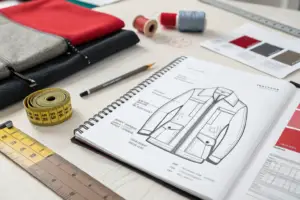
Start by documenting processes visually. Use annotated sample photos of both “good” and “bad” quality for each key component: seams, collars, print alignment, etc. Tools like Process Street or Tallyfy help digitize and standardize these SOPs across production lines.
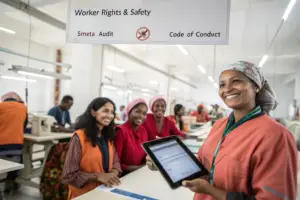
At Fumao, we create line-side SOP posters and digital SOPs in tablets near each station. This keeps expectations visible and consistent—especially during onboarding of new staff or shifts.
Can SOPs Be Adjusted Per Client or SKU?
Absolutely—and they should be. Each client might have a different tolerance range. A high-end fashion brand might reject a 2mm deviation, while a mass retailer may allow 5mm.
Our approach is modular SOPs. We maintain a base template but add specific brand notes or client tolerances as appendices. This structure, supported by Notion and internal QC apps, keeps our lines flexible yet controlled.
How to Implement Real-Time Quality Monitoring on All Lines?
Even the best SOPs fail without real-time feedback. By the time final QC catches an issue, you've already wasted materials, labor, and time.
We install inline QC checkpoints every 20–30 garments and use real-time dashboards to detect defect patterns before they scale into serious losses.

What Digital Tools Support Live Quality Control?
We use custom dashboards integrated with tools like Katana and FactoryFour. These systems connect to barcode scanners at each checkpoint. If a defect exceeds threshold, line leaders are alerted instantly.
Our factory also integrates Google Sheets API with in-house tablets, syncing real-time quality metrics across all five lines. This allows our managers—and clients like Ron—to remotely monitor quality KPIs.
Should You Use Cameras or AI for Quality Checks?
AI vision systems like Intello Labs or Qualcomm Smart Cameras are emerging, but they’re not yet effective for all garment types—especially soft knits and color-matching.
Instead, we train our inline inspectors using a hybrid approach: human judgment for visual defects, and software tracking for measurable variances (length, panel matching, etc.). This dual system maintains both efficiency and human nuance.
How to Train and Motivate Your Quality Control Team?
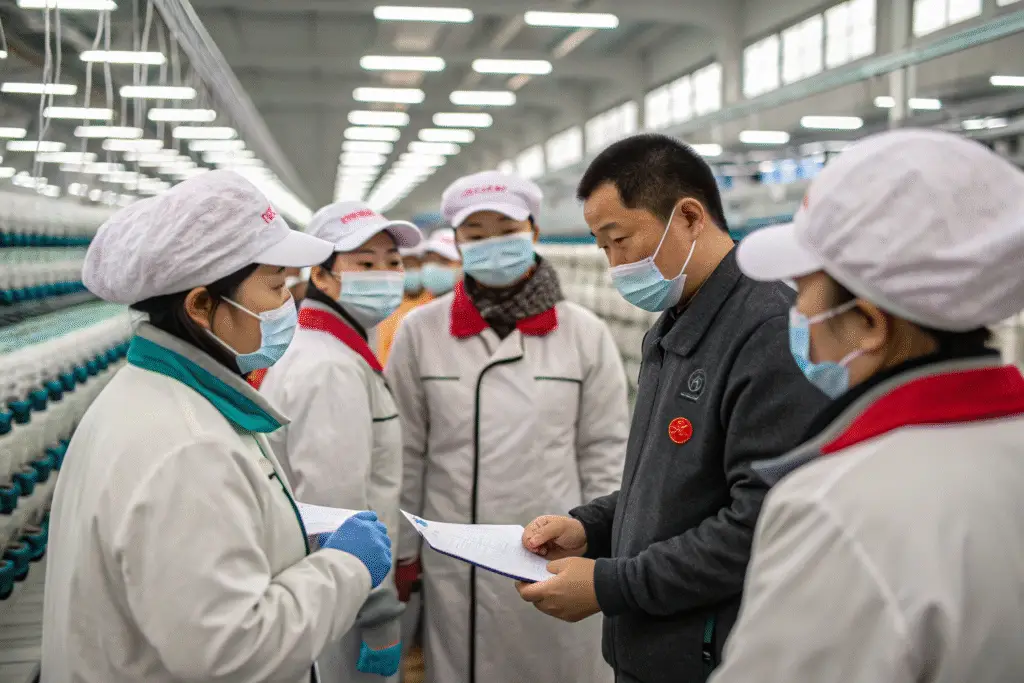
Your quality is only as strong as your QC staff. A disinterested inspector or under-trained checker can ruin entire orders. And when you’re operating across multiple lines, this risk multiplies.
We believe in training QC as a leadership track—not just a checkpoint role. Well-trained inspectors not only detect problems but help prevent them through communication and ownership.
What Should a Quality Inspector Training Program Include?
Our program spans 5 structured modules:
| Module | Content |
|---|---|
| 1 | Reading tech packs and client specs |
| 2 | Identifying top 10 common defects |
| 3 | Hands-on sessions with defect samples |
| 4 | Reporting using digital tools |
| 5 | Soft skills: feedback delivery to line staff |
We also follow ISO 9001 guidelines and supplement with American Apparel & Footwear Association (AAFA) manuals to keep international standards.
How Can You Reward Good QC Performance?
Motivation matters. We track inspector accuracy vs. final QC rejections. High-performing inspectors are eligible for bonuses, recognition awards, and priority promotion. We use tools like Motivosity to keep morale high and communication open.
For buyers, a motivated QC team means your garments are being inspected by people who care—and who understand what’s at stake.
How to Prevent Defects Instead of Just Detecting Them?
Catching defects late is already too late. Each unit of rework adds cost and causes delays—especially when you’re shipping to strict schedules.
Prevention-focused factories analyze historical defect patterns and modify workflow, machines, or operator training before production even begins.

What Pre-Production Quality Practices Work Best?
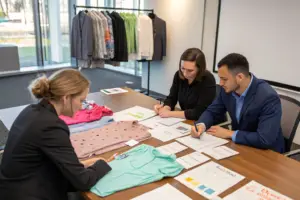
We start every production with a PP meeting (Pre-Production). All line supervisors, QC leads, and sample room staff attend. Together, we review:
- The final approved sample
- Technical risks for specific fabrics (e.g., puckering)
- Historical defects on similar styles
- Special client instructions
We document these meetings in cloud-based tools like Airtable and share with clients—creating alignment and accountability.
How to Use Root Cause Analysis After a Defect Spike?
If a spike in defects occurs on one line, we pause that section and apply a 5 Whys root cause protocol. For example:
Why was the hem misaligned? → Because the folder was shifted.
Why was it shifted? → Because the table wasn’t fixed.
Why wasn’t it fixed? → Because the maintenance ticket was delayed.
This systemic thinking helps prevent recurrence. We log these reports via Trello or ClickUp and tie them to future production planning.
Conclusion
Managing quality across multiple clothing production lines requires more than final inspection. It demands a system of documentation, real-time visibility, skilled teams, and preventive thinking. At Fumao Clothing, we’ve spent years developing this system across five lines—ensuring our buyers in the U.S. and Europe get the quality they expect, every single time.
If you want a partner who delivers consistent, scalable quality in every production run, contact our Business Director Elaine at elaine@fumaoclothing.com. Let us help you build a supply chain that performs, even at scale.