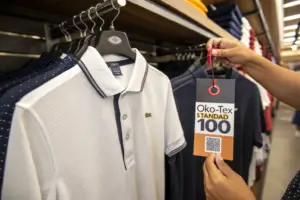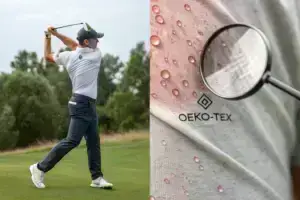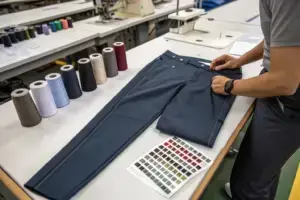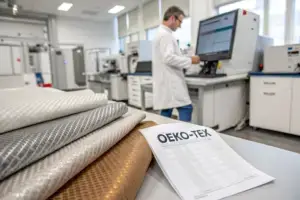
You’re designing high-performance skiwear. The priorities are clear: waterproofness, breathability, insulation, durability, and freedom of movement. In the past, achieving these technical benchmarks often came with a chemical cost—relying on treatments like PFC-based DWR (Durable Water Repellency) or certain solvents. Today, the paradigm has shifted. The modern consumer demands that peak performance does not compromise human or environmental safety. Integrating OEKO-TEX certified fabrics is no longer a compromise; it is a sophisticated design challenge that, when solved, creates a superior, market-leading product.
Integrating OEKO-TEX fabrics into technical skiwear requires a proactive, system-level design approach that starts at the material R&D phase. It involves selecting certified base fabrics with inherent performance, specifying OEKO-TEX compliant chemical finishes, and ensuring every component—from membranes and insulation to zippers and seam tapes—is part of a traceable, certified assembly system. This transforms certification from a constraint into the framework for responsible innovation.
Let’s navigate the critical steps to build high-tech skiwear that is as safe as it is performant.
Can Performance and Safety Truly Coexist in Ski Fabrics?
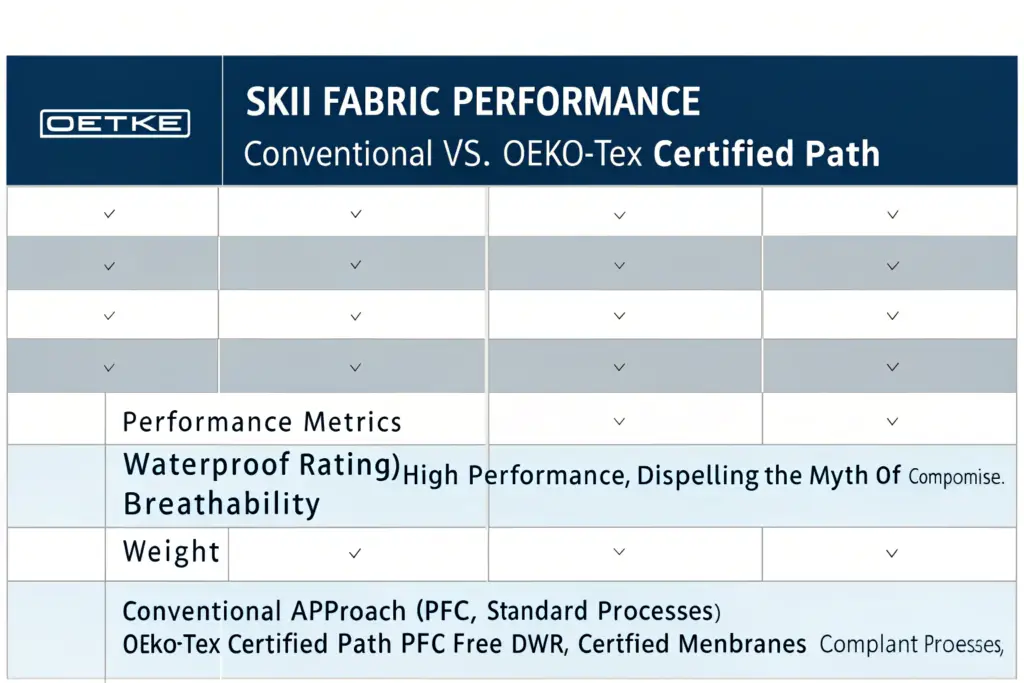
Absolutely. The key is understanding that OEKO-TEX certification is a safety standard for chemicals, not a ban on performance. It restricts specific harmful substances (like certain PFCs, phthalates, heavy metals) but does not prohibit the functional goals of waterproofing, moisture management, or thermal regulation.
The innovation happens at the mill level. Leading fabric developers now create OEKO-TEX certified performance textiles by:
- Using Alternative Chemistry: Developing PFC-free DWR finishes that meet stringent water repellency standards while being OEKO-TEX compliant.
- Engineering Inherent Properties: Utilizing tightly woven or knitted constructions with hydrophobic yarns (like polyester) to create initial water resistance without heavy chemical finishes.
- Selecting Certified Membranes: Sourcing waterproof-breathable membranes (e.g., variations of ePTFE or PU) that are manufactured with OEKO-TEX compliant processes and adhesives.
- Innovating with Safe Insulation: Offering OEKO-TEX certified down (tested for residue from cleaning processes) and synthetic insulations like PrimaLoft® that are developed to meet strict chemical standards.
The question for a designer is not “Can I find a certified fabric?” but “Which certified fabric has the exact performance profile (e.g., 20K waterproofing, 15K breathability, specific weight) I need for this garment?” At Shanghai Fumao, we connect designers with a curated library of such fabrics from specialized mills, turning this from a sourcing challenge into a creative selection process.

What Are the Trade-offs, If Any?
The primary trade-off is not performance, but availability and cost. Cutting-edge, certified performance fabrics are often developed by top-tier mills and may have higher minimum order quantities (MOQs) and lead times. The cost is also higher due to the R&D and testing involved. However, this investment translates directly into a product that can command a premium price and build unshakeable brand trust in a market sensitive to environmental and health concerns.
How to Design a Garment System with All Certified Components?
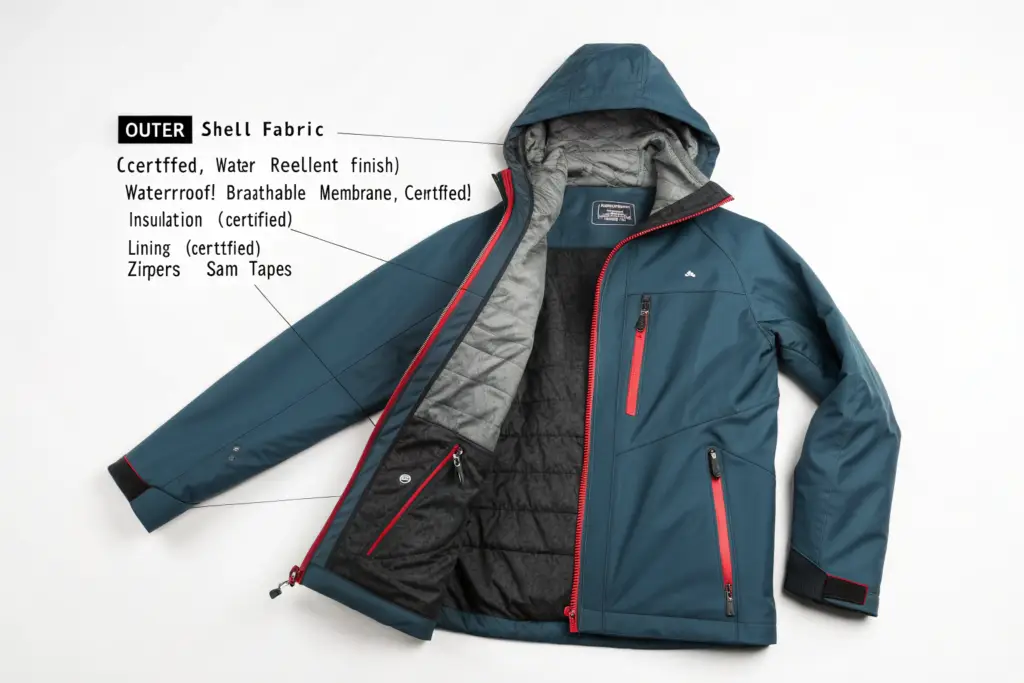
A skiwear garment is a complex system. Certification of the outer shell fabric is meaningless if the insulation, lining, zippers, or bonding adhesives introduce non-compliant substances. Success requires a Bill of Materials (BOM) level strategy.
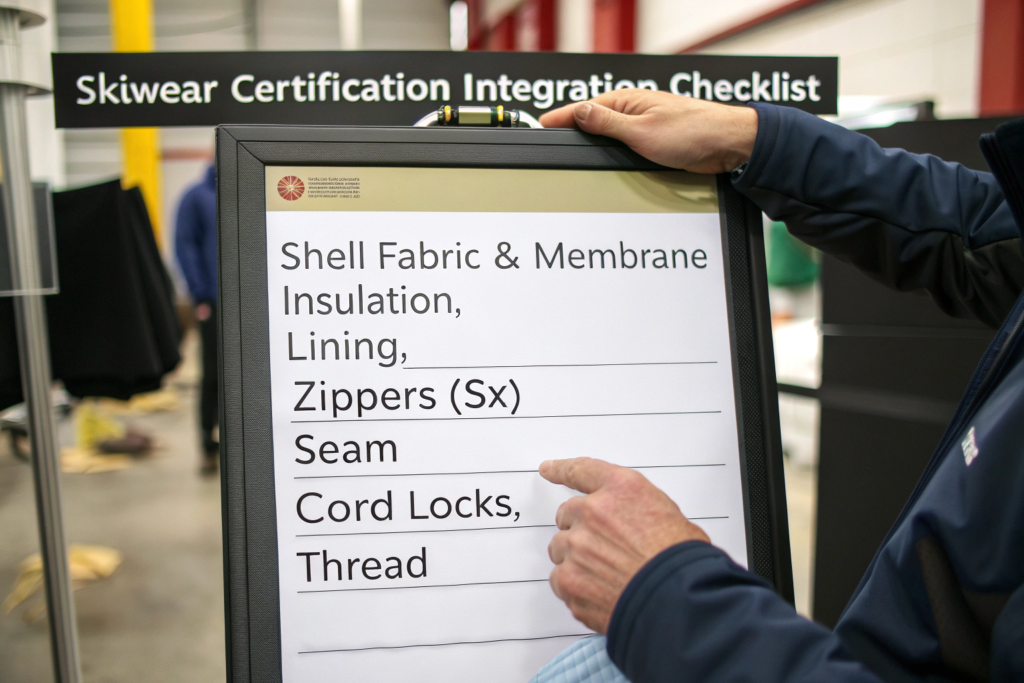
Your technical pack must mandate OEKO-TEX certification for:
- Outer Shell Fabric: Including its face treatment (DWR) and any laminated membrane.
- Insulation: Certified down or synthetic fill.
- Lining Fabric: Often a lightweight, breathable mesh or taffeta.
- Trims & Hardware:
- Zippers (tape, teeth, slider)
- Seam Tapes (the adhesive and film)
- Cord Locks and Adjusters
- Velcro/Hook & Loop
- Buttons/Snaps
- Thread, Labels, and Printing Inks.
This is a significant logistical undertaking. The most efficient path is to partner with a full-package manufacturer that has already established a vetted network of certified suppliers for each of these components. They manage the complexity, providing you with a complete certification dossier for the finished garment.
What About Construction Methods?
The certification can also extend to construction. For instance, if using heat-bonded seams (welding) instead of sewing, the adhesive tape used must be certified. The factory’s process must ensure that no non-certified sewing oils or lubricants come into contact with the certified materials during assembly.
How to Verify the "Finished Article"?
For the highest assurance, especially for children’s skiwear or premium lines, insist on Finished Article certification. This involves submitting a fully assembled jacket for testing. It is the ultimate proof that the entire system—and its interactions—is safe. A capable manufacturing partner will facilitate this process.
What Are the Critical R&D and Sampling Steps?
Integrating certified fabrics is not a plug-and-play process. It requires a dedicated R&D and sampling phase to validate performance and fit.
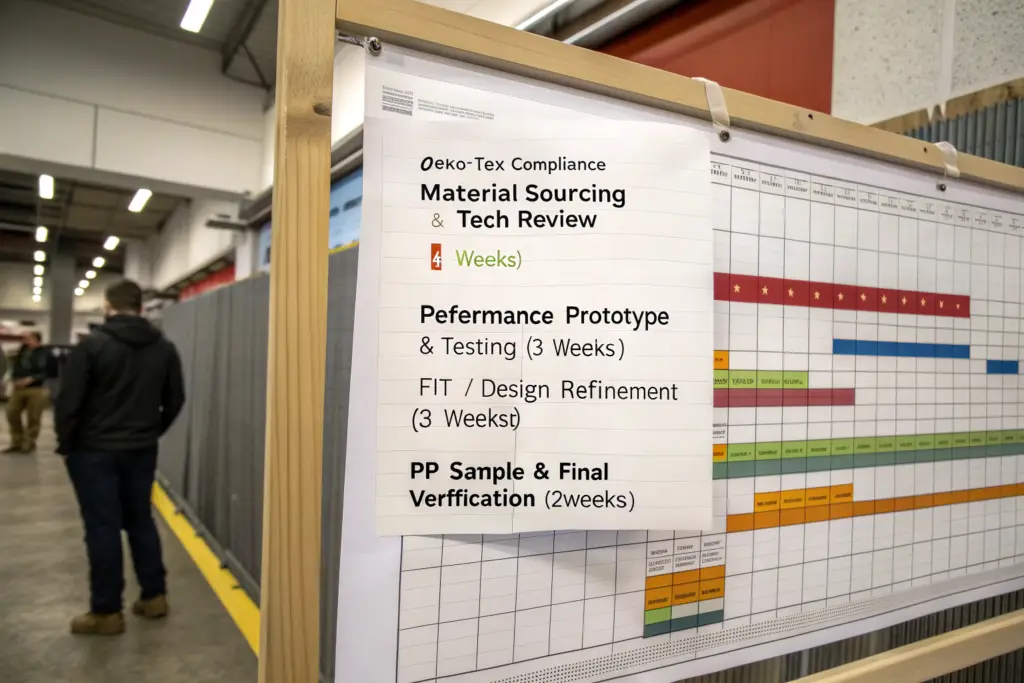
The process should follow this sequence:
- Fabric Sourcing & Approval: Source swatches and technical data sheets for 2-3 certified fabric options that meet your performance specs. Test them for hand-feel, drape, and, if possible, send for a quick water/breathability test.
- Develop a "Certified" Prototype: Make your first prototype using the exact certified shell, insulation, and lining fabrics. This prototype is for testing performance and construction, not just fit.
- Performance Testing: Subject the prototype to real-world or lab tests: waterproof shower test, breathability assessment, and durability checks on seams and zippers.
- Fit and Design Refinement: Once performance is validated, proceed with fit samples, adjusting patterns as needed for the specific certified materials, which may have different stretch or drape than generic fabrics.
- Pre-Production Sample (PP Sample): This final sample, made from all certified components, is your green light for production. It should be tested again to ensure nothing was lost in translation.
Skipping these steps risks a bulk order that is either non-compliant or underperforming. Our team at Shanghai Fumao guides clients through this phased approach, using our in-house sampling and basic testing capabilities to de-risk the development cycle.
How to Manage Color and Aesthetics?
Work with your mill and factory to develop colors using OEKO-TEX compliant dye recipes. Many mills offer curated color palettes that are pre-certified. For prints, ensure the printing inks and processes are certified. The goal is to have no aesthetic element break the chemical safety chain.
How Does This Integration Impact Brand Story and Marketing?
This technical integration becomes your brand’s most powerful story. In a market saturated with greenwashing, a verifiable, system-wide commitment to safety through OEKO-TEX is a compelling differentiator.
Your marketing can authentically communicate:
- Holistic Safety: “From the outer shell to the inner lining, every layer is independently certified safe for your skin.”
- Performance Without Compromise: “We engineered PFC-free waterproofing that meets the OEKO-TEX standard, so you stay dry without the chemical footprint.”
- Transparency: Provide a “layer breakdown” on your product page, linking each component to its certification.
- Trust for Families: For kids’ lines, highlighting OEKO-TEX Class I (babywear standard) certification is an incredibly strong purchase driver.
This narrative aligns with the values of the modern, environmentally conscious skier and provides tangible evidence to back up your claims.
What is the Competitive Advantage?
Beyond marketing, this integration builds operational moats. It requires deep supply chain knowledge and disciplined factory partnerships that competitors cannot easily replicate. It future-proofs your products against tightening chemical regulations (e.g., PFC bans in certain regions). Ultimately, it builds a brand known for integrity and performance, fostering fierce customer loyalty.
Conclusion
Integrating OEKO-TEX fabrics into technical skiwear is the definitive next step in the evolution of performance apparel. It moves beyond merely avoiding harmful substances to proactively designing a safe, high-performing system from the molecule up. This process demands a shift from traditional design thinking to a holistic, component-aware, and partnership-driven approach.
The result is not just a garment that ticks a certification box. It is a superior product that delivers uncompromising performance, provides verifiable safety to the wearer, and tells an authentic brand story that resonates in today’s market. The path requires expertise, but the destination—a leading, responsible skiwear brand—is worth the journey.
If you are ready to design skiwear where cutting-edge performance and certified safety are engineered as one, you need a manufacturing partner who speaks both languages. Contact Shanghai Fumao’s Business Director Elaine today. Let us introduce you to our network of OEKO-TEX certified technical fabric mills and guide you through the integrated development process for your next collection. Reach her at elaine@fumaoclothing.com. Let's engineer confidence, from the summit to the base.