Managing SKUs for imported clothing isn’t just about labeling—it’s about creating clarity from chaos. From sourcing factories overseas to stocking retail shelves in the U.S., effective SKU management determines how smoothly your business runs.
To implement effective SKU management for imported clothing, you must standardize naming conventions, digitize inventory tracking, integrate barcode labeling, and regularly analyze SKU performance.
At Fumao Clothing, we help our global clients avoid stock confusion, minimize fulfillment errors, and scale their product lines efficiently. Here's exactly how to make your SKU system work—from customs clearance to customer checkout.
Why Is a Strong SKU System Critical for Imported Garments?
For clothing brands importing from overseas, tracking hundreds of product variations—by size, color, and style—can easily become a nightmare. Without a robust SKU structure, errors multiply at every touchpoint.
A strong SKU management system simplifies sourcing, speeds up logistics, and improves demand forecasting—especially for multi-season apparel lines.

What Happens If You Don’t Have a SKU Structure?
Without SKUs, you risk:
- Receiving the wrong items from suppliers
- Delays in customs due to incorrect documentation
- Warehouse confusion during sorting
- Inaccurate sales or stock forecasting
- Losing control of product variants in returns
According to Logiwa, brands that lack proper SKUs face 30% higher fulfillment error rates.
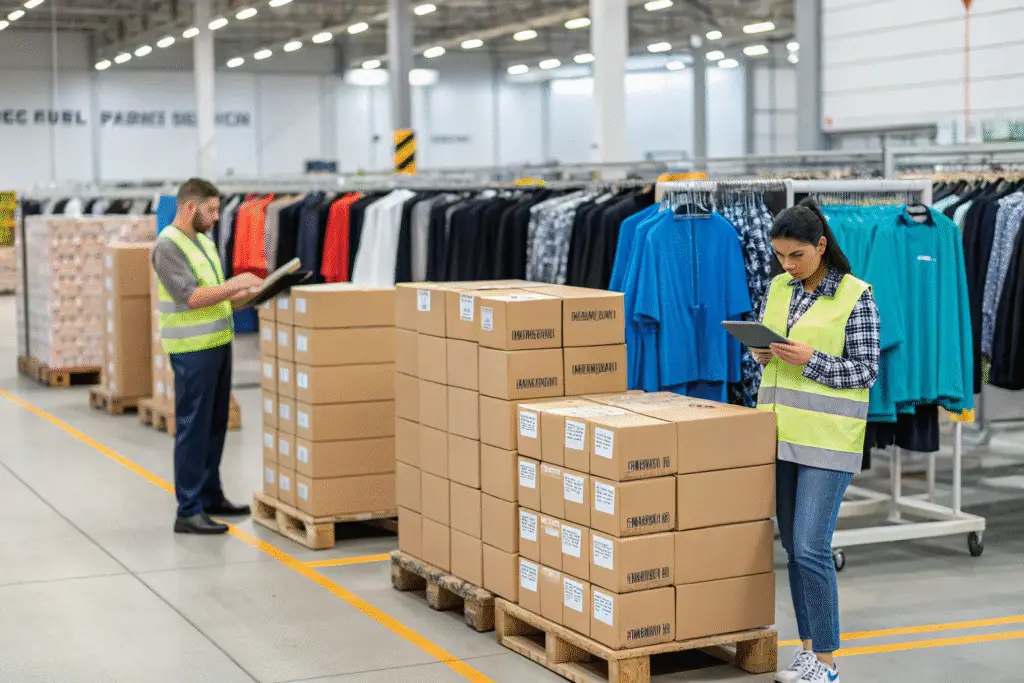
At Fumao, we assign SKU codes at the pre-production stage so packing, barcoding, and documents align across all stakeholders.
How Can SKUs Help in Global Shipping and Compliance?
A consistent SKU format helps with:
- HS code mapping for customs
- Linking product specs in packing lists and invoices
- Faster unloading and sorting at 3PL warehouses
We integrate SKUs into U.S. customs entry summaries and carton labeling. This helps clients like Ron ensure everything clears customs with minimal inspection risk.
How to Structure SKUs for Fashion Variants and Imports?
With clothing, a single design can generate dozens of variants. That’s why your SKU format must capture product attributes without being overly complex.
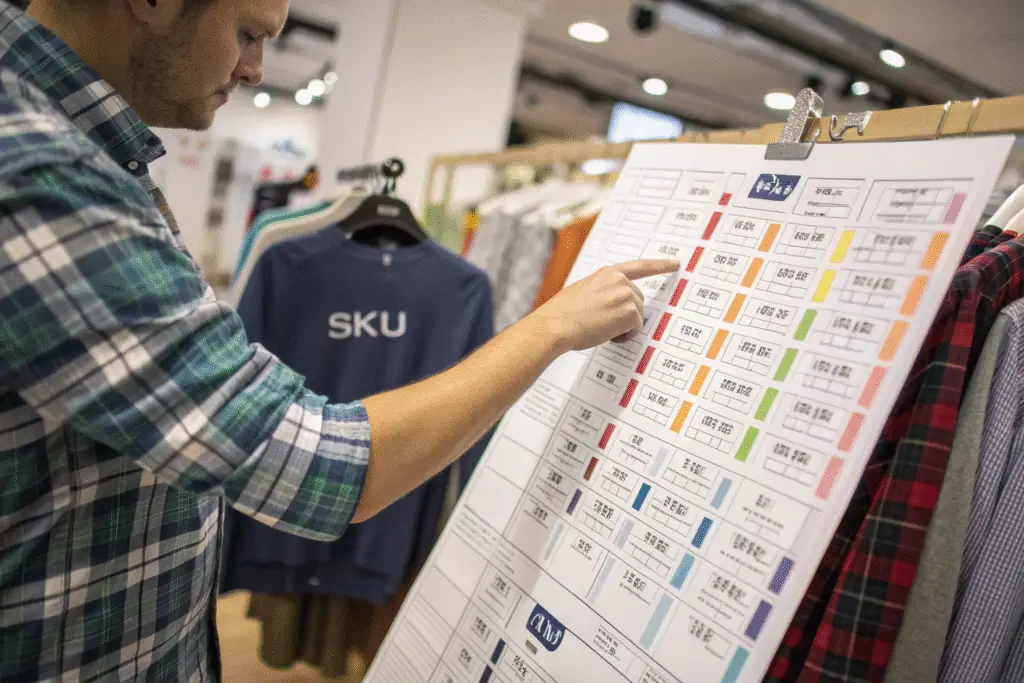
A well-built apparel SKU includes product type, style code, color, size, and import batch reference.
What’s the Ideal Format for Apparel SKUs?
A good SKU example:
M-SHRT-3201-BLK-L-CH25
Breakdown:
- M = Men’s
- SHRT = Shirt
- 3201 = Style number
- BLK = Black
- L = Size
- CH25 = China import, shipment #25
You can tailor this format based on GS1 Standards or internal logic. Use hyphens or underscores for clarity.
Tools like SKU Science help forecast and structure large catalogs with thousands of codes.
How to Maintain SKU Logic as the Product Line Grows?
Use these rules:
- Lock your logic—don’t change formats mid-season
- Automate SKU creation using tools like Cin7
- Add import indicators to track which batch a style came in
- Avoid duplicate codes—check for SKU reuse regularly
At Fumao, we assign SKU tags in production sheets and confirm alignment with the buyer’s ERP before any labeling begins. This prevents chaos later.
What Tools and Systems Support SKU Tracking and Accuracy?
Once your SKUs are structured, you need tools to track them through every stage: from port to warehouse, shelf to shopping cart.
Inventory software, barcode scanning, and ERP integration are key to maintaining SKU visibility across your supply chain.

What Inventory Software Works Well with Apparel SKUs?
Popular systems for fashion businesses include:
- NetSuite – ERP with strong SKU mapping
- TradeGecko/QuickBooks Commerce – great for SME brands
- Katana MRP – ideal for DTC production flow
- Zoho Inventory – budget-friendly and barcode-ready
We sync SKU-based packing sheets with these tools to allow real-time receiving, sales channel syncing, and restocking triggers.
How Do Barcoding and RFID Help Improve Accuracy?
Barcode labels (EAN/UPC) and RFID tags improve:
- Stock accuracy
- Receiving speed
- Pick-pack efficiency
- Cycle counting
We provide GS1-compliant barcode labels or custom QR codes per SKU upon request. RFID is also available for clients who need inventory sync with retail PoS systems like Shopify Plus.
How to Analyze SKU Performance and Optimize Inventory?
Not all SKUs perform equally. You need data to know which styles move and which ones collect dust. Smart analysis helps reduce dead stock and increase reorder efficiency.
By tracking sales velocity, gross margin, and inventory turns by SKU, brands can optimize reorders and eliminate waste.

What KPIs Should You Monitor by SKU?
Track these SKU-level KPIs:
- Sell-through rate = units sold ÷ units received
- Stock turn ratio = annual sales ÷ average inventory
- Gross margin per SKU
- Days in inventory = how long each style sits unsold
Apps like Inventory Planner and Goflow provide SKU dashboards with reorder suggestions and seasonal ranking.
We help clients generate SKU sales snapshots across multiple retail channels.
How to Handle Slow-Moving or Dead SKUs?
Use:
- Markdown strategies
- Bundling slow SKUs with high-demand items
- Flash sale events
- B2B liquidation via Faire or Handshake
- Re-labeling and remarketing for a new collection drop
We offer repacking, retagging, and relabeling services for slow SKUs returned to our factory via reverse logistics.
Conclusion
Effective SKU management is the backbone of any scalable apparel operation—especially when importing goods. With structured naming, smart tracking, and data-driven decisions, you gain full control over inventory, forecasting, and margin protection.
At Fumao Clothing, we implement SKU systems with every client from the tech pack stage. Whether you’re sourcing from China, Vietnam, or India, SKU clarity ensures efficiency from the first sample to the final shipment.
Don’t let your SKUs be chaos. Make them your competitive edge.