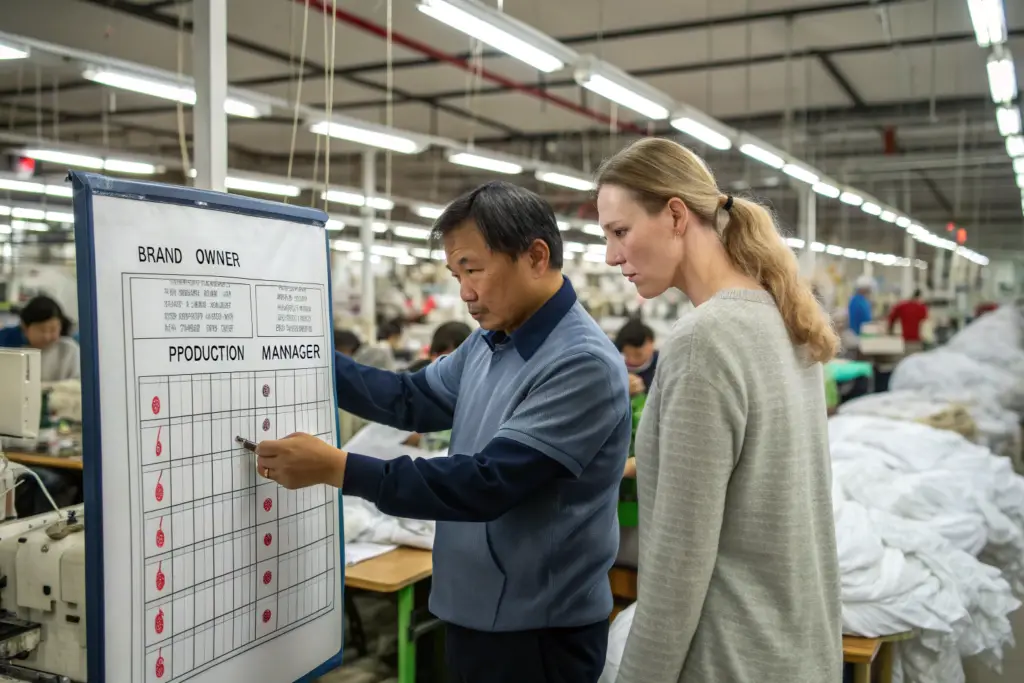
I have run a clothing factory for over twenty years. Every year, the same thing happens. My clients come to me in July and December. They are panicked. Their sales have spiked. Their inventory is gone. They need more product immediately. They ask me, "Can you make 5,000 more pieces in two weeks?" I want to help. But the reality is different. My production lines are already booked. My fabric suppliers have their own schedules. I cannot just add 5,000 pieces to a full schedule. The clients who plan ahead get the capacity. The ones who do not plan get disappointed.
Handling seasonal demand spikes with your current clothing manufacturer requires advance planning, transparent communication, flexible production arrangements, and a clear understanding of your manufacturer's capacity and lead times. The factories that can support your spikes are the ones that know about them early. When you share your seasonal forecast, reserve production capacity, and build strategic inventory, your manufacturer becomes your partner in meeting demand. When you wait until the spike happens, you will be too late.
This is what I want to share with you today. I am a factory owner who has helped my clients navigate seasonal spikes for years. I know what works and what does not. I will walk you through the strategies that successful brands use. I will use real examples from my own factory floor. By the end, you will have a clear plan for handling your seasonal demand without stress.
How far in advance should you plan for seasonal spikes?
The biggest mistake I see is clients underestimating how much lead time they need. They think they can order in September for holiday sales. They cannot. The factories that make holiday goods start production in July or August. The fabric mills start even earlier.

What is the true lead time for seasonal production?
I break down lead time into four stages. Each stage takes time. Each stage requires planning.
A client in New York learned this lesson in 2022. They wanted winter jackets for November delivery. They came to us in August. They thought that was early. I showed them our timeline. We needed to order fabric in June. The fabric mill had a 6-week lead time. The production slot was booked for September. The shipping would take 4 weeks. The jackets would arrive in October. That was fine for November. But they had missed the fabric order window. We could not get the fabric they wanted. They had to choose a different fabric. The jackets were good, but not exactly what they wanted.
Here is a realistic seasonal production timeline:
| Stage | Winter Production (for Nov delivery) | Summer Production (for May delivery) |
|---|---|---|
| Fabric ordering | May-June | November-December |
| Fabric arrival | July | January |
| Production | August-September | February-March |
| Shipping | September-October | March-April |
| In warehouse | October | April |
| Sell to customers | November-December | May-June |
If you want your goods in time for the season, you need to start planning 6 to 8 months ahead. That is the reality of international manufacturing.
The clients who handle spikes best share their forecasts early. They do not wait until they have firm orders. They share their expectations.
A client in Chicago does this well. Every March, they send me their forecast for the next 12 months. They tell me:
- Which styles they expect to be best-sellers
- How many units they expect to sell each month
- When they expect demand spikes
- What new styles they are testing
With this information, I can plan. I reserve production capacity for them. I talk to fabric mills about their needs. I make sure they have priority when their spike comes.
Here is what a good seasonal forecast includes:
| Forecast Element | What to Share | Why It Helps |
|---|---|---|
| Expected best-sellers | SKU numbers, quantities | Reserve fabric, plan production lines |
| Spike timing | Specific months or weeks | Block production capacity |
| New styles | Sample orders, test quantities | Plan sampling timeline |
| Growth projections | % increase from last year | Scale capacity accordingly |
At Shanghai Fumao, we work with our clients to build these forecasts. We share our production schedule with them. We tell them when they need to order to hit their seasonal windows. We want them to plan ahead so we can deliver.
How do you reserve production capacity for your spikes?
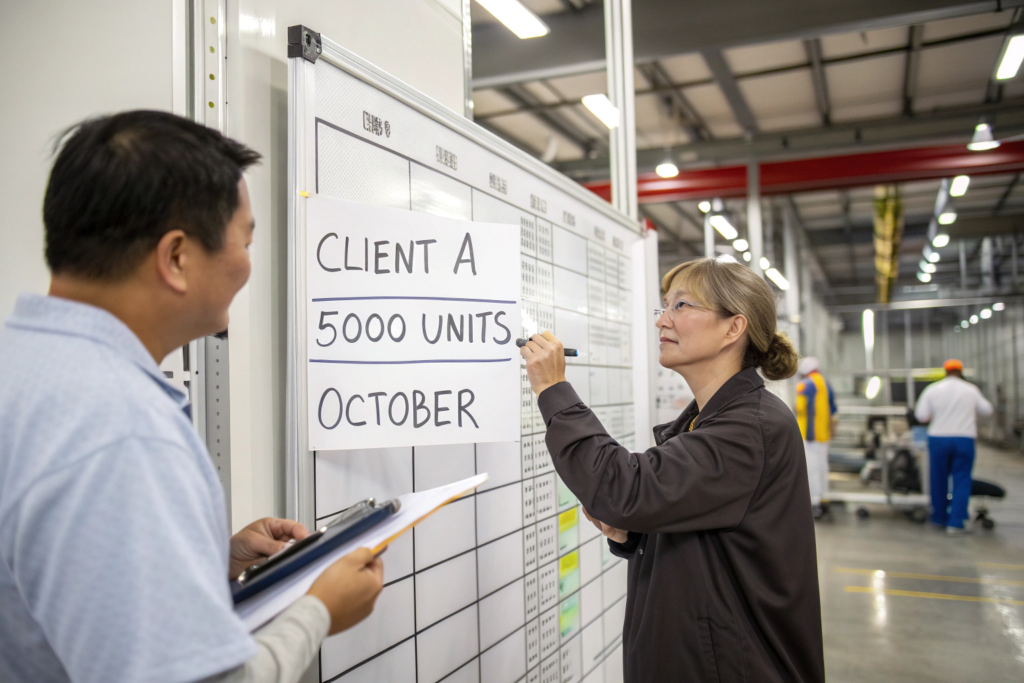
Production capacity is a limited resource. Every factory has a maximum number of garments they can make each month. When that capacity is full, it is full. You cannot add more. The only way to guarantee capacity for your spike is to reserve it in advance.
What is a production slot and how do you book it?
A production slot is the time on my factory schedule allocated to your order. When you book a slot, I commit to using my machines and my workers for your products during that time.
I have a client in Los Angeles who books their slots 6 months in advance. In January, they book their slots for June, July, and August. They do not know exactly what they will produce. But they know they will need capacity for their summer season. They pay a small deposit to reserve the slots. When they are ready with the final styles and quantities, we fill the slots.
This system works for both of us. They get guaranteed capacity. I get predictable scheduling. I can plan my labor and my material purchases.
Here is how production slot booking works:
| Timing | Action | Benefit |
|---|---|---|
| 6 months before spike | Client books production slots | Secures capacity before others |
| 4 months before spike | Client confirms styles and quantities | Allows fabric ordering |
| 2 months before spike | Fabric arrives, production begins | Ready for seasonal demand |
| Spike occurs | Inventory is ready | No stockouts, no panic |
How do you balance minimum order quantities with seasonal needs?
Minimum order quantities can be a challenge for seasonal spikes. If you need 2,000 pieces but the factory requires 3,000, you have a problem.
At Shanghai Fumao, we offer flexibility for our regular clients. If you have booked production slots and shared your forecast, we can work with lower minimums for reorders. We understand that spikes are unpredictable. We want to help you meet demand without forcing you to over-order.
A client in Seattle used this flexibility well. They booked production slots for 10,000 units across three styles. When the season came, one style sold much better than expected. They needed 5,000 more of that style. We were able to adjust their slots. We shifted production from slower styles to the hot style. They got the inventory they needed. The other styles had lower demand, but they did not over-order because we had the flexibility to adjust.
Here is a comparison of different factory flexibility models:
| Factory Model | Minimum Order | Flexibility for Spikes | Best For |
|---|---|---|---|
| Traditional factory | High minimums | Low flexibility | Large, predictable orders |
| Flexible partner | Moderate minimums | High flexibility with planning | Brands with seasonal spikes |
| On-demand production | No minimums | Very flexible but higher cost | Test styles, small reorders |
At Shanghai Fumao, we position ourselves in the flexible partner category. We help our clients manage spikes without forcing them into huge minimums.
How do you use inventory strategies to buffer seasonal spikes?
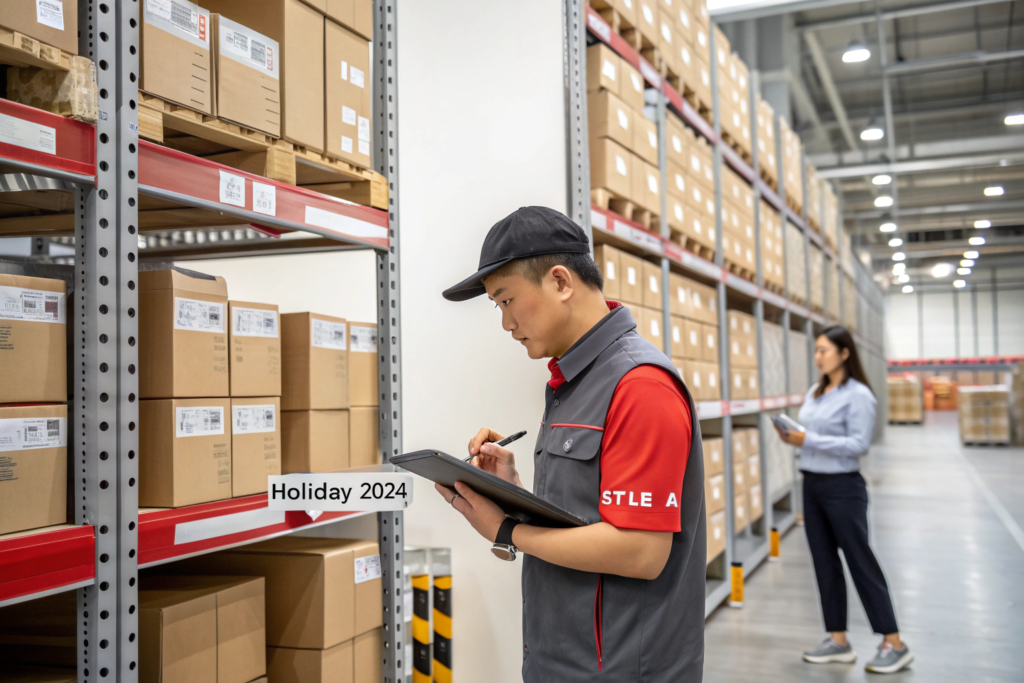
Even with the best planning, you cannot always predict spikes exactly. You need inventory buffers. Safety stock and strategic pre-positioning can save you when demand surprises you.
What is safety stock and how much should you hold?
Safety stock is extra inventory you hold to protect against unexpected demand. It is insurance. It costs money to hold. But it costs more to miss sales.
A client in Austin taught me about safety stock. They calculated their risk. They looked at their sales volatility. They looked at their lead time. They decided to hold 20% safety stock on their best-sellers. That meant if they expected to sell 10,000 units, they would order 12,000. The extra 2,000 units sat in their warehouse. When a spike came, they had inventory ready. They did not need to rush an order.
One year, their best-selling hoodie spiked 40% above forecast. They used their safety stock to cover the first 2 weeks of the spike. Then they placed a reorder. Because they had safety stock, they did not run out. They captured all the sales.
Here is a formula for calculating safety stock:
| Factor | How to Calculate | Example |
|---|---|---|
| Average demand | Units sold per week | 500 units |
| Demand variability | Highest week vs. average | 800 units peak (60% higher) |
| Lead time | Weeks from order to delivery | 8 weeks |
| Safety stock | (Peak demand - Average) × Lead time | (800-500) × 8 = 2,400 units |
How do you pre-position inventory before peak season?
Pre-positioning means moving inventory closer to your customers before the spike. For apparel brands, this often means sending inventory to a U.S. warehouse before the season starts.
A client in Boston uses this strategy. They order their holiday collection in July. The goods arrive in August and September. They store them in a third-party warehouse in the U.S. When holiday sales spike in November and December, the inventory is already in the country. They can fulfill orders in 2-3 days. They do not have to wait for ocean freight.
This strategy has two benefits. First, they are not waiting for containers during peak shipping season. Second, they can respond to spikes quickly. When a style sells out, they can pull from safety stock immediately.
Here is a pre-positioning timeline:
| Timing | Action | Benefit |
|---|---|---|
| April-May | Order holiday collection | Secure production slots |
| July-August | Goods arrive in U.S. warehouse | Avoid shipping delays |
| September-October | Build marketing momentum | Create demand |
| November-December | Fulfill from U.S. warehouse | Fast shipping during peak |
| January | Clear remaining inventory | Prepare for next season |
At Shanghai Fumao, we help clients with this strategy. We offer DDP shipping directly to their U.S. warehouse. We help them time their orders to hit their pre-positioning windows. We want their inventory in the right place at the right time.
How do you communicate effectively with your factory during spikes?
Communication during a spike is critical. The factory needs to know what is happening. The brand needs to know what is possible. When communication breaks down, problems get worse.
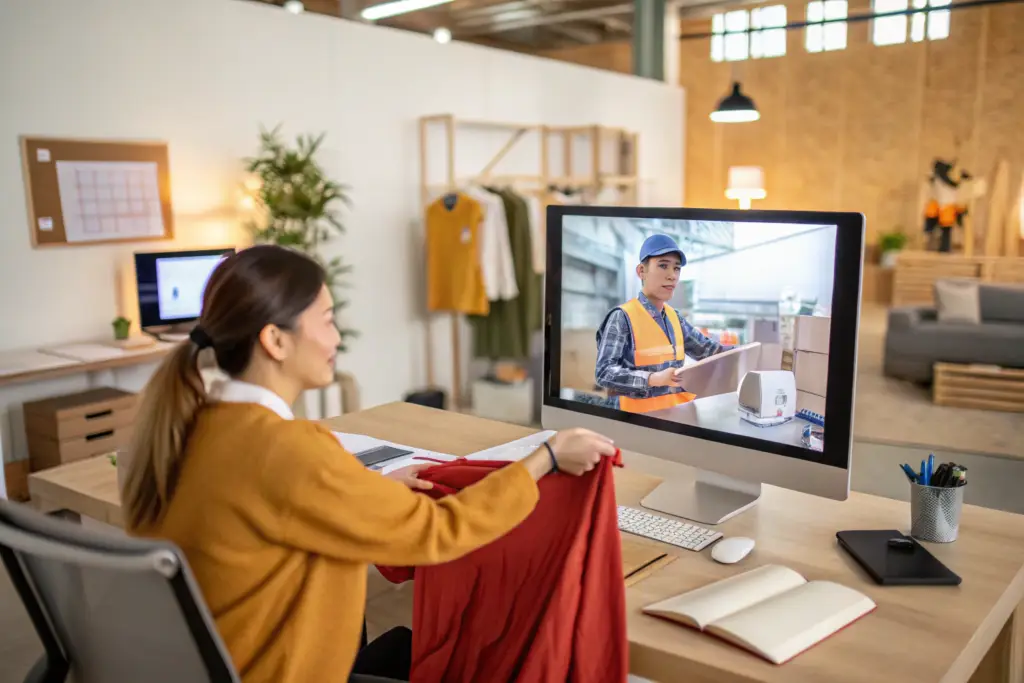
When a spike hits, I need specific information from my clients. The clients who provide it get the best support.
A client in Denver handles spikes very well. When they see a spike coming, they send me an email with:
- Which SKU is spiking
- Current sales rate per day or week
- Current inventory level
- Forecasted demand for next 8 weeks
- When they need more inventory
With this information, I can make decisions. I can check if I have fabric. I can see if I have production capacity. I can tell them what is possible and when.
Here is a spike communication template:
| Information | What to Include | Why It Helps |
|---|---|---|
| SKU details | Style number, size, color | Identifies exactly what is needed |
| Sales velocity | Units sold per day, current rate | Shows urgency level |
| Current inventory | Units on hand, units in transit | Shows how long stock will last |
| Forecast | Projected demand for coming weeks | Helps plan production quantity |
| Request | Exact quantity needed, by when | Clear ask for factory to address |
How do you balance urgency with realistic expectations?
Urgency is important. But unrealistic expectations create problems. I need my clients to understand what is possible.
A client in Miami once called me on a Friday. They needed 3,000 dresses in two weeks. They were panicked. I told them the truth. The fabric would take 3 weeks. Production would take 2 weeks. Shipping would take 3 weeks. They would not have the dresses for 8 weeks. They were upset. But they accepted the reality. They adjusted their marketing. They offered pre-orders. They managed customer expectations.
If they had pushed me to promise something impossible, I would have disappointed them. Honest communication is better than false promises.
Here is how to set realistic expectations:
| Factor | Realistic Timeline | Unrealistic Expectation |
|---|---|---|
| Fabric sourcing | 2-6 weeks | "We can get fabric in 1 week" |
| Production | 4-8 weeks | "We can make 5,000 pieces in 1 week" |
| Shipping | 3-6 weeks | "We can ship by air at no extra cost" |
| Total | 9-20 weeks | "We need it in 4 weeks" |
At Shanghai Fumao, we are honest with our clients. We tell them what we can do and when. We work with them to find solutions. Sometimes that means air freight. Sometimes that means splitting the order. Sometimes that means adjusting the forecast. But we communicate clearly so there are no surprises.
Conclusion
Handling seasonal demand spikes with your current clothing manufacturer is possible. But it requires planning, communication, and the right strategies. The brands that do it well start early. They share their forecasts 6 to 8 months in advance. They book production slots to secure capacity. They build safety stock to buffer against surprises. They pre-position inventory before the season starts. And they communicate clearly and honestly when spikes happen.
I have seen my clients succeed with these strategies. They have grown their businesses without the stress of stockouts or panic orders. They have built trust with their customers by always having product available. And they have built strong partnerships with their factories because they plan ahead and communicate well.
At Shanghai Fumao, we are committed to helping our clients handle seasonal spikes. We work with them to build forecasts. We offer flexible production slots. We help them plan their inventory. We communicate openly about what is possible. We want to be the partner that helps them grow through every season.
If you are looking for a factory that understands the challenges of seasonal demand, I invite you to talk to us. Let us discuss how we can help you plan for your next spike. Let us build a production schedule that supports your growth.
You can contact our Business Director, Elaine, directly. She can walk you through our production planning process. She can help you understand our capacity and lead times. She can work with you to build a seasonal plan that works for your business. Her email is: elaine@fumaoclothing.com. Let us prepare for your next spike together.