You've designed your collection and are ready to move into production, but the quotes you're receiving vary wildly—some suspiciously low, others impossibly high. How can you determine which numbers are realistic and which will lead to hidden costs and compromised quality? The difference between an accurate quote and an misleading one can determine whether your fashion business succeeds or struggles with unexpected expenses.
An accurate clothing production quote requires comprehensive technical documentation, clear communication of your quality standards, realistic quantity targets, and understanding of what's included in the pricing. Manufacturers need complete information to provide precise costing, and vague requests inevitably lead to estimates that either underestimate true costs or include unnecessary padding for uncertainties. The most accurate quotes come from manufacturers who ask detailed questions about your specifications and provide transparent breakdowns rather than single lump sums. Let's explore what specific preparations and questions will get you the reliable numbers you need for confident decision-making.
What technical documents ensure pricing accuracy?
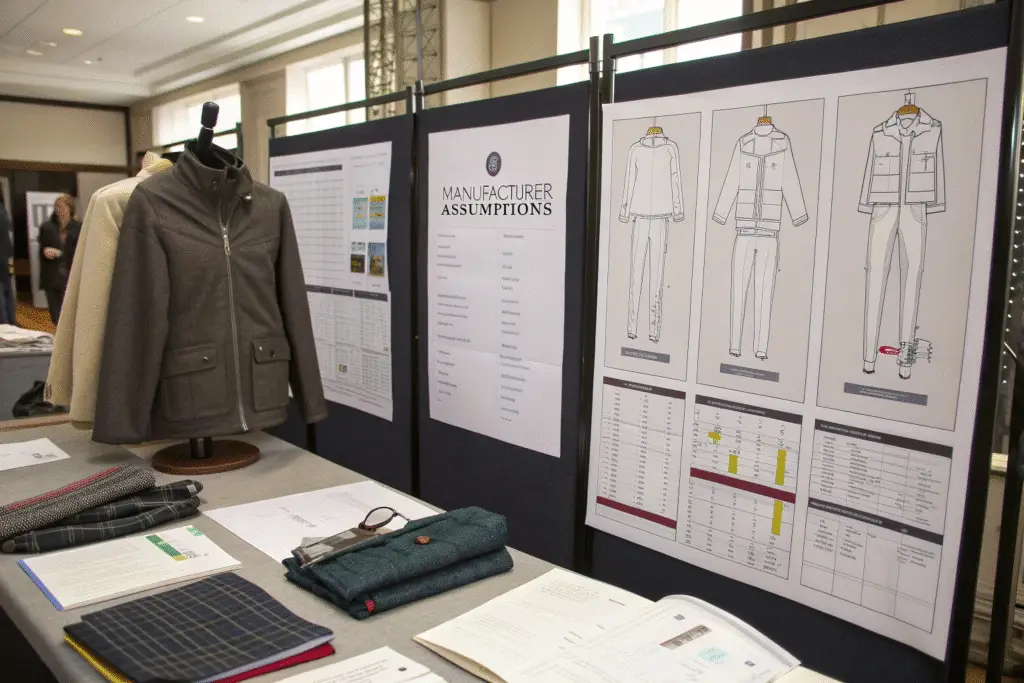
Complete technical documentation is the foundation of an accurate production quote. Without detailed specifications, manufacturers must make assumptions—and those assumptions often lead to cost adjustments once production begins. Comprehensive tech packs eliminate guesswork and enable precise costing from the start.
Your tech pack should function as a complete manufacturing blueprint. It needs flat sketches with all measurements, materials list with specific compositions and weights, construction details specifying stitch types and seam finishes, and branding placement with exact dimensions. When a contemporary womenswear brand provided us with exceptionally detailed tech packs including grading rules for all sizes and tolerance specifications for each measurement, we were able to quote within 2% of their final costs. Their previous manufacturer's quote had varied by 15% because they hadn't specified these details, forcing the factory to estimate conservatively.

Why do fabric specifications matter so much?
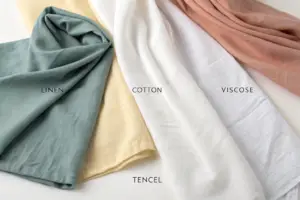
Fabric typically represents 50-70% of a garment's cost, so vague descriptions guarantee inaccurate quotes. "Cotton jersey" could range from $2-8 per meter depending on weight, composition, finish, and source. Instead, specify "240 GSM 95/5 Cotton-Spandex Jersey, Pre-shrunk, Brushed Back, Oeko-Tex Certified." This precision allows manufacturers to source accurately and price accordingly. We recently helped a client avoid a 23% cost increase by identifying during quoting that their specified fabric was unusually expensive for their market segment and suggesting a comparable alternative at 40% lower cost.
How do construction details impact cost?
The way a garment is assembled significantly affects labor costs—often by 30% or more between simple and complex construction. Specify seam types (flatlock vs. overlook), stitch density (stitches per inch), and any specialized operations like binding, taping, or pleating. A client requesting "basic t-shirts" was surprised to learn that their design actually required specialized construction—their dropped shoulder seam and curved hem required 40% more labor than a standard t-shirt. Documenting these details in their tech pack ensured our quote reflected the true manufacturing complexity rather than standard pricing.
How do your quantity and timeline affect the quote?
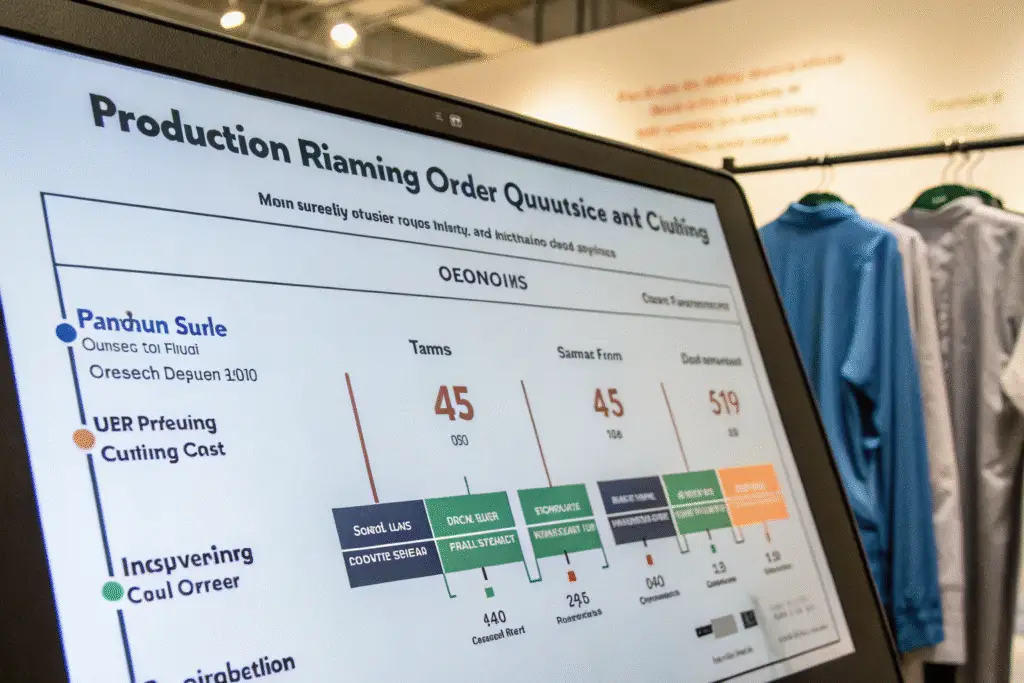
Production costs don't decrease linearly with quantity, and timing requirements can significantly impact pricing. Understanding the relationship between order volume, production schedule, and cost helps you set realistic expectations and receive quotes that reflect your actual situation rather than ideal scenarios.
Economies of scale exist in apparel manufacturing, but they have breakpoints rather than smooth curves. The cost difference between 500 and 1,000 units might be 15%, while between 5,000 and 10,000 might only be 8%. Additionally, timing affects cost—rushed orders typically incur 10-30% premiums for overtime, expedited shipping, and production line prioritization. A startup was confused why their 3,000-unit quote was only 12% lower than their 1,500-unit quote until we explained that both quantities used the same cutting and setup processes—the savings came primarily from fabric purchasing power and slightly improved sewing efficiency.
What is the true cost of small quantities?
Small production runs have higher costs per unit because setup expenses are distributed across fewer pieces. Pattern making, marker creation, and machine setup represent fixed costs regardless of quantity. We recently quoted a 200-unit order where setup costs represented 28% of the total—a shock to the client who expected proportional scaling from larger quantity pricing. Understanding these fixed costs helps smaller brands budget realistically or consider collective ordering with other designers to achieve better pricing.
How do timing requirements impact price?
Manufacturers maintain production schedules much like airlines manage seats—last-minute requests or changes typically cost more. Standard lead times (8-12 weeks for most orders) allow for optimal production planning and material sourcing. When a client needed 5,000 units in 5 weeks instead of 10, our quote included 25% overtime premiums, express fabric sourcing fees, and air freight instead of sea shipping—adding 42% to the total cost. Their decision to adjust their launch timeline rather than pay these premiums saved them over $18,000.
What questions should you ask about quote inclusions?
An accurate quote isn't just about the number—it's about understanding what that number includes. Many apparently low quotes exclude essential services that appear as surprise costs later. Learning to identify what should be included prevents misunderstandings and ensures you're comparing equivalent offerings across different manufacturers.
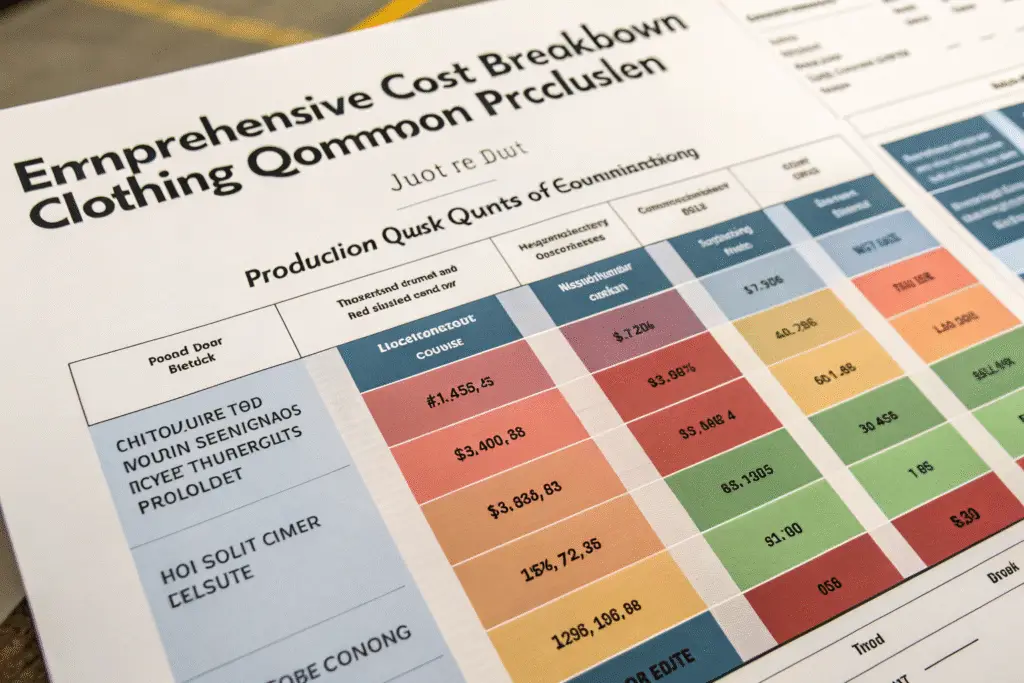
A comprehensive quote should itemize all cost components: materials (fabric, thread, trims), labor (cutting, sewing, finishing), overhead (factory operations), and additional services (quality control, packaging, documentation). When a sportswear brand received a quote 30% lower than ours, we helped them analyze the difference: the cheaper option excluded pattern making, fabric testing, and final inspection—services that would cost extra later. Their "bargain" would have ultimately cost 15% more than our all-inclusive quote once all necessary services were added.
What quality control should be included?
Quality control isn't a single activity but a process throughout production. Ask what specific QC measures are included: inline checking during sewing? Final inspection? What AQL (Acceptable Quality Level) standard do they use? A luxury knitwear client specifically asked about our quality assurance processes and was pleased to learn our quote included three inspection points and fabric testing against their specified standards. This thorough approach prevented the quality issues they'd experienced with a previous manufacturer whose lower quote had excluded adequate quality measures.
Are logistics and duties clearly specified?
International shipping involves multiple cost components that are often overlooked. For imports to the US, specify whether quotes are EXW (Ex Works), FOB (Free On Board), or DDP (Delivered Duty Paid)—each represents different cost responsibility. We recently educated a client about these incoterms after they'd received an FOB quote that didn't include $4,200 in duties, freight, and insurance. Understanding these distinctions helps compare quotes accurately and budget for total delivered costs.
How can you verify a quote's realism?
An accurate quote should align with industry standards for your product type, quantity, and quality level. Understanding typical cost structures and asking the right verification questions helps you identify quotes that are either unrealistically low or unnecessarily high.
Research typical cost ranges for your product category, but remember that variations exist based on fabric quality, construction complexity, and manufacturing location. Ask manufacturers to explain their cost structure and how it compares to industry benchmarks. A denim brand was skeptical of our quote until we walked them through each cost component and showed how their design details—such as custom hardware and complex distressing—drove costs 40% above basic denim pricing. This transparency built trust and helped them understand the value they were receiving.
What are the signs of an unrealistically low quote?
Quotes significantly below market rates typically indicate one of three problems: inexperience with true costs, intentional lowballing with planned cost increases later, or compromised standards somewhere in the process. We recently analyzed a quote for a client that was 45% below market rate and identified that the factory was using substandard fabric, planned to use unqualified labor, and excluded essential quality checks. Their "bargain" would have produced unsellable products and damaged their brand reputation.
How do payment terms affect quote accuracy?
Payment structure can indicate a manufacturer's financial stability and confidence in their quoting. Standard terms typically involve deposits with balance due before shipment. Be cautious of manufacturers requesting 100% upfront payment or unusual splits. We maintain 50/50 terms (50% deposit, 50% before shipment) which demonstrates our confidence in accurately quoting and delivering as specified. One client avoided a problematic partnership when a factory requested 80% upfront—a sign of potential cash flow problems that might impact their ability to complete the order properly.
Conclusion
An accurate clothing production quote emerges from a partnership-like dialogue where you provide comprehensive information and the manufacturer demonstrates transparency and expertise. The most reliable quotes come from manufacturers who ask detailed questions, provide clear breakdowns, and explain how your specific choices impact costs. This collaborative approach ensures the numbers you receive reflect reality rather than optimistic estimates or padded contingencies.
Remember that the cheapest quote often becomes the most expensive choice once hidden costs, quality issues, and timeline overruns are accounted for. For a detailed, transparent production quote based on comprehensive analysis rather than assumptions, contact our Business Director Elaine at elaine@fumaoclothing.com. Provide your tech packs, and we'll deliver a quotation that accurately reflects your vision and sets your production up for success.