When you're sourcing hospital scrubs, it’s not just about sewing garments—it’s about meeting strict hygiene standards, fulfilling color and sizing requirements, and delivering bulk orders on time. For buyers like Ron in the U.S., a confident business owner in the medical supply chain, custom hospital scrubs offer a niche branding opportunity—but only if manufacturing is handled right.
To find reliable manufacturers for custom hospital scrubs, buyers should evaluate factory certifications, fabric sourcing capabilities, customization options, and logistics experience specific to medical apparel.
At Fumao Clothing, we’ve supported medical brands and uniform distributors across North America by supplying certified, customizable scrub sets. We know what questions to ask, what red flags to avoid, and how to deliver consistently in this specialized B2B space.
What Certifications Should a Medical Scrub Manufacturer Have?
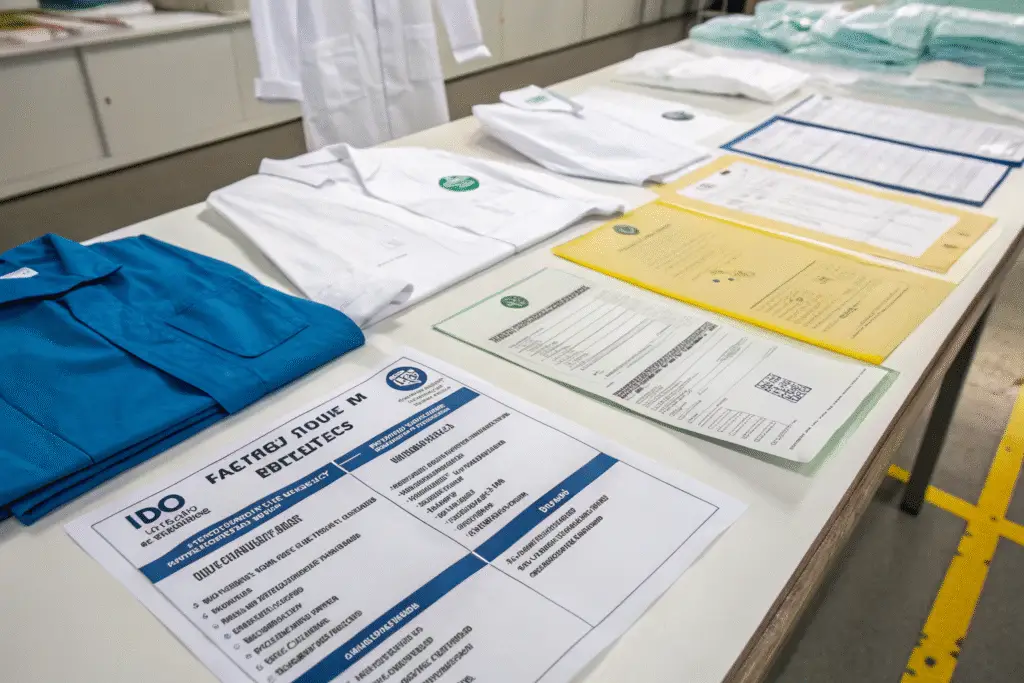
Certifications aren’t just for show—they prove that a factory can meet the safety and quality standards expected in healthcare environments. If you’re sourcing for hospitals or clinics, you’ll likely need a supplier who can produce in compliance with ISO and textile safety norms.
Reliable scrub manufacturers should offer at least OEKO-TEX 100, ISO 13485, and preferably medical device-related QMS systems or BSCI audits.
Why Is OEKO-TEX Certification Important for Scrubs?
OEKO-TEX 100 guarantees that the fabrics used in scrubs are free from harmful chemicals, skin irritants, and residues. For healthcare workers in contact with patients or working long shifts, this reduces allergy risks and improves comfort.
At Fumao, we only use OEKO-TEX certified fabrics in our scrub programs—especially for products sold in pediatric clinics and dermatology centers.
Learn more about OEKO-TEX in medical textiles or explore certification steps for apparel.
Is ISO 13485 Necessary for All Scrub Manufacturers?
ISO 13485 is the gold standard for manufacturing medical devices. While not required for general apparel factories, it’s a huge bonus if your scrub supplier adheres to this quality system—it shows they understand the regulatory expectations of healthcare buyers.
Even if your supplier isn’t ISO 13485-certified, they should at least follow traceability and sanitation protocols similar to those found in medical manufacturing.
Check out ISO 13485 scope and application or see how it applies to hospital uniforms.
What Fabric Qualities Are Best for Custom Scrubs?
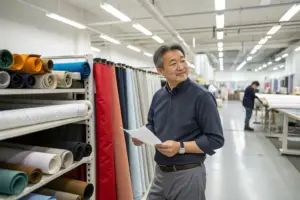
Not all fabrics are suitable for hospital use. You need textiles that are easy to sterilize, resistant to pilling, breathable, and comfortable for long shifts. Most buyers prefer poly-cotton blends for durability and low shrinkage.
The best scrub fabrics are 65/35 poly-cotton or performance blends with anti-odor, stain resistance, and mechanical stretch.
Should You Choose Poly-Cotton or Stretch Performance Blends?
Poly-cotton (65% polyester / 35% cotton) is the industry staple. It’s cost-effective, holds color well, and survives frequent washing. For premium orders, we offer mechanical stretch options (blended with spandex) for enhanced comfort during 12-hour shifts.
Stretch blends are particularly popular in women's scrub sets, maternity wear, and fitted top designs.
Check poly-cotton scrub durability or learn about stretch performance fabrics in medical clothing.
What About Moisture-Wicking or Antimicrobial Treatments?
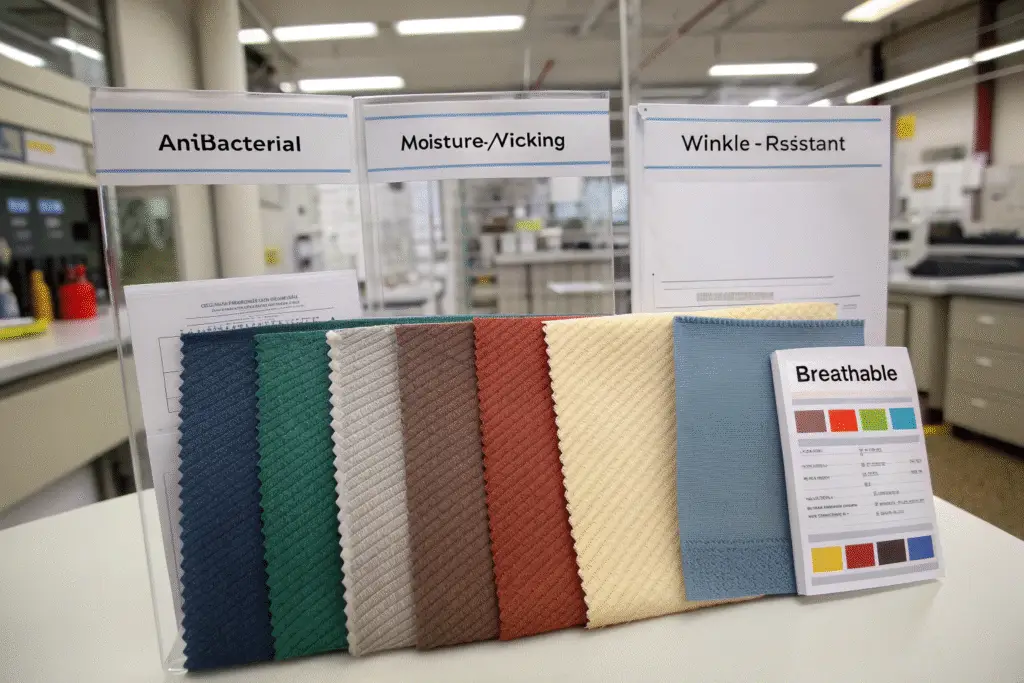
Some brands want added functionality—like wicking finishes, silver-based antimicrobials, or soil-release coatings. These add value but also cost and minimums.
At Fumao, we offer antimicrobial-treated scrubs with MOQ starting from 1,000 sets. We source from bluesign®-approved suppliers and test under ISO 20743 for bacteria reduction.
Review antimicrobial textile standards or see what makes a fabric medical-grade.
How Do You Customize Scrub Designs Without Slowing Delivery?
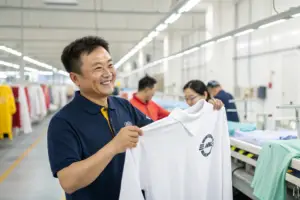
Buyers like Ron often want more than standard blues and greens. Custom hospital scrubs can include branded embroidery, pocket configuration changes, contrast piping, or size grading by region.
Customizations must be balanced with production lead time—choosing the right factory with in-house sampling and digital prototyping can cut weeks off your timeline.
What Design Elements Can Be Customized?
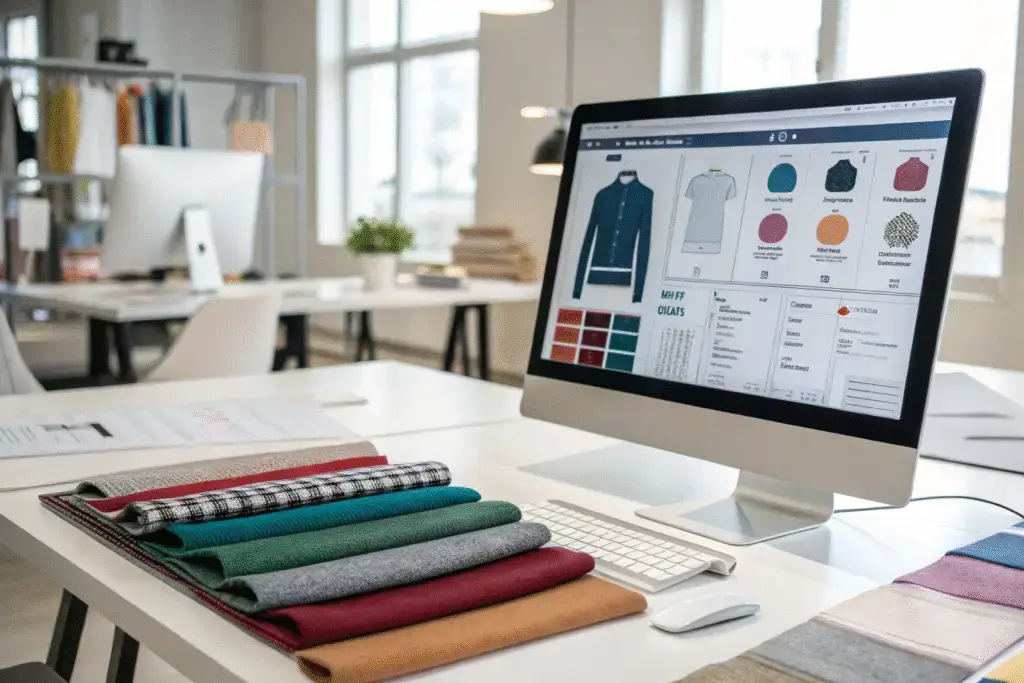
Most factories can alter the neckline, sleeve type, pocket count, and garment length. For larger volumes, you can also create unique color palettes, brand-dyed fabric, and private labeling (inside neck, wash care tags, or woven logos).
Our best-selling scrub projects usually involve 3–5 design SKUs with standard fits and 6-color options per range.
Explore custom scrub design guidelines or visit branding tips for medical apparel.
How Fast Can Custom Designs Be Sampled and Approved?
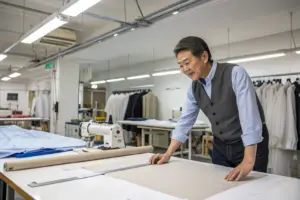
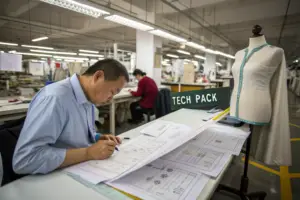
Speed depends on clarity of tech packs. At Fumao, we digitize all patterns and simulate fabric drape with 3D modeling tools like CLO3D. This allows brands to approve designs in 2–3 days, not weeks.
We ship physical samples via express services with full documentation—ideal for compliance or visual merchandising.
Read more about 3D sampling for apparel or explore how to streamline custom orders.
What Logistics Setup Should Scrub Manufacturers Offer?
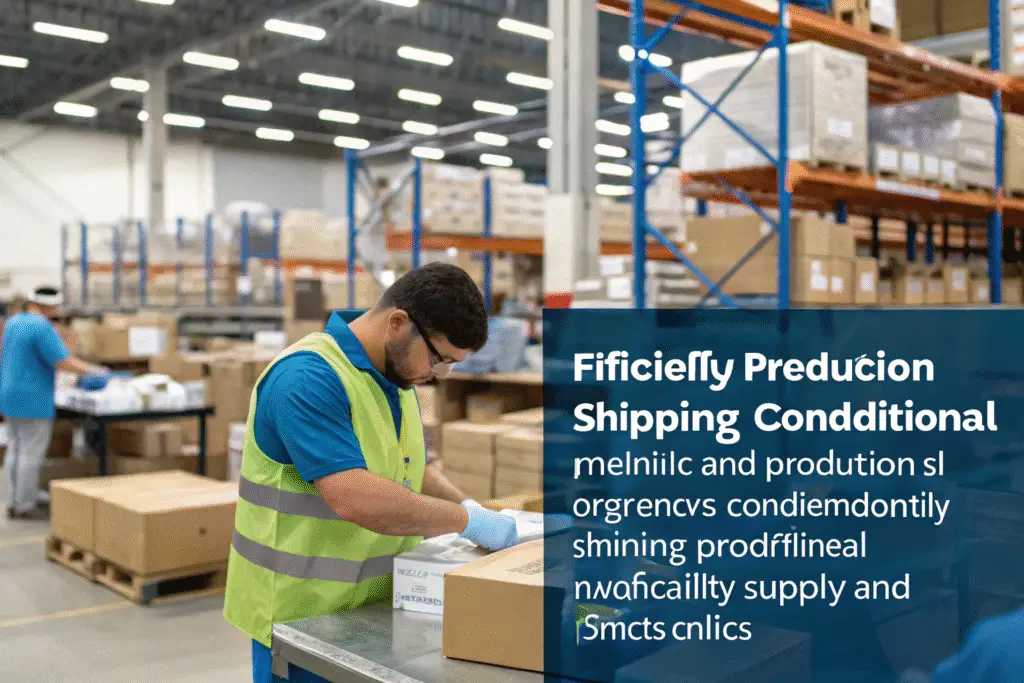
For time-sensitive clients like hospitals or clinics, late deliveries are not acceptable. Your manufacturer must integrate production planning with shipping coordination.
Ideally, choose manufacturers who offer DDP delivery, U.S. customs compliance, and carton packing per your distribution center’s SOP.
Is DDP (Delivered Duty Paid) Best for U.S. Buyers?
Yes. With DDP, the factory handles everything—from export clearance in China to final delivery to your U.S. warehouse, including duties and taxes. You avoid surprise fees, long port holds, or incorrect tariff codes.
At Fumao, we work with GeeseCargo to ensure all medical uniform shipments clear U.S. customs with HTS codes for 6203.43.4010 and 6211.33.0000.
Learn about DDP for apparel imports or see customs requirements for healthcare products.
What Packing Details Are Required for Medical Scrubs?
Buyers should clarify how garments are folded, labeled, and sorted. Most medical distributors want scrubs folded in polybags by size and style, with UCC-128 barcodes and carton labels matching their ERP.
We offer carton kitting services, bundling by hospital PO or department. This reduces warehouse handling and speeds up shelf restocking.
Review carton packing best practices or explore barcode systems for hospital apparel.
Conclusion
Finding the right manufacturer for custom hospital scrubs means balancing certification, quality, customization, and logistics. A good partner ensures not only clean stitching and soft fabric—but also timely delivery, brand compliance, and scalability for hospital systems.
At Fumao Clothing, we specialize in helping American medical brands and distributors build reliable scrub programs with consistent quality. If you're ready to create or improve your custom healthcare apparel line, reach out to our Business Director Elaine at elaine@fumaoclothing.com. We’re ready to make your scrub supply seamless.