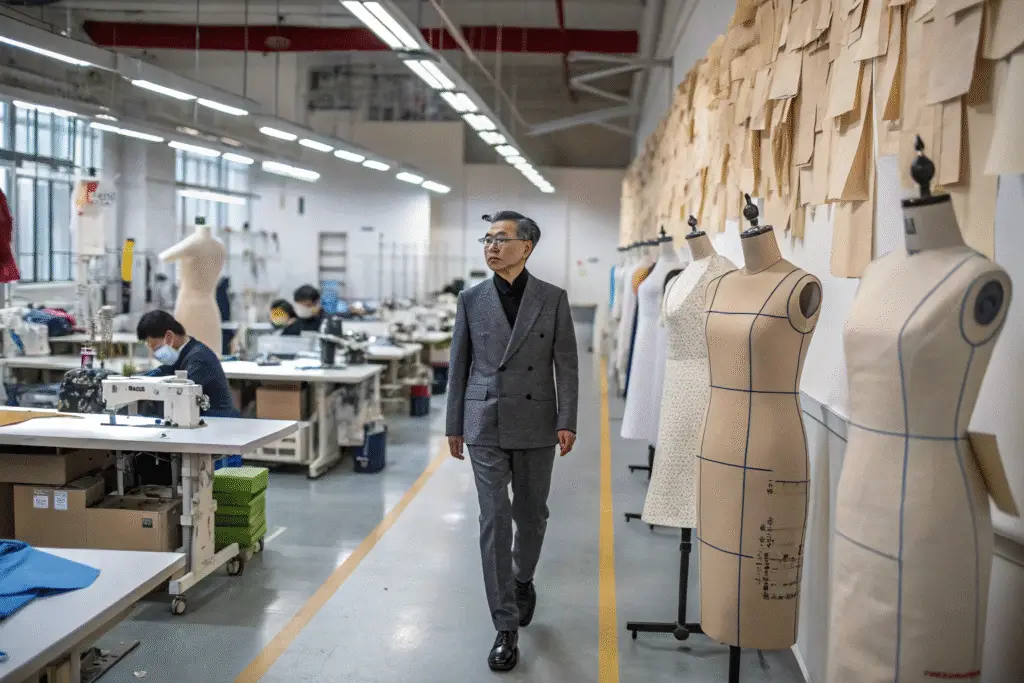
In today’s competitive fashion industry, brands are shifting away from mass production and turning to custom tailored clothing to offer premium value and personalized fit. But finding a factory that can deliver true tailoring—not just size variations—is harder than it seems. Poor communication, mismatched expectations, and substandard quality can derail your entire line.
To find the right factory for custom tailored clothing, you need to look beyond cost and prioritize craftsmanship, flexible MOQs, and proven communication systems. At Shanghai Fumao, we’ve worked with fashion startups and high-end brands across the U.S. and Europe to bring their tailored vision to life—on time and within budget.
In this guide, I’ll walk you through everything you need to know about finding, vetting, and working with custom tailoring factories that can truly support your brand goals.
What Defines a True Custom Tailoring Factory?
Not all garment manufacturers are equal—especially when it comes to tailored clothing. Many claim to offer customization, but what they really provide is “made-to-measure” from existing patterns, not true tailoring from scratch.
A real custom tailoring factory will build each garment using your unique pattern, offer fabric and trim options, and support grading, sampling, and fit iteration.
What Capabilities Should a Custom Tailoring Factory Have?
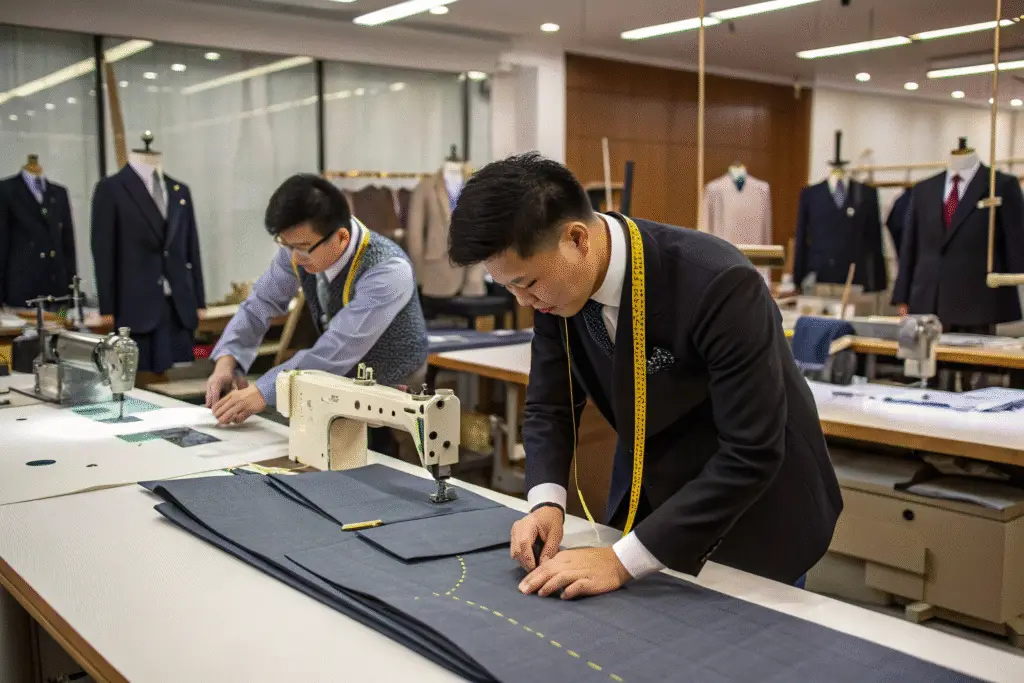
To deliver tailored garments successfully, your factory must offer:
- In-house pattern making and grading
- Fabric cutting by individual measurement or block
- Sewing machines suited for suit-weight fabrics
- Custom lining, interfacing, and trim sourcing
- Trial sampling and adjustable fittings
Factories that specialize in men’s suits, formal wear, and uniforms are often the best at delivering structured tailored products. You can review manufacturers through Kompass business directory or compare tailoring capabilities on Fibre2Fashion.
How Does a Tailoring Factory Differ From Mass Manufacturers?
Most mass garment factories operate on bulk sizing and high-speed lines, optimized for fast-moving categories like T-shirts and hoodies. Tailoring factories, on the other hand, use:
- Smaller production teams
- Individual garment attention
- Fabric buffering and steaming equipment
- Hand finishing where necessary
This difference in workflow is what allows for curved seams, structured fits, and higher-end aesthetic. You can view visual contrasts in production setups on YouTube’s tailoring factory tours or compare workflow charts on Sewport.
Where Are the Best Locations for Tailored Garment Production?
If you're a U.S. or European brand, you’ve likely considered China, India, or Vietnam for cost-effective production. But not all regions are equally skilled in custom tailoring.
Choosing the right country for custom tailored manufacturing depends on the complexity of your garments, your MOQ, and your budget.
Why Is China Still Leading in Flexible Custom Garment Manufacturing?
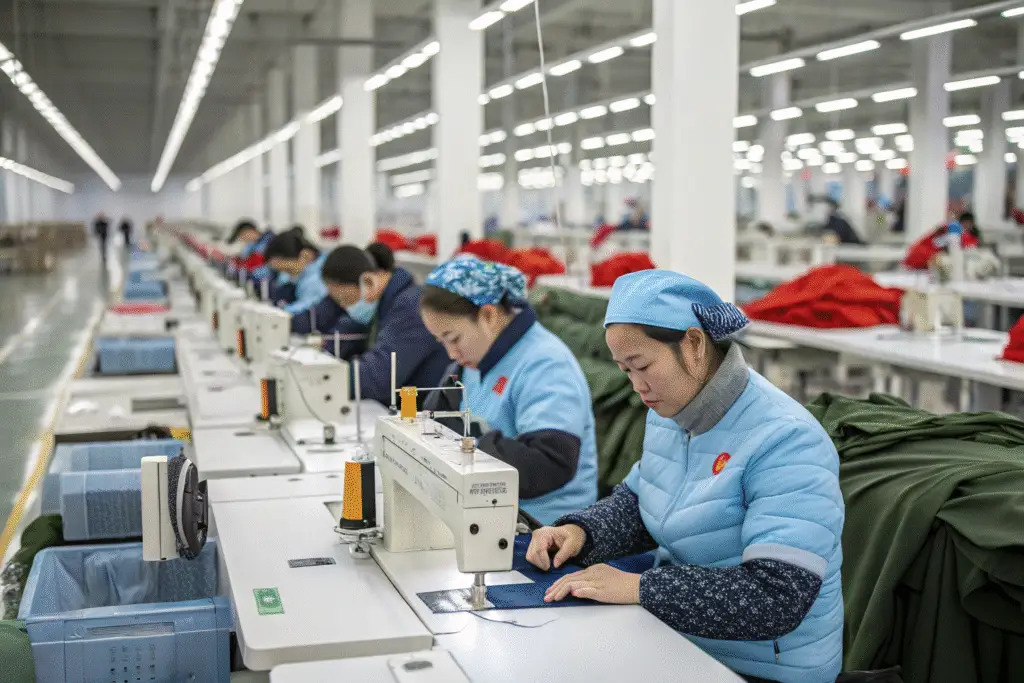
China offers the best of both worlds—cost efficiency and technical precision. At Fumao, we combine our industrial infrastructure with skilled tailoring teams that handle small-run suit jackets, shirts, dresses, and uniforms.
What makes China ideal:
- Strong fabric supply chains (wool blends, suiting cottons)
- Access to interlining, shoulder pads, buttons, and trims
- DDP shipping and scalable logistics
- Consistent sample-to-bulk quality
You can verify supplier capabilities via Alibaba’s Verified Manufacturer tag or explore regional strengths on Made-in-China.
Is India a Better Fit for Bespoke and Hand-Finished Orders?
India is renowned for artisan tailoring, especially in traditional wear and formal garments. If you’re seeking embroidery, hand-stitching, or unstructured tailoring, India is an excellent source.
However, be aware:
- Lead times are longer
- Logistics infrastructure is weaker
- Sampling may require in-person visits or third-party inspection
India’s tailoring clusters in Delhi, Mumbai, and Chennai offer experienced workforce but require clearer oversight. Check vetted partners on Indiamart or view tailoring certifications via Apparel Export Promotion Council (AEPC).
What Questions Should You Ask a Tailoring Factory?
Before placing your first custom tailoring order, you need to ask the right questions. Many sourcing mistakes happen not because of bad intent—but because of unclear expectations.
A detailed conversation with your supplier can help align product specs, fabric sourcing, and fitting protocol upfront.
Can They Handle Grading and Pattern Development?
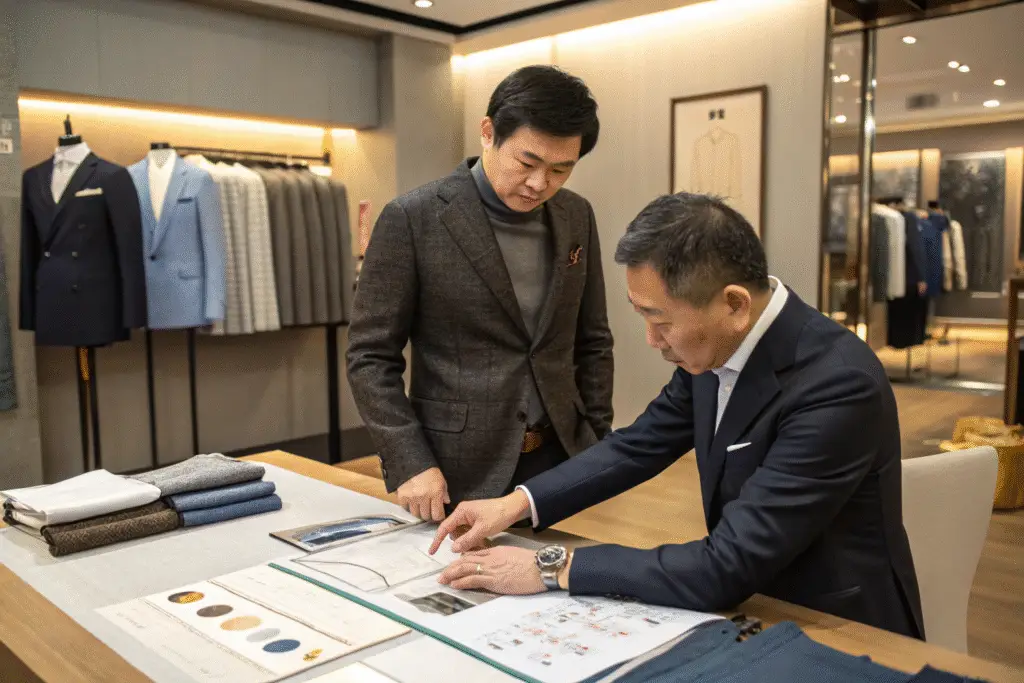
Custom tailored clothing is based on specific patterns for each size or body type. Your supplier should offer:
- In-house or CAD-based pattern making
- Grading rules aligned with U.S./EU fit
- Storage of your brand’s base patterns
- Pattern amendments after sampling
For example, at Fumao, we offer Gerber Technology CAD pattern systems and digitize your patterns for faster replication and updates.
Other digital solutions like Clo3D or Browzwear offer visualization and fitting accuracy for brands scaling custom clothing.
What MOQ Can They Support for Tailored Items?
Tailored products often require lower MOQ commitments per SKU because of fit complexity. A good factory will be transparent about:
- MOQ per style vs per size
- Sample charges and pattern retention
- Combined MOQ across different styles
At Fumao, we support tailored clothing production starting at 100 pcs per design, with the ability to mix sizes and colorways.
Check competitive MOQ structures from suppliers on Sewport’s factory listing or view best practices on Maker’s Row blog.
How to Manage Fit Samples and Quality Control?
Even if your tech pack is perfect, fit and construction must be verified in real samples. This is especially true for tailored clothing, where a 1cm error can ruin the silhouette.
Fit sampling and third-party quality control are essential steps before and during bulk production.
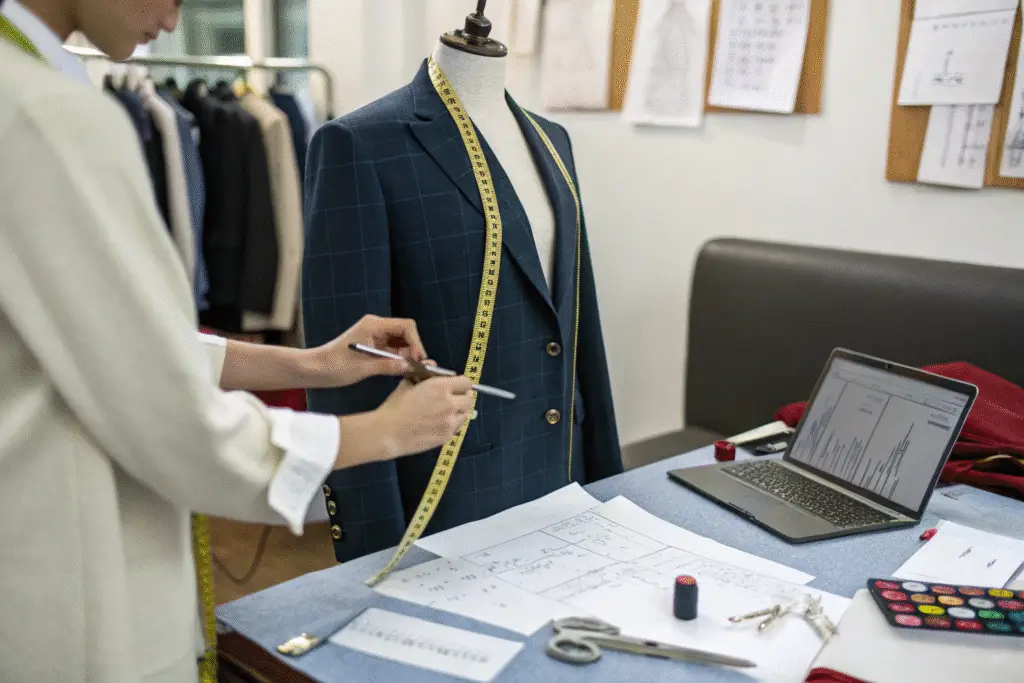
How Should You Handle the Fit Sampling Process?
Fit sampling includes:
- Proto Sample – For construction and fabric feel
- Fit Sample – To check size and silhouette
- Pre-Production Sample (PPS) – Final reference before bulk
You should wear-test your samples or send them to your stylists/clients for validation. Each round should be documented in Notion or shared via Google Drive folders.
At Fumao, we send videos and measurements with every sample, including QR-coded fit reports per SKU.
What QC Measures Should Be in Place During Production?
Good factories will support either in-house QC or allow third-party inspections from agencies like:
These inspections should focus on:
- Stitch accuracy and strength
- Seam alignment
- Measurement tolerances
- Label and trim consistency
For detailed QC checklists, download sample reports from QIMA’s templates or Intertek forms.
Conclusion
Finding a factory that specializes in custom tailored clothing is about much more than price or speed. It requires dedication to pattern precision, sampling discipline, communication clarity, and flexible scaling.
At Shanghai Fumao, we’ve built a tailored garment production system designed for premium fashion brands that want to scale responsibly—with accuracy and brand consistency at the core. If you're ready to bring your tailored vision to life, contact our Business Director Elaine at elaine@fumaoclothing.com and start your next collection with confidence.