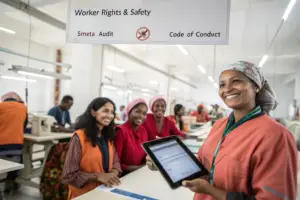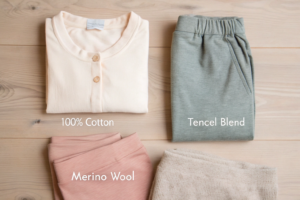
Are you an American apparel brand owner scrolling through endless supplier lists on Alibaba, feeling overwhelmed? You are not alone. Finding a trustworthy manufacturing partner online is a major pain point. Many buyers experience delayed shipments, quality inconsistencies, and frustrating communication gaps, which can ruin your selling season and damage your brand.
This guide provides a proven, step-by-step strategy to identify and vet reliable garment manufacturers, both on platforms like Alibaba and through alternative channels. It focuses on actionable tactics for quality control, certification verification, and logistics setup to secure a partnership that delivers on time, to spec, and within budget.
The journey from sourcing to delivery is complex. A great partner becomes an extension of your team. A poor one becomes your biggest headache. Let's change how you search for suppliers. This article will give you the tools to move forward with confidence.
How To Vet An Apparel Manufacturer's Legitimacy?
You found a factory with great prices and a flashy website. But how can you be sure they are real? Many brands have been burned by suppliers who exaggerate capabilities or, worse, are trading companies posing as factories. Verifying legitimacy is your first and most critical line of defense.
The core of vetting is moving beyond online profiles to gather concrete, verifiable evidence. You must confirm their business license, physical factory existence, and production capacity. Do not just trust what is written; seek proof you can cross-check.
What Legal Documents And Certifications Should You Demand?
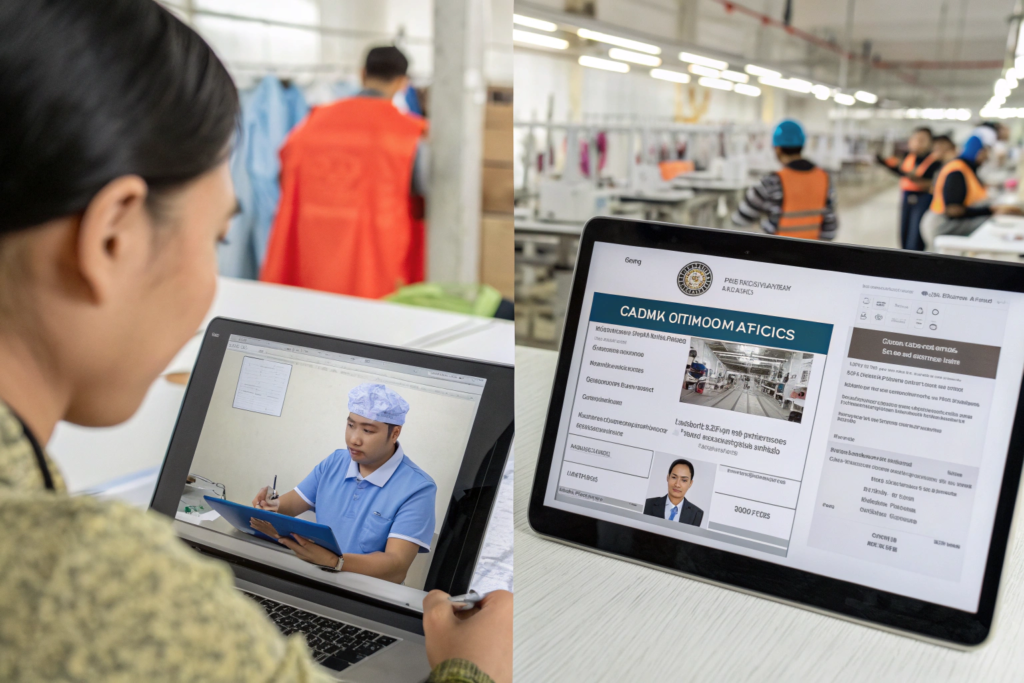
Always start by requesting the company's official business license. In China, a legitimate manufacturer will have a Business License issued by the local Administration for Market Regulation. Check the registered capital, scope of business (it should include garment manufacturing), and legal representative. Do not accept blurred copies. For a U.S.-focused partner, certifications like ISO 9001 for quality management systems are strong indicators of a structured operation. For specific product categories, ask for relevant compliance certificates, such as Oeko-Tex Standard 100 for fabric safety or GRACS for social responsibility. Last year, a client from Texas almost partnered with a supplier who provided forged Oeko-Tex certificates. We advised them to verify the certificate number directly on the Oeko-Tex official website, which revealed the fraud. They subsequently partnered with us at Shanghai Fumao, where we provided immediate, verifiable documentation for all our processes.
How Can A Virtual Factory Tour Prevent Costly Mistakes?
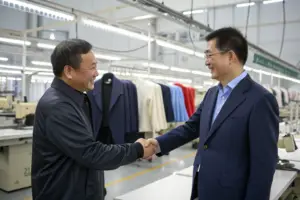
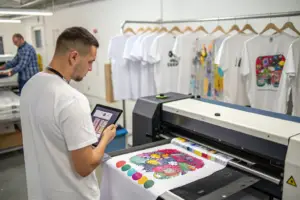
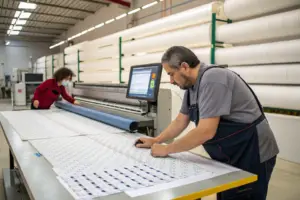
A virtual tour is your best tool to see the real operation. Insist on a live video call, not a pre-recorded video. Schedule it during their working hours. Ask them to walk you through the factory floor, showing key areas like the cutting room, sewing lines, quality inspection stations, and warehouse. Pay attention to the equipment, worker skill, and general organization. Look for signs of actual production for other clients, like hanging garments with different labels. In 2023, we conducted over 150 live virtual tours for potential clients. One brand buyer noticed our automated cutting machines and dedicated quality control checkpoints, which matched exactly what we described in our proposal. This transparency built instant trust and led to a successful order for their line of woven shirts. This hands-on verification is a service we are proud to offer at Shanghai Fumao Clothing.
What Are The Red Flags In Garment Supplier Communication?
Communication problems are often the first sign of deeper issues. Inefficient, unclear, or evasive communication from a sales rep usually predicts problems with production and logistics. Your goal is to identify partners who communicate like professionals, not just salespeople.
Red flags include slow response times, vague answers to technical questions, and reluctance to provide detailed contracts. A reliable partner communicates proactively, transparently, and with technical knowledge.
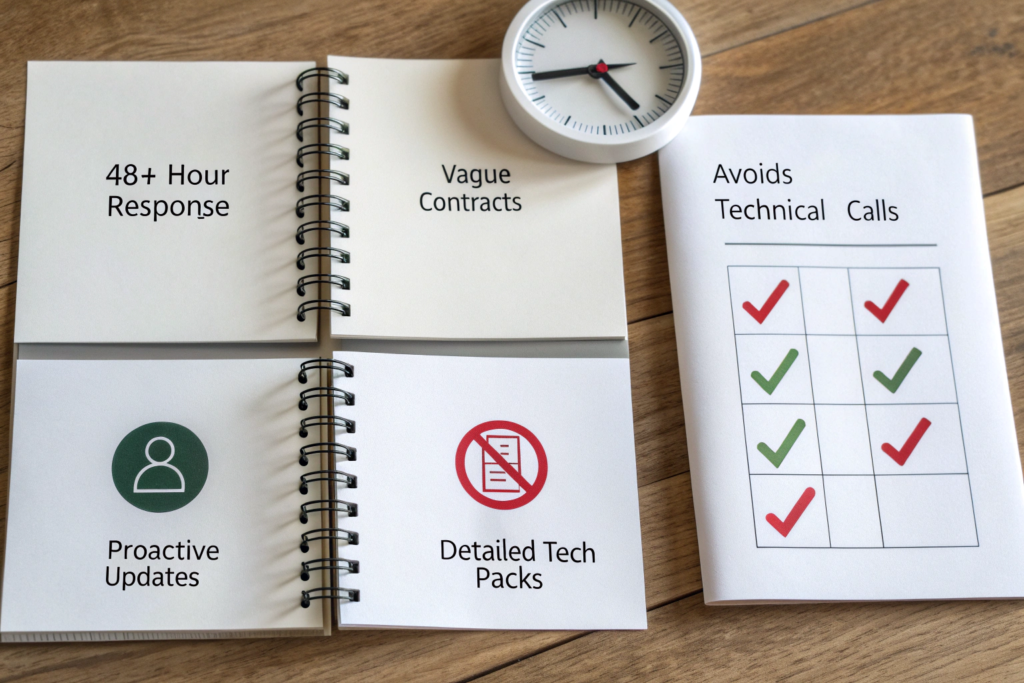
Why Are Vague Quotes And Contracts A Major Risk?
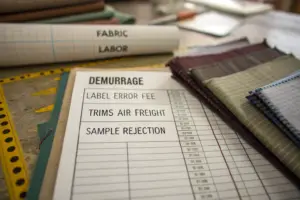
A detailed quote and contract protect both parties. A vague quote that just states "$10 per piece, FOB Shanghai" is a huge risk. It leaves room for hidden costs and misunderstandings. Demand a detailed breakdown that includes fabric cost (type, weight, supplier), labor cost, trims, packaging, and logistics terms. The contract should clearly define payment terms (e.g., 30% deposit, 70% before shipment), quality standards (referencing AQL inspection levels), delivery deadline with a penalty clause for delays, and protocols for solving disputes. A supplier who hesitates to provide this detail may be inexperienced or planning to cut corners later. We provide our clients with line-item quotes and clear contracts because we believe transparency is the foundation of a long-term partnership.
How To Test A Supplier's Responsiveness And Technical Knowledge?
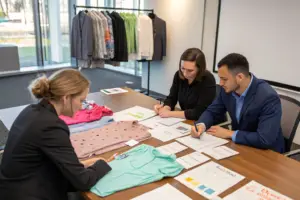
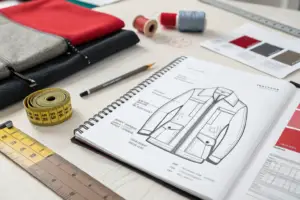
Test them before you commit. Send a detailed inquiry with specific questions about fabric sourcing, moq for custom designs, and their process for handling quality defects. Gauge their response time and depth of answer. Ask for a video call to discuss your tech pack. A sales rep who can only talk about price, but must "ask the factory" for every technical question, is a middleman. You want to speak directly with someone who understands production. For instance, a client once sent us a complex tech pack for performance activewear. Our sales manager, who has a background in textile engineering, arranged a call with our production head. We discussed moisture-wicking fabric alternatives, seam construction for durability, and provided a sample timeline within 24 hours. This demonstrated our integrated team structure and expertise.
How To Ensure Quality Control With An Overseas Manufacturer?
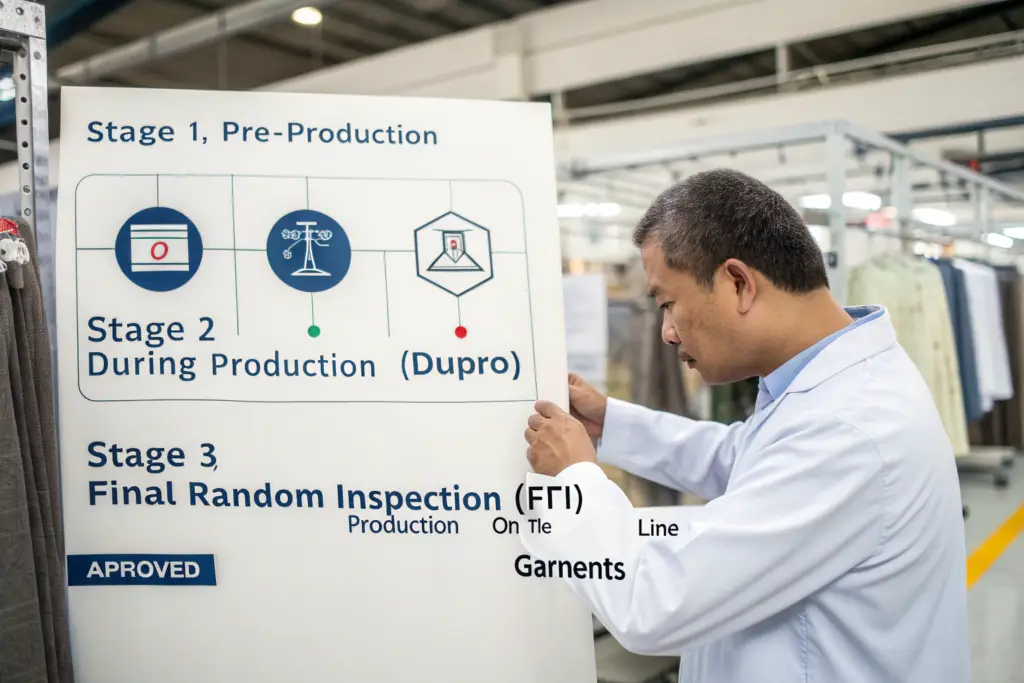
You cannot be in the factory every day, so your quality control system must work remotely. Relying solely on the supplier's final inspection is a gamble. Successful importers build a multi-layered QC process that catches issues at key production stages.
This involves clear standards, independent verification, and using technology to your advantage. It turns quality from a hope into a managed result.
What Is The Role Of Pre-Production Samples And Lab Tests?
Never skip the pre-production sample. This sample, made with the correct fabrics and trims, is your final approval before mass production. It is your benchmark. Alongside this, insist on fabric testing reports from an internationally recognized third-party lab, such as SGS or Bureau Veritas. Tests can check for colorfastness, shrinkage, pilling, and harmful substances. This objective data is crucial. Two years ago, a client provided a specific fabric blend for polo shirts. Our in-house lab test showed a higher-than-expected shrinkage rate. We sourced an alternative fabric with better performance, sent a new sample and test report for approval, and prevented a massive quality failure. This proactive approach saved the client's autumn collection.
Should You Hire A Third-Party Inspection Company?
For large orders, hiring a third-party inspection company is a wise investment. They act as your eyes on the ground. The industry standard is the AQL (Acceptable Quality Level) inspection. An inspector will check a random batch of finished goods against your approved sample and report any defects. We recommend this for all new partners or for orders above a certain volume. At Shanghai Famoa, we work openly with inspection companies. In fact, we often facilitate their access and provide all necessary documents. We see it as a joint commitment to quality that builds trust. Our internal QC team operates under the same AQL standards, so we are rarely surprised by an external report.
What Are The Best Logistics Strategies For Timely US Delivery?
Delayed shipments are a top pain point, often missing the crucial selling season. A reliable logistics strategy is as important as the production itself. It involves understanding Incoterms, planning for lead times, and having contingency plans.
The goal is to move your goods from the factory floor to your U.S. warehouse predictably and efficiently, navigating customs and potential port congestion.
DDP vs. FOB: Which Shipping Term Is Safer For Importers?
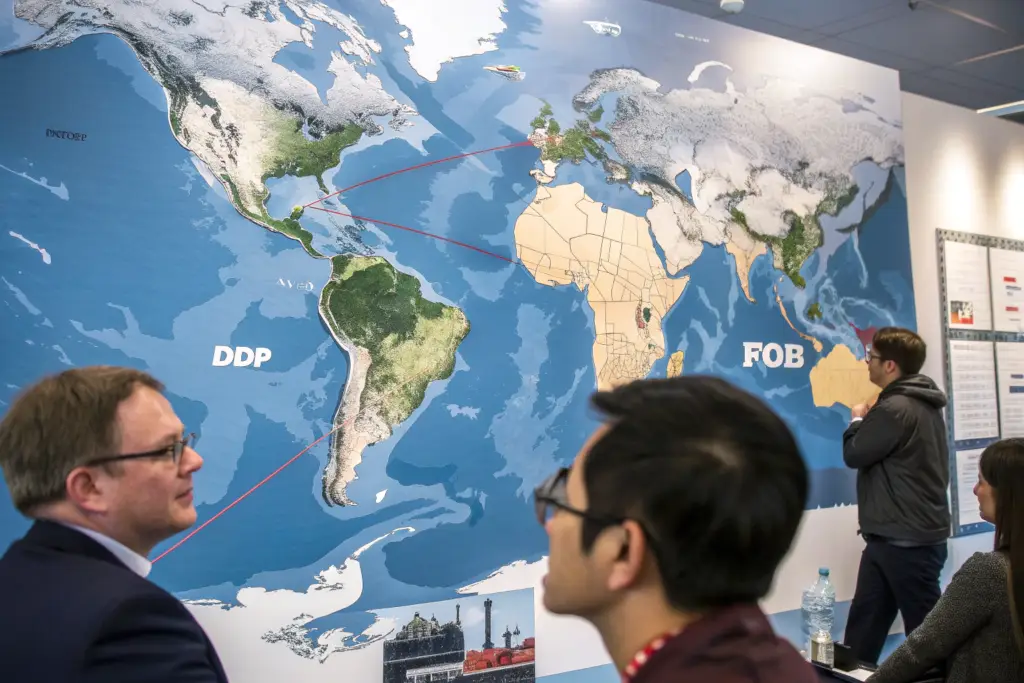
This is a critical choice. FOB (Free On Board) means the supplier gets the goods to the port and loaded on the ship. You, the buyer, are responsible for the main shipping cost, insurance, and all processes from the destination port onward. It offers more control but also more complexity for you. DDP (Delivered Duty Paid) means the supplier handles everything from their factory to your designated warehouse in the USA, including all duties and taxes. For buyers who want a hands-off, predictable total cost, DDP is often safer and simpler. We specialize in DDP shipping to the USA for our clients. They receive one clear price and a single point of contact—us. We manage the freight, customs clearance, and final delivery, providing real-time tracking. This eliminates the stress of coordinating multiple agents and unexpected destination fees.
How To Build Realistic Timelines And Plan For Delays?
Always add buffer time. A common formula is: Production Time + Shipping Time + 10-15% Buffer = Your Realistic Timeline. For sea freight from China to the US West Coast, factor in 30-35 days after the goods leave the factory. Work backwards from your must-have in-store date. Discuss potential risks openly with your supplier—like Chinese New Year closures, port congestion, or fabric sourcing delays. A good partner will warn you about these in advance and suggest solutions. For example, for a client's spring jacket line, we advised starting production two weeks earlier than initially planned due to forecasted port delays. We secured the fabric early and delivered the goods with a week to spare before their marketing launch. This level of proactive planning is part of our service.
Conclusion
Finding a reliable garment partner requires a shift from just searching for the lowest price to diligently vetting for proven capability, transparent communication, and shared commitment to your success. The process involves verifying legitimacy, establishing clear quality control gates, and choosing logistics terms that match your operational capacity. By asking the right questions and demanding verifiable evidence, you can turn the risky endeavor of overseas sourcing into a strategic advantage for your brand.
Your search for a manufacturer that combines competitive pricing with unwavering reliability and seamless DDP logistics ends here. Let us help you bring your apparel visions to market with confidence and precision. We invite you to contact our Business Director, Elaine, to discuss your next project. Reach out to her at elaine@fumaoclothing.com. Visit Shanghai Fumao Clothing to learn more about how we serve ambitious U.S. brands as their trusted manufacturing extension.