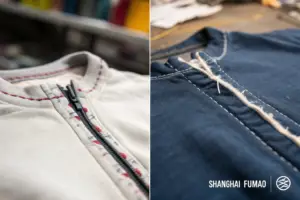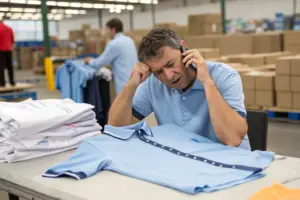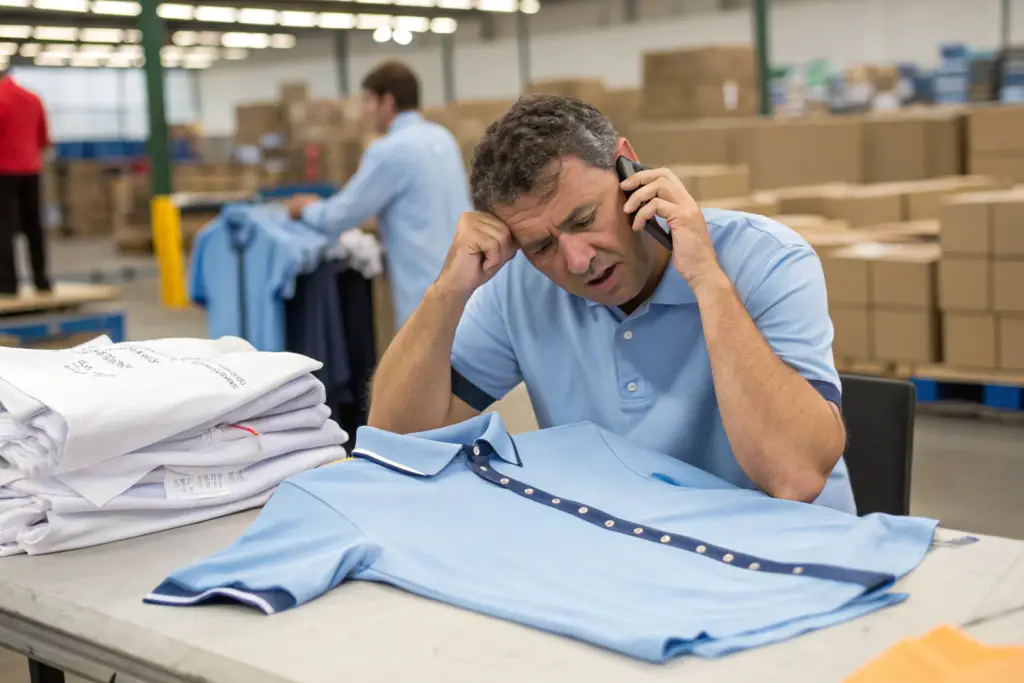
I remember a call that still makes me wince. It was about five years ago, and a client from Texas had just received his largest ever order: 15,000 pieces of custom polo shirts for a corporate event. The first 100 shirts looked perfect. But as his team unpacked deeper into the containers, they found a problem. About 2,000 shirts had a small stitching error near the hem. It was inconsistent. Some had it, some did not. He had to have every single shirt checked by hand before he could deliver them to his client. The cost of that extra labor ate up his entire profit margin. He called me, frustrated and exhausted. "How did this happen?" he asked. "We approved the samples. Everything looked good."
The answer is simple but not easy: you ensure quality in every piece of a large order by building quality into the process, not just inspecting for it at the end. This means breaking the production run into manageable lots, inspecting at multiple points along the way, and using statistical sampling methods that catch problems early. You cannot rely on a single final inspection to catch every defect in 15,000 pieces. By then, it is too late to fix anything without massive cost and delay.
That Texas client taught me a hard lesson. We had let him down. Our final inspection had missed those random stitching errors. After that, we completely rebuilt our quality system for large orders. At Shanghai Fumao, we now treat every large order as a series of small orders linked together. We inspect each part separately. We catch problems when they are small. Let me walk you through exactly how we do this, so you can protect your next large order from the same fate.
How Do You Break A Large Order Into Manageable Quality Control Lots?
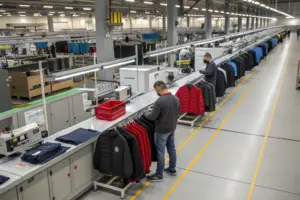
When you order 10,000 pieces, it is tempting to think of it as one single thing. One order, one production run, one inspection. But this thinking is dangerous. Problems do not appear evenly across 10,000 pieces. They cluster. They start in one shift, or one machine, or one bundle of fabric. If you treat the whole order as one unit, you will miss these clusters until it is too late. The first step is breaking the order down.
What Is Lot Sampling And Why Does It Matter?
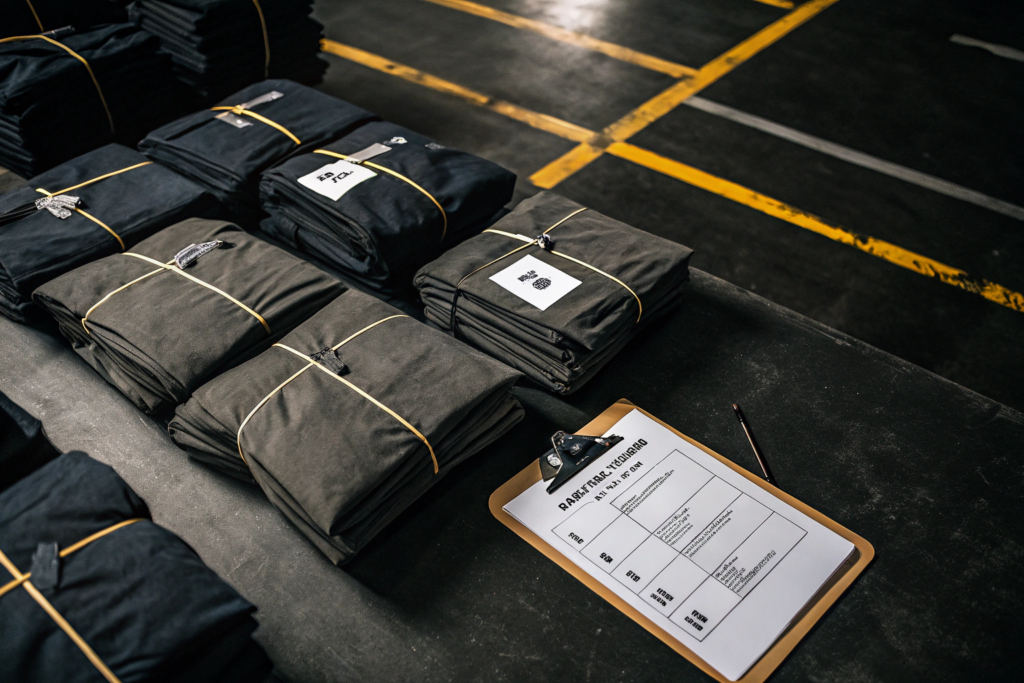
Lot sampling means dividing your total order into smaller, separate groups. Each group, or lot, might be based on production shift, fabric dye lot, or cutting batch. You then inspect each lot independently. If a lot passes, you ship it. If a lot fails, you stop and fix the problem before it spreads to other lots.
Let me give you a real example. Last year, we produced 20,000 t-shirts for a client in Florida. We divided the order into lots of 2,000 pieces, based on the day they were cut and sewn. During inspection of lot number three, our team found a tension problem on the sleeve hems. The stitching was slightly loose. Because we caught it in lot three, we stopped production immediately. We adjusted the machines and retrained the sewers. Lots one and two were already fine. Lots four through ten were produced correctly. Only 2,000 pieces were affected, and we fixed them by re-stitching the sleeves. If we had waited for a final inspection of all 20,000 pieces, we would have had 18,000 good shirts and 2,000 bad ones mixed randomly throughout. We would have had to inspect every single shirt to find them. Lot sampling saved us from that nightmare. You can learn more about sampling methods from quality organizations like ASQ, which publishes standards for lot sampling in manufacturing.
How Do You Track Different Fabric Dye Lots Separately?
Fabric is not always consistent. Different dye lots can have slight color variations. If these variations end up in different pieces of the same order, your customer will notice. A batch of black t-shirts might have one that is slightly brownish-black next to one that is blueish-black. On their own, they look fine. Together, they look wrong.
This is why we track every single fabric roll and assign it to specific production lots. We record the dye lot number for every piece. When we cut, we keep pieces from the same dye lot together. When we sew, we track which garments came from which bundles. This way, if a client receives an order and finds a shade variation, we can trace it back to a specific dye lot. We can isolate the problem. We do not have to recall everything. This level of traceability is essential for large orders. Organizations like Textile Exchange provide guidelines for material traceability that help factories implement these systems. At Shanghai Fumao, we use barcode scanning to track every piece from fabric roll to finished garment.
What Inspection Points Should You Establish During Production?
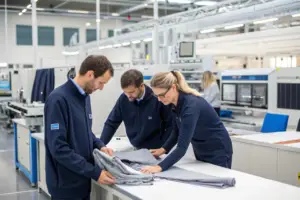
Waiting until the end to inspect is like waiting until your house is built to check the foundation. You need checkpoints along the way. Each checkpoint catches different types of problems. Together, they create a safety net that catches defects before they become embedded in thousands of pieces. I recommend three essential inspection points for every large order.
What Should You Check During In-Line Inspection?
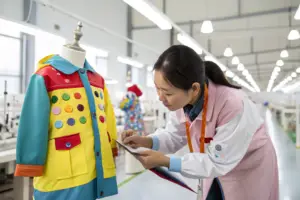
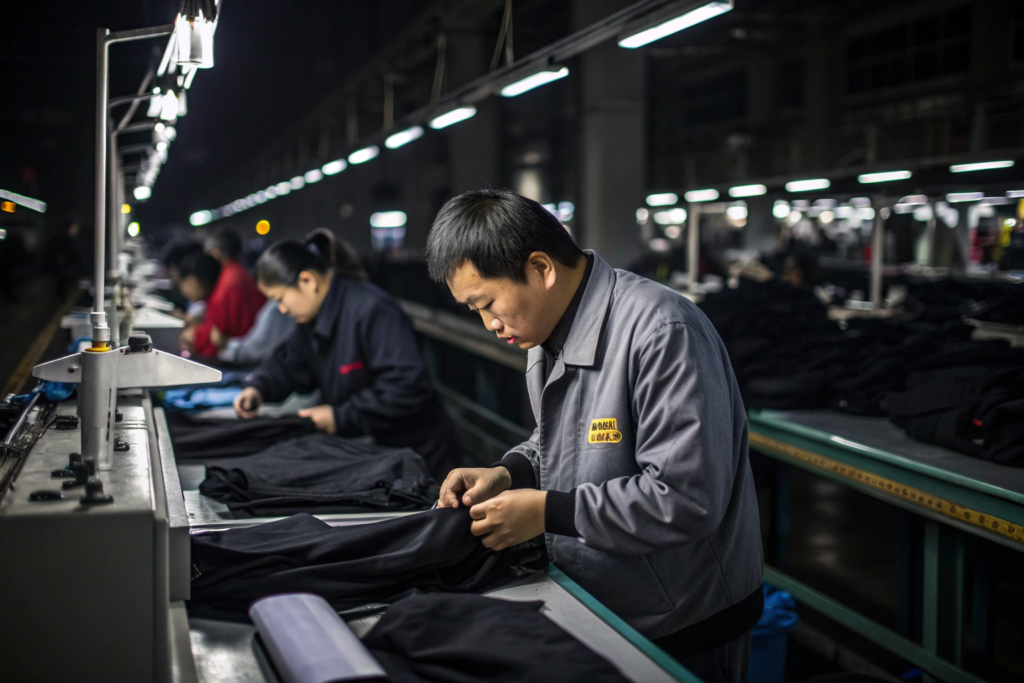
In-line inspection happens while production is running. It is not a final check. It is a mid-process check. The goal is to verify that the production process is working correctly. If there is a problem, you catch it after 50 pieces, not after 5,000.
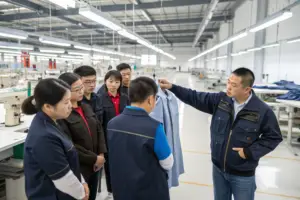
Typically, we perform in-line inspection after the first 10% to 20% of production is complete. We check critical measurements, stitching quality, and construction details. We compare the pieces to the approved sample. If everything matches, we continue. If we find deviations, we stop. I remember a situation with a client in Chicago who ordered 8,000 pairs of shorts. During in-line inspection, we noticed the pocket depth was 1cm shallower than the sample. It was a small error, but it would have changed the look of the shorts. We stopped production, traced the problem to a miscommunication in the cutting room, fixed it, and restarted. Only 400 pairs were affected. We reworked them. The other 7,600 were perfect. That in-line inspection saved the client from 8,000 pairs of shorts that did not match their design. You can find detailed in-line inspection checklists from companies like QIMA, which offers guidance on what to check at each production stage.
Why Is Pre-Shipment Inspection Your Last Line Of Defense?
Pre-shipment inspection is the final check. It happens when production is complete and the goods are packed and ready to go. This is your last chance to catch problems before the container ships. For large orders, this inspection must be done carefully.
We use AQL standards for pre-shipment inspection. For most wholesale orders, we use AQL 2.5. This means we randomly select a sample size based on the total order quantity. We inspect that sample thoroughly. If the number of defects is within the acceptable limit, the whole order passes. If defects exceed the limit, we reject the order and do a 100% inspection to sort good from bad. This system is efficient and statistically valid. It does not require checking every piece, but it gives you confidence that the overall quality is acceptable. However, as I learned from that Texas client, AQL sampling is not perfect. It can miss clustered defects. This is why we combine it with in-line inspection and lot sampling. The combination is much stronger than any single method. The American Society for Quality has detailed resources on AQL sampling plans and how to apply them correctly.
How Do You Handle Defects When They Are Found?
No matter how good your process is, you will find defects. The question is not whether defects happen. The question is what you do when you find them. A clear system for handling defects is essential for protecting your brand and your profit margin. You need to know what to reject, what to repair, and what to accept.
What Is The Difference Between Critical, Major, And Minor Defects?
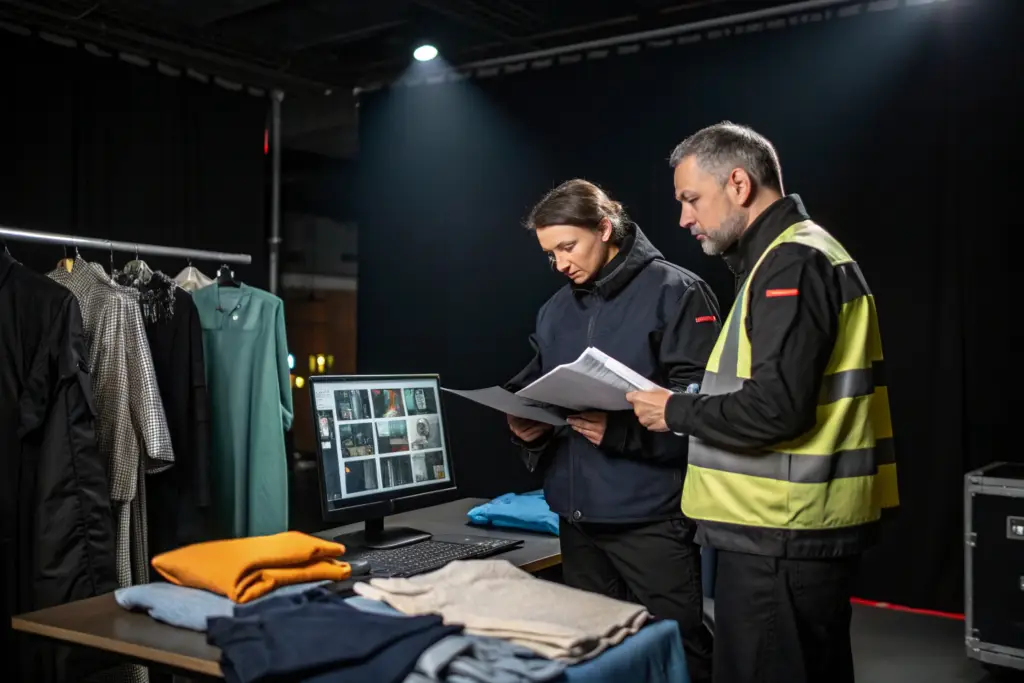
Not all defects are equal. A critical defect makes a garment unsafe or unsellable. A missing button is not critical. A broken needle left inside a garment is critical. A major defect affects the appearance or function significantly. A crooked seam on the front of a shirt is a major defect. A minor defect is barely noticeable. A loose thread end inside a pocket is a minor defect.
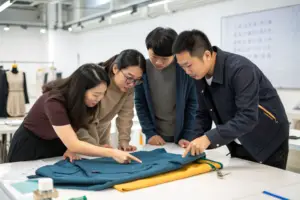
You need to define these categories with your factory before production starts. What is acceptable to you? What is not? For a luxury brand, a minor defect might be unacceptable. For a mass-market basics line, it might be fine. Clear definitions prevent arguments later. At Shanghai Fumao, we work with each client to establish their specific defect criteria. We put them in writing. Inspectors use them consistently. This clarity protects both of us. You can find standard defect classifications from organizations like Intertek, which provides guidelines for garment inspection.
When Does It Make Sense To Repair Versus Replace?
When you find defects, you have choices. You can repair the defective garments. You can replace them with new production. You can discount them and sell them as seconds. The right choice depends on the defect and your timeline.
For minor defects, repair is often fastest. A loose button can be tightened. A hanging thread can be clipped. For major defects, replacement might be necessary. But replacement takes time. If you are close to your shipping deadline, you might accept a discount instead. I had a client in Boston who received a shipment with a small percentage of shirts that had slightly misaligned pockets. It was a major defect by their standards, but fixing it would have delayed the shipment by three weeks and caused them to miss their launch. We negotiated a discount, and they sold the shirts at a lower price point. It was not ideal, but it was better than missing the season. These decisions require clear communication and flexibility. The International Trade Centre has resources on managing quality disputes and negotiating solutions with suppliers.
Conclusion
Ensuring quality in every piece of a large wholesale order is not about luck. It is not about a single final inspection. It is about building a system. You break the order into lots. You inspect at multiple points. You track materials carefully. You define defects clearly. You have a plan for when things go wrong. This system does not guarantee perfection. Nothing does. But it guarantees that when problems happen, you catch them early, fix them fast, and protect the vast majority of your order.
At Shanghai Fumao, we have spent years building and refining this system. We learned from our mistakes, including that painful lesson from Texas. Now, we treat every large order with the same disciplined approach. We want you to open your containers with confidence, knowing that what you ordered is what you will receive. If you are tired of quality surprises and want a partner who takes consistency seriously, let's talk. Contact our Business Director, Elaine, at elaine@fumaoclothing.com. She can walk you through our quality control system and show you how we protect your brand with every piece we make.