Dimensional stability in fabric isn’t just a technical requirement—it’s a cornerstone of product quality. If a T-shirt shrinks after one wash, your brand reputation takes the hit. Whether you're producing kidswear, activewear, or formal garments, ensuring fabrics maintain their shape and size after laundering is critical for customer satisfaction.
Dimensional stability means your fabric resists shrinking, stretching, or warping during and after wash cycles. At Shanghai Fumao, we test and control dimensional performance as part of our bulk production workflows for U.S. and European brands that demand precision and durability.
This guide dives into why dimensional stability matters, how to measure it, and how to ensure your garments hold up from first wash to final wear.
What Causes Fabric Shrinkage or Stretching After Washing?
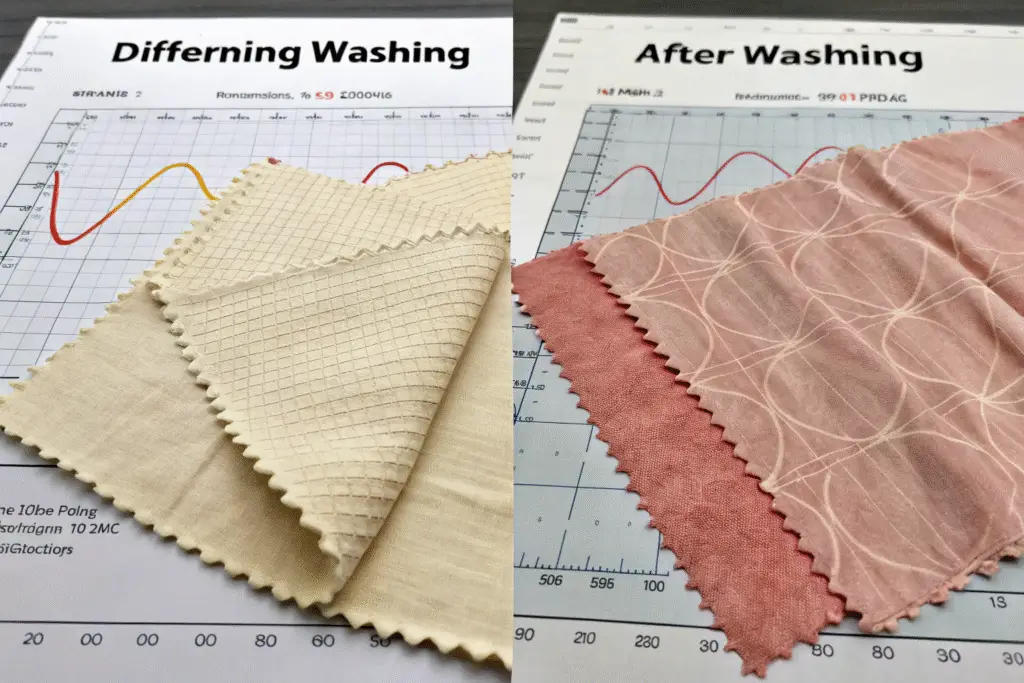
Fabric changes during washing are a result of fiber relaxation, heat exposure, and mechanical agitation. If not pre-treated or tested properly, garments lose their original shape—leading to returns and bad reviews.
Understanding the root causes of dimensional instability helps manufacturers prevent performance failure before it reaches the customer.
What Are the Main Fabric Types Prone to Shrinkage?
Not all fibers behave equally in wash tests. Here’s how they compare:
| Fiber Type | Shrinkage Risk | Common Use |
|---|---|---|
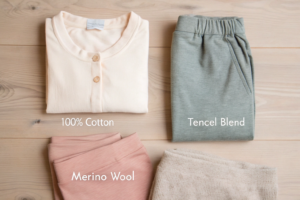
| 100% Cotton | High | T-shirts, casualwear |
| Rayon/Viscose | Very High | Dresses, blouses |
| Polyester | Low | Sportswear, outerwear |
| Wool | Medium-High | Suits, knitwear |
| Spandex Blends | Medium | Leggings, bodywear |
Cotton shrinks mostly due to fiber swelling and relaxation. Rayon is highly absorbent and distorts under agitation. Visit Textile School for a deeper comparison or consult Spoonflower’s shrinkage test for visuals.
How Do Washing Conditions Affect Fabric Shape?
Factors that accelerate shrinkage or distortion:
- Water temperature (hot = more shrinkage)
- Tumble drying (high heat sets shrinkage)
- Mechanical stress (agitation causes skew)
- Chemical content (harsh detergents strip coatings)
Fumao performs AATCC 135 and ISO 6330 tests for every new fabric lot. You can view method standards via AATCC website or ISO Central.
How to Test Fabric Dimensional Stability Accurately?
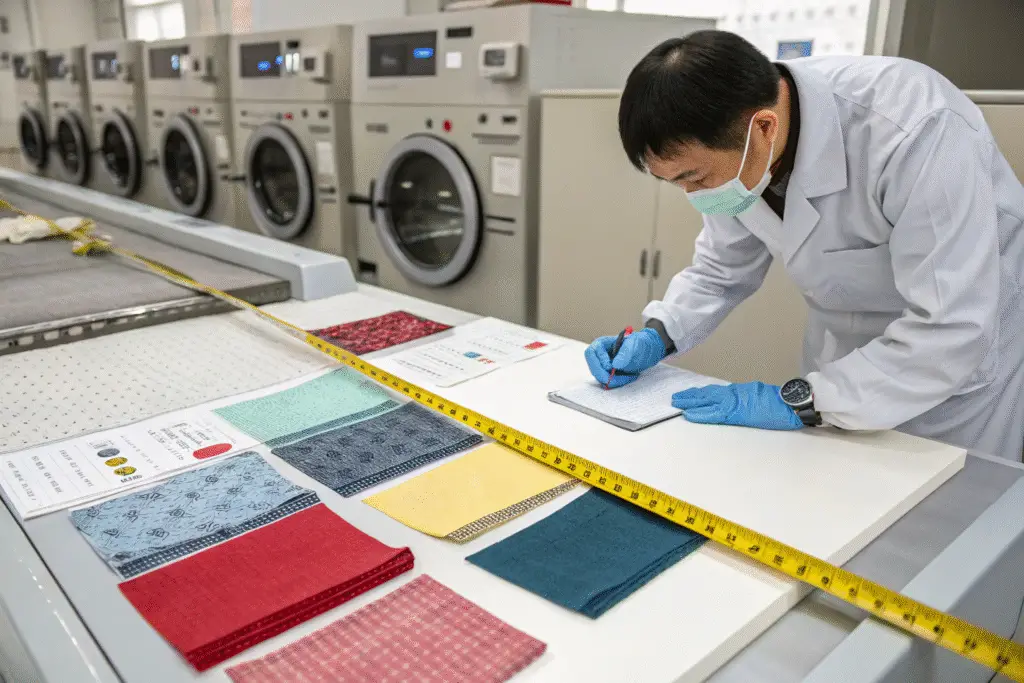
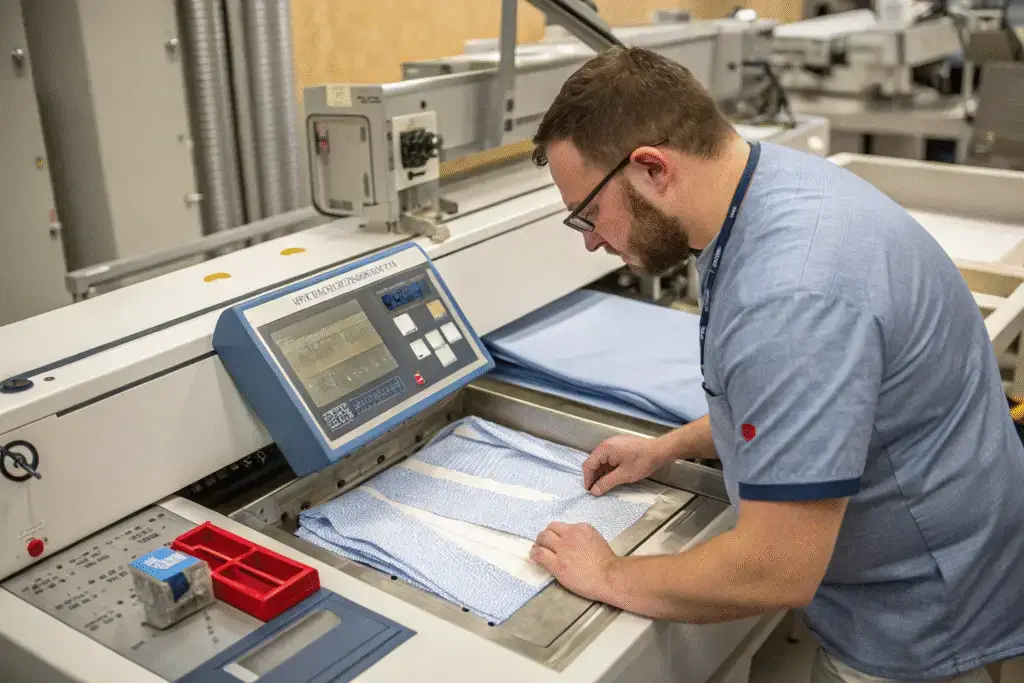
Testing isn’t optional—it’s the only way to verify if your fabric will perform as expected. Whether in-house or through a third-party lab, shrinkage and growth measurement must be done under controlled conditions.
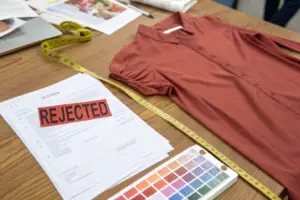
Proper testing gives you the data to approve or reject fabric batches before they reach cutting tables.
What Are the Standard Test Methods for Shrinkage?
There are two globally accepted protocols:
- AATCC Test Method 135 – Simulates domestic washing, drying
- ISO 6330 + ISO 5077 – For woven/knit fabrics in EU markets
Both require:
- Marking a 250mm square
- Washing/drying per method
- Measuring shrinkage in warp (length) and weft (width)
- Calculating % change
Typical tolerance ranges:
| Category | Acceptable Shrinkage |
|---|---|
| Knits | ±5% |
| Wovens | ±3% |
| Blended knits | ±4% |
You can download sample reports from Intertek or Bureau Veritas.
How Often Should You Test Fabric for Shrinkage?
Best practice is to test:
- Every new lot of bulk fabric (even with same specs)
- After finishing changes (enzyme wash, brushing, etc.)
- Before mass production begins
- For each supplier or mill
At Fumao, we perform pre-cut testing and retain test reports for each style code. If your brand needs regular shrinkage data, use tools like Techpacker to manage results over time.
What Fabric Treatments Improve Dimensional Stability?
Dimensional stability isn’t just about fabric type—it also depends on how the fabric is processed after weaving or knitting. Treatments like compacting, sanforizing, and heat-setting help “lock in” the size.
Choosing pre-stabilized fabric—or requesting finishing at the mill—can prevent major shrinkage in finished garments.
What Is Sanforizing and How Does It Reduce Shrinkage?
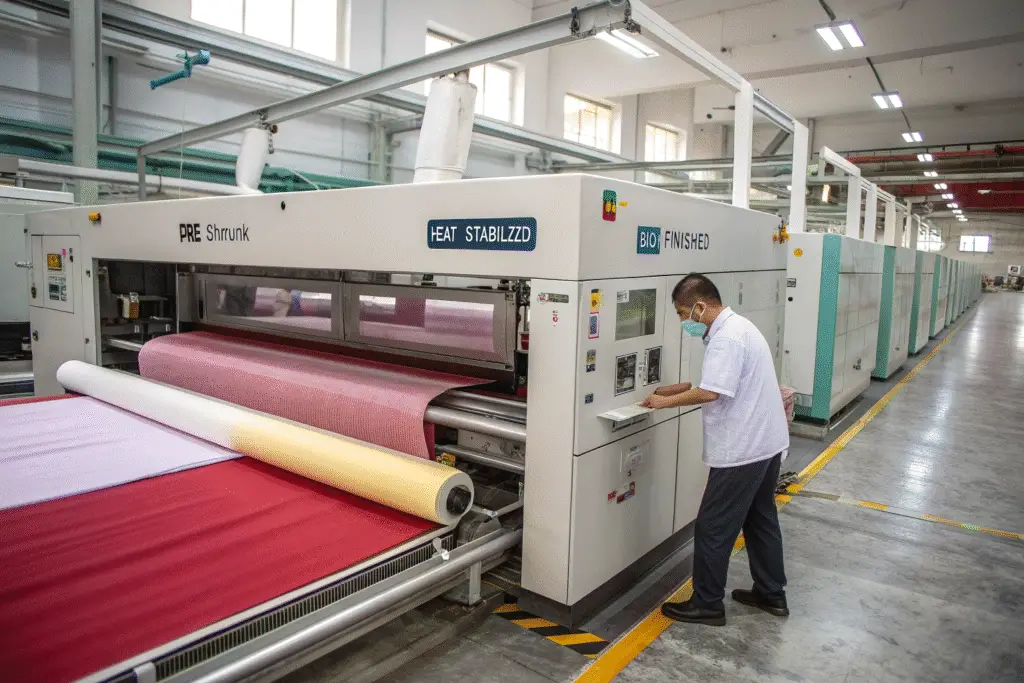
Sanforizing is a mechanical compression technique that reduces post-wash shrinkage in wovens—especially cotton.
Steps:
- Fabric is steamed
- Passed through heated rollers
- Compressed to “pre-shrink” it before cutting
Sanforized cotton typically shrinks less than 1%. It’s widely used in denim and shirts. Learn more from Sanfor® official process and Jeans Finishing Glossaries.
Are Knits Heat-Set or Compacted Differently?
Yes—knits require tube compaction or open-width heat setting to avoid curling and distortion.
Treatments include:
- Compactor machines to stabilize width
- Stenter frames to set shape in polyester-rich knits
- Bio-enzyme washes to remove fiber fuzz and reduce pilling
These are common in fleece, interlock, and jersey used for kidswear and loungewear.
You can find compacting machine specs at Biancalani or Ferraro Textile Machines.
How Can Manufacturers Ensure Shrinkage Control at Scale?
Prevention is better than cure—but prevention at bulk scale requires both supplier coordination and in-line controls. It’s not just about testing—it’s about repeatable processes and accountability.
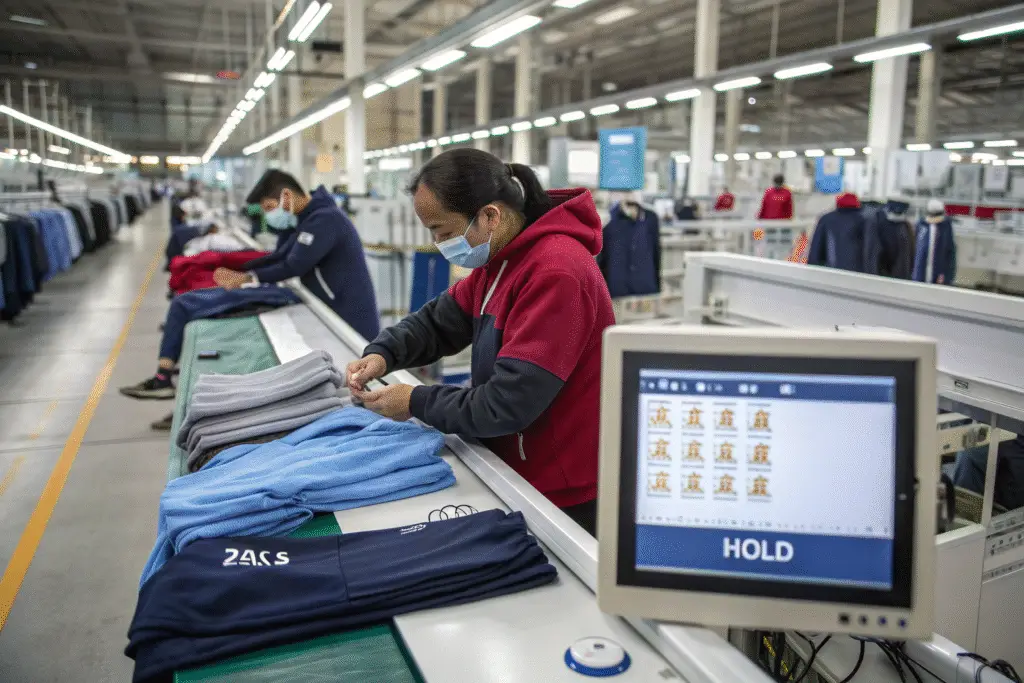
Smart factories combine fabric testing, garment wash trials, and inline QA to minimize post-sale complaints.
Should You Conduct Garment Shrinkage Testing Before Shipment?
Absolutely. Especially for pre-washed or dyed garments, confirm:
- Shrinkage within spec after one home laundry cycle
- Labeled care instructions are accurate
- Garment shape (e.g. neckline, hemline) is retained
Our QA team washes random samples from bulk production using AATCC or buyer-specific protocols before shipping.
You can view home-laundering QA tools on SGS Textile QA Solutions or Texcare Lab.
What Factory Protocols Help Maintain Dimensional Consistency?
Key controls include:
- Fabric batch ID tracking to link rolls to garments
- Pre-shrinking tolerance records stored digitally
- Marker optimization based on actual shrinkage %
- Consistent fusing and stitching tensions
We also train machine operators to spot tension errors that may stretch fabric during stitching, especially with ribbed trims or elastic zones.
See SOP templates via WRAP compliance manuals or ISO 9001 garment controls.
Conclusion
Dimensional stability is critical to apparel quality—especially in today’s consumer market where online reviews can make or break a brand. Whether you're making luxury loungewear, kids’ clothing, or uniforms, fabric shrinkage must be tested, treated, and controlled through every production stage.
At Shanghai Fumao, we incorporate fabric testing, pre-shrinking protocols, and certified finishing techniques into our manufacturing processes—ensuring every garment meets your shrinkage specs before it ships.
📩 Ready to build a stable foundation for your next apparel line? Contact our Business Director Elaine at elaine@fumaoclothing.com and let’s create clothing that fits—and stays that way.