Accurate grading is one of the most overlooked—yet most crucial—steps in apparel production. As the owner of a clothing factory in China, I’ve seen firsthand how size grading errors lead to returns, poor reviews, and broken customer trust. That’s why our U.S. and European clients prioritize precision when placing orders with multiple sizes.
To ensure accurate size grading, brands and manufacturers must follow consistent grading rules, use digital tools, verify samples across size sets, and adapt grading logic to target markets. It’s not just about making clothes bigger or smaller—it’s about preserving the original fit and style across all sizes.
In this article, I’ll break down how we achieve grading accuracy at Fumao Clothing and how you, as a brand buyer, can demand consistency without sacrificing time-to-market.
What Is Clothing Grading and Why Is It So Critical?
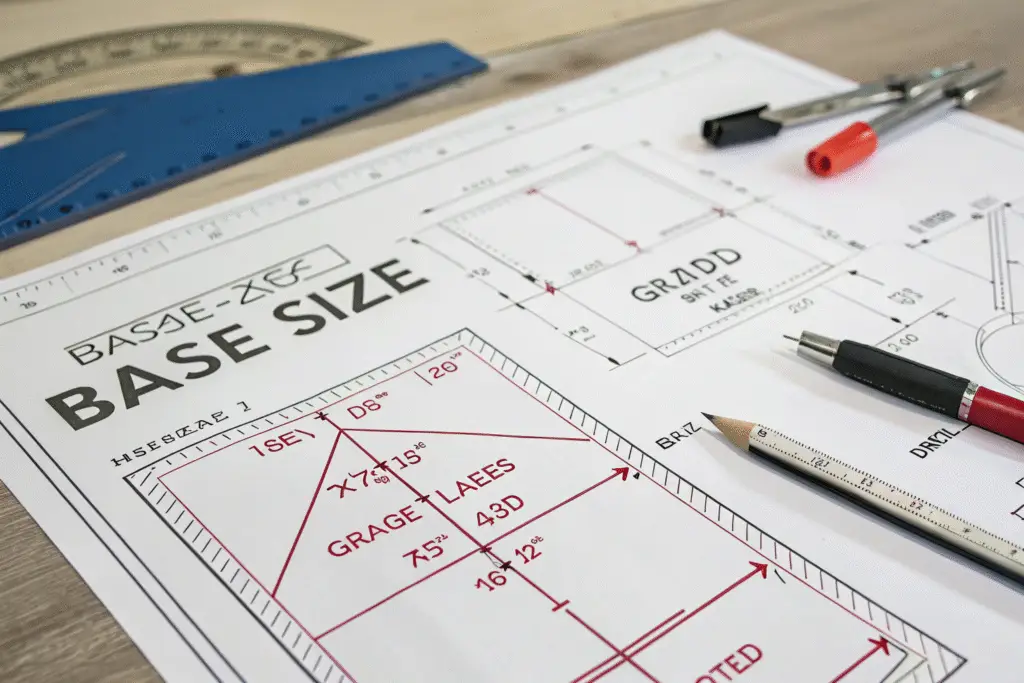
Grading is the process of taking a base garment size—usually Medium—and scaling it up or down to create other sizes. But the key is not just adjusting width or length; it’s about keeping the garment’s shape and proportions consistent across the full range.
Without precise grading, the final garment may twist, pull, or lose its intended silhouette in larger or smaller sizes.
How Are Grading Rules Created?
Grading rules are usually defined as measurement increments—for example, +2 inches at chest, +1 inch at waist per size. These are applied to key body points like bust, hip, shoulder width, sleeve length, and total garment length.
Our in-house team builds grading charts based on ASTM sizing standards and modifies them per client region (U.S., EU, Asia). We offer this service as part of development, especially for brands that lack an internal tech team.
Why Does Poor Grading Cause High Return Rates?
Inconsistent grading causes garments to fit well in medium but poorly in XL or XS. This is a major reason behind high eCommerce return rates—especially for brands selling globally.
A 2023 ReturnLogic study found that nearly 40% of apparel returns in the U.S. were due to fit issues. We help our clients reduce this risk by checking grading accuracy with real wear tests before bulk runs.
What Are the Most Reliable Grading Techniques?
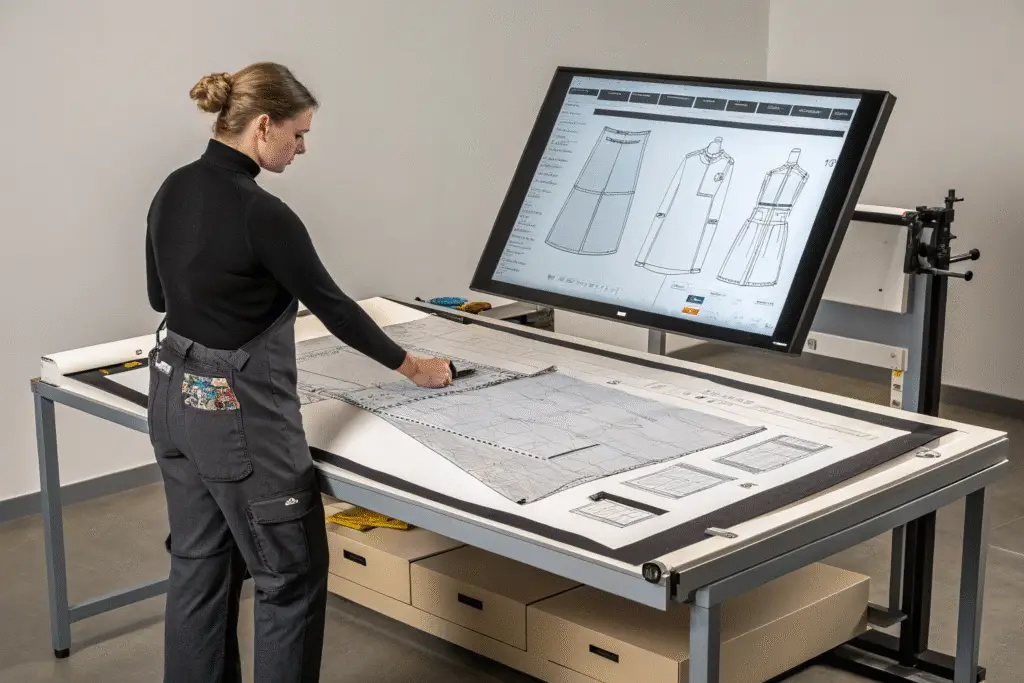
At the production level, grading is both an art and a science. It can be done manually on paper or digitally using CAD software—but the best results come from combining software precision with human fit testing.
Modern grading techniques include CAD-based digital grading, grade rule libraries, and 3D fitting tools to visualize results before sampling.
What Tools Are Used for Accurate Digital Grading?
We use Gerber AccuMark and Lectra Modaris to grade patterns digitally. These tools let us create a base pattern and apply customized grade rules across all sizes with millimeter accuracy.
Digital grading prevents the paper stretch or shrinking errors common in manual methods. It also lets us share DXF files with brands for easy edits and approvals.
Can 3D Virtual Fitting Improve Grading Confidence?
Absolutely. We use CLO 3D to simulate how each size fits on different body shapes. This allows our buyers to visualize how a size XL flows compared to size S—before we even sew a sample.
It’s especially useful for DTC brands that don’t have time for physical samples of every size. We export fit animations and screenshots to help clients approve virtual garments remotely.
How Do You Avoid Common Grading Errors?
Even with software, grading errors still happen. They usually stem from incorrect measurements, copying rules from one style to another, or not adjusting design elements that don’t scale linearly (like armholes or collar curves).
To avoid grading mistakes, always cross-check with real samples, verify against size charts, and perform pilot runs.
What Are the Most Frequent Mistakes in Grading?
- Applying the same vertical increase to torso and sleeve
- Ignoring grading for collar depth or sleeve cap
- Over-grading the width on stretch fabrics
- Copy-pasting grade rules across different silhouettes
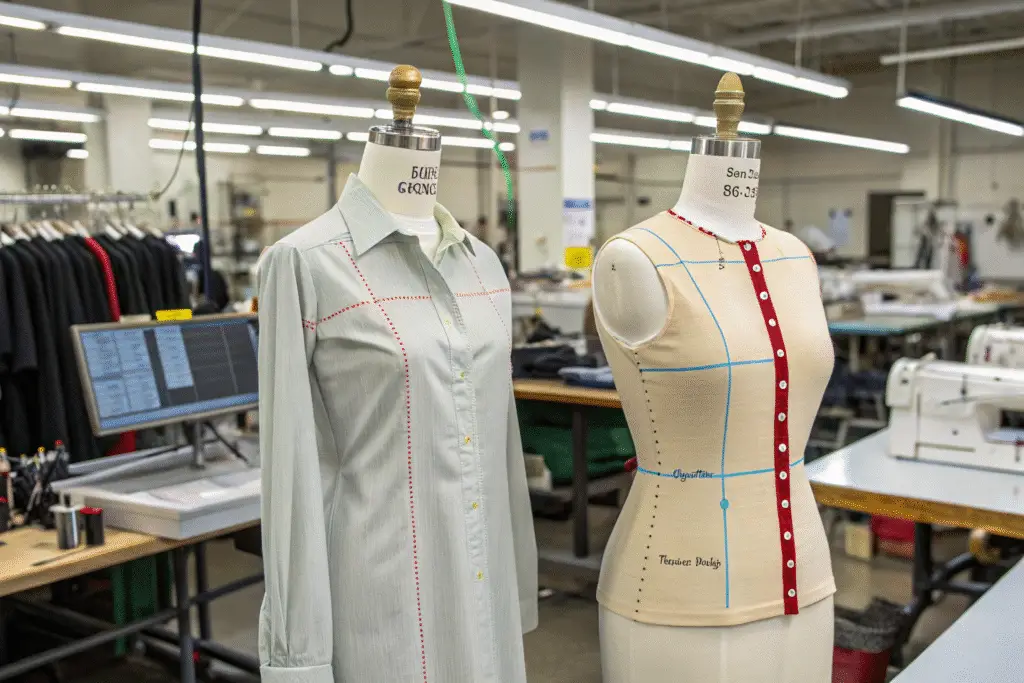
We combat this by running test fits across a live fit model set (XS to XXL) and comparing sample measurements to the original grade rules. Discrepancies get flagged before we cut bulk fabric.
How Do You Spot Errors Before Bulk Production?
After grading, we produce a full-size set of “golden samples” across the size range. These are physically fitted, photographed, and signed off before factory cutting begins.
We also use AI-assisted spec checks through Techpacker to compare expected size specs with real garment measurements. This process catches subtle size drift early.
How Should Brands Communicate Size Expectations?
Accurate grading isn’t just the factory’s responsibility. Brands must clearly communicate what they expect—not just with measurements, but with reference fit, intended body type, and region-specific sizing logic.
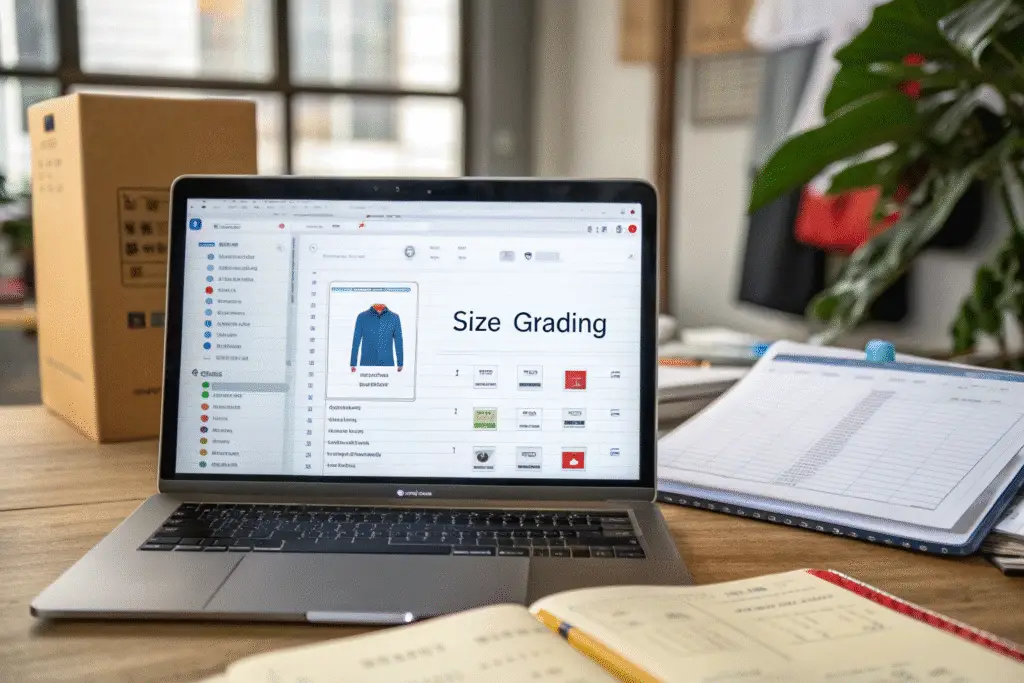
Tech packs, grading tables, visual references, and sample feedback loops are essential to ensuring sizing consistency from factory to store.
What Documents Should Brands Provide?
At a minimum:
- Base size spec sheet with tolerances
- Grading chart (manual or digital)
- Fit notes or videos from previous styles
- Fit model photos or CAD drawings
We accept all these via shared drives and recommend Google Drive folders per style. We also use Asana for larger clients managing multiple collections.
How Do You Align with Global Size Systems?
U.S. vs EU vs UK sizes differ in both dimensions and expectations. We adapt grade rules depending on market. For example, a U.S. “L” is often larger than a European “L.”
We consult Alvanon size standards and retail fit references from stores like Zara or Target to calibrate sizing when clients lack data. We also match our fit models accordingly.
Conclusion
Accurate grading is the backbone of scalable apparel production. It affects not just how a garment fits—but how your brand is perceived. Whether you're a small startup or a mass retailer, smart grading can save thousands in returns, elevate customer experience, and streamline your supply chain.
At Fumao Clothing, we combine CAD tools, real wear testing, and transparent communication to ensure every size fits with the same intent as your original design. From XS to XXL, we help you create size ranges that actually sell.
Have a size-sensitive product or new fit strategy? Contact our Business Director Elaine at elaine@fumaoclothing.com to explore how we can help you scale your collection with precision grading across global sizes.