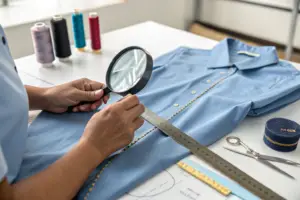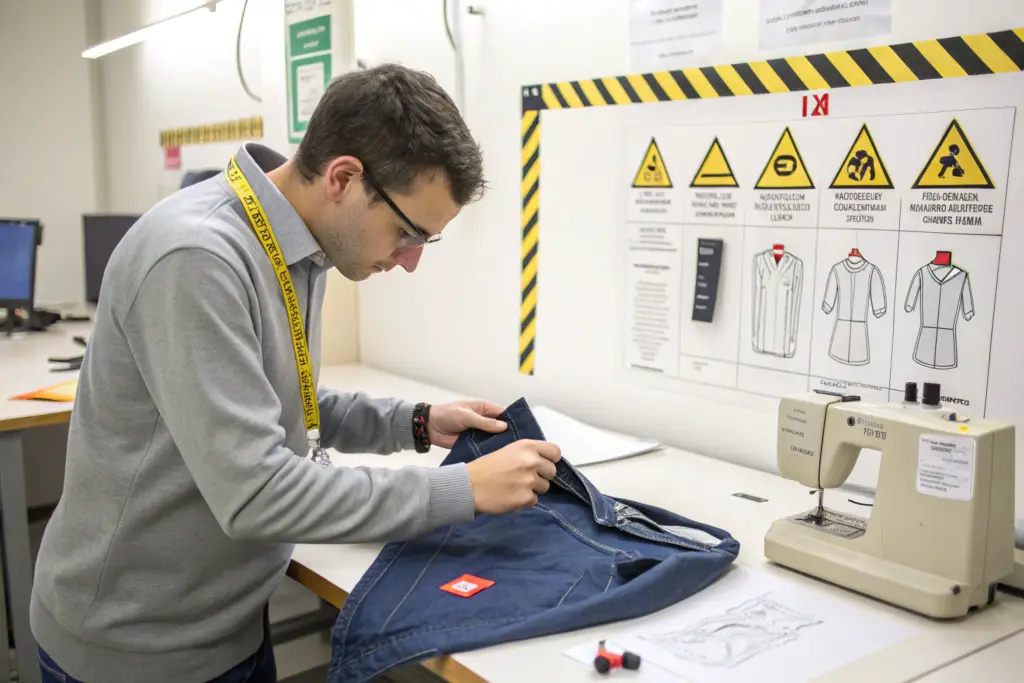
You have a great idea for a children's collection. The colors are bright. The prints are fun. You are excited. Then you learn about safety regulations. There are rules about drawstrings. Rules about buttons. Rules about flammability. Rules about small parts. You feel overwhelmed. You worry that your designs will not pass. You worry about liability. You are not alone. Safety regulations for kids' wear are complex. But they are not impossible. You can design beautiful, safe garments. You just need to know the rules.
To design kids' wear that meets strict safety regulations, you must integrate safety requirements into your design process from the very first sketch, not as an afterthought. This means understanding the specific regulations for your target market—such as CPSIA in the US or EN standards in Europe—selecting compliant materials and trims, eliminating hazards like long drawstrings and small detachable parts, and building in testing requirements like lead content and flammability. Safety is not a barrier to creativity. It is a design constraint that, when respected, protects your customers and your brand.
I have run a clothing factory for over a decade. I have produced thousands of children's garments for brands in the US and Europe. I have seen the regulations evolve. I have seen brands succeed by designing with safety in mind. I have also seen brands fail because they ignored the rules. The brands that succeed treat safety as a design feature, not a compliance burden.
What Are the Key Safety Regulations for Kids' Wear in Different Markets?
The regulations vary by market. The US has different rules than Europe. Japan has different rules than Australia. If you sell in multiple markets, you need to meet the strictest standards. Understanding these regulations is the first step to designing compliant garments.
What are the US safety standards for children's clothing?
In the United States, children's clothing is regulated by the Consumer Product Safety Commission (CPSC) under the Consumer Product Safety Improvement Act (CPSIA). The rules are strict. They apply to all children's clothing for ages 12 and under.
Key US requirements include:
- Small parts: For children under 3, no small parts that can detach and become a choking hazard. Buttons, snaps, rivets, and decorative elements must be securely attached. They must withstand a 10-pound pull test.
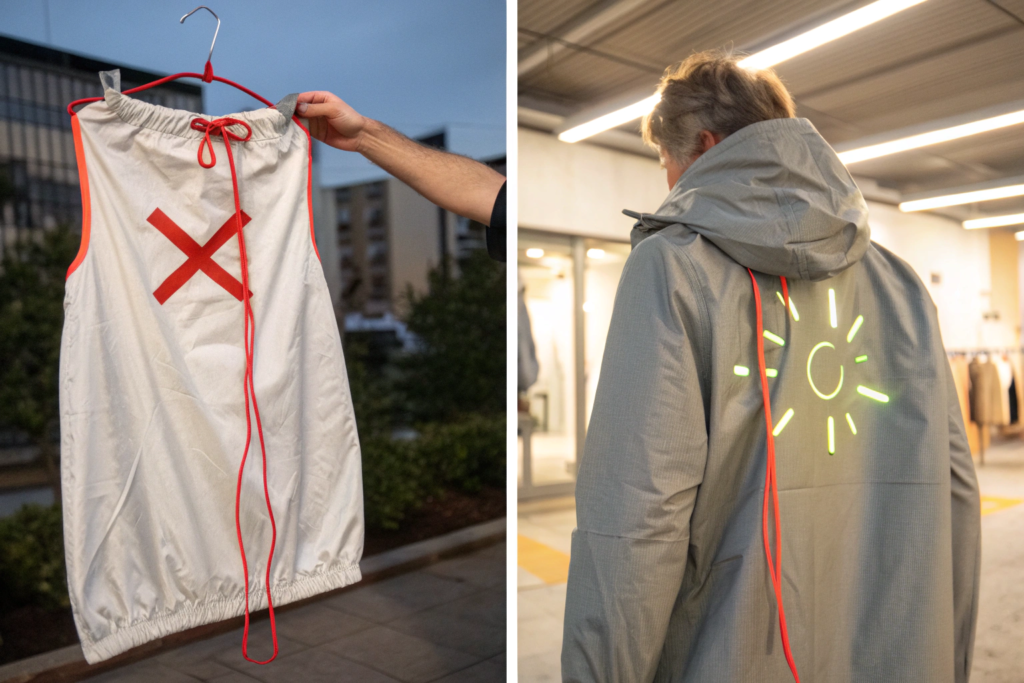
- Drawstrings: No drawstrings at the hood or neck for children under 14. Drawstrings at the waist must be limited in length and cannot have toggles that can catch.
- Lead and phthalates: All materials must meet limits for lead content (100 ppm total lead in accessible parts) and phthalates (0.1% for certain phthalates in children's products).
- Flammability: Children's sleepwear must meet strict flammability standards (16 CFR Part 1615 and 1616). Non-sleepwear must meet general flammability standards (16 CFR Part 1610).
- Tracking labels: All children's products must have a tracking label with the manufacturer, date, and batch information.
A client in New York learned about the small parts requirement the hard way. They designed a toddler dress with small decorative buttons. The buttons were attached with standard stitching. A third-party lab tested the garment. The buttons failed the pull test. The client had to replace all the buttons with larger, securely attached ones. The delay cost them two weeks. Now they specify pull-test requirements in every tech pack.
You should familiarize yourself with the CPSC's children's product safety guidelines. The agency provides clear guidance. Your factory should also be familiar. A good factory will flag potential safety issues during development.
What are the European safety standards for children's clothing?
Europe has different standards. The key regulation is EN 14682 for cords and drawstrings. EN 71 for small parts and safety of toys. The rules are similar to US standards but with some differences.
Key EU requirements include:
- Cords and drawstrings: EN 14682 specifies limits for drawstring length and placement. No cords at the hood or neck for children under 14. Waist cords must be limited in length and cannot have free ends.
- Small parts: EN 71-1 applies. Similar to US rules. Small parts must not detach. Buttons and decorative elements must be secure.
- Chemicals: REACH regulations restrict certain chemicals. Nickel, lead, phthalates, and azo dyes are limited.
- Flammability: EN 14878 for children's sleepwear. EN 1103 for general clothing.
A client in London sourced children's pajamas from China. They were compliant with US flammability standards. They assumed that was enough. But the European standards are different. The pajamas did not meet EN 14878. The client had to air freight new fabric and redo the production. The cost was significant. Now they specify both US and EU standards in their tech pack.
You should ask your factory about their experience with your target market. A factory that exports to the US and Europe will know the differences. They will help you design for both markets.
How to Select Safe Materials and Trims for Kids' Wear?
The materials and trims you choose are the foundation of safety. Fabric can fail flammability tests. Buttons can detach. Zippers can contain lead. You need to select materials that are safe and test them to be sure.
What fabric properties affect safety compliance?
Fabric safety is about flammability and chemical content. You cannot assume that any fabric is safe. You need to verify.
Key fabric considerations:
- Flammability: Some fabrics are inherently flammable. Cotton and other natural fibers burn easily. They require chemical treatment to meet sleepwear standards. Synthetic fibers like polyester are more flame-resistant. You need to know the flammability rating of your fabric.
- Lead content: All fabrics and trims must meet lead limits. This is especially important for printed fabrics. Some inks contain lead. You need to test.
- Phthalates: Phthalates are used in some printing processes and plastic trims. You need to ensure your materials are phthalate-free.
- Azo dyes: Some azo dyes are restricted in Europe. They can release carcinogenic amines. You need to use safe dyes.
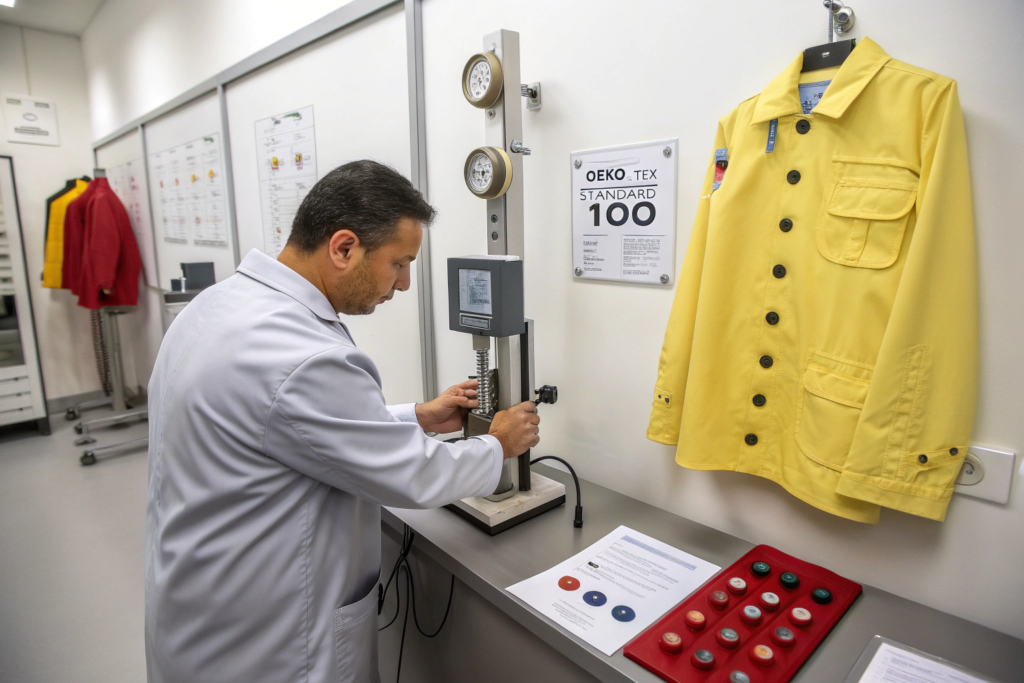
- Oeko-Tex certification: Oeko-Tex Standard 100 is a global certification for textile safety. It tests for harmful substances. Fabric with Oeko-Tex certification is a good starting point.
A client in Los Angeles sourced cotton fabric for children's pajamas. The fabric was beautiful. But it failed the flammability test. The fabric had no flame retardant treatment. The client had to find a new fabric. The delay was six weeks. Now they request flammability test reports from the fabric mill before ordering.
You should ask your fabric suppliers for test reports. A reputable mill will provide them. If they cannot, find another supplier. Your factory can help with this. They work with mills regularly. They know which mills produce compliant fabrics.
What trim specifications ensure safety?
Trims are the most common safety issue. Buttons, snaps, rivets, zippers, and decorative elements must be secure. They must also be free of hazardous chemicals.
Key trim considerations:
- Attachment strength: For children under 3, all trims must withstand a 10-pound pull test. This applies to buttons, snaps, and decorative elements. The attachment method matters. Metal snaps are more secure than plastic ones. Bar-tacking is stronger than standard stitching.
- Size: Small parts are a choking hazard. For children under 3, avoid any part that can fit into a small parts cylinder. This includes small buttons, small snaps, and small decorative elements.
- Material: Trims must be free of lead and phthalates. Metal trims should be nickel-free or coated to prevent nickel exposure. Plastic trims should be phthalate-free.
- Drawstrings: Avoid drawstrings entirely for children under 14. If you must use them at the waist, they should be short, have no toggles, and be fixed so they cannot be pulled out.
A client in Seattle designed a hoodie with metal eyelets on the drawstring. The eyelets were small. They failed the small parts test. The client had to replace them with larger eyelets. The cost was minimal. But the delay was frustrating. Now they check trim sizes before sampling.
You should specify trim requirements in your tech pack. State that all trims must pass a 10-pound pull test. State that all trims must be lead-free and phthalate-free. State that no small parts are allowed. Your factory will use compliant trims.
How to Integrate Safety into the Design and Development Process?
Safety should not be an afterthought. It should be integrated into every stage of development. The best time to address safety is during design. The worst time is after production.
What design features should you avoid in kids' wear?
Some design features are inherently unsafe. They should be avoided from the start. Do not design them. Do not try to work around them.
Avoid:
- Hood drawstrings: No drawstrings at the hood or neck for any children's garment. This is a strangulation hazard. There are no exceptions.
- Neck drawstrings: No drawstrings, ties, or decorative cords at the neck.
- Long waist drawstrings: If you use waist drawstrings, they must be short, with no free ends. Better to use elastic instead.
- Small decorative parts: For children under 3, avoid small buttons, small snaps, small beads, and small sequins. They can detach and be swallowed.
- Detachable parts: Avoid parts that can be easily detached. If you must use them, ensure they are securely attached with a method that passes the pull test.
- Fringe and loose threads: Fringe and long loose threads can be a strangulation hazard or cause entanglement.
A client in Austin wanted a children's jacket with a hood drawstring. I told them it was not allowed. They insisted. I showed them the CPSC regulations. They redesigned without the drawstring. The jacket still sold well. The safety issue was not worth the risk.
You should review your designs against safety regulations before you sample. A simple checklist can save you from costly redesigns later.
How do you incorporate safety into the tech pack?
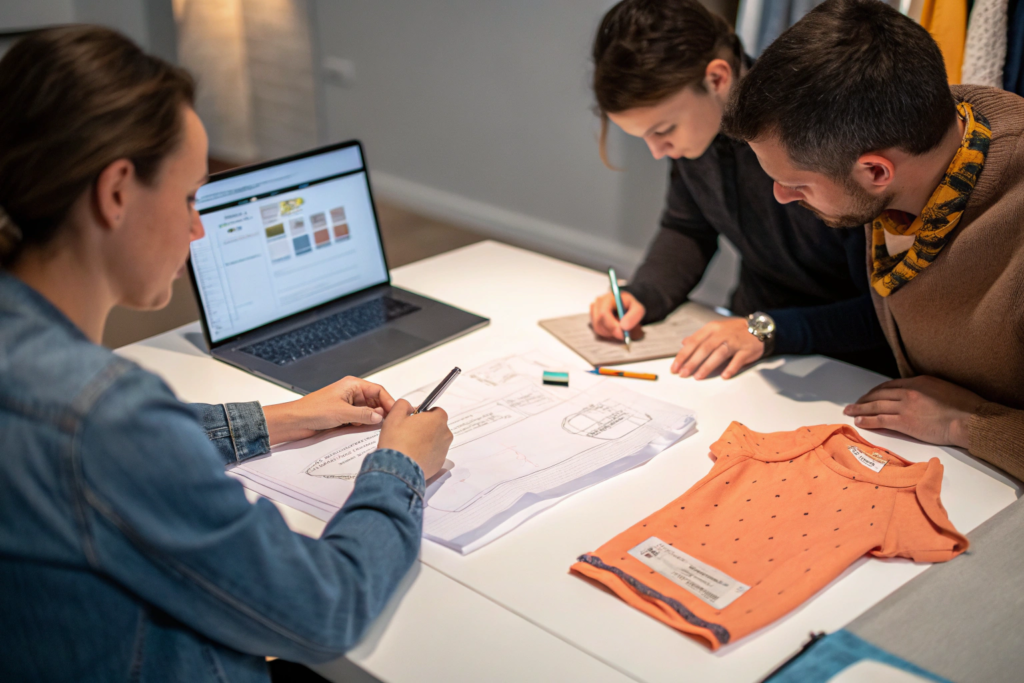
Your tech pack is the instruction manual for your factory. It should include all safety requirements. Do not assume the factory knows. Tell them explicitly.
Your tech pack should include:
- Safety specification page: List all applicable regulations (CPSIA, EN 14682, etc.)
- Small parts statement: "No small parts for sizes 0-3T. All trims must pass 10-pound pull test."
- Drawstring statement: "No drawstrings at hood or neck. Waist drawstrings limited to 3 inches exposed length. No toggles."
- Material requirements: "Fabric must meet flammability standards. All materials must be lead-free and phthalate-free."
- Testing requirements: "Final production must pass third-party safety testing. Provide test reports."
A client in Boston had a detailed safety section in their tech pack. The factory followed it exactly. The first sample passed all safety tests. The client was happy. The clear instructions prevented miscommunication.
You should also include photos of safe and unsafe examples. A picture of a proper drawstring placement is worth a paragraph of text. A picture of a failed pull test shows the factory what to avoid.
What testing is required for kids' wear?
Testing is required. You cannot assume compliance. You need to prove it. Third-party testing is mandatory for many children's products. You need to budget for it. You need to plan for it.
Required tests for US market:
- Lead testing: For all accessible parts
- Phthalate testing: For plastics and printed materials
- Small parts testing: For children under 3
- Pull testing: For buttons and trims
- Flammability testing: For sleepwear and general wear
- Tracking label verification: That labels are present and correct
A client in Denver budgeted for testing on their first collection. They allocated $3,000 for third-party lab testing. The testing passed. The cost was worth the peace of mind. They knew their garments were safe.
You should work with an accredited testing lab. CPSC-accepted labs are listed on the CPSC website. Your factory may have relationships with labs. They can coordinate testing for you.
How to Work with Your Factory to Ensure Safety Compliance?
Safety compliance is a partnership. You cannot do it alone. Your factory is your partner. They need to understand the requirements. They need to have systems to meet them. You need to verify.
What should you ask your factory about safety compliance?
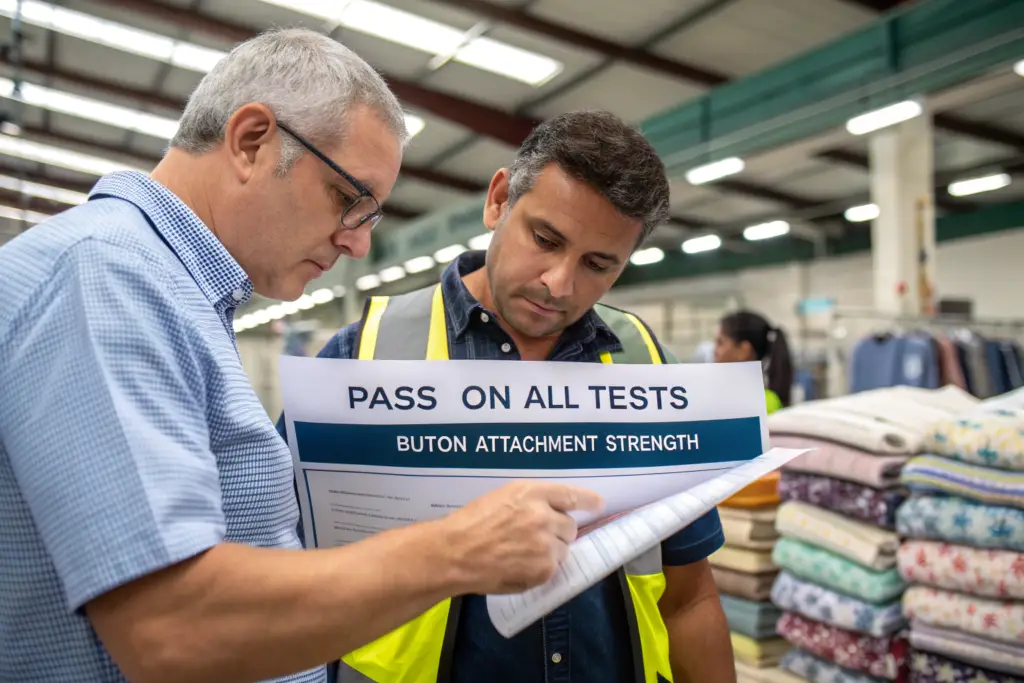
Before you place an order, ask your factory about their safety systems. A factory that takes safety seriously will have answers. A factory that does not will be vague.
Ask:
- Do you have experience with US/EU children's wear? If they have exported to these markets, they know the requirements.
- Do you have a quality control system for safety? Do they test trims? Do they inspect for small parts?
- Do you work with accredited testing labs? Can they coordinate testing for you?
- Have you had any safety-related recalls? If yes, ask how they addressed it.
- Can you provide certificates for materials? Do your fabric and trim suppliers provide test reports?
A client in San Francisco asked these questions of three factories. One factory had no experience with US children's wear. Another had experience but could not name the testing labs they used. The third had a detailed safety manual and worked with SGS for testing. The client chose the third factory. The choice was clear.
You should also ask for references. Talk to other brands that produce children's wear with the factory. Ask about their experience with safety compliance.
How do you verify that your factory is using safe materials?
You cannot assume. You need to verify. Your factory should provide documentation from their suppliers. You should also conduct your own testing.
Verification steps:
- Request material certificates: Ask for Oeko-Tex certificates, lead test reports, phthalate test reports from the fabric and trim suppliers.
- Review the certificates: Check the dates. Certificates expire. Make sure they are current.
- Conduct spot testing: Even with certificates, conduct your own spot tests. Send samples to a third-party lab. This verifies that the materials in your order match the certificates.
- Test production samples: Before full production, test pre-production samples. This catches issues early.
A client in Chicago requested certificates from their factory. The factory provided them. The client also sent samples to a third-party lab. The lab found that the fabric had elevated lead levels. The certificates were outdated. The client rejected the fabric. The factory sourced new fabric. The client's own testing prevented a major safety issue.
You should budget for testing. Third-party testing costs money. But it is less than the cost of a recall. A recall can destroy your brand.
How do you handle safety issues if they arise?
Even with good systems, issues can arise. You need to handle them quickly and professionally. Do not hide them. Do not hope they go away.
If you find a safety issue:
- Stop production: Do not continue until the issue is resolved.
- Identify the root cause: What went wrong? Was it a material issue? A manufacturing issue? A design issue?
- Correct the issue: Rework or replace the affected materials. Adjust the design if needed.
- Retest: Test again to confirm the issue is resolved.
- Document everything: Keep records of what happened and how it was resolved.
- Consider recall: If unsafe products have already shipped, you may need to recall them. Consult with a safety professional.
A client in Miami discovered that a batch of sleepwear did not meet flammability standards. The fabric had been treated incorrectly. The client stopped production. The factory corrected the treatment. The client retested. The second batch passed. The shipment was delayed by 3 weeks. The client informed their retailers. The retailers appreciated the transparency. The brand's reputation was preserved.
You should have a recall plan before you need it. Know what you will do. Know who you will contact. Be prepared.
Conclusion
Designing kids' wear that meets strict safety regulations is not optional. It is required. It is also the right thing to do. Children are vulnerable. Their safety is paramount. A single unsafe garment can cause harm. It can also destroy your brand.
Safety starts with knowledge. You need to know the regulations in your market. You need to know the requirements for materials and trims. You need to integrate safety into your design process. You need to work with a factory that takes safety seriously. You need to test and verify.
The good news is that safety does not limit creativity. It focuses it. The constraints of safety force you to think differently. They push you to find new solutions. The brands that embrace safety create beautiful, functional garments that parents trust. That trust is valuable. It builds loyalty. It builds repeat business.
At Shanghai Fumao, we take children's wear safety seriously. We know the US and European regulations. We work with accredited testing labs. We inspect trims for attachment strength. We verify material certificates. We train our workers on safety requirements. We are proud to produce children's garments that are safe and beautiful.
If you are designing children's wear and want a factory partner who understands safety, we would like to work with you. Our Business Director, Elaine, can walk you through our safety processes. She can help you navigate the regulations. You can reach her at elaine@fumaoclothing.com. Let us create safe, beautiful children's wear together.