The fashion market is noisy. Launching the wrong pieces too fast—or too slow—can kill your momentum.
To design a successful capsule collection, you must balance vision and logic—aligning your buyer’s lifestyle with a curated product mix that’s versatile, cohesive, and profit-minded.
If you’re a brand owner or buyer navigating wholesale clothing design, this guide will help you understand the essential decisions behind a profitable, buzzworthy capsule drop.
Defining Your Target Customer and Style Theme?
If you try to please everyone, you’ll waste time, money, and fabric. I’ve seen this mistake cost brands entire seasons of sales.
To design an effective capsule collection, start with a clear definition of your ideal customer—then build a style theme that connects with their lifestyle and values.

How can you define your capsule customer in a way that truly guides design decisions?
Before I even think about silhouettes or fabrics, I sit down with my team and map out the buyer's personality. We ask basic but powerful questions:
- Who is this person dressing for?
- How do they spend their weekdays and weekends?
- What brands are already in their wardrobe?
- What do they value more: comfort or visual identity?
Creating a profile like this allows us to anchor all design choices in real life. For example, if we’re targeting female professionals in their 30s living in urban areas, we won’t design anything too eccentric or hard to care for. We’d go for structured comfort—maybe wrinkle-resistant trousers, fitted shirts with stretch, and jackets that transition from office to evening.
Here’s a quick comparison chart we use to align on direction:
| Target Profile | Key Need | Style Approach |
|---|---|---|
| Urban millennial moms | Speed + ease | Neutral palettes, relaxed fits |
| Creative freelancers | Identity + comfort | Bold accents, premium basics |
| Male Gen Z trendsetters | Image + affordability | Experimental, layered streetwear |
This clarity influences not just the design, but how we present the capsule, from photo styling to copywriting.
What are some smart ways to select a style theme that won’t go stale in 3 months?
Here’s a big lesson I’ve learned: style themes must reflect a mood, not a micro-trend. When clients ask us to “follow what’s hot,” we advise caution. Micro-trends expire fast. Capsules need staying power.
Instead, we focus on emotions, seasons, or roles. Think "Summer Reset," “Quiet Luxury,” or “City Uniform.” These offer room for interpretation and layering, while giving your capsule a strong identity.
We also encourage our buyers to choose themes that support layered storytelling. For instance, "Modern Nomad" isn’t just boho—it hints at travel, sustainability, and freedom. That’s enough creative fuel to drive visuals, content, and garment function all at once.
So start with who. Then go deep on why.
Choosing Timeless Pieces with High Versatility?
I’ve worked with brands that went viral from just five pieces—because each one earned its place.
A great capsule collection contains items that can be mixed and matched for different occasions, staying relevant for seasons, not just weeks.

How do you avoid overdesigning and still make your capsule look intentional?
Designers often get carried away. They want each piece to be a “wow.” But capsules aren’t about individual fireworks. They’re about harmony.
Our best-performing capsules often follow this ratio:
- 40% foundation pieces: like well-fitted tees, tanks, and neutral bottoms
- 30% accent layers: overshirts, cardigans, or accessories
- 30% statement items: bold color or pattern, often one-per-capsule
The key is utility. We always ask, “Can this piece be worn in 3 different situations?” If the answer is no, it doesn’t make the cut.
Let’s take a neutral belted dress as an example:
| Use Case | Styling Approach |
|---|---|
| Office wear | Layer with blazer, heels |
| Weekend brunch | Pair with sneakers and denim jacket |
| Resort look | Add sandals, beach hat |
The same logic applies to men’s capsules. A minimalist black overshirt? That’s office-ready, airport-ready, and date-night-ready.
Capsules should also consider size inclusivity and fabric performance. Many buyers forget that “versatility” includes washability, wrinkle resistance, and layer-friendliness.
What’s the risk of adding too many novelty items in a capsule?
It’s tempting to spice things up with asymmetry, cut-outs, neon, or extreme silhouettes. But I’ve seen this backfire, especially in B2B launches. These items are harder to produce, riskier to size, and often become clearance inventory.
Remember, your capsule is not a runway. It’s a tool for profit and loyalty. Choose one standout detail per drop, max. And make sure it doesn’t disrupt the overall wearability of the collection.
If you really want to test edgy ideas, offer them as pre-orders or waitlist-only. This way, you reduce risk and gather useful buyer feedback.
Creating a Cohesive Color and Fabric Palette?
A mismatch in fabric weight or clashing tones can make even the best silhouettes look cheap or disconnected. I’ve learned this the hard way.
Your capsule’s success depends on using a tight, thoughtful palette that connects every piece visually and tactically.

How do you pick a color palette that feels cohesive but not boring?
Start with a dominant base: black, navy, or beige. Add 1–2 accents for energy—like burnt orange or sage. Then introduce 1 surprise color only if it supports the theme.
I like to follow the 60-30-10 rule:
- 60% core color
- 30% secondary neutral
- 10% accent hue
This palette should extend into buttons, zippers, threads, and even labels. That’s what makes a capsule feel premium and intentional.
Here’s a sample palette guide we use:
| Capsule Theme | Core | Secondary | Accent |
|---|---|---|---|
| Urban Minimalist | Black | Gray | Olive |
| Modern Desert | Sand | Cream | Terracotta |
| Tech Streetwear | Navy | Charcoal | Neon green |
Avoid too many shiny finishes. Limit glossy surfaces to 1 item per drop. Mixed sheens can make photos look chaotic, especially on e-commerce.
What fabrics work best across different pieces in a capsule?
We always prioritize consistency in texture and weight. That means:
- Using the same brushed cotton for shirts and drawstring pants
- Selecting ribbed knits for both tanks and mid-layer tops
- Ensuring outerwear doesn’t overpower inner layers in bulk
We also do wear tests. A capsule is only as good as its weakest seam. That’s why we avoid novelty blends unless we can source enough yardage with repeatable specs.
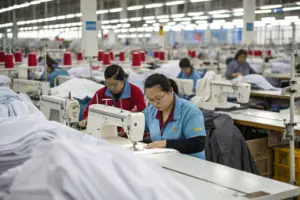
In our factory, we test for:
| Fabric Attribute | Test Method | Why It Matters |
|---|---|---|
| Colorfastness | Wash and UV tests | Avoids buyer complaints |
| Pilling Resistance | Abrasion machine | Ensures long-term wear |
| Shrinkage | Wash-dry cycle | Keeps fit consistent |
Using consistent fabrics saves time in production, too. Less SKU variance means fewer sourcing headaches and fewer color mismatches.
Planning Quantities and Launch Timing Strategically?
Great design means nothing if your production misses the season—or the mood. I’ve seen delays kill entire drops.
Plan quantities based on real data and launch timing around your customer’s lifestyle rhythm—not just trade show dates.

What are the best ways to decide how much to produce for each piece?
We use a layered demand model. First, we look at historical sales—either from the brand or comparable clients. Then, we model according to:
- Price sensitivity
- Visual impact
- Versatility score
Foundational items get higher quantities. Flashier ones get less. Here's an example plan from one of our recent clients:
| Item Type | Qty Ratio | Notes |
|---|---|---|
| Classic tee | 100% | Core repeat seller |
| Midi dress | 70% | High margin but lower repeat |
| Statement jacket | 30% | High cost, lower reorder chance |
| Accessories | 60% | Good upsell, small batch OK |
We also factor in production batch minimums from our factory. If your vendor can’t scale down a style, you may need to bundle pre-orders or do limited drops first.
How do you time your launch to catch attention and convert?
Think like your buyer. Not just about when they shop—but when they plan. In B2B, you need to reverse-plan by 4–6 months.
Here’s what that looks like:
| Capsule Season | Launch Date | Production Start | Design Finalized |
|---|---|---|---|
| Spring Capsule | November | January | September |
| Summer Capsule | February | April | December |
| Fall Capsule | May | July | March |
| Holiday Capsule | August | October | June |
Also think about cultural moments, not just climate. “New Year Reset” capsules do great in January. “Back to City” themes work in September. And never launch without a narrative—it’s what fuels PR and influencer interest.
Conclusion
A capsule collection is more than just a small group of clothes. It’s a focused business decision. When every piece tells a shared story, you win more than sales—you win loyalty.