You're preparing for a crucial product development meeting with your clothing manufacturer. While designs and fabrics may be finalized, packaging considerations demand equal attention. Clear packaging specifications transcend mere detail—they constitute a fundamental component of brand identity and operational excellence. A meticulously defined packaging strategy safeguards your investment while elevating the customer experience.
Establishing comprehensive packaging requirements during development meetings ensures alignment between brand vision and manufacturing capabilities, optimizes cost efficiency, and guarantees product integrity throughout the supply chain. This proactive approach involves specifying materials, logistics requirements, and branding elements during initial discussions to prevent costly errors and delivery delays, thereby securing a seamless journey for your garments from our production facility to your customers.
Many brands concentrate exclusively on garment construction, relegating packaging to secondary consideration. This approach frequently results in unanticipated expenses, product damage, and diluted brand messaging. Let us examine how to integrate packaging as a strategic element within your product development framework from the outset.
Why Does Packaging Merit Critical Attention in Apparel Development Meetings?
Packaging represents the initial physical interaction between your brand and the customer. It establishes the tone for the unboxing experience while providing essential protection during transit from our manufacturing facility to your distribution center. Addressing packaging during development meetings ensures its integration within project timelines and budgets, rather than constituting a last-minute addition.
Early packaging discussions prevent costly mid-production modifications while ensuring consistent brand value communication from the initial package opening. This alignment creates cohesive workflows across all departments—from design conceptualization to logistics execution.

What Financial Implications Arise From Ambiguous Packaging Specifications?
Vague packaging specifications can substantially erode profit margins through hidden costs. Undefined requirements often precipitate emergency material sourcing charges, expedited label production fees, or costly air freight substitutions due to missed sea freight deadlines. Consider how failing to specify poly bag thickness can increase damage rates during transportation, resulting in customer claims and lost accounts. Moreover, inaccurate labeling information may cause complete shipment rejections by customs authorities, creating significant delays. We have witnessed clients facing retailer chargebacks due to non-compliant packaging. Defining these parameters during development meetings establishes cost certainty and prevents financial surprises. Partnering with an experienced garment manufacturer offering comprehensive full-package production remains crucial for avoiding these pitfalls.
How Does Packaging Influence Brand Perception and Unboxing Experience?
The unboxing moment represents a potent marketing opportunity. When customers receive thoughtfully packaged merchandise, it reinforces brand quality and value perception. Dotcom Distribution research indicates 40% of consumers would share images of unique or luxury unboxing experiences on social platforms—constituting authentic, organic advertising. Conversely, products arriving in damaged or inferior packaging instantly diminish brand value, making customers question their purchase decision. We collaborate with you to select materials—from custom-printed tape to branded tissue paper—that create memorable, shareable moments. This meticulous attention to detail transforms initial purchasers into loyal brand advocates.
What Essential Elements Require Definition in Apparel Packaging Strategy?
Effective packaging strategy necessitates systematic decomposition into core components, each serving distinct functional or branding purposes. Developing a comprehensive checklist for these elements ensures complete coverage while enabling accurate supplier costing.
Critical packaging elements span from primary protective layers to secondary branded containers and all informational components between. Methodical approaches in this area conserve time while minimizing errors.
Which Primary Packaging Components Demand Explicit Specification?
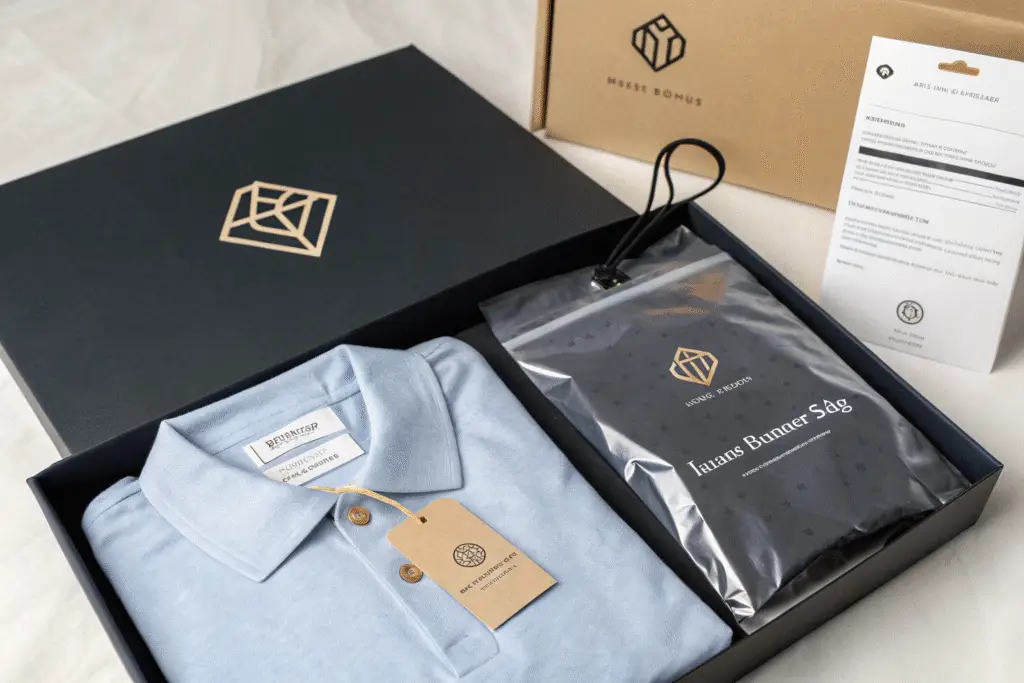
Primary packaging constitutes materials directly contacting your garments, with protection as its primary objective. The poly bag represents the most prevalent component, requiring specification of material composition, thickness measurements, dimensional requirements, and printing details. Will you utilize standard polyethylene or biodegradable alternatives? Thickness (measured in gauge) determines protective durability. Incorporation of humidity control cards within packaging provides essential moisture protection during sea freight transit. Hang tags constitute another critical element, requiring specification of material (cardstock versus plastic), dimensional parameters, structural shape, and attachment methodology (plastic fasteners versus strings). Precise definition of these details prevents production errors and ensures your garments arrive in impeccable condition.
How Should Brands Evaluate Branded Boxes Versus Recycled Mailers?
This decision balances cost considerations, sustainability objectives, and customer experience priorities. Branded corrugated boxes deliver superior protection for high-value categories like outerwear while creating premium unboxing sensations. However, they increase weight and shipping expenses substantially. Recycled mailers offer cost-efficient, lightweight alternatives for t-shirts and activewear, frequently aligning with eco-conscious brand values. Your evaluation should incorporate product categorization, shipping economics, and brand messaging. We provide both options for hands-on quality assessment and durability testing. This determination during development meetings ensures accurate FOB pricing incorporation.
| Packaging Type | Optimal Applications | Advantages | Limitations |
|---|---|---|---|
| Branded Box | Outerwear, Premium Knitwear, High-Fashion | Maximum protection, Luxury unboxing experience, Strong brand impact | Elevated cost, Increased weight (higher shipping costs), Substantial storage requirements |
| Recycled Mailer | T-Shirts, Activewear, Essentials | Cost-efficient, Minimal weight, Environmental appeal, Space-efficient | Reduced protection, Potentially less premium perception, Constrained branding space |
How Should Packaging Align With Logistics and DDP Terms?
Packaging selections maintain direct correlation with logistics planning and Incoterms. Under Delivered Duty Paid (DDP) terms—where we manage complete logistics to your designated location—packaging must comply with international shipping regulations while optimizing transport cost efficiency.
Packaging-logistics alignment entails developing protective yet efficient solutions that minimize dimensional weight while facilitating smooth customs clearance. This constitutes an indispensable requirement for delivery reliability.
How Does Packaging Configuration Impact Shipping Economics?
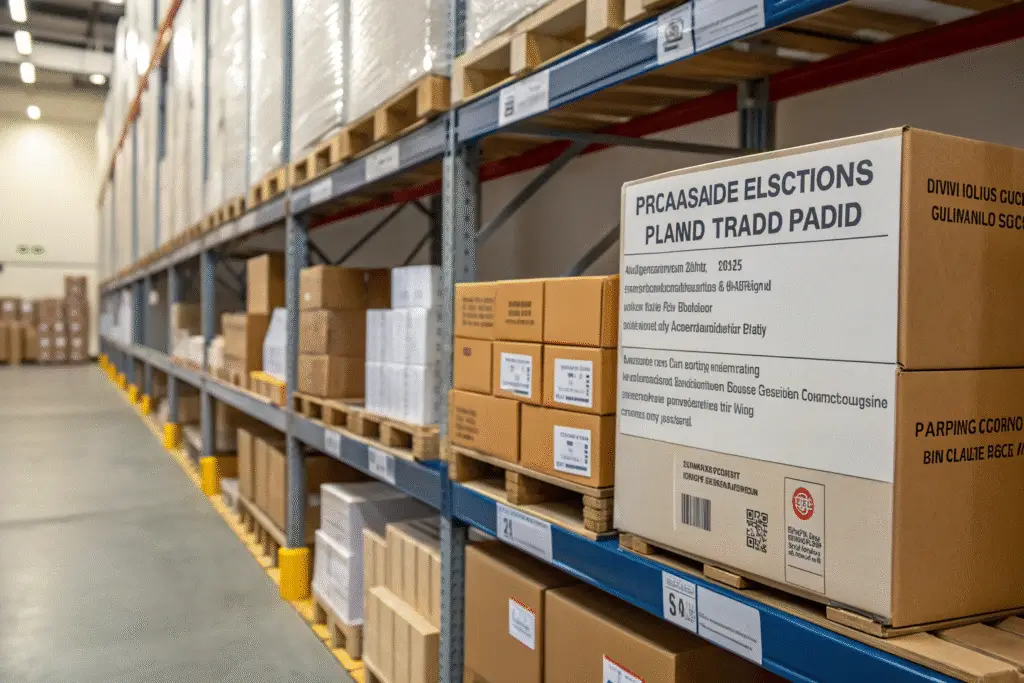
Shipping costs calculate using actual weight or dimensional weight (DIM weight)—whichever proves greater. Bulky or inefficient packaging increases DIM weight substantially, elevating transportation expenses. We assist in designing appropriately sized packaging that accommodates garments snugly without wasted space. Implementing thinner yet durable corrugated cardboard or selecting flexible mailers can dramatically reduce dimensional weight. This optimization, when determined during development phases, generates significant savings—particularly for volume shipments. This represents a fundamental aspect of our value proposition in delivering competitive pricing without product safety compromises.
Which Certifications and Labeling Requirements Govern International Shipping?
Smooth customs clearance—especially for North American and European markets—mandates correct packaging labeling. This typically includes permanent country of origin labels ("Made in China") affixed to each garment. Shipping cartons require markings indicating content descriptions, quantities, and destinations. Wood pallet utilization necessitates ISPM 15 standard compliance for pest prevention treatment. We provide comprehensive guidance through these requirements to prevent shipment holds or port inspections. This proactive methodology reflects our commitment to quality assurance and reliable delivery, ensuring you never miss critical selling seasons.
What Common Packaging Mistakes Should Brands Avoid?
Despite optimal intentions, brands frequently commit packaging strategy errors. These missteps typically originate from experiential gaps or inadequate factory communication. Recognizing these potential pitfalls beforehand enables robust packaging plan development.
Prevalent mistakes encompass deficient quality control, eleventh-hour modifications, and disconnects between design concepts and practical implementation. Addressing these considerations during development meetings establishes orders for success.

How Can Brands Prevent Delays Originating From Packaging Issues?
The predominant delay catalyst remains late approval of packaging artwork or samples. Prevention requires establishing clear timelines during development meetings. These schedules must incorporate deadlines for logo file submission, hang tag and box mock-up approvals, and care label placement confirmations. Another critical measure involves ordering all packaging materials well before garment production completion. We integrate packaging lead times within overall production schedules, ensuring bag and box readiness when final stitching concludes. This meticulous planning underpins our on-time delivery commitment.
Why Must Brands Verify Supplier Packaging Quality Control Protocols?
Not all manufacturers implement rigorous packaging quality control. Suppliers might utilize smudging inks, weak poly bag seals prone to rupture, or inaccurate barcodes causing warehouse complications. We have encountered situations involving falsified material certifications. Prevention requires requesting pre-shipment packaging samples and insisting final random inspections include packaging assessment. Our facility maintains dedicated QC teams examining randomized finished, packaged products. They verify every element—from poly bag seal security to carton label accuracy—against your specifications. This process provides peace of mind while protecting brand reputation.
Conclusion
Defining packaging requirements during development meetings constitutes strategic business practice. This approach protects merchandise, controls costs, enhances brand perception, and ensures streamlined logistics operations. By awarding packaging equal importance as fabric selection and design development, you transform potential operational challenges into competitive advantages. This proactive methodology prevents communication inefficiencies and shipping delays that partners like Ron have experienced with alternative suppliers.
Fumao Clothing remains dedicated to transparent, reliable partnership from concept through delivery. We possess the expertise to guide you through every packaging detail, guaranteeing your apparel reaches customers perfectly—every time. Let's discuss your packaging requirements during our next development meeting.
For manufacturing partnerships prioritizing clear communication and timely delivery, contact Business Director Elaine to initiate your next project. Reach her at: elaine@fumaoclothing.com.