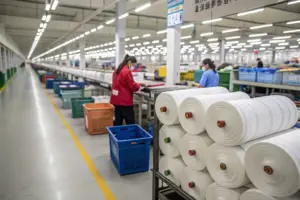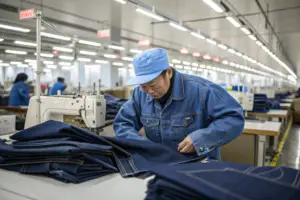
Are you struggling with inconsistent quality, communication blackouts, and logistical nightmares when managing multiple factories across different continents? Disconnected production hubs can destroy your margins and timeline, turning global sourcing into a global headache.
Coordinating production across factories in China, Jordan, Bangladesh, and Kenya requires a centralized command hub, standardized operating procedures, integrated digital tools, and a deep understanding of each region's unique advantages, from China's full-package expertise to Africa's trade agreement benefits for EU/US markets.
At Shanghai Fumao, we act as this central hub for our clients, orchestrating complex multi-country production by leveraging our own facilities in China and a vetted network of partner factories. This model turns geographic diversity from a risk into a powerful strategic tool. Here is the actionable framework we use.
What is the foundational structure for multi-country coordination?
Success hinges on moving from a fragmented supplier list to an integrated network managed by a single point of accountability. This structure prevents the "left hand not knowing what the right hand is doing" syndrome.
The core principle is centralization of communication, technical standards, and logistics planning, while decentralizing execution to specialized units.

Why is a single command hub non-negotiable?
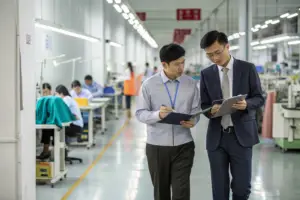
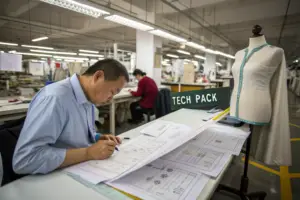
You must establish one central technical office (CTO) that holds the "master keys" to the entire operation. This hub, often in a primary sourcing region like China, creates the universal tech pack, approves all samples, and disseminates updates. For example, our Shanghai Fumao headquarters serves as this hub. When a client's design is finalized with us, we become responsible for translating it into actionable instructions for our partner factories in Jordan or Kenya, ensuring everyone works from the same, constantly updated blueprint. This eliminates the costly errors that occur when factories receive ambiguous or differing instructions.
How do you create and enforce universal standards?
Standardization is your network's common language. This includes:
- A Unified Quality Manual & AQL Standards: Every factory, from Bangladesh to Jordan, must inspect to the same Acceptable Quality Level (e.g., AQL 2.5 for major defects).
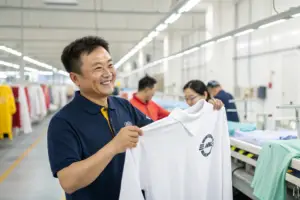
- Standardized Labeling & Packaging Specifications: Carton marks, polybag printing, and hangtag placement must be identical regardless of origin.
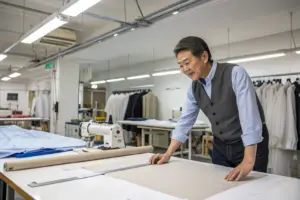
- A Centralized Sample Approval Process: All pre-production samples (PPS) are shipped to the command hub for approval against the master standard, not directly to the brand from each factory. We maintain a physical reference sample library in Shanghai that every partner factory receives copies of.
How do you match production to each country's strategic advantage?
Not all orders are suited for all locations. Intelligent allocation based on each country's cost structure, capabilities, and trade agreements is the key to unlocking value.
This requires a granular understanding of each node in your network.
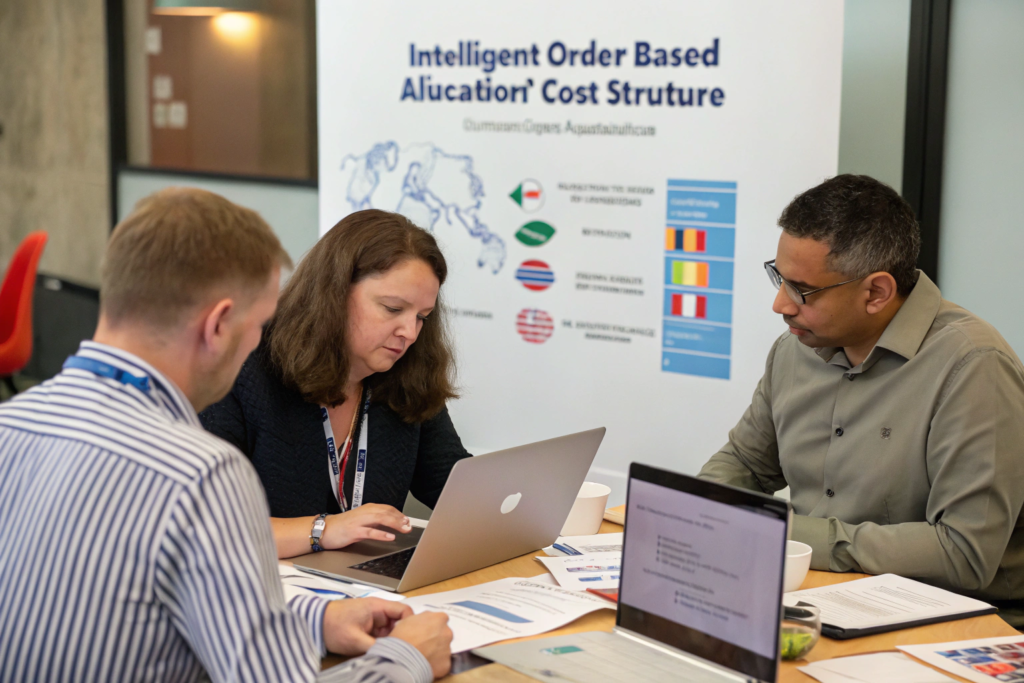
What should be produced where? A strategic breakdown.
| Country | Strategic Advantage | Ideal Product Type | Key Consideration |
|---|---|---|---|
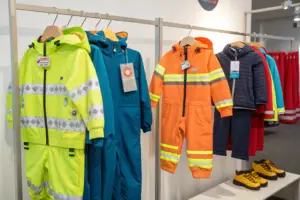
| China | Full-package solutions, complex techniques (printing, embroidery), technical fabrics, rapid sampling. | High-end outerwear, performance wear, customized/camo apparel with in-house printing. | Higher labor cost offset by efficiency and vertical integration. |
| Jordan | Qualifying Industrial Zone (QIZ) access to the US duty-free, skilled labor for woven shirts and trousers. | Men's dress shirts, tailored trousers, structured uniforms. | Must meet strict QIZ rules of origin (Israeli content). |
| Bangladesh | Highly competitive CMT labor costs, large-scale capacity for basics. | High-volume knitwear (T-shirts, polos), simple woven bottoms, fleece. | Longer lead times; strong on ethical compliance (ACCORD). |
| Kenya | African Growth and Opportunity Act (AGOA) duty-free access to the US, growing hub for EU market. | Casual knits, chinos, simple dresses, and shirts for US/EU markets. | Developing infrastructure; strong in cotton products. |
We used this matrix in 2023 to split a large order for a retail chain: complex reversible jackets with printed liner were made in our China factory, while the high-volume basic tees and chinos were allocated to our partner units in Bangladesh and Kenya, optimizing cost and leveraging AGOA benefits.
How do you manage fabric and trim sourcing for dispersed factories?
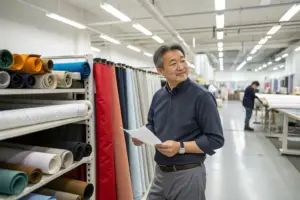
The command hub should centralize fabric and trim sourcing for consistency and bulk discounts. We often source all fabric and licensed components (like branded zippers) centrally from Asia, then ship precise "kitted" packages to each factory. This guarantees color consistency across all production units and prevents factories from substituting inferior local materials. For a pan-African uniform order, we cut and printed all camouflage fabric in China and shipped it to Kenya for assembly, ensuring perfect pattern alignment continent-wide.
What digital tools are essential for real-time visibility?
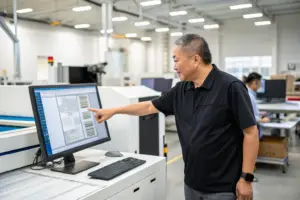
Relying on email and spreadsheets is a recipe for disaster. You need a single source of truth that provides live visibility into the status of every order, in every factory.
Cloud-based platforms are the central nervous system of a dispersed manufacturing network.
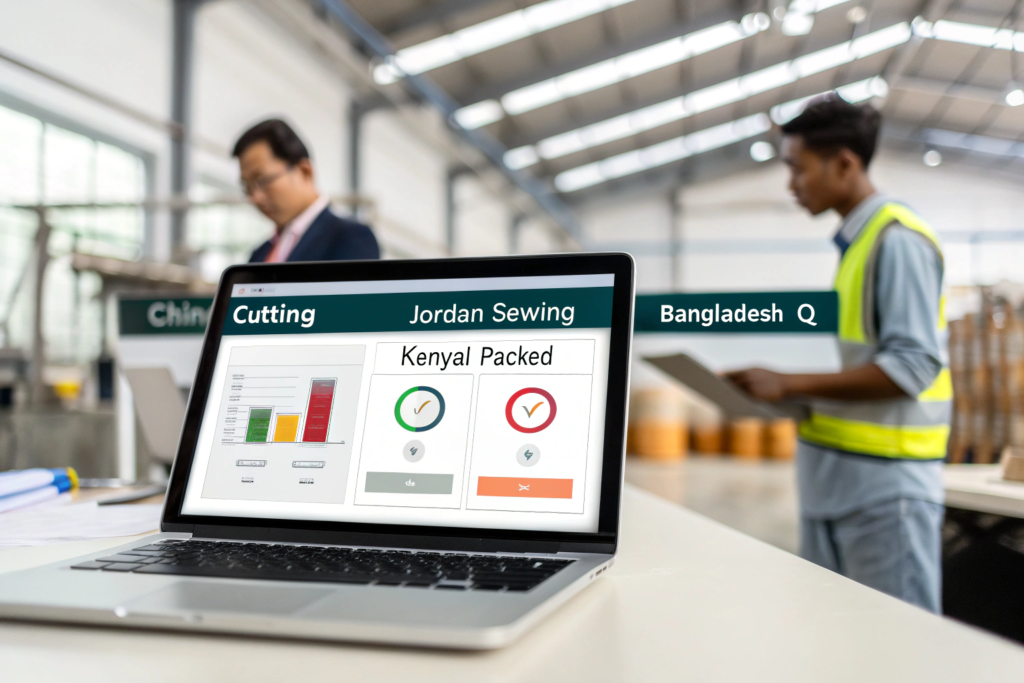
Which platform features are critical?
A robust Production Management System must include:
- Centralized Tech Pack & File Repository: Every factory accesses the latest version.
- Real-time Order Tracking: From fabric booking to final shipment.
- QC Report Upload & Analytics: All inspection data feeds into a central database for trend analysis.
- Communication Log: All correspondence related to an order is tagged and saved, eliminating "he said, she said."
We integrate such platforms with our clients, allowing them to see the status of their order in Kenya as clearly as the one in China, fostering transparency and trust.
How does digital QC streamline multi-location audits?
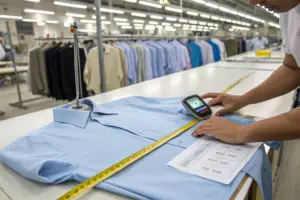
Implement digital quality control tools. Factory QC inspectors use tablets to conduct inspections, input data directly into forms, and upload photos/videos of defects in real-time. This allows the command hub's quality manager to audit the audit, providing immediate feedback. This system proved invaluable when we coordinated a synchronized launch across three countries; we could compare real-time defect rates and dispatch specialist engineers from our hub to the factory showing an anomaly, preventing a batch failure.
How do you mitigate logistics and compliance risks?
The final challenge is bringing disparate shipments together on time, through different customs regimes, and in compliance with varied trade rules.
This requires forward planning and expert logistics partnership.
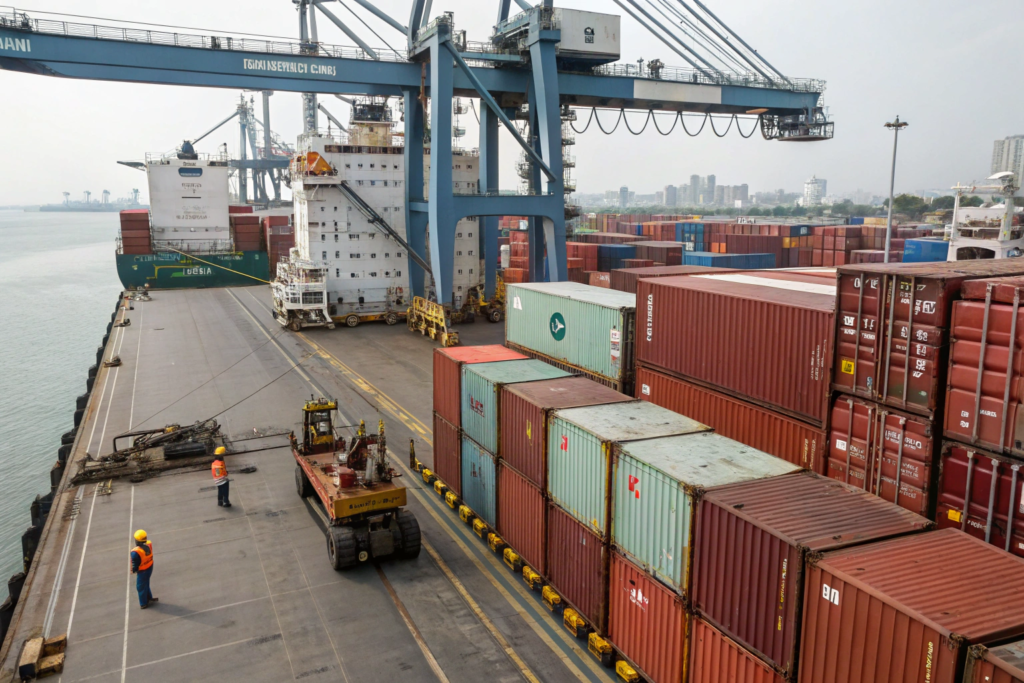
How to consolidate shipping from multiple origins?
Planning consolidated shipping is crucial for cost and efficiency. The command hub must orchestrate production timelines so that shipments from Bangladesh, Jordan, and Kenya arrive at a consolidation hub (e.g., in Singapore or Rotterdam) simultaneously for merging into a single container to the final destination. This requires buffer time planning and constant communication with freight forwarders. Our logistics team uses predictive software to model these flows, ensuring no single factory's delay holds up the entire order.
How to ensure compliance across different trade agreements?
Each country has specific rules of origin and documentation requirements (e.g., Jordan's QIZ certificate, Kenya's AGOA visa). The command hub must have in-house expertise or vetted partners to ensure every shipment is accompanied by the correct, legally valid documents to claim duty-free benefits. A single paperwork error can nullify the entire cost advantage of producing in that region. We maintain a compliance database for each partner factory and conduct pre-shipment document audits.
Conclusion
Coordinating across China, Jordan, Bangladesh, and Kenya is not about managing four separate suppliers; it's about conducting a symphony where each player's strength is harnessed under a single conductor's vision. It demands a blend of strategic planning, technological integration, and relentless standardization.
Attempting this without an established network and central command is overwhelmingly complex. By partnering with a manufacturer like Shanghai Fumao that already operates this integrated model, you gain the benefits of global diversification—cost optimization, risk mitigation, and market access—without the operational burden. Let us be your command hub. To discuss orchestrating your next multi-country production strategy, contact our Business Director, Elaine, at: elaine@fumaoclothing.com.