You have a brilliant idea for a new garment. You can see it, feel it, and even imagine your customers wearing it. But how do you bridge the gap between that exciting vision in your head and a precise, technical document that a factory can execute perfectly? This transition from concept to blueprint is the most critical step in apparel manufacturing, and many brands struggle with it. The good news is that it's a structured process that any brand can master.
Converting your idea into a professional tech pack requires a systematic approach that translates your creative vision into detailed, measurable specifications. This involves defining your core concept, creating precise technical drawings, specifying every material, documenting construction methods, and establishing clear quality standards. A professional tech pack acts as the universal language between your brand and your manufacturer, ensuring your idea is produced exactly as you envision it. We've helped over 200 brands through this process, and those who invest in a thorough tech pack see their sampling success rate improve by 60% or more.
Let's walk through the practical steps to transform your inspiration into a manufacturing-ready document.
How Do You Start with a Clear Design Concept?
Before a single technical detail is documented, your idea needs a solid foundation. A clear design concept serves as your North Star throughout the entire development process. Last year, a startup approached us with a vague idea for "comfortable workwear." After guiding them through a concept-definition exercise, they refined their vision to "professional trousers with the mobility of athletic wear," which dramatically focused their tech pack and resulted in a highly successful product.
Begin by creating a comprehensive design brief. This should include your inspiration, target customer, key selling points, and desired price point. Create a mood board with images, colors, and fabrics that capture the aesthetic you're aiming for. Write a clear description of the garment's purpose and features. This foundational work will inform every decision you make in the tech pack, from material selection to construction details.

What key questions should your design concept answer?
Your concept should clearly define:
- Who is this garment for? (Define your target customer's age, lifestyle, and preferences)
- What is its primary function and key features?
- When and where will it be worn? (Specify the occasion and context)
- Why should someone choose it over competitors? (Identify your unique value proposition)
Answering these questions upfront provides crucial context for the factory and ensures your tech pack aligns with your commercial objectives.
How do you translate inspiration into actionable specifications?
Take the elements from your mood board and make them specific. If you're inspired by "vintage military jackets," identify exactly what elements you want to incorporate—perhaps specific pocket styles, hardware finishes, or fabric treatments. These specific elements then become individual line items in your tech pack that can be clearly specified and sourced.
What Are the Essential Components of a Tech Pack?
A professional tech pack is a multi-faceted document that leaves no room for interpretation. When a Denver-based brand sent us their first tech pack, it was missing construction details and fabric performance specifications. The resulting samples had inconsistent stitching and used fabric that didn't meet their durability requirements. After we helped them build a complete tech pack, their next sample was approved on the first try, saving them weeks of revisions.
The core components of a complete tech pack include:
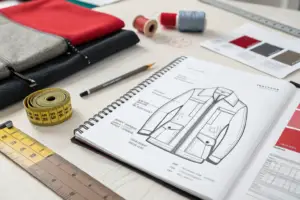
- Technical Flats: Detailed, to-scale drawings of the garment from all angles (front, back, side) showing all construction details, topstitching, and hardware placement
- Bill of Materials (BOM): A comprehensive list of every component needed, including main fabric, lining, interlining, threads, zippers, buttons, and labels with exact specifications
- Construction Details: Specific instructions on how the garment should be assembled, including stitch types, seam finishes, and assembly sequence
- Measurement Spec Sheet: Precise point-of-measurement specifications with acceptable tolerances for each size in your range

Why are technical flats more important than inspirational sketches?
While inspirational sketches convey mood and style, technical flats communicate exact specifications. They show seam placements, stitch lines, hardware locations, and construction details in a clear, measurable format. These flats should be in black and white, to scale, and include callouts for every important detail. They serve as the visual foundation that every other part of the tech pack references.
How detailed should your Bill of Materials be?
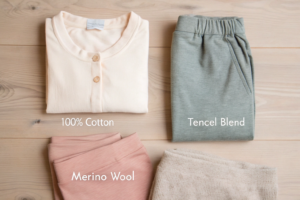
Your BOM should be exhaustive and specific. Instead of "cotton fabric," specify "98% Cotton 2% Spandex Jersey, 280 GSM, Brushed Back, Oeko-Tex Certified." Instead of "zipper," specify "YKK Vislon 5CN Zipper in Antique Brass Finish, 24 inches long." This level of detail prevents misunderstandings and ensures you get exactly the materials you expect. Include supplier information when possible, especially for branded components like YKK zippers or specific fabric mills.
How to Create Accurate Garment Specifications?
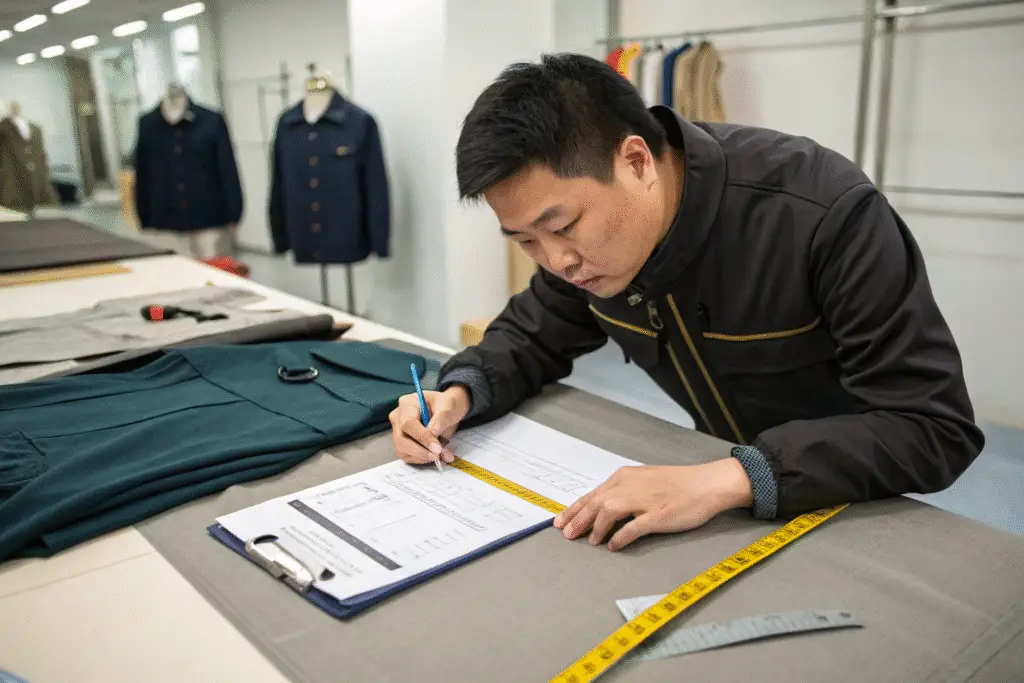
The measurement spec sheet is arguably the most technical part of your tech pack and requires precision and industry knowledge. We worked with an activewear brand that initially provided only basic body measurements. When we received their first samples, the fit was inconsistent across sizes. By implementing a detailed points-of-measurement (POM) system with clear grading rules, we achieved perfect fit consistency in their next production run.
Start with a base size (typically Medium) and define every critical measurement. Use standard points of measurement to ensure clarity. Include not just body measurements but also garment specifications like sleeve length, shoulder width, and hem depth. Establish clear grading rules that define how these measurements change across your size range. This ensures consistent fit from XS to XL.
What are the most critical measurements to include?
While the specific measurements vary by garment type, these are universally important:
- Chest/Bust: Measured 1" below armhole
- Waist: At the narrowest point or specified placement
- Hip: At the fullest point (typically 7-9" below waist)
- Garment Length: From high point shoulder to bottom hem
- Sleeve Length: From shoulder point to cuff
Be sure to specify whether measurements are taken from the garment laid flat (half measurements) or body measurements (full circumference).
How do you establish effective grading rules?
Grading rules define the incremental size changes throughout your range. Create a grading chart that shows exactly how much each measurement increases or decreases between sizes. For example, the chest measurement might increase by 2 inches between each size, while the sleeve length increases by 0.5 inches. Consistent grading is essential for maintaining proper proportions and fit across all sizes in your collection.
How to Specify Quality Standards and Construction Details?
The construction and quality assurance sections transform your tech pack from a description into an instruction manual. A Los Angeles-based streetwear brand learned this the hard way when their first production run had inconsistent stitching and fabric flaws. By adding detailed construction callouts and quality control checkpoints to their tech pack, their second production run had a 98% pass rate, dramatically reducing returns and increasing customer satisfaction.
Document every construction detail explicitly. Specify stitch types (lockstitch, chainstitch, overlock), SPI (stitches per inch), seam types (French, flatlock, superimposed), and hardware application methods. Include a quality assurance section that defines your standards for fabric, construction, and finishing. Reference industry standards like ASTM or create your own brand-specific checkpoints.

What construction details are most often overlooked?
Many brands miss these critical details:
- Stitch density (SPI) for different parts of the garment
- Seam finishes for internal construction
- Reinforcement stitching at stress points
- Thread type and weight for different applications
- Pressing and finishing specifications
Being explicit about these elements ensures your garment not only looks right but performs well over time.
How do you set measurable quality benchmarks?
Define clear, testable quality standards. Instead of "good fabric quality," specify "fabric must pass Martindale abrasion test of 20,000+ cycles" or "color fastness to washing must achieve Grade 4+ per AATCC Test Method 61." For construction, define acceptable tolerance ranges for measurements and specify inspection criteria for stitching, seams, and finishing. These measurable benchmarks give your factory clear targets and provide objective criteria for quality inspection.
Conclusion
Converting your idea into a professional tech pack is a methodical process that transforms creative vision into manufacturing reality. By developing a clear design concept, creating comprehensive technical drawings, specifying precise measurements, and documenting exact construction and quality standards, you create a blueprint that ensures your final product matches your initial inspiration. A well-crafted tech pack is your most powerful tool for achieving manufacturing success, reducing errors, and bringing your vision to life exactly as you imagined.
Ready to transform your apparel ideas into professionally manufactured products? At Fumao Clothing, we specialize in guiding brands through the entire tech pack development process, ensuring your vision is perfectly translated into a manufacturable product. Contact our Business Director Elaine today to start your journey from concept to creation: elaine@fumaoclothing.com.