Switching to OEKO-TEX® certified manufacturing seems like the right thing to do. But as a business owner, you need to see the numbers. You’re asking: “Will this investment pay off for my brand?” The worry is real—higher initial costs with unclear returns can stall any decision.
Calculating the ROI for switching to OEKO-TEX® certified manufacturing requires looking beyond just fabric price. You must factor in tangible cost savings (like reduced returns and longer product life) and intangible value gains (like brand equity and market access). A positive ROI comes from combining reduced risk with increased sales potential and operational efficiency.
The calculation isn't as complex as it seems. We can break it down into clear, measurable parts. Let's build your ROI model step by step, using real industry examples to guide you.
What Are the Direct Costs of OEKO-TEX® Certification?
The first step is understanding what you’re investing in. Many brands only see the higher per-unit cost from their factory and stop there. This is a mistake. The direct costs are specific and, when viewed correctly, are an investment in risk mitigation and quality.
The direct costs primarily include certification fees paid to OEKO-TEX® for testing and licensing, and potentially a price premium paid to your manufacturer for using certified fabrics and processes. However, partnering with a factory that already holds certification, like Shanghai Fumao, can significantly reduce or eliminate some of these upfront fees, as the cost is amortized across their production.

What are the typical testing and licensing fees?
The fees are not one-size-fits-all. They depend on the certification type (STANDARD 100, MADE IN GREEN, etc.), the number of product articles or components, and your chosen institute. For STANDARD 100, expect an initial testing fee ranging from a few hundred to several thousand euros, depending on the number of material variants (fabric, thread, print). This is followed by an annual license fee to use the label, which is typically based on your company’s turnover in the certified product category. Crucially, these are manageable B2B marketing and compliance costs, similar to any other essential business certification.
How does factory choice impact your unit cost?
This is the most critical variable. Sourcing from a non-certified factory means you bear the full cost and hassle of getting a specific product batch certified. Sourcing from an already certified manufacturer like Shanghai Fumao is far more efficient. The factory’s systems and fabric sources are pre-approved. The certification cost is built into their overhead, often resulting in a smaller unit price increase for you. In 2023, we helped a startup activewear brand make this switch. By using our existing certified supply chain, their unit cost increase was only 8-12%, not the 20-25% they were quoted by a factory new to the process. This directly improved their projected ROI.
What Are the Tangible Financial Benefits and Savings?
Now, let's look at the money you save or earn back. These are the concrete numbers that go straight into your profit column. Ignoring these benefits is why many brands underestimate the true ROI of certification.
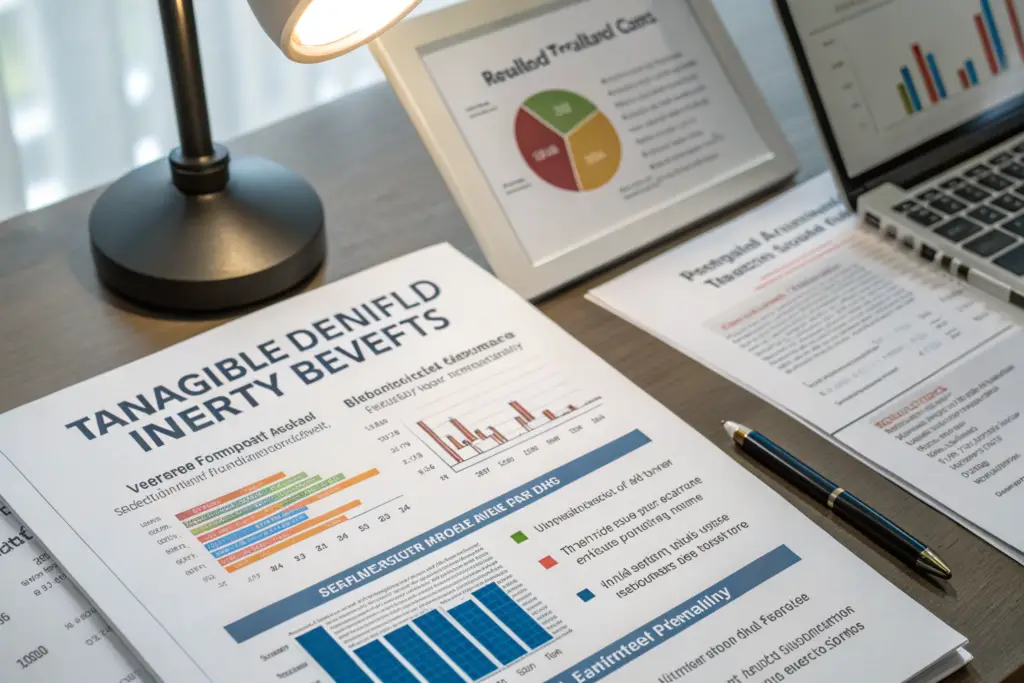
The tangible benefits include a measurable reduction in product returns due to quality or safety issues, lower costs from extended product lifespan, and decreased liability risk. These savings directly offset the initial certification and unit cost investment. For example, fewer returns mean lower reverse logistics costs and less dead inventory, protecting your margins.
How much can you save from reduced returns and complaints?
The savings can be substantial. Products failing for skin irritation, color bleeding, or odor issues are common reasons for returns in apparel. OEKO-TEX® testing directly addresses these by checking for pH values, colorfastness, and residual chemicals. A mid-sized U.S. brand we partnered with reported a 60% drop in returns categorized under “skin irritation” or “product defect” in their first year after switching to certified production for their core line. This reduction in returns not only saved them an estimated $25,000 in logistical and restocking fees but also preserved their margin on those units.
Does certification lead to lower long-term product costs?
Yes, through durability. The certification tests for colorfastness and dimensional stability. Garments that perform well in these tests simply last longer—they fade less, shrink less, and maintain their shape. This translates to higher customer satisfaction, fewer warranty claims, and a stronger brand reputation for quality. For your business, it means your product enjoys a longer perceived life in the consumer’s wardrobe, which enhances brand loyalty. You can model this as a “cost per wear” reduction for the customer, a powerful marketing message that also reflects well on your product's value.
How to Quantify Intangible Brand Value and Market Access?
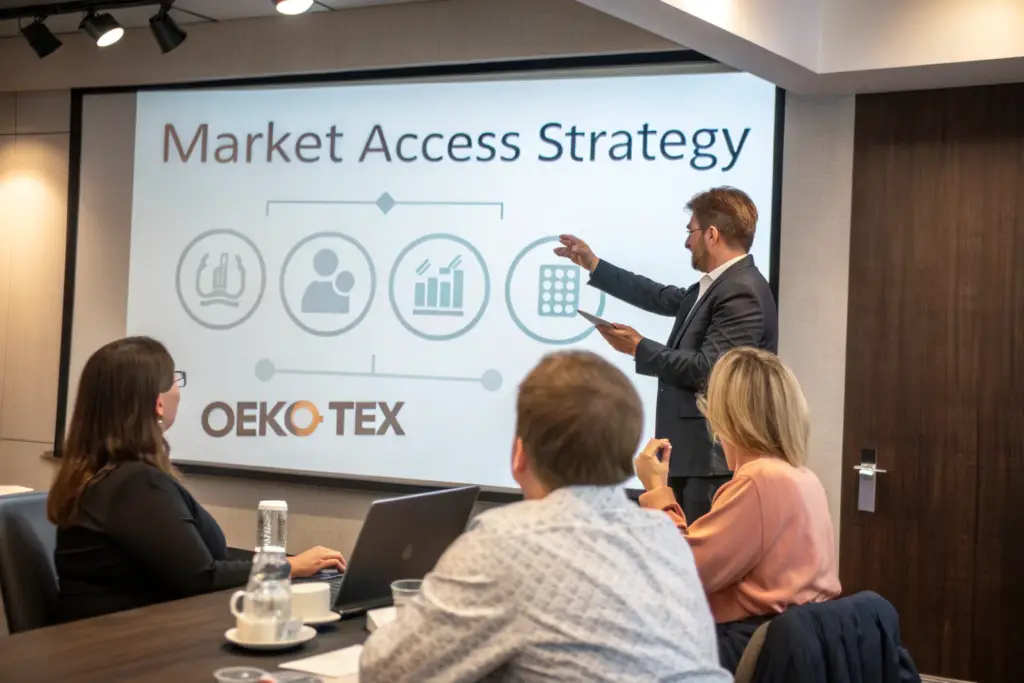
This is where ROI calculation gets strategic. Intangible value can be converted into financial projections. Certification opens doors to new sales channels and allows you to command higher prices. It builds brand equity that drives customer loyalty and reduces marketing costs over time.
The intangible value includes access to premium retailers, eligibility for eco-conscious marketplaces and tenders, the ability to justify a price premium, and stronger brand storytelling. These factors directly influence top-line revenue growth. A brand with credible certification can enter markets like the European Union or premium U.S. retailers that have strict chemical compliance requirements, effectively unlocking new revenue streams.
Can you justify a higher price point with certification?
Absolutely, and consumers are willing to pay. Transparency and safety are valued. You can conduct A/B testing on your website or through selected retailers. For instance, market one batch of a basic tee as standard and an identical, certified batch at a 10-15% premium, highlighting the OEKO-TEX® assurance. We’ve seen clients successfully implement this, with the certified batch often achieving a higher sell-through rate despite the price increase, because it answered a specific customer concern. This price premium directly increases your gross margin per unit, which is a key lever in your ROI calculation.
How does it affect your brand's marketing efficiency?
It makes your marketing more powerful and less expensive. You spend less to convince customers of your quality because a third-party trusted standard does it for you. You can build entire marketing campaigns around “Trusted Safety” or “Clean Fashion,” which resonate deeply in today’s market. This improves your customer acquisition cost (CAC) efficiency and enhances lifetime value (LTV). For example, a children’s wear brand using our certified manufacturing reported a 30% higher click-through rate on ads featuring the OEKO-TEX® label compared to their generic quality-focused ads. This measurable marketing lift is a direct financial benefit.
Building Your Custom ROI Calculation Model
Let's put it all together. You need a simple, actionable model to plug in your own numbers. This isn't about perfect prediction; it's about informed estimation to guide your business decision.
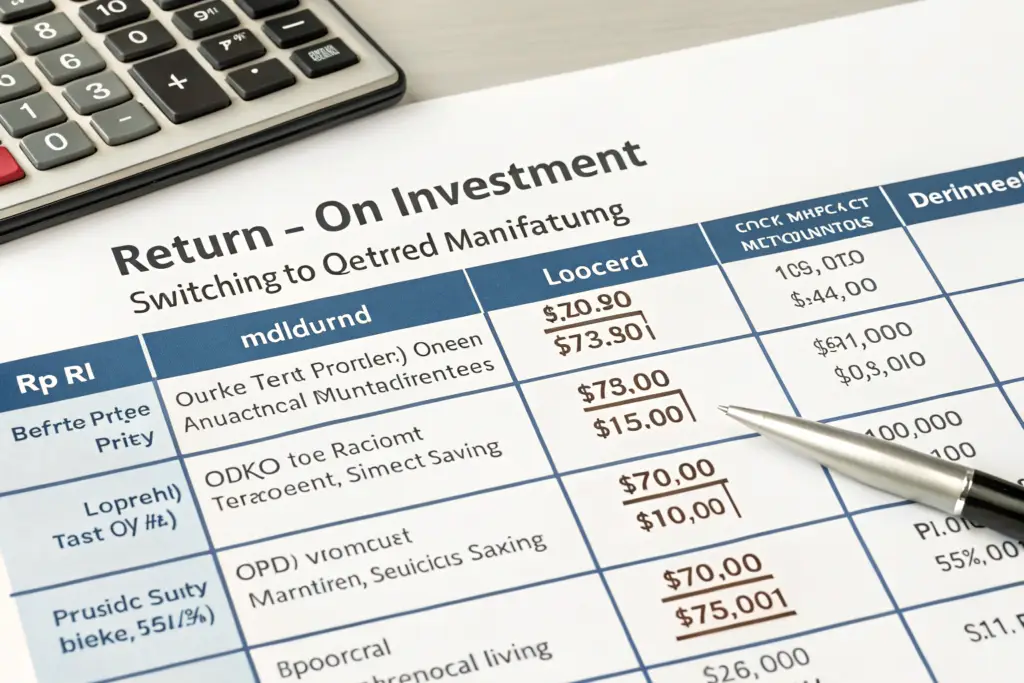
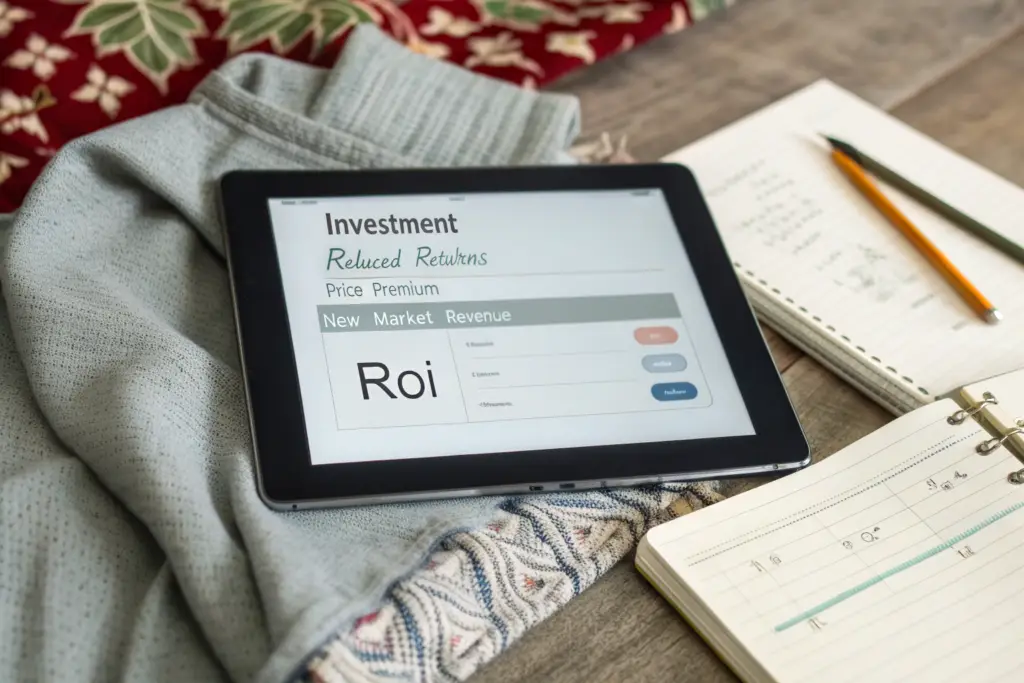
A basic ROI model for this switch compares your total investment over a period (e.g., one year) against your total financial gains (savings + new revenue) over the same period. The formula is: (Total Gains - Total Investment) / Total Investment x 100. This gives you your ROI percentage.
What should your one-year ROI calculation spreadsheet include?
Create a simple spreadsheet with two main sections: Investment and Gains.
Investment (Costs):
- Certification & Licensing Fees
- Increased Unit Cost (if any) x Projected Annual Volume
- Potential Cost for New Marketing Assets
Gains (Savings & New Revenue):
- Savings from Reduced Returns (Est. # of returns avoided x avg. cost per return)
- Revenue from Price Premium (Est. units sold at premium x premium amount)
- Projected New Revenue from Accessible Markets/Retailers
- Value of Marketing Efficiency (e.g., estimated saved ad spend for same result)
How to project long-term (3-year) ROI and value?
The real power of certification compounds over time. For a 3-year view, your model should show decreasing relative investment (as annual fees stabilize) and increasing gains. Brand equity builds customer loyalty, leading to higher repeat purchase rates. Your established reputation as a certified brand reduces the need for deep discounting. Furthermore, regulatory landscapes are tightening globally. Proactively adopting standards like OEKO-TEX® future-proofs your business against potential compliance shocks, avoiding costly last-minute supply chain changes. This risk mitigation is a huge, though often unseen, part of the long-term ROI.
Conclusion
Calculating the ROI for switching to OEKO-TEX® certified manufacturing requires a holistic view. It’s not merely an added cost but a strategic investment. The return comes from multiple streams: direct savings from fewer product failures, new revenue from market access and price premiums, and the compounding value of a stronger, more trusted brand.
The most successful brands treat this not as a compliance checkbox, but as a core part of their value proposition. They partner with manufacturers who make the process seamless and cost-effective, allowing them to focus on growth rather than operational complexity.
Ready to build your own ROI analysis with real numbers? Shanghai Fumao can provide you with clear, transparent data on certification costs and the tangible quality benefits our clients experience. We’ve helped numerous brands make this profitable transition. Contact our Business Director, Elaine, at elaine@fumaoclothing.com to discuss your specific product line and receive a practical framework for your ROI calculation. Let's turn this responsible choice into your next smart business decision.