When I started supplying a Denver-based startup three years ago, they had a bold vision: a premium ski brand built entirely on transparency and safety. Their first mistake was thinking "OEKO-TEX certified from China" was a simple checkbox. They sourced what they believed were certified jackets, only to discover the certificates were for the fabric only, not the finished garments containing waterproof tape and non-compliant zippers. The entire launch was delayed by six months. This experience taught me that building a brand on this foundation isn't just about sourcing products; it's about architecting a supply chain with verification at its core.
To build a ski brand with OEKO-TEX certified garments from China, you must integrate certification as a strategic supply chain pillar, not a last-minute add-on. This requires selecting a manufacturing partner capable of full-package certified production, embedding verification into every stage from design to delivery, and leveraging the certification as a core narrative for marketing, compliance, and brand trust.
It's a process that turns a compliance requirement into your most powerful market differentiator. Let's map out the practical steps, from your initial sketch to the customer receiving the jacket.
How Do You Source Truly OEKO-TEX Certified Full-Package Production?
The term "full-package" takes on a critical meaning here. Many Chinese suppliers offer cut-make-trim (CMT), where you provide the certified fabrics and they assemble. The risk? The threads, zippers, tapes, and prints you provide might invalidate the certification. True OEKO-TEX full-package means the factory manages and certifies the entire bill of materials (BOM) as a finished product.
You must source a manufacturer that offers OEKO-TEX STANDARD 100 certification for the finished garment as part of their full-package service. This means they control and certify the entire component ecosystem—shell, lining, insulation, membrane, zippers, threads, tapes, and labels—ensuring the final product you receive carries a valid certificate with your brand as the applicant or a verifiable link to your order.
What specific questions should you ask potential factories?
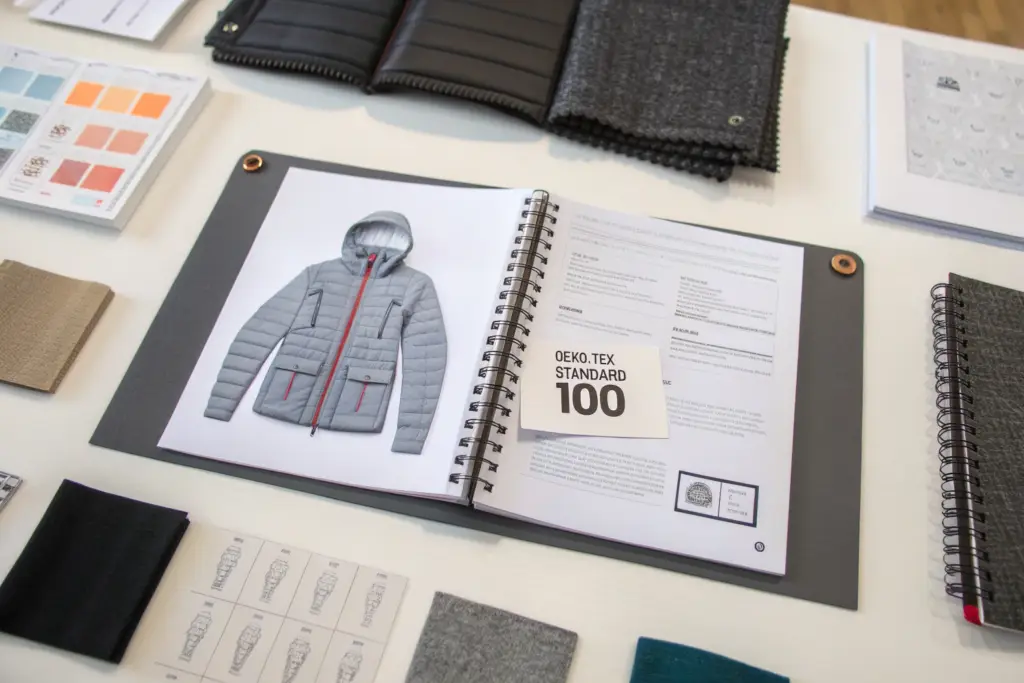
Move beyond "Are you OEKO-TEX certified?" Ask these instead: "Can you show me the OEKO-TEX certificate for a finished ski jacket you have produced? Can I verify its number online?" "Do you source all components from pre-certified suppliers, or do you batch-test them for compliance?" "What is the process for adding our new fabric or trim to your certified BOM?" "Can you list us as the certificate 'Applicant'?" For example, when Shanghai Fumao onboards a new brand, we provide a dossier for a similar past project, including the certificate number for online verification.
Why is a "one-stop" factory critical for this model?
A factory with in-house product development, sourcing, and quality control teams can manage compliance internally. If fabric sourcing, sewing, and trimming are split among different entities, accountability shatters. A 2022 client wanted to use a specific Korean waterproof fabric. Because we operate a full-package production model, we could submit that fabric along with our standard components for a new combined certification, managing all logistics and documentation. A trading company or a simple sewing factory cannot offer this.
How to Design Your Collection for OEKO-TEX Certification from the Start?
Design choices made on your drawing board in Portland directly impact certification feasibility and cost in Shanghai. Designing for certification means specifying materials and constructions that are readily compliant, avoiding last-minute substitutions that delay your timeline.
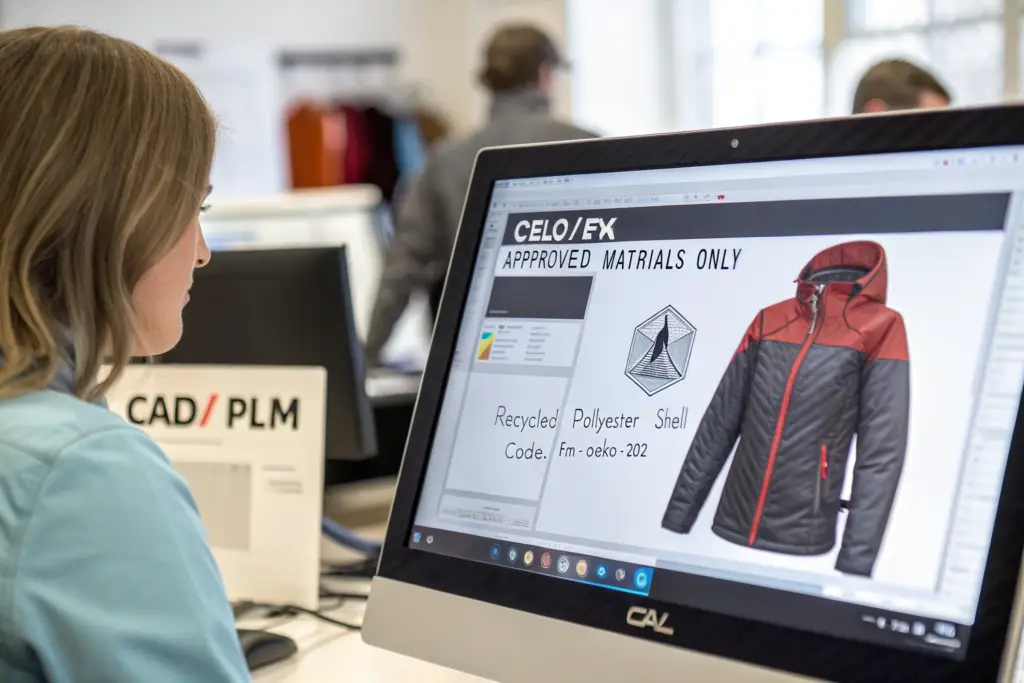
Design your collection by starting with an OEKO-TEX compliant material library from your chosen factory. Co-develop your tech packs with the factory’s R&D team, specifying approved material codes for every component. Avoid custom prints or dyes with untested chemistry until their compliance is verified, and design with the goal of minimizing the number of unique material lots to simplify and reduce certification costs.
How does material selection impact timeline and cost?
Every unique material combination requires testing. If you have 5 shell fabrics, 3 linings, and 2 insulation types in different combinations across 10 styles, the certification becomes complex and expensive. We advise brands to use a unified "platform" approach. For instance, use the same OEKO-TEX certified face fabric, lining, and zipper across multiple styles, varying only colors or non-material features. This "material rationalization" can cut certification fees by up to 60% and shorten the lead time by weeks.
What are common design pitfalls that break certification?
Common pitfalls include unapproved custom prints which may contain phthalates, specialty trims from uncertified sources that can fail for nickel, and composite materials from unvetted suppliers that might use non-compliant adhesives. The solution is to use factory-approved print techniques, choose from the factory's certified trim catalog, and allow the factory's quality assurance team to audit any new material before design finalization.
What Does the Step-by-Step Production and Verification Process Look Like?
Transparency is your brand's currency. You should receive not just a certificate at the end, but a verifiable audit trail throughout. This process turns your factory into a true partner.
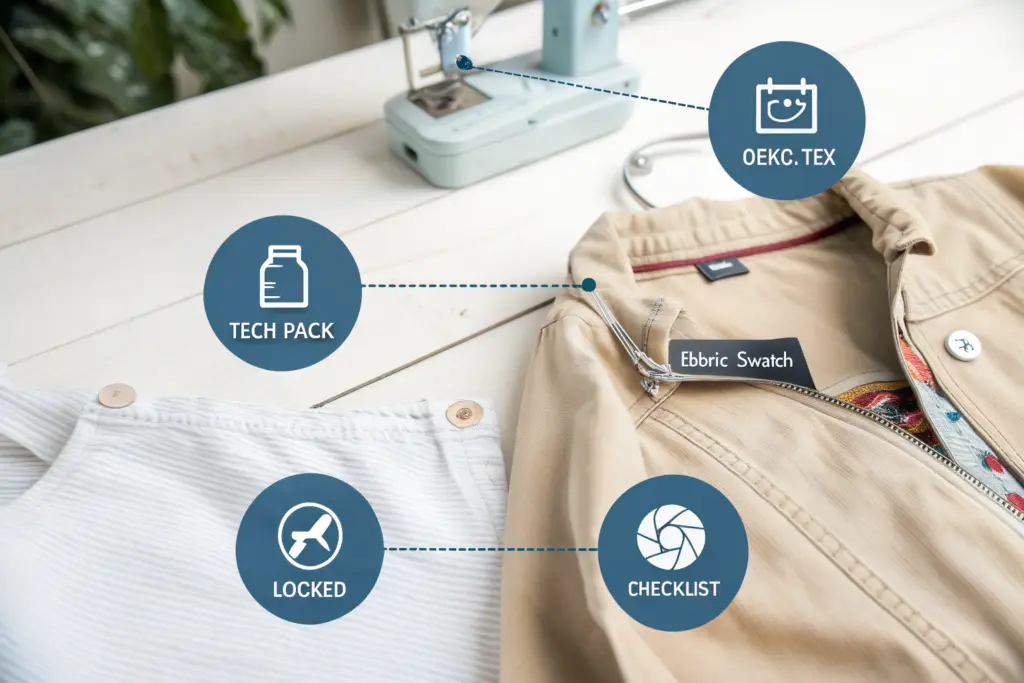
The production process should follow a verified chain: 1) Pre-production: Submit final BOM for factory's internal audit and certificate application/extension. 2) Production: Factory uses only approved materials from locked storage; in-process QC checks for material substitution. 3) Post-production: Finished goods are batch-tested or shipped under the umbrella of the pre-approved certificate. You receive the certificate and unique product IDs before shipment.
What verifications should you perform at each stage?
At the proto stage, request test reports for main fabric and key trim. During pre-production, receive and verify the official certificate draft online. During production, your quality control agent or the factory should provide evidence of certified materials on the cutting table. Before shipment, receive the final certificate and ensure correct labels are sewn in, performing a random online verification. We provide key clients at Shanghai Fumao with a secure portal to view certificate status and QC reports in real time.
How does this integrate with DDP shipping and logistics?
Under DDP (Delivered Duty Paid) terms, the certification documents are part of the shipping dossier. A professional factory will include the OEKO-TEX certificate copy in the master shipping documents, facilitating smoother customs clearance in the U.S. or EU, as it serves as proof of product safety standards. This end-to-end handling is part of the value of a integrated manufacturer.
How to Market Your Brand Around OEKO-TEX Certification Authentically?
In a market rife with greenwashing, authenticity wins. OEKO-TEX is a third-party verified claim, making it a powerful marketing tool. But you must communicate it correctly to build trust, not just check a box.
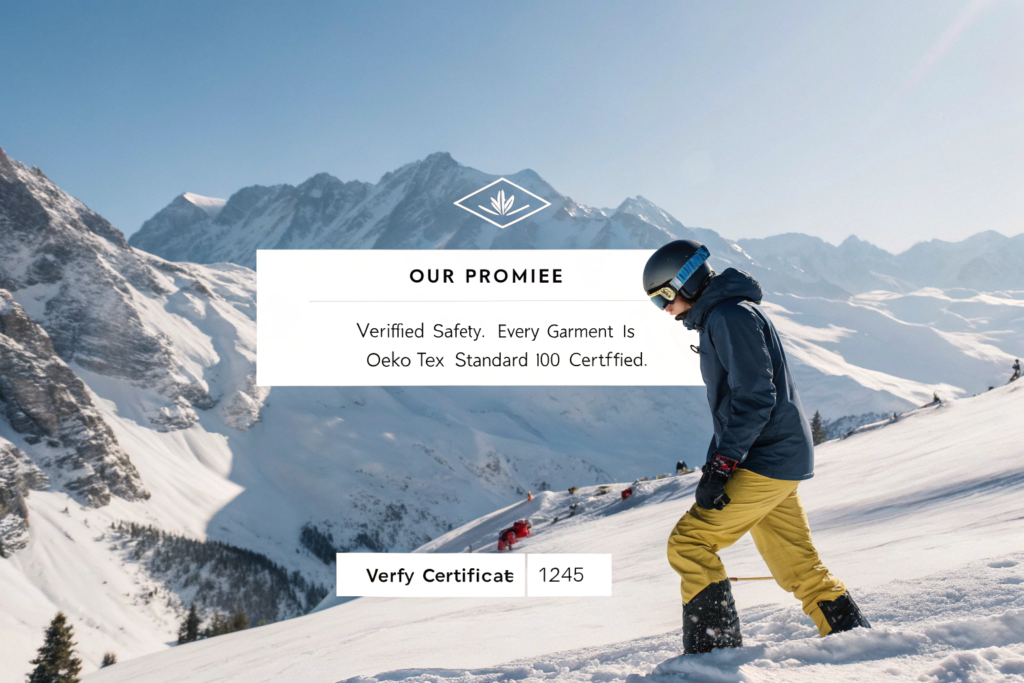
Market your brand by educating your customer on why OEKO-TEX matters for ski wear. Use your website, tags, and content to explain the specific benefits: PFAS-free DWR, skin-safe interiors during high exertion, and environmental protection from harmful chemicals. Show transparency by sharing your certificate number or a "Learn About Our Certification" page that details your factory partnership and verification process.
What are compelling marketing messages for ski apparel?
Compelling messages link certification directly to the skier's experience: "Sweat Without Worry. Our linings are certified free from harmful substances, even during the most intense runs." or "Clean Mountains Start with Clean Chemistry. Our PFAS-free waterproofing is OEKO-TEX certified." Another powerful angle is transparency: "Trace Our Thread. Every component is part of our certified system. Scan the QR code to learn more."
How can you leverage this in B2B sales and retailer onboarding?
For wholesale, your OEKO-TEX certification is a key part of your compliance portfolio. It directly addresses the Consumer Product Safety Improvement Act (CPSIA) concerns of major U.S. retailers. When presenting to buyers, include the certificate in your line sheet and explain your factory's full-package control system. This demonstrates professional supply chain management, reducing the retailer's perceived risk and making your brand easier to onboard. This strategic use has helped our clients at Shanghai Fumao secure shelf space in specialty outdoor retailers.
Conclusion
Building a ski brand with OEKO-TEX certified garments from China is a deliberate strategy that aligns product integrity with market demand. It transforms a complex supply chain requirement into the very foundation of your brand story—trust, safety, and transparency. The journey hinges on choosing a manufacturing partner that doesn't just sell you a certified product, but one that architects a certified process around your vision.
This path requires more due diligence upfront but pays dividends in brand equity, customer loyalty, and operational smoothness. If you are ready to build a ski brand that stands for verified performance and responsibility, your manufacturing partnership is the most critical decision. At Shanghai Fumao, we are structured to be this partner, offering the integrated full-package production, in-house expertise, and transparent verification process required to bring a credible, certified brand to life. Contact our Business Director, Elaine, at elaine@fumaoclothing.com to start building your foundation.