Every extra SKU adds cost. Every mismatched piece creates friction. A modular collection solves both by design.
A modular rental collection uses coordinated pieces that mix and match seamlessly, increasing outfit combinations while lowering inventory costs and simplifying user experience.
At Fumao, we help rental brands create modular systems that boost versatility, reduce SKUs, and turn garments into flexible building blocks—not fixed sets.
What Is a Modular Fashion Collection and Why Does It Work?
In rental models, flexibility is power. Modular collections deliver that with fewer pieces and more combinations.
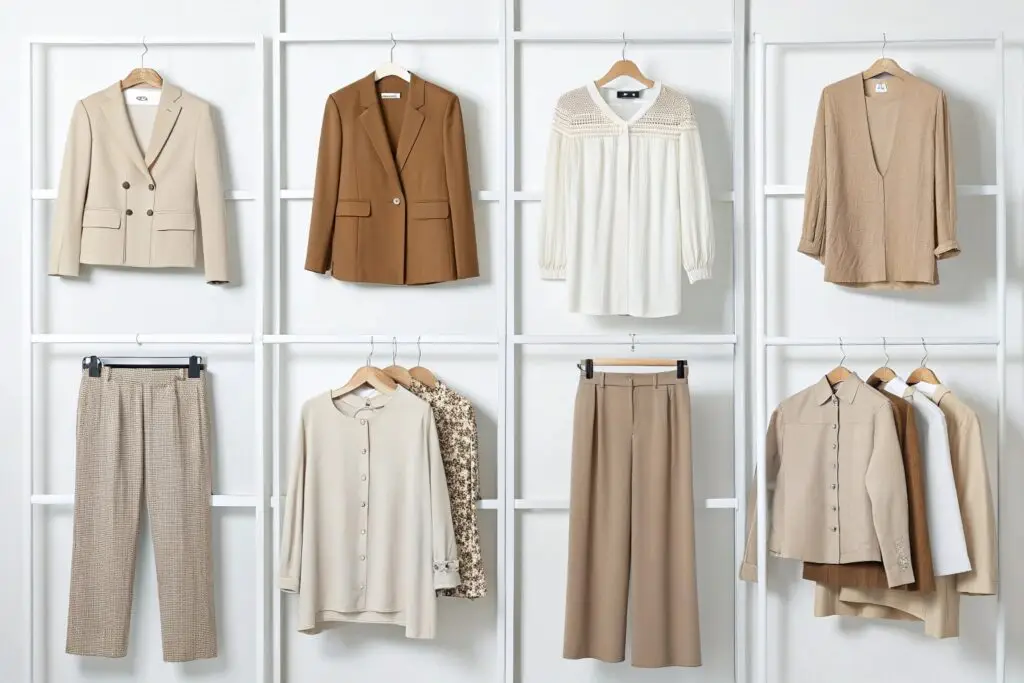
A modular fashion collection is a curated set of garments designed to be combined in multiple ways—allowing users to build many outfits from a small, coordinated selection.
How is modular fashion different from regular collections, and why does it suit rentals?
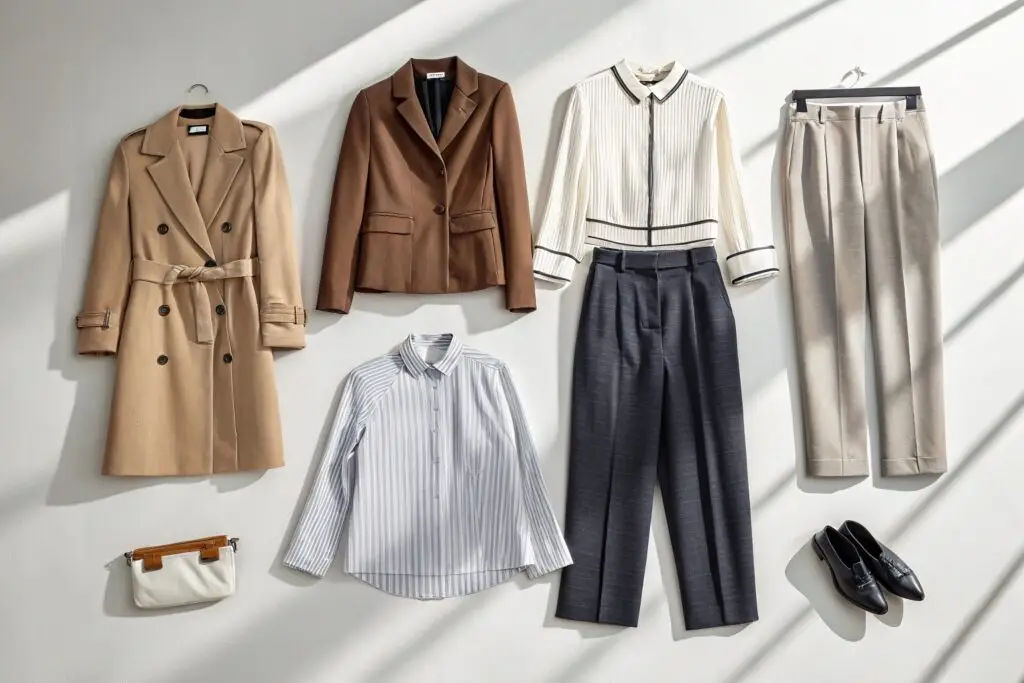
Traditional collections focus on wide variety—multiple fits, colors, and styles. Modular collections focus on functionality and uniformity, prioritizing:
- Core colors (black, navy, gray)
- Standardized silhouettes
- Coordinated proportions
- High durability fabrics
This system works in rental because:
- Staff need standardized fits
- Garments rotate through many users
- Simpler logistics = faster delivery
We helped a client in retail uniform rental shift from 35 random items to a 12-piece modular capsule. Result? Outfit combinations increased, but warehouse SKUs dropped by 60%.
What are the core principles behind a modular rental collection?
| Principle | Function in Rentals |
|---|---|
| Interchangeable | Tops and bottoms pair in any combo |
| Neutral Palette | Easy styling and reuse across seasons |
| Consistent Fabric | Uniform wear, wash, and aging pattern |
| Layer-Ready | Allows adjustment for temperature |
Modular = efficient, consistent, scalable.
How to Choose Versatile Pieces for Rental Success?
The right base pieces are the foundation of any modular system. Get them wrong, and the whole structure falls apart.
Choose versatile garments that balance durability with clean aesthetics—such as neutral-colored trousers, layerable tops, and wrinkle-resistant outerwear.
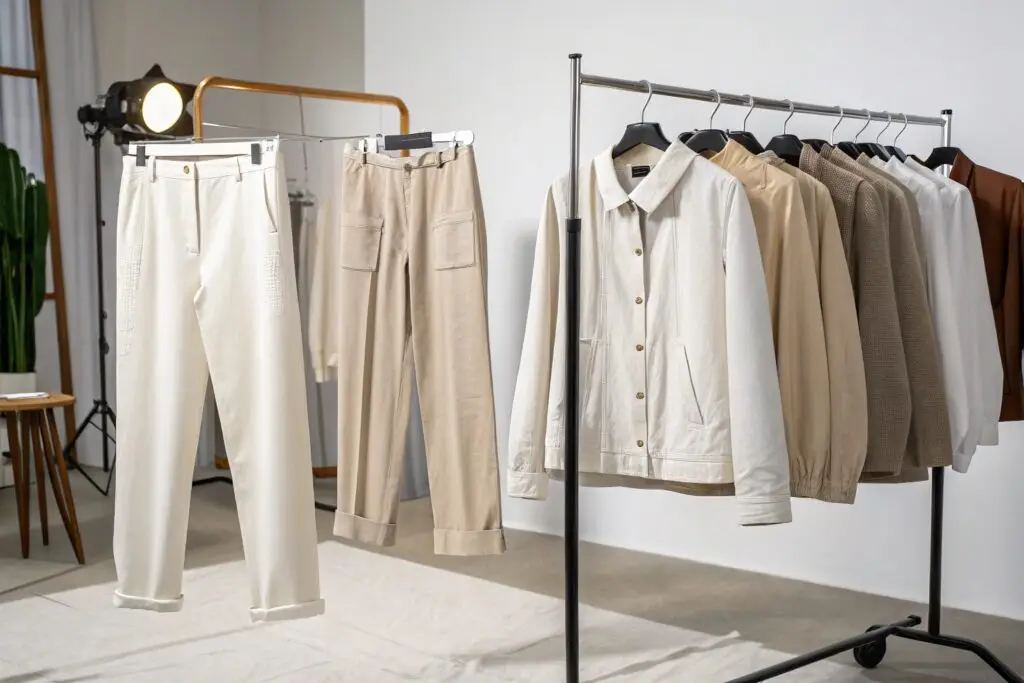
What defines a “versatile” rental garment, and how can you test for it?
- Matches with at least 3–4 other garments
- Holds up to 50+ washes
- Looks presentable across sizes and body types
- Layers easily for season changes
We test versatility by doing pairing trials in showroom sessions. For each piece, we ask: “Can this be worn with three tops or three bottoms without looking forced?”
Here’s a basic matrix:
| Item | Match Count | Reorder Priority |
|---|---|---|
| Black Straight Pant | 6+ | High |
| White Poplin Shirt | 5 | High |
| Olive Utility Vest | 3 | Medium |
| Patterned Blouse | 1–2 | Low |
Versatile items should take up 80–90% of your SKU count in modular rental collections2.
What fabric and fit choices support versatility in modular design?
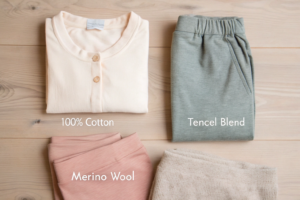
- Midweight poly-cotton twill3 – wrinkle resistant, cross-season
- Relaxed cuts – more forgiving across body types
- Minimal trims – fewer style limitations
- Stretch blends – increase comfort without distortion
Think less “statement” and more “foundation.” Foundations get rented more.
Tips to Mix and Match Styles Across Seasons
Rental garments need to perform year-round—without doubling inventory.
To mix and match across seasons, build in convertible layers, neutral colors, and styles that can be dressed up or down with minor additions.
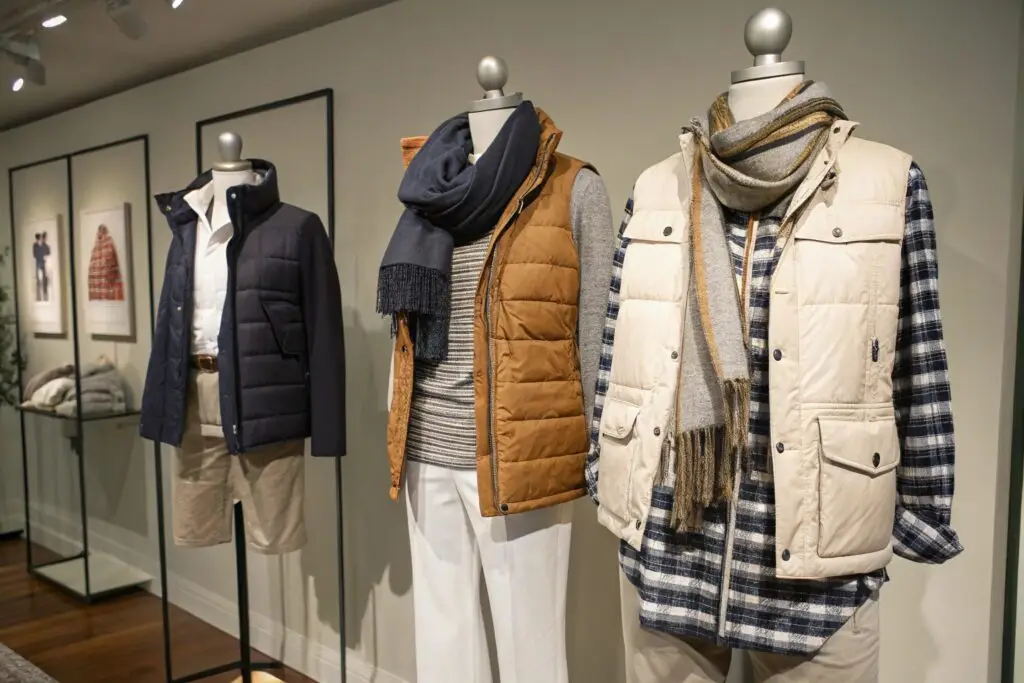
How can rental brands maintain year-round service without separate summer/winter lines?
Design with transition in mind. Instead of separate seasonal lines:
- Use layering options4: cardigans, vests, tunics
- Include breathable fabrics5 that also insulate
- Add detachable pieces6: collars, linings, sleeves
We designed a 3-in-1 modular jacket for a delivery client. Outer shell (waterproof), inner fleece (insulated), combined via zippers. Works across winter and shoulder seasons.
One modular pant works in all four seasons when styled with:
- Polo in summer
- Button-up and vest in fall
- Shirt + fleece in winter
- Blazer in spring
Color palette matters too: black, gray, and olive span the whole year without looking off-season.
What accessories or add-ons support seasonal flexibility without inflating SKUs?
- Scarves
- Hats
- Waist aprons
- Ties or neckerchiefs
- Sleeveless outerwear
These are light in cost and storage but high in style rotation value. Rental buyers can add optional kits without overhauling the whole line.
Best Practices for Managing a Modular Rental Inventory
Even the best-designed modular collection fails without clear inventory systems.
To manage modular rental inventory effectively, assign set codes, track usage per combo, label by compatibility, and standardize sizing across garments.
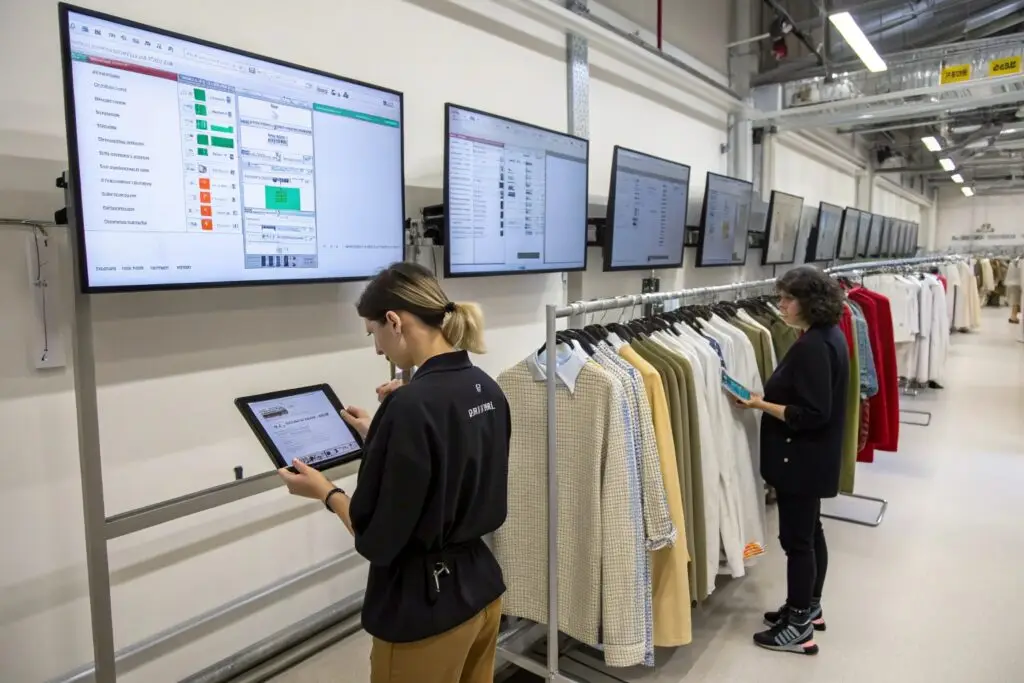
How should rental businesses track modular units and ensure correct pairings?
Modular garments need labeling logic:
- Use capsule codes7 (e.g., MOD-23-BLK-VST)
- Assign group compatibility tags (e.g., “Layer Set A”)
- Add barcode or RFID for scanning in/out of rotation
When garments are returned, systems should auto-check if:
- They belong to the same modular set
- One piece is missing
- A replacement is needed
We set up a QR-linked dashboard for one client where staff could scan a pant and see its entire compatible set.
What return and reorder systems improve modular inventory efficiency?
- Set minimum stock thresholds8 per module (not per SKU)
- Use bundle packs for reorders (e.g., 1 top + 1 pant + 1 vest)
- Automate replacement triggers9 after 40+ wash cycles
- Group returns and prep by capsule, not item type
Here’s a return prep workflow:
- Scan item
- Auto-tag capsule set
- Check for visual wear
- Reassign to next rental order or repair bin
This system cuts turnaround time and reduces mix-ups across inventory groups.
Conclusion
A modular rental collection gives you more with less—more combinations, more control, and more satisfied clients. At Fumao, we build rental-ready modules that mix perfectly, wear well, and simplify every stage of inventory flow.
-
Understanding versatile rental pieces can help you make informed choices for your wardrobe, ensuring you get the most out of your rental experience. ↩
-
Exploring modular rental collections can provide insights into efficient wardrobe management and sustainable fashion practices. ↩
-
Learning about midweight poly-cotton twill can enhance your knowledge of fabric choices that support versatility and comfort in clothing. ↩
-
Explore this link to discover innovative layering techniques that enhance versatility in fashion, perfect for rental brands. ↩
-
Learn about breathable fabrics that provide comfort and insulation, essential for creating versatile clothing lines. ↩
-
Find out how detachable pieces can transform outfits and maximize seasonal flexibility, a must for rental brands. ↩
-
Explore how capsule codes enhance inventory tracking and organization for rental businesses. ↩
-
Learn about setting minimum stock thresholds to optimize inventory levels and prevent stockouts. ↩
-
Discover how replacement triggers can automate inventory replenishment and improve efficiency. ↩