You have a vision for a new golf brand: premium performance, sleek design, and a clear commitment to quality and safety. You know manufacturing in China offers expertise and value, but you’ve heard the stories about quality inconsistency and chemical concerns. How do you navigate this and build a brand that stands for trust from the ground up? The strategic answer lies in making OEKO-TEX certification the non-negotiable core of your product development and supply chain strategy from day one. This isn’t just about adding a label; it’s about building your brand on a foundation of verifiable safety and operational excellence.
Building a golf brand with OEKO-TEX certified garments from China requires a dual strategy: First, using the certification as a rigorous filter to select a manufacturing partner with systemic integrity, not just a certificate. Second, weaving the certification’s promise of safety and quality into every layer of your brand story, from product development to marketing to customer service. This approach transforms a potential liability (overseas production) into your most powerful competitive advantage.
Let’s walk through the actionable steps to build a credible, high-value brand from concept to customer.
Why Should OEKO-TEX Be Your First Design Spec, Not an Afterthought?
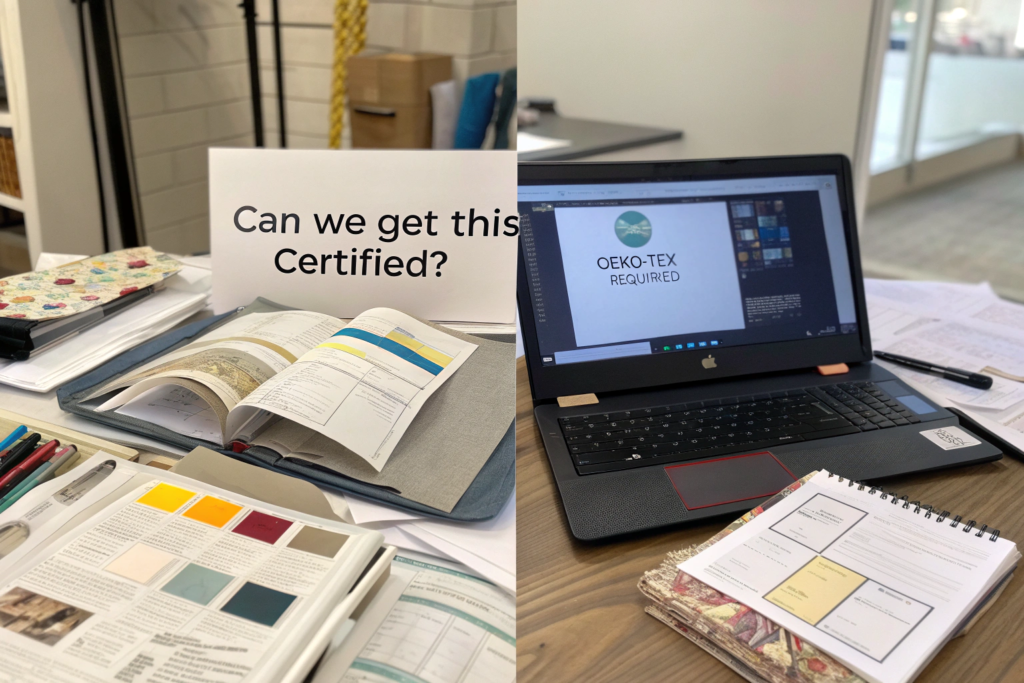
Most brands design a product, then look for a factory to make it, and finally ask about certifications. This backward approach invites compromise. Instead, you must design backwards from certification. This means your technical specifications (tech pack) must mandate OEKO-TEX certification for every single component before you even start sampling.
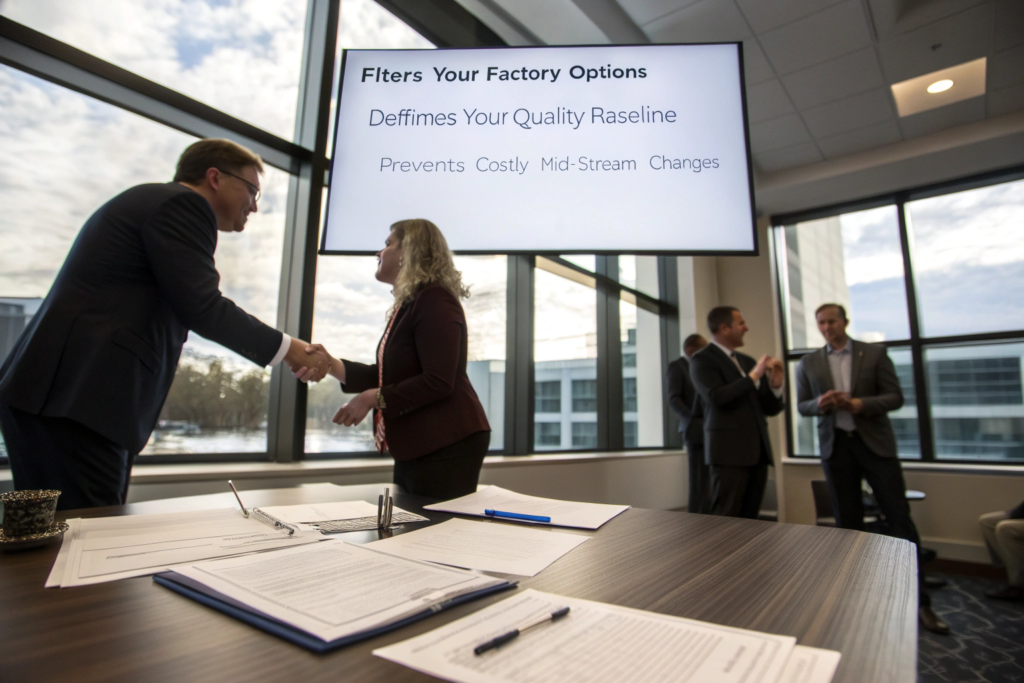
This upfront commitment does three critical things:
- Filters Your Factory Options: It immediately eliminates suppliers who cannot or will not provide full transparency and systemic compliance. You will only be dealing with serious partners.
- Defines Your Quality Baseline: It sets an objective, scientific standard for quality that goes beyond subjective “look and feel.” This standard governs fabric sourcing, trim selection, and production processes.
- Prevents Costly Mid-Stream Changes: Trying to add certification after samples are made often means changing fabrics or trims, incurring new costs and delays.
When we engage with startup brands at Shanghai Fumao, we start the conversation with our library of pre-certified fabric and trim options. This allows them to design creatively within a guaranteed-safe framework from the very first sketch.
How to Write Certification Requirements into Your Tech Pack?
Your tech pack must be explicit. Don’t just write “OEKO-TEX certified.” Specify:
- “Main fabric: Must be OEKO-TEX STANDARD 100 certified, Product Class II, with valid certificate provided.”
- “All trims (sewing thread, interlining, buttons, zippers, labels & inks): Must have individual OEKO-TEX STANDARD 100 certification, valid certificates required prior to bulk order.”
- “Finished garment must comply with OEKO-TEX STANDARD 100. Supplier to provide full component certificate dossier and is responsible for maintaining segregated production to ensure compliance.”
This level of detail sets professional expectations and becomes part of your legally binding purchase order.
What Does "Designing for Certification" Look Like in Practice?
It means choosing styles that align with certified material availability. For example, if you envision a complex garment with 10 different specialized trims, securing certification for each unique item will be challenging and slow. A more streamlined, elegant design with fewer certified components is often smarter for a launch collection. It’s about balancing creativity with operational pragmatism—a key skill we help our brand partners develop.
How to Select a Factory That Won’t Jeopardize Your Brand?
Your factory is not just a vendor; it is the guardian of your brand’s promise. In the OEKO-TEX context, you need a systemic partner, not a certificate holder. This requires a forensic evaluation during sourcing.
Move beyond the Alibaba profile. Conduct a virtual or in-person audit focused on their certification management system. Ask to see:
- The Physical System: A live video tour of their segregated storage for certified materials.
- The Paper Trail: Examples of complete certification dossiers they’ve provided for previous orders.
- The Process: Their protocol for incoming material testing and what they do if a batch fails.
- The Dedication: Do they have production lines or scheduled blocks dedicated to certified orders to prevent cross-contamination?
A factory with 5-10 focused lines, like ours, can often provide more controlled, transparent oversight for a growing brand than a giant 100-line facility where your order is a small number.
What Are the Red Flags in Factory Communication?
- Vagueness: “Yes, we are certified” without immediately providing specific certificates.
- Resistance to Audits: Unwillingness to show you their facility or processes live.
- Price Too Good to Be True: Significant undercutting on certified goods often means corners are being cut on materials or processes.
- Component Evasion: Inability to provide certificates for items like thread or labels.
Your chosen partner should educate you, not just agree with you. They should explain their system proudly because it’s their competitive edge too.
Why is a "Full-Package" Supplier Advantageous for a Startup Brand?
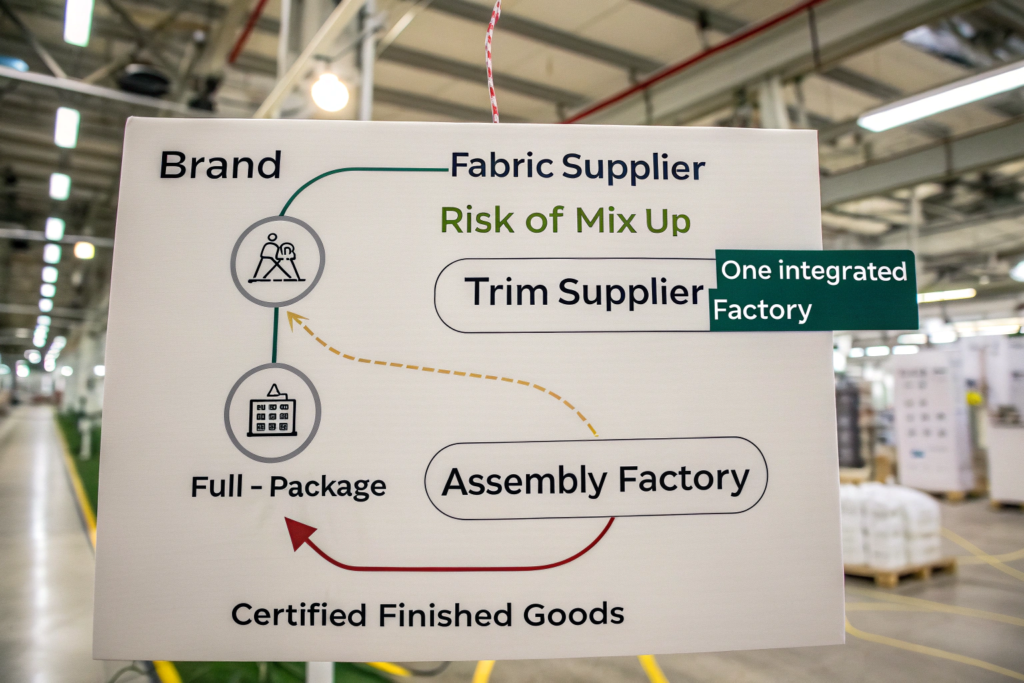
For a new brand, managing multiple suppliers (fabric mill, trim factory, garment factory) is a logistical and compliance nightmare. A full-package manufacturer that controls the entire process under one roof simplifies everything. They take responsibility for sourcing all certified components, managing the production integrity, and delivering a finished product with complete documentation. This allows you, the founder, to focus on brand building and marketing, not supply chain detective work. This integrated model is core to how we operate at Shanghai Fumao.
How to Market a Brand Built on OEKO-TEX Certification?
Certification is not the end of the story; it’s the beginning of your brand narrative. For the modern golfer—who is health-conscious and values transparency—this is a powerful story to tell. Your marketing should move from a technical claim (“OEKO-TEX certified”) to an emotional benefit (“Play with peace of mind”).
Your messaging framework should answer:
- Why it Matters: “Your skin is your largest organ. During 4 hours in the sun, you deserve gear that’s proven free from harmful substances.”
- The Proof: Don’t just show the label. Explain what it means. “We test for over 100 chemicals, from heavy metals to allergens, so you don’t have to worry.”
- The Craft: Link it to quality. “This commitment to purity is part of our obsession with detail, from the stitch to the finish.”
Use the certification across all touchpoints: product pages with downloadable certificates, hangtags with the label, and social content that educates. A client of ours saw a 30% higher conversion rate on product pages where they featured a video explaining their OEKO-TEX commitment compared to those that didn’t.
How to Differentiate in a Crowded Market?
When many brands start using OEKO-TEX, you need to go deeper. Leverage it to tell a fuller story:
- Combine with Material Story: “OEKO-TEX certified for safety, and made from recycled polyester for the planet.”
- Focus on a Niche: “The only performance golf wear for sensitive skin, certified to the strictest OEKO-TEX Class I (babywear) standard.”
- Highlight the Partnership: Be transparent about your factory partner’s role. “Crafted in partnership with Shanghai Fumao, a specialist in certified performance apparel, to ensure every layer meets our standard.” This builds deeper trust.
What Are the Operational Realities and How to Scale?
Launching is one thing; scaling is another. Your systems must scale with your volume without breaking. The key is to have a production partner whose own systems are built for scalable, certified manufacturing.
Discuss these scaling topics early:
- Material Capacity: Can your factory secure enough of your chosen certified fabric for a 300% larger order? Do they have relationships with mills to guarantee supply?
- Lead Time Planning: Certified materials have longer lead times. Work with your factory on a rolling 6-month forecast to secure production slots and fabric.
- Quality at Scale: How does their quality control process maintain integrity as order size increases? The answer should involve more checkpoints, not fewer.
- Cost Evolution: Understand how costs per unit change at different order quantities. True partners will show you the economies of scale you can achieve.

How to Manage Inventory and Cash Flow?
Certified production often requires larger minimum order quantities (MOQs) for fabrics. This can tie up more cash in inventory. Smart strategies include:
- Starting with a tightly edited core collection in versatile colors.
- Using a pre-order model to gauge demand before committing to large bulk runs.
- Working with a factory that offers flexible production scheduling for repeat orders.
When Is It Time to Explore Additional Certifications?
Once OEKO-TEX is your operational baseline, you can layer on additional claims. For example, after a successful launch, you might introduce a line using GOTS-certified organic cotton that is also OEKO-TEX certified. This evolves your brand story and caters to an even more discerning customer segment. Your factory should be capable of guiding you through this next phase.
Conclusion
Building a golf brand with OEKO-TEX certified garments from China is a deliberate and highly strategic path. It requires you to place verified safety and operational integrity at the very center of your business model, not as an add-on. This approach meticulously filters your supply chain, defines your quality, and provides a profound, marketable truth for your brand story.
By partnering with a factory that embodies this philosophy—one that acts as an extension of your brand’s values—you transform the complexities of offshore manufacturing into a scalable, trustworthy foundation. You are not just selling apparel; you are selling confidence, quality, and a modern ethos that resonates deeply with today’s golfer.
The journey from vision to viable brand begins with the decision to build on a certified foundation. If you are ready to execute this strategy with a partner who has walked this path with many emerging brands, let’s begin. Contact Shanghai Fumao’s Business Director Elaine today. Let’s discuss your vision, review our certified material library, and build a roadmap to launch your golf brand with integrity and impact. Reach her at elaine@fumaoclothing.com. Let's build a brand that stands apart, from the first stitch to the final swing.