Your custom collection launch date is set. Marketing campaigns are scheduled. Then an email arrives: "We regret to inform you of a production delay." Your timeline shatters, and with it, sales forecasts and brand momentum. In custom apparel manufacturing, delays are not mere inconveniences; they are systemic failures that erode profit and trust. But here's the crucial truth: most delays are predictable and preventable. They are not acts of God but failures in process, communication, or planning.
Avoiding delays in custom apparel manufacturing requires a proactive, partnership-based approach that focuses on eliminating the most common points of failure: ambiguous design specifications, unrealistic timelines, poor raw material planning, and reactive communication. Success hinges on treating your manufacturer as a strategic co-pilot from day one, not a transactional vendor. By building a project on clarity, realistic scheduling, and shared accountability, you transform your production timeline from a source of anxiety into a reliable engine for growth.
At Shanghai Fumao, a client approached us with a half-finished tech pack and a demand for an "aggressive" 8-week timeline for a complex, fully-lined trench coat. Their previous manufacturer had promised the impossible and failed. We declined to quote on that basis. Instead, we proposed a 14-week plan, starting with a 2-week collaboration to complete the tech pack and a detailed, phase-gated schedule. The client agreed. We delivered the perfect order on the scheduled date, week 14. Their head of operations later admitted, "Your 'slow' timeline was the fastest, smoothest production we've ever had." Let's dissect the framework that makes this possible.
Why Is A "Perfect" Tech Pack Your First and Best Defense Against Delays?
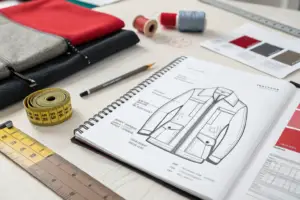
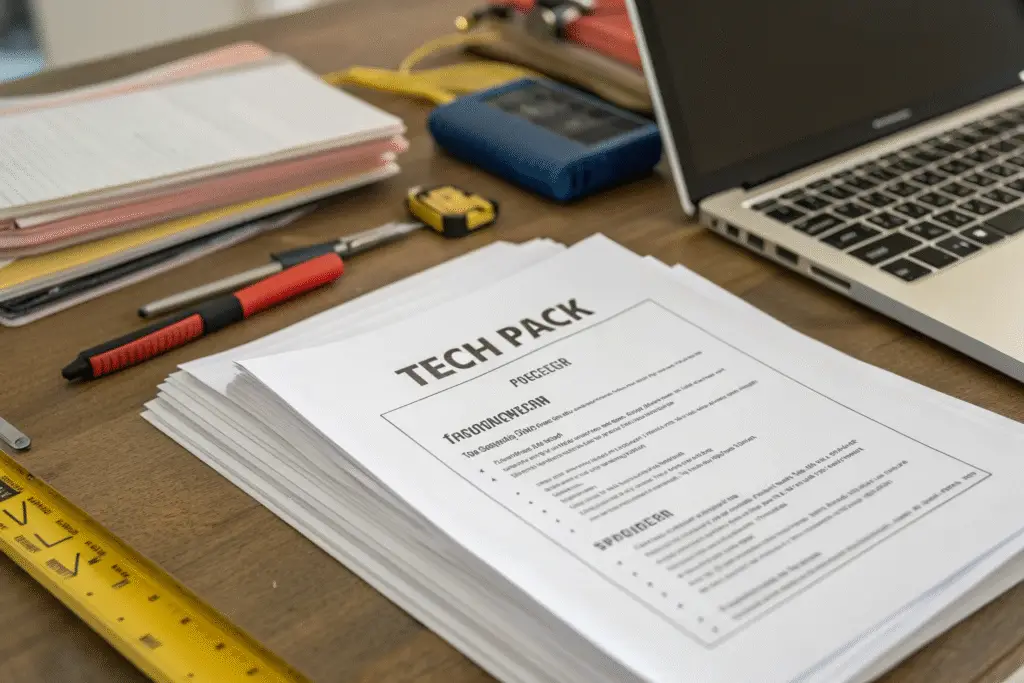
The single greatest cause of delay is ambiguity. A vague or incomplete tech pack forces the factory to guess, leading to incorrect samples, material misorders, and production rework. Each round of clarification or correction adds days or weeks. Your tech pack is not just a design file; it's the project's instruction manual.
Investing time upfront to create a flawless, comprehensive tech pack compresses the entire timeline by eliminating backtracking.
What Does A "Delay-Proof" Tech Pack Include?
Beyond standard flats and measurements, it must specify:
- Unambiguous Construction Details: Don't say "finish seam." Specify: "Use French seam, 6mm allowance, with 100% polyester thread, color matched to shell."
- Complete Bill of Materials (BOM): Every single component: main fabric, lining, interlining, thread (type and color), buttons (size, color, # of holes), zippers (type, length, tape color), labels (care, size, brand). Include Pantone codes for all colors.
- Tolerance Specifications: Define acceptable variance. Is ±0.5cm okay for a body length? ±0.2cm for a cuff? This prevents subjective rejections later.
- Packaging & Labeling Mock-ups: Exactly how should the garment be folded, tagged, polybagged, and boxed? Ambiguity here causes packing line stoppages.
How Does This Directly Prevent Delays?
- Accurate First Samples: A perfect tech pack leads to a higher first-sample approval rate. We've seen this rate jump from ~30% with poor packs to over 80% with excellent ones, saving 2-3 weeks of sample revision time.
- Correct Material Sourcing: The factory can source all materials simultaneously and correctly from day one. No waiting for your approval on a trim you forgot to specify.
- Eliminates "Interpretation" Errors: When the sewing operator has a clear spec, they don't stop to ask supervisors, keeping the line moving.
Treat the tech pack development as a collaborative phase with your manufacturer. Our technical designers can often spot potential construction issues or suggest optimizations that save time in production.
How To Build a Realistic, Phase-Gated Timeline (And Stick To It)?
The "4-6 week" myth is a trap. A realistic timeline for custom apparel accounts for the sequential, dependent nature of production. It must be built backward from your must-arrive date and include buffer for the unexpected. This phase-gated approach ensures each stage is completed satisfactorily before the next begins, preventing cascading failures.
A realistic schedule is a contract for success.

What Are The Non-Negotiable Phases and Their Durations?
For a typical custom order, a responsible timeline includes:
- Pre-Production & Sampling (3-5 weeks):
- Tech pack finalization & pattern making (1-2 wks).
- Proto & Fit samples (1-2 wks).
- Pre-Production Sample with bulk materials (1 wk).
- Material Procurement (The Critical Path - 4-8 weeks):
- Fabric and trim sourcing, production, and delivery to the factory. This is often the longest, least flexible block. Custom fabric can take 6+ weeks.
- Production (3-4 weeks):
- Cutting, sewing, finishing, in-process QC.
- Final QC & Logistics (2-4 weeks):
- Final inspection, packing, shipping (sea freight).
Total Realistic Timeline: 12-18 weeks. Trying to compress this invites disaster.
How Does a "Phase-Gated" System Prevent Delays?
Each phase has a clear "gate" with defined deliverables that must be approved before proceeding. For example:
- Gate 1: Approved Tech Pack & Proto Sample. Output: Locked pattern and BOM.
- Gate 2: Approved Fit Sample & Bulk Fabric/Trim Order. Output: Materials ordered.
- Gate 3: Approved Pre-Production Sample & Production Green Light. Output: Bulk production starts.
This stops a project from advancing with unresolved issues. If the fit sample isn't right, you don't order $20,000 of fabric. It creates natural pause points for review, preventing expensive mistakes from moving downstream.
At Shanghai Fumao, we provide clients with a shared digital schedule that tracks these gates. Transparency is the enemy of unrealistic expectations.
How Does Proactive Raw Material Strategy Eliminate The Biggest Bottleneck?
Fabric and trim delays account for over 50% of all production delays. You cannot sew without materials. A proactive strategy treats material sourcing as a parallel, critical project that starts the day the tech pack is finalized, not after sample approval.
Your manufacturer's sourcing network and planning acumen are your greatest assets here.

What Are The Key Strategies?
- Early Sourcing Engagement: During sampling, use fabric from the mill's stock or development ranges where possible. This allows production planning to begin while custom fabric is being produced.
- Dual/Backup Sourcing: For critical custom materials, a robust factory will have a primary and a secondary approved supplier. If Mill A has a problem, Mill B can be activated without losing weeks.
- "Just-in-Time" is a Myth for Custom Materials: For custom fabrics, you must respect the mill's lead time. Pushing them creates quality risks. Build this lead time honestly into your schedule.
- In-House Material Testing: Conduct fabric testing (shrinkage, colorfastness) as soon as bulk fabric arrives. Discovering a failure then is a 2-week delay. Discovering it after cutting and sewing is a 6-week catastrophe.
A Case Study in Material Risk Mitigation:
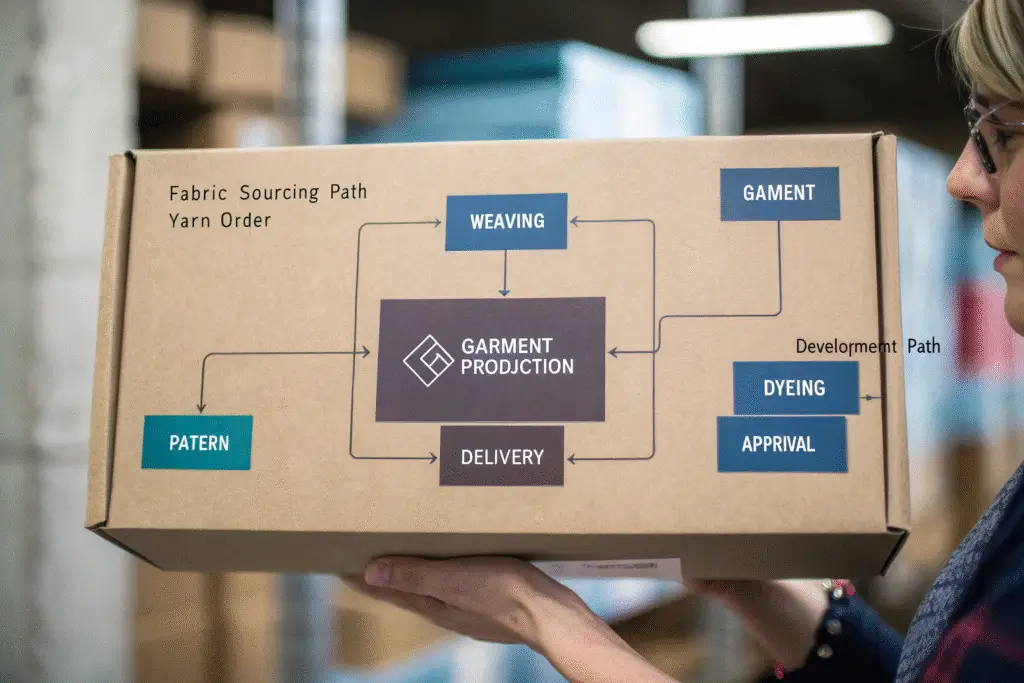
A client's order required a specific custom-dyed wool blend. As soon as the lab dip was approved, we placed the bulk yarn order with the mill (a 3-week process) concurrently with finalizing the garment pattern. While the yarn was being spun and the fabric woven, we completed our fit samples using a similar-weight fabric from stock. This parallel processing saved 4 weeks versus the sequential approach of waiting for final sample approval before ordering any materials.
This level of integrated planning is a core benefit of partnering with a full-package, vertical manufacturer like Shanghai Fumao, where material sourcing and production planning are under one management roof.
What Communication Protocols Are Essential For Keeping Projects On Track?
Delay often sprouts in the silence between emails or in the confusion of group chats. Establishing a formal, structured communication protocol from the outset is your project's central nervous system. It ensures information flows quickly, to the right people, and with full context.
Reactive communication = delayed discovery. Proactive communication = early problem-solving.
How To Structure Communication For Speed and Clarity?
- Single Point of Contact (SPOC): You need one dedicated project manager on the factory side who owns your order. At Shanghai Fumao, your SPOC consolidates updates from all departments (sampling, sourcing, production, QC) and provides you with one coherent weekly report.
- Scheduled, Agenda-Driven Updates: Instead of "checking in," have a standing weekly video call (e.g., every Monday 9 AM EST) with a shared agenda. Review the schedule, upcoming approvals, and any yellow flags.
- Visual & Digital Approval Tools: Use platforms that allow you to comment directly on photos or videos of samples and submits. A picture of a mismatched trim with an arrow and a note resolves issues in minutes, not over days of emails saying "the blue looks wrong."
- Clear Approval Windows: Contractually agree to response times. "Client will provide feedback on all submits within 48 hours." This prevents your approval lag from becoming the factory's reason for delay.
What Does "Proactive" Communication Look Like From the Factory?
Your SPOC should warn you of risks before they become delays. A good update sounds like:
- "The fabric shipment from the mill is tracking 3 days late. This will not impact the cutting schedule due to our built-in buffer, but I'm making you aware."
- "Our QC head has flagged a potential issue with the button attachment method on the pre-production sample. We suggest a stronger bartack. Please review the close-up video in the shared folder by Thursday so we can proceed."
This builds trust and allows for collaborative problem-solving in real-time.
How To Choose A Manufacturing Partner Built To Avoid Delays?
Ultimately, your choice of manufacturer is the most significant delay-mitigation decision you will make. A factory's systems, culture, and infrastructure determine its reliability. You must vet for proactive delay prevention, not just sewing capability.
Look for a partner, not just a producer.

What Operational Capabilities Should You Vet?
- In-House Technical Design & Pattern Making: This allows for rapid iteration and problem-solving during sampling, avoiding back-and-forth with external freelancers.
- Vertical Integration or Strong Sourcing Control: Factories with direct mill relationships or in-house fabric production have more control over the #1 delay cause.
- Transparent Capacity Planning: Ask: "How do you schedule orders? How do you prevent overbooking?" They should show you a system, not just give assurances.
- Robust Quality Control Embedded in Process: In-Process QC (IPQC) catches defects when they are cheap and quick to fix, preventing a line shutdown or post-production rejection delay.
What Cultural & Business Traits Signal Reliability?
- They Set Realistic Timelines: A factory that readily agrees to an impossibly short deadline is either desperate or dishonest. A trustworthy partner will educate you on a realistic schedule.
- They Are Proactive and Transparent: They communicate issues early, along with proposed solutions.
- They Invest in Technology: Use of PLM software, real-time production tracking, and digital communication tools indicates a modern, process-oriented operation.
- They Ask Detailed Questions: A factory that deeply interrogates your tech pack is one that plans thoroughly.
At Shanghai Fumao, our entire operation is engineered for predictable flow. We don't just make garments; we manage complex projects to conclusion. We welcome audits of our systems because our confidence is in our process.
Conclusion
Avoiding delays in custom apparel manufacturing is not about finding a magic "fast" factory. It is about constructing a robust project management framework founded on clarity, realism, proactive strategy, and disciplined partnership. It requires investing time upfront in perfect specifications, respecting the physics of material and production timelines, and establishing communication channels that foster collaboration, not confusion.
By embracing this holistic approach, you shift from being a victim of your supply chain to being the architect of its reliability. Your production timeline becomes a predictable, managed asset that powers your brand's growth instead of hindering it.
If you are seeking a manufacturing partner whose systems and culture are designed to deliver on time, through proactive management and deep expertise, let's build your next project on a foundation of certainty. At Shanghai Fumao, we specialize in transforming complex custom apparel visions into on-schedule, on-budget realities. Contact our Business Director Elaine to start planning with a partner committed to your timeline: elaine@fumaoclothing.com.