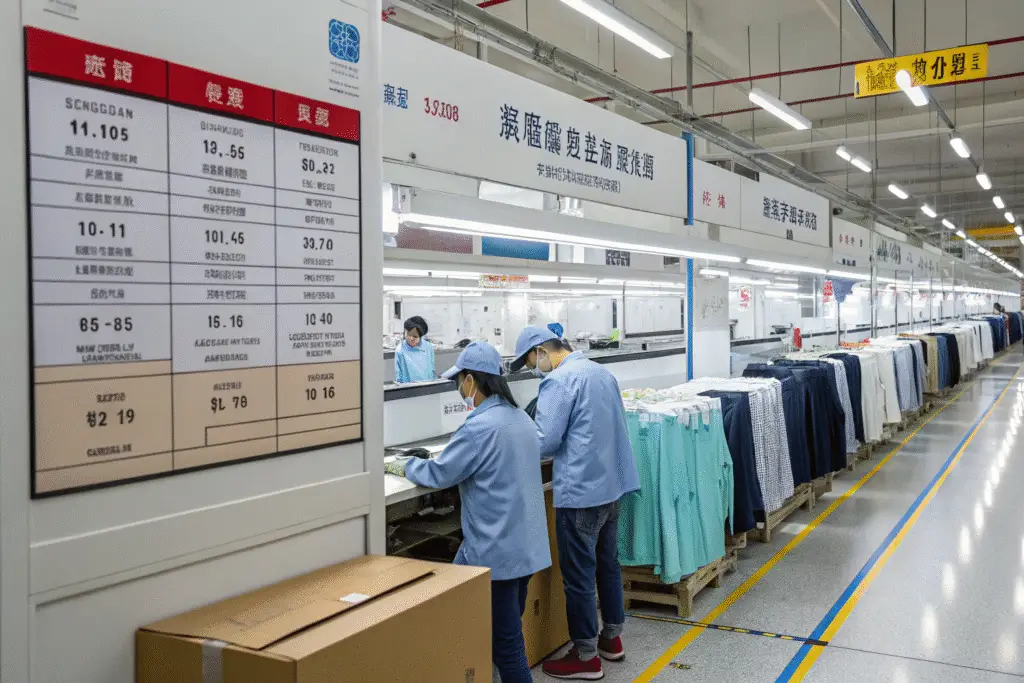
Delays in clothing shipments are a nightmare for brand owners. A few days late can mean lost retail slots, missed launches, or broken contracts with distributors. Whether you’re a small apparel label or a mass distributor, every shipment counts when it comes to timelines.
Avoiding shipment delays starts long before production even begins. From tech pack clarity to pre-booked vessels, every stage must be precisely managed. But most buyers overlook small missteps that snowball into major hold-ups.
In this article, I’ll share our proven practices at Fumao Clothing for ensuring your garment shipments are on time — every time. We’ll cover planning, communication, inspections, and factory behaviors that really affect timelines.
Why Do Garment Shipments Get Delayed?
Recraft指令-- Generate a split-scene image showing a chaotic vs organized clothing production timeline: left side showing delayed shipments with idle workers and stacked cartons, right side showing synchronized packaging and dispatch. Avoid text and maintain facial realism.
Understanding why delays happen is the first step in preventing them. Many buyers mistakenly blame the factory when the root cause is avoidable with better structure.
Are Late Approvals a Common Cause of Delay?
Absolutely. In our experience, unclear tech packs, slow sample approvals, or vague revisions waste weeks. If buyers take too long to approve PPS (Pre-Production Samples), bulk can’t begin — especially when fabric lead times are tight.
Avoid this by using tools like Techpacker to create clear tech packs and approve digitally. Once you’ve confirmed trims and colorways, keep a clear change freeze date to avoid chaos.
More factories now expect digital sign-offs to proceed on time, especially during peak seasons.
How Do Fabric Sourcing Delays Affect Production?
Massively. If your fabric is custom-dyed or imported, even one day of delay at the mill can delay sewing, printing, and finishing stages. Many buyers forget that fabric accounts for 60–70% of the production timeline.
To solve this, ask your supplier to share bulk fabric ETD (Estimated Time of Dispatch) from the mill. We often use Textile Exchange certified mills, and they usually have predictable turnarounds if booked early.
A lack of greige fabric in stock is a major early red flag that most brands ignore.
How Can Better Planning Prevent Shipping Delays?
Most delays are rooted in poor front-end planning. Brands that fail to lock in calendars, book vessels early, or buffer for inspections always struggle to ship on time.
Should You Include Buffer Time in Your Calendar?
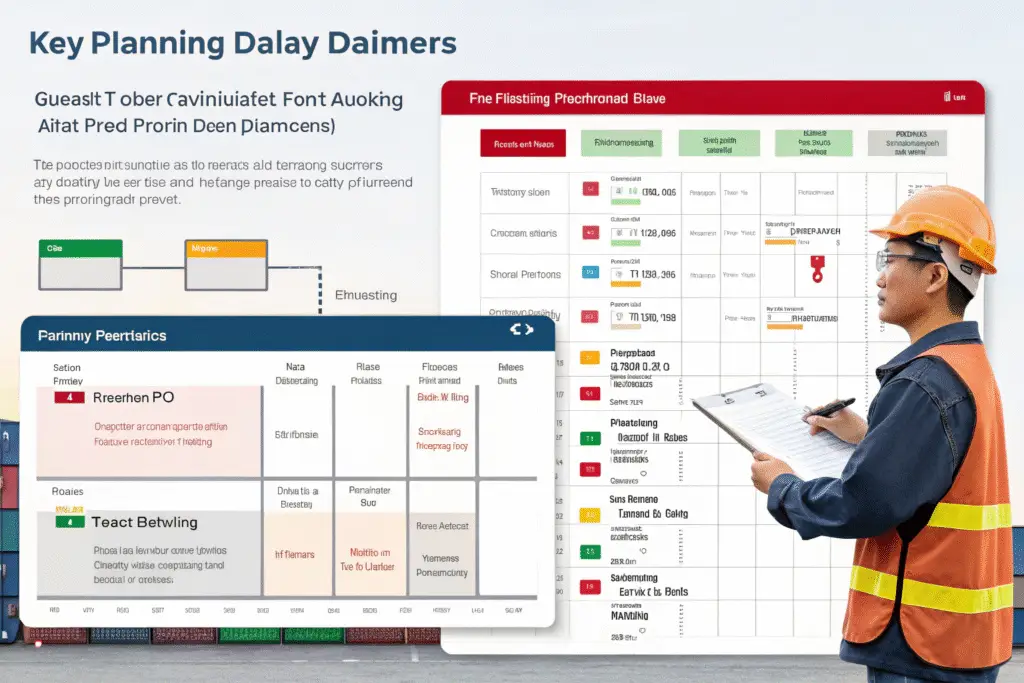
Yes — and not just a few days. At Fumao, we recommend clients include 7–10 working days of buffer between final production and vessel departure. This protects against sudden QC failures or port congestion.
Use platforms like Flexport to track freight options and allocate container space ahead. Remember, during Q3–Q4 (peak season), ports like Ningbo and Shenzhen often have backlog delays.
A buffer is not a luxury — it’s protection.
Is It Important to Book Logistics in Advance?
It’s critical. Many delays happen when production finishes on time, but containers aren’t available, or no space is booked on vessels or flights.
We advise booking DDP or FOB freight slots during PO confirmation, not after production starts. Tools like Freightos and Maersk Flow can automate this.
Delaying your booking may push your ETD by 5–15 days, even if your goods are ready.
How Can You Ensure Your Factory Respects Deadlines?
Factories want your repeat business — but you must hold them accountable. Your supplier’s internal systems are the foundation of your timeline.
Should You Request a Production Plan from the Start?
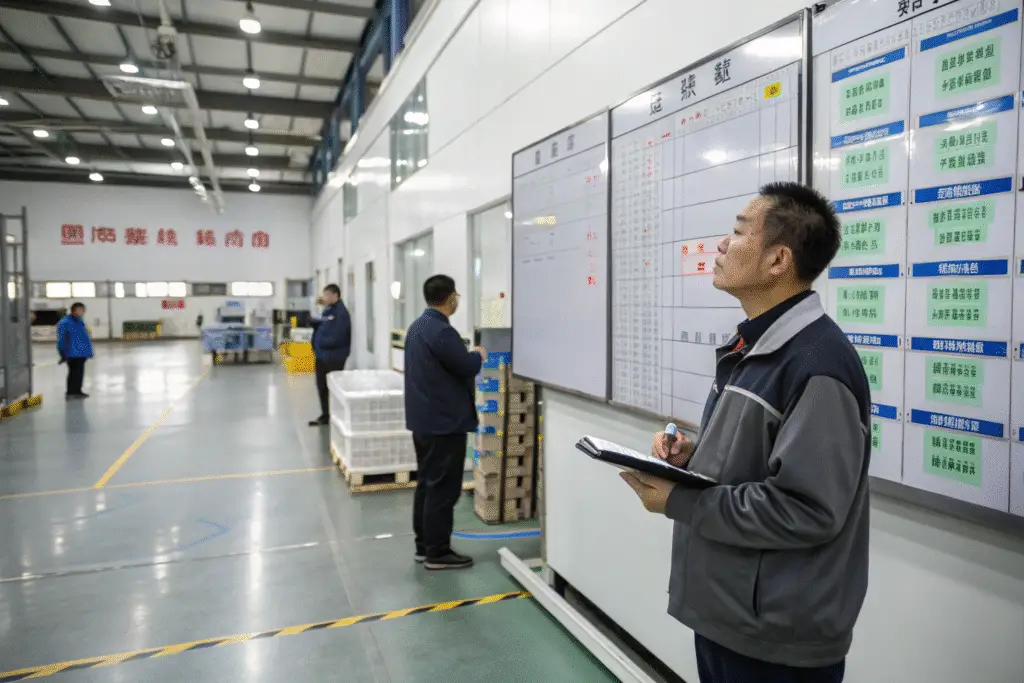
Definitely. A professional supplier will give you a production timeline with exact dates for cutting, sewing, QC, packing, and shipment. Ask for weekly updates via spreadsheet or tools like Trello or Notion.
At Fumao, we offer shared dashboards so clients can view real-time updates and hold our team accountable. This transparency keeps projects moving and flags bottlenecks fast.
If a factory resists structured updates, be cautious — they may be overbooked or disorganized.
Is It Wise to Sign a Penalty Clause for Delays?
Yes, if you’re placing mid-to-large orders. We’ve had clients include delivery penalty clauses in their PO, where delay beyond 7 working days incurs a deduction per day.
This motivates suppliers to allocate better resources, and many serious factories will agree. Use templates from sites like Export Genius to structure fair clauses.
A penalty clause shows professionalism — not distrust.
What Role Does QC and Pre-Shipment Inspection Play?
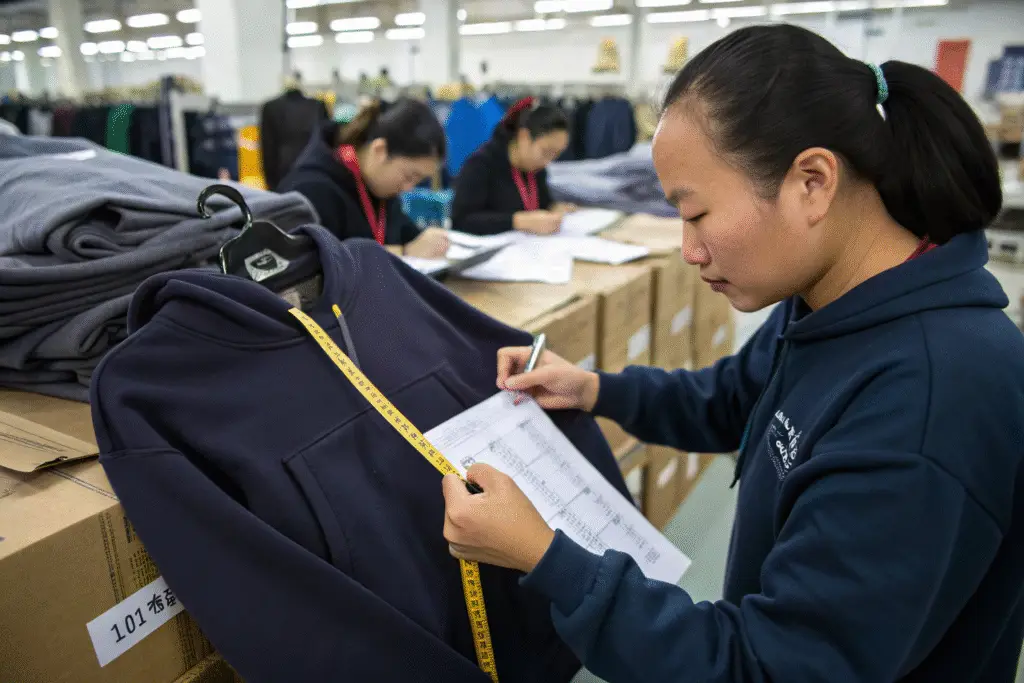
You’d be surprised how many shipments get delayed due to failed QC — and it’s avoidable with proactive inspection and packaging approval.
Should You Use Third-Party QC Services?
Yes. Third-party inspection reduces the risk of last-minute failures. We often coordinate with firms like SGS, Bureau Veritas, and Intertek.
They inspect AQL (Acceptable Quality Level) per garment category and issue a report before packing. You’ll know in advance if cartons are ready or need rework.
Small brands can even book QC by piece via QIMA.
How Do Packing Errors Delay Clearance?
Simple packing mistakes — like incorrect inner carton size, poor barcode placement, or missing labels — can delay customs or cause warehouse rejections.
Always ask for a master carton sample and outer label photo. Confirm your barcode formats (FNSKU, GS1, UCC) match what your warehouse or Amazon FBA system requires.
Check guides on Amazon's packaging requirements.
Conclusion
Delayed shipments aren’t inevitable — they’re preventable. With strong planning, early freight booking, active communication, and QC discipline, you can protect your timeline and maximize retail success.
At Fumao Clothing, we help clients like you eliminate delays by offering clear calendars, internal dashboards, and full DDP logistics. Let’s build a partnership based on consistency and performance.
For seamless production and on-time shipping, reach out to our Business Director Elaine at elaine@fumaoclothing.com — and never miss another selling season.