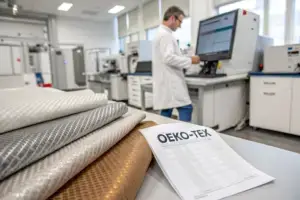
Placing a large ski wear order with a new factory feels like a leap of faith. I’ve seen buyers lose tens of thousands because they trusted a piece of paper that turned out to be invalid or irrelevant. The truth is, a certificate is only as good as the system behind it. Simply asking "Are you certified?" is not enough in 2025. You need to know how to audit the validity, scope, and practical implementation of those certifications to protect your investment, your timeline, and your brand's reputation.
To effectively audit a garment factory's certifications, you must move beyond document collection to a three-phase verification process: Scrutinizing the Certificate's Authenticity and Scope, Assessing the Integration into Daily Operations, and Stress-Testing the Factory's Responsiveness to Your Specific Needs. This process reveals whether certifications are marketing tools or management systems. A genuine audit uncovers if the factory can actually deliver what their certificates promise for your specific order.
Last year, a client almost placed a 5,000-piece order with a factory that presented a valid BSCI audit report. During our suggested call with their compliance officer, we asked to see the Corrective Action Plan from that audit. The factory couldn't produce it. This red flag led us to discover the audit had major non-conformities they hadn't addressed. The client walked away, avoiding a potential social compliance disaster. The certificate was real, but the system was broken.
Phase 1: Scrutinizing the Certificate Itself (The Document Audit)
Never accept a PDF at face value. Every certification has key data points that prove its validity and relevance to your order. This phase is about forensic document examination. You are looking for expiration dates, scope limitations, testing institute credibility, and most importantly, a direct link between the certificate and the exact products or processes you will be using.
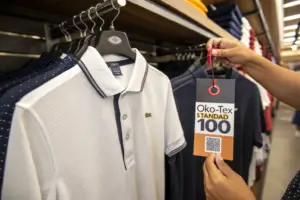
The document audit is your first filter. A trustworthy factory will provide clear, organized, and current certificates. You must verify the issuing body is accredited (e.g., for OEKO-TEX, it should be from one of the 18 independent institutes), check the certificate number against the online database, and confirm the scope includes the materials and processes relevant to your product (e.g., knitting, dyeing, waterproof laminating). Mismatched scope is the most common hidden flaw.
In 2023, a brand sent us an OEKO-TEX certificate from a competing factory for comparison. The certificate was valid, but the "Product Class" was listed as Class IV (for decorative materials). The brand was ordering ski bibs, which require Class II (for direct skin contact) or Class I (for baby wear). The factory was using a certificate for upholstery fabric to imply safety for apparel—a critical and potentially dangerous misrepresentation. We helped the client identify this discrepancy immediately.

How do you verify an OEKO-TEX or bluesign® certificate?
Follow this checklist:
- Official Database Check: Go to the official OEKO-TEX certificate database or bluesign® system partner list. Enter the certificate number or company name. Confirm the status is "valid," not "suspended" or "expired."
- Scope Verification: Look for the "Article Description" or "Approved Product" list. Does it explicitly mention the type of fabric (e.g., "polyester woven fabric with PU coating") you plan to use? A certificate for "yarn" does not cover "finished garments."
- Test Institute: Note the issuing institute (e.g., Hohenstein, TESTEX). Cross-check that it is an officially listed OEKO-TEX institute.
For BSCI/SMETA reports, the validation is different. You must request the full report (not just a summary) and look for the audit date, the auditor's company (e.g., SGS, BV, UL), and the detailed findings and CAP (Corrective Action Plan).
What are the key questions to ask about scope and validity?
Prepare these questions for the factory's sales or QA manager:
- "Can you provide the certificate for the specific waterproof membrane we selected from your sample book?"
- "Does your BSCI audit report cover the exact building where my order will be produced?"
- "Is the dyeing process performed in-house covered under this environmental permit, or is it subcontracted?"
- "When is the renewal audit date, and will my production be completed under the current certificate's validity period?"
Asking these detailed questions separates proficient suppliers from those who are unprepared. It also demonstrates your expertise, setting a tone for a rigorous partnership. This level of due diligence is advocated by industry bodies like the United States Fashion Industry Association (USFIA).
Phase 2: Assessing Integration into Daily Operations (The System Audit)
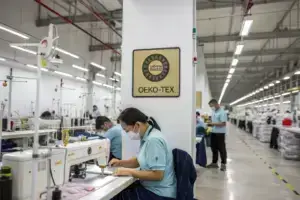
A certificate on the wall means nothing if it's not embedded in the factory's daily routine. The system audit moves from paper to practice. Your goal is to see if the certification requirements have translated into tangible procedures, trained personnel, and physical infrastructure. This is best done via a live video tour or onsite visit, focusing on the quality control (QC) and compliance departments.
The system audit answers: "Do they live it?" You need to see evidence that certifications drive daily behavior. This includes calibrated testing equipment in the in-house lab, visible chemical management systems for bluesign® or OEKO-TEX STeP, and trained workers who understand basic compliance protocols. A disconnect here is a major risk indicator. A factory with integrated systems will proactively show you this evidence.
We invite potential clients to a virtual "QC Lab Tour." We don't just show the machine; we show the calibration sticker with the next due date on the colorfastness tester. We show the bound logbook where daily test results are recorded. We introduce the compliance officer who explains how they track chemical inventories from certified suppliers. This transparency, which we practice at Shanghai Fumao, builds more trust than any certificate alone. Last month, this tour helped us secure an order from a German brand whose previous supplier failed a lab audit because their pH testing equipment was uncalibrated for two years.

What operational evidence should you request?
Ask for visual or documented proof of:
- Quality Control Systems:
- AQL Inspection Records: Random sample inspection reports from previous orders.
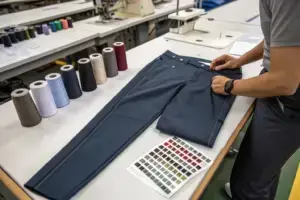
- Lab Test Reports: Internal tests for seam strength, color matching, etc.
- Equipment Calibration Certificates: For all key testing machines.
- Chemical Management (for OEKO-TEX MADE IN GREEN/bluesign®):
- Approved Chemical Inventory List.
- MSDS (Material Safety Data Sheets) for dyes and auxiliaries on file.
- Storage Areas for chemicals, visibly well-organized and labeled.
- Social Compliance Integration:
- Posted Labor Laws in the local language and worker language.
- Timecard & Payroll System demonstration (protecting worker privacy).
- First-Aid Stations and trained personnel.
How do you evaluate their quality control workflow?
Ask them to walk you through their "Quality Control Flow Chart" for a typical order. Listen for critical checkpoints:
- Pre-production: Fabric testing upon arrival from the mill.
- During production: In-line checks for stitching, pressing.
- Pre-shipment: Final random inspection according to AQL standards (like ANSI/ASQ Z1.4).
A sophisticated factory will have this process mapped visually. They should be able to explain how a defect is caught, recorded, and corrected at each stage. This operational rigor is what ultimately determines the final product quality you receive.
Phase 3: Stress-Testing with Your Specifics (The Scenario Audit)
This is the most critical phase. It tests the factory's agility and commitment to your specific needs. Present hypothetical but realistic challenges related to your order and see how they respond. This reveals their problem-solving capacity, communication efficiency, and whether their certified systems are flexible or merely rigid facades.
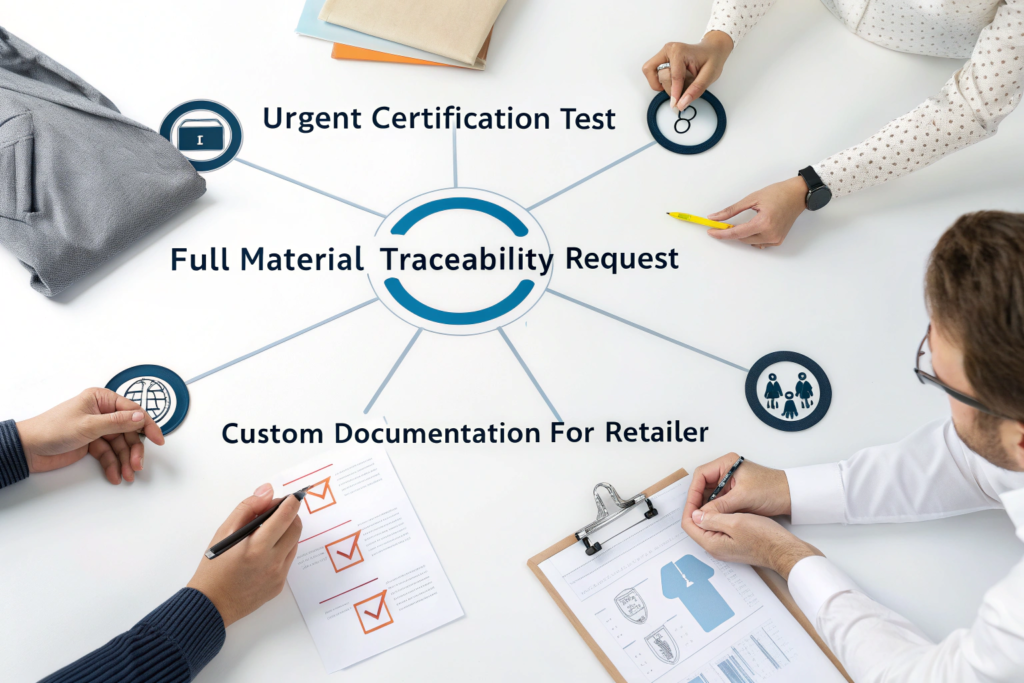
The scenario audit simulates real-world pressures. You are testing their ability to apply their certified systems to your unique requirements. Do they have a process for handling urgent, order-specific tests? Can they trace certified materials through their production? Their answers will show if they see certification as a partnership tool or a sales brochure. A factory that hesitates or gives generic answers is a red flag.
Here is a real example from a client's audit of Shanghai Fumao last season. They asked: "If we need to add a last-minute OEKO-TEX test for a new color after fabric is already dyed, what is your process, timeline, and cost?" Our response was immediate and structured: 1) We submit the fabric swatch to our partnered lab within 24 hours. 2) We provide an expedited testing quote. 3) We update the Technical File for that style with the new report. 4) The typical timeline is 7-10 working days. This concrete answer gave them confidence in our operational control.
What specific scenario questions should you ask?
Pose these challenges to the factory management:
| Scenario | What to Ask | What a Good Answer Looks Like |
|---|---|---|
| Retailer Compliance Spike | "A key retailer suddenly requires testing for a new restricted substance (e.g., PFAS). How would you handle this for my in-production order?" | A clear procedure involving lab liaison, risk assessment of current materials, and a communication plan with timelines. |
| Material Traceability | "Can you trace the specific roll of OEKO-TEX certified fabric used in jacket #XL54321 back to the mill's batch number and test report?" | Yes, and they can show you their lot-tracking system (digital or physical) that links finished goods to raw material certificates. |
| Documentation Customization | "We need a consolidated compliance dossier formatted exactly to our retailer's template. Can you provide that?" | Yes, they have a dedicated person or team for custom documentation and ask to see your template to assess workload. |
How do they handle communication and problem escalation?
Notice who answers your questions. Is it a savvy sales rep, or can they connect you directly with the Technical/QA Manager? Ask: "If a quality issue is found during inspection, what is the escalation path, and how will I be notified?"
A robust factory will have a defined protocol, often involving a shared online platform where issues are logged, photographed, and tracked to resolution. This level of communication is essential for managing the complexities of global apparel production.
Red Flags & How to Build Your Audit Checklist
Your audit should conclude with a clear "Go/No-Go" decision. Be wary of common red flags that signal deeper issues. Simultaneously, build a reusable audit checklist from your findings to streamline future supplier evaluations. This turns a one-time stress into a repeatable business process.
Major red flags include evasion of direct questions, inability to provide current certificates, lack of on-site testing capability, and refusal to allow live video tours of key areas. A green flag is a factory that proactively offers more information than you ask for, introduces you to their technical team, and demonstrates pride in their operational systems, not just their certificates. Your checklist should capture both the objective criteria and your subjective assessment of their transparency and culture.
We once assisted a client who received a BSCI certificate from a factory where the "Factory Address" on the certificate was a P.O. Box, not a physical location. This was a major red flag. Upon deeper inquiry, it was found the audit was conducted at a "showcase" facility, while actual production happened in an unaudited, substandard unit. The client terminated discussions immediately.
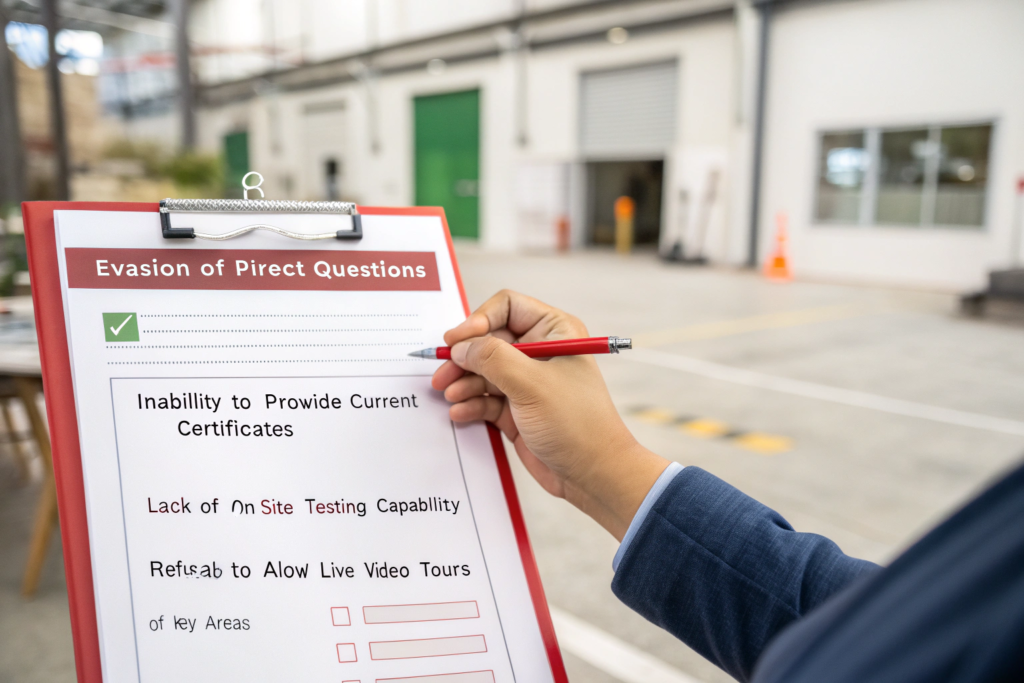
What are the non-negotiable red flags?
- Expired or Soon-to-Expire Certificates without a scheduled renewal audit.
- Scope Mismatch: Certificates for products/processes not relevant to your order.
- No In-House QC Lab for basic tests (colorfastness to rubbing, seam strength).
- The Sales Rep is the Sole Point of Contact for all technical and compliance questions.
- Vague or Contradictory Answers to specific scenario questions.
How to build your factory certification audit checklist?
Create a scored spreadsheet. Here is a simplified framework:
Category: Document Authenticity (Score: /30)
- Certificate is valid and verified online. (+10)
- Scope explicitly covers our product type. (+10)
- Issuing body is accredited. (+10)
Category: System Integration (Score: /40)
- Live tour of QC lab and visible calibration. (+15)
- Existence of documented procedures (QC, chemical management). (+15)
- Trained compliance/QA personnel introduced. (+10)
Category: Responsiveness & Traceability (Score: /30)
- Clear, detailed answers to scenario questions. (+15)
- Demonstrated material tracking system. (+10)
- Willingness to provide custom documentation. (+5)
Total Score: /100
- 85+: Strong candidate.
- 70-84: Proceed with caution, address gaps contractually.
- <70: High risk, not recommended.
Conclusion
Auditing a garment factory's certifications is a due diligence process that protects your business. It moves from passive acceptance to active verification. By combining rigorous document checks, operational assessment, and real-world scenario testing, you can distinguish between factories that use certifications as wallpaper and those that use them as the blueprint for how they operate.
The right manufacturing partner will welcome this audit. They will see it as an opportunity to demonstrate their competence and build a foundation of trust for a long-term partnership. Their transparency is your first assurance of quality.
If you are seeking a partner for your next ski wear order that not only holds the necessary certifications but is prepared to demonstrate their integration into every stitch, Shanghai Fumao is ready for your audit. We believe our systems, our team, and our track record speak for themselves. Contact our Business Director, Elaine, to schedule a comprehensive virtual audit of our certifications and production facilities. Let us show you the difference between a certificate on file and a certificate in action. Reach her at: elaine@fumaoclothing.com.