As a factory owner who has been on the receiving end of both good and bad audits, I can tell you this: a pre-order compliance check is your most powerful tool to avoid catastrophic delays and failed shipments. Relying on a supplier's word or a single certificate is a high-risk gamble. A proper audit is due diligence.
Auditing a factory’s OEKO-TEX compliance before ordering requires a systematic, document-based approach that verifies not only the validity of certificates but also the operational processes and material controls that ensure ongoing compliance throughout production, focusing on traceability from raw material to finished garment. It's about verifying a system, not just a piece of paper.
Let me guide you through a practical, step-by-step audit framework you can use, even remotely, to separate credible partners from those who may put your order and brand at risk.
What Documents Must You Scrutinize First?
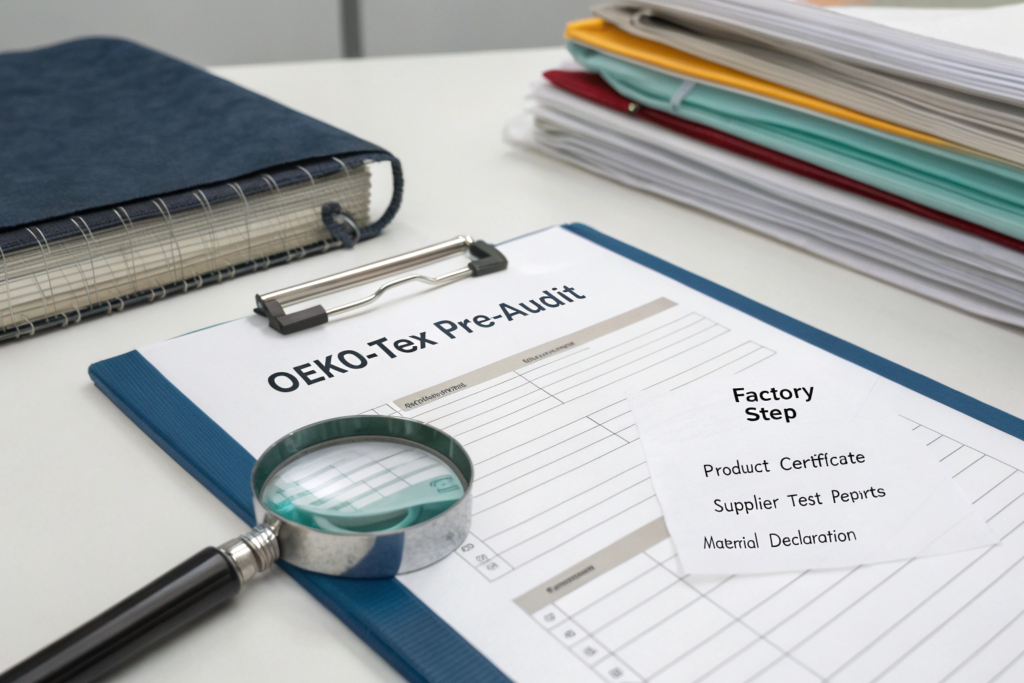
The paper trail is your starting point. Authentic, current, and relevant documentation is the bedrock of compliance. Do not proceed without validating these.
You must first scrutinize the factory's official OEKO-TEX STeP (Sustainable Textile Production) or STANDARD 100 manufacturing certificate, the specific product certificates for items similar to your order, and the supporting test reports and material declarations from their upstream suppliers. This document stack forms the initial evidence chain.
How to Verify the Authenticity of Certificates?
A certificate is only as good as its verifiability. Follow these steps:
- Get the Official Document: Request a clear, full-page copy of the OEKO-TEX certificate. Do not accept a simple logo on a brochure.
- Check the Certificate Number: Every genuine certificate has a unique number. Use the free OEKO-TEX “CertCheck” online database (on the official OEKO-TEX website) to verify it. Confirm the factory name, address, and certified product scope match.
- Check Validity Dates: Certificates are valid for one year. Ensure it is current. An expired certificate is a red flag.
- Identify the Certification Body: Ensure it was issued by an official OEKO-TEX institute (like Hohenstein, TESTEX, etc.).
Last year, a potential client sent us a competitor's certificate for comparison. A quick CertCheck revealed the certificate number was for a different company entirely—a clear case of fraud. This simple, 2-minute check saved them from a disastrous partnership.
What Questions to Ask About Product-Specific Certification?
If the factory claims a specific polo or skirt is certified, demand the exact product certificate. Ask:
- “Can you provide the OEKO-TEX certificate for the exact article number I am ordering?”
- “If my design has a custom logo or new fabric, how will you handle certification? Will it be an article extension under your existing system, or will it require new testing?”
- “Can I see the test reports that support this certificate?”
A trustworthy factory like Shanghai Fumao will have these documents organized and readily available. Hesitation or vagueness here is a major warning sign.
How to Assess the Factory's In-Process Material Control?
Certificates prove past compliance. You need evidence of ongoing control. This is where many suppliers fail. You must assess how they prevent non-certified materials from entering production.
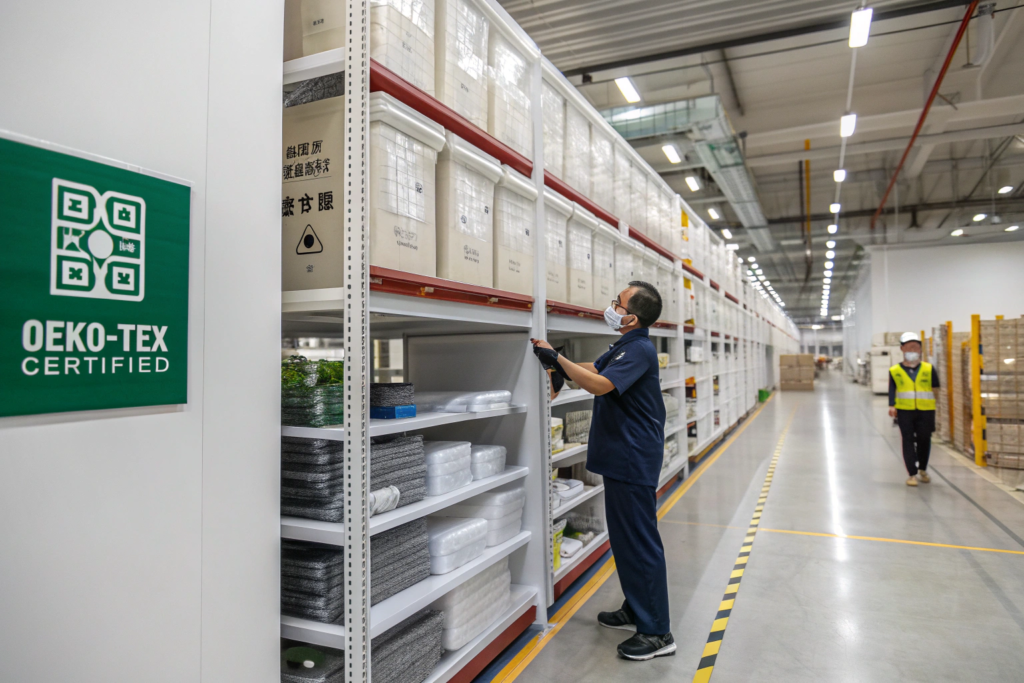
Assess the factory's in-process material control by examining their system for segregating certified and non-certified materials, reviewing their supplier approval and inbound inspection records, and auditing their internal lab or quality control protocols for batch verification. This is the operational heartbeat of compliance.
Can You Tour the Warehouse and Lab (Virtually or Physically)?
Request a video tour or live video call in the key areas:
- Fabric Warehouse: Ask to see how certified rolls are labeled and stored separately. Look for OEKO-TEX tags on the rolls or bins.
- Trim Store: Check if threads, buttons, and zippers are from certified suppliers. Ask to see the supplier certificates for these components.
- QC Lab: Even a basic lab should have simple test equipment for pH or colorfastness. Ask how they perform random checks on incoming certified materials. Do they keep records?
During a virtual audit for a European brand, we showed them our digital Batch Tracking System. We pulled up a recent fabric intake record, displaying the mill's OEKO-TEX certificate, our own internal test result, and the specific production lot it was allocated to. This level of traceability gave them immediate confidence.
What Records Should You Request?
Ask for samples of their internal documents:
- Supplier Approval List: With OEKO-TEX status noted.
- Incoming Inspection Report: For a recent batch of certified fabric.
- Non-Conformance Log: To see if they have ever rejected materials for failing compliance checks.
A factory that cannot produce such records is likely not controlling the process; they are just hoping the material from the mill is correct—a dangerous assumption.
What Questions Reveal Operational Knowledge and Risk?
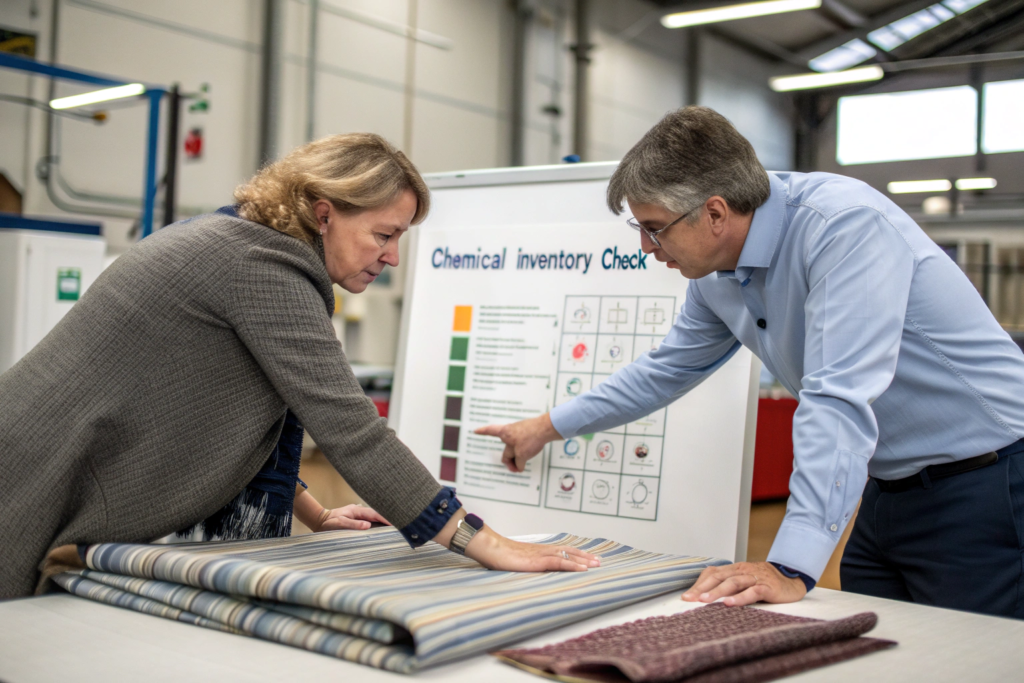
The sales rep might be smooth, but the technical team's knowledge reveals true capability. You need to probe for understanding of common failure points and risk scenarios.
Questions that reveal operational knowledge focus on supply chain bottlenecks, problem-solving history, and contingency plans for certification failures, uncovering whether the factory proactively manages risk or merely reacts to crises. Their answers separate experts from order-takers.
Ask About Past Problems and Solutions.
Pose scenario-based questions:
- “Tell me about a time a certified fabric from your mill failed your internal check. What did you do?”
- “What is your process if a trim supplier suddenly cannot provide a certified component mid-production?”
- “How do you ensure that sewing lubricants or cleaning chemicals used on the production floor don’t contaminate the certified garments?”
A credible factory will have stories and protocols. For instance, we once had a mill substitute a dye batch without notification. Our spot check detected a pH anomaly. We quarantined the entire roll, forced the mill to provide a new test report, and only then put it into production. We share this incident to demonstrate our controls work.
Inquire About Their Own Testing Strategy.
Do they blindly trust mill certificates, or do they verify? Ask:
- “What percentage of incoming certified fabric lots do you test, and for what parameters (e.g., pH, formaldehyde)?”
- “Do you conduct final random product tests before shipment to ensure nothing was compromised during making?”
A factory that invests in its own basic testing is investing in your security. Reference to standard test methods like ISO 3071 (for pH) shows technical awareness.
How to Structure Your Audit Findings and Decision?
An audit without a clear conclusion is wasted effort. You must synthesize your findings into a actionable risk assessment and make a clear go/no-go decision.
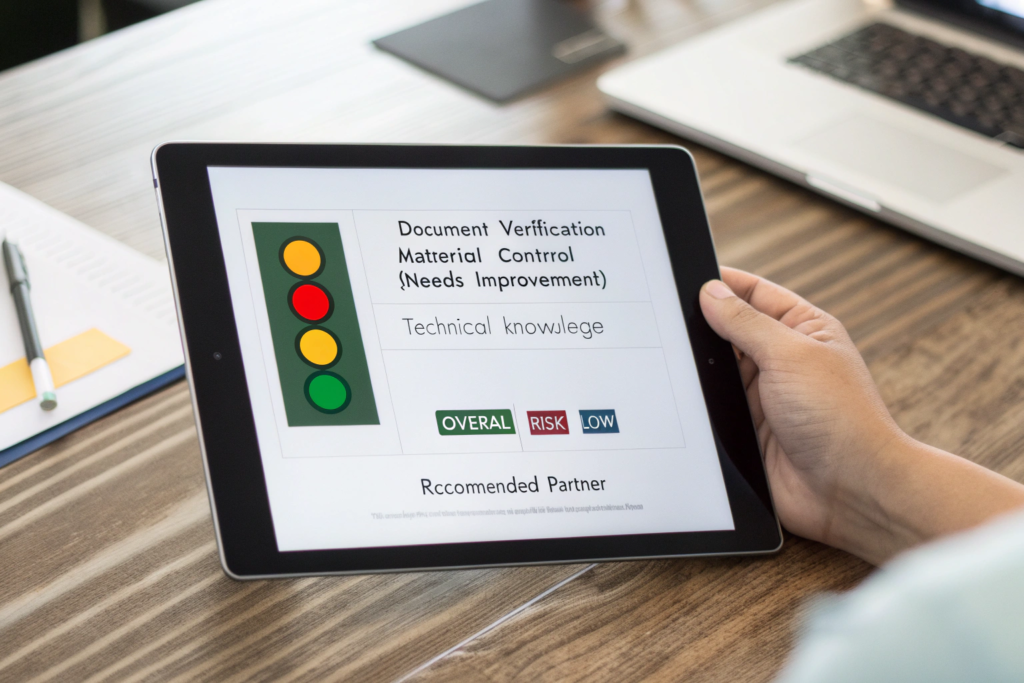
Structure your audit findings by categorizing evidence as “Verified,” “Requires Action,” or “Critical Gap,” and make your decision based on the factory’s willingness and ability to close gaps before production begins, prioritizing partners who are transparent, systematic, and can provide documented evidence at every step. Create a simple scorecard.
Create a Simple Audit Scorecard.
Use a table to quantify your assessment:
| Audit Category | Key Evidence Reviewed | Status (Pass/Flag/Fail) | Notes & Required Actions |
|---|---|---|---|
| 1. Certificate Validity | OEKO-TEX CertCheck verification, current dates. | Pass | Certificate #XYZ123 verified online. |
| 2. Product-Specific Proof | Certificate for similar skirt style provided. | Pass | Article #SKT-2024-01 certified. |
| 3. Material Segregation | Virtual tour of labeled storage; SOP document. | Flag | Request photos of updated trim storage labels. |
| 4. Supplier Documentation | Provided mill certs for main fabric. | Fail | Missing thread and button supplier certificates. Action Required. |
| 5. Technical Knowledge | Answered scenario questions with detailed protocols. | Pass | Demonstrated strong problem-solving experience. |
What is the Final Step Before Placing an Order?
If gaps exist, the factory must close them before you sign the contract and pay a deposit. For any "Fail" or "Flag" item, send a formal email listing the Corrective Action Requests (CARs). For example: "Please provide valid OEKO-TEX certificates for all specified sewing threads and plastic buttons by [date]."
Only place the order once all CARs are satisfied with documented evidence. Make reference to the certification and agreed-upon compliance protocol in the purchase order terms. This formalizes the agreement and gives you legal recourse.
Conclusion
Auditing a factory’s OEKO-TEX compliance is a non-negotiable step for securing a reliable, low-risk supply chain. It moves you from a position of hope to one of verified confidence. The process hinges on diligent document verification, a deep dive into material control processes, and probing the operational team’s real-world knowledge.
A factory that welcomes this audit with transparency and organized evidence is a true partner. We at Shanghai Fumao have built our systems to withstand and even facilitate such scrutiny because we know it’s the foundation of trust with savvy buyers. If you are evaluating partners for your next certified apparel order and seek a factory that will make your audit process straightforward and reassuring, let us demonstrate our compliance from the ground up. Contact our Business Director Elaine at elaine@fumaoclothing.com to schedule a virtual audit of our facilities and documentation.