Worried your next bulk garment order will arrive with crooked seams, mismatched colors, or inconsistent sizing? An ineffective factory audit can lead to catastrophic quality failures, lost revenue, and damaged brand reputation. You need proof of capability, not just promises.
A thorough audit of a Chinese factory's quality control for B2B orders must be a multi-layered inspection covering documented systems, physical facility capability, in-process controls, and validated performance history. It moves beyond checking certificates to observing the actual, daily practice of quality management on the production floor.
As an experienced manufacturer and partner to U.S. brands, we at Shanghai Fumao understand what a genuine, effective QC system looks like from the inside. A proper audit isn't an interrogation; it's a due diligence process that separates true production partners from mere suppliers. Let's walk through the critical steps.
What documented quality systems should you verify first?
Before you even visit the factory, their paperwork tells the first chapter of their quality story. Request and scrutinize these documents; a professional operation will have them organized and ready.
You must verify third-party certifications, internal procedural manuals, and key quality records. These documents form the backbone of any credible QC system.

Which international certifications are truly meaningful?
Look for valid, scope-appropriate certifications. ISO 9001:2015 for quality management systems is a strong baseline—it shows the factory has a process for documenting and improving its procedures. For social compliance, BSCI or SMETA audits are common. For specific products, OEKO-TEX® STANDARD 100 for fabric safety is crucial. However, don't just see the certificate. Ask for the audit report summary (with confidential details redacted) to check for non-conformities. In 2023, a client of ours rejected a potential sub-contractor because their ISO certificate had lapsed six months prior—a red flag about their managerial diligence. These international standards are a starting point for trust.
How to assess their internal quality control manuals?
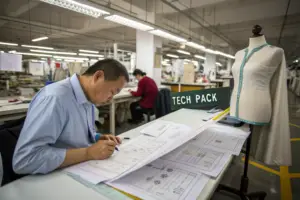
Ask for their Quality Manual and Inspection Procedure Documents (like AQL sampling plans). A strong manual will detail every checkpoint: from fabric incoming quality control (IQC) to final random inspection (FRI). Review the AQL (Acceptable Quality Level) they apply. For general apparel, AQL 2.5 for major defects and 4.0 for minor defects at Inspection Level II is industry standard. A professional factory, like ours at Shanghai Fumao, will have these documents in both Chinese and English, and more importantly, will be able to explain how they are implemented daily, not just filed away.
What must you physically inspect on the production floor?
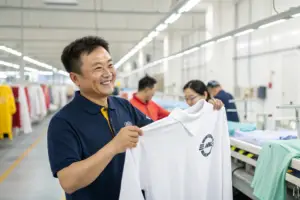
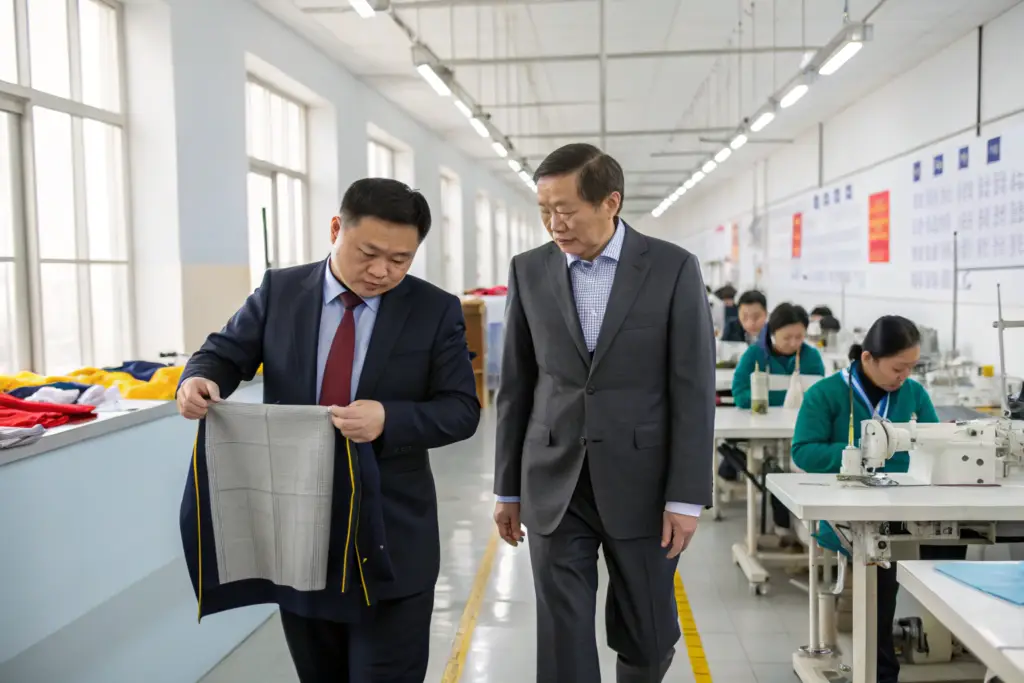
Documents can be copied, but the factory floor doesn't lie. Your physical tour is where you see theory put into practice. Observe the environment, the workflow, and the attitude of workers and QC staff.
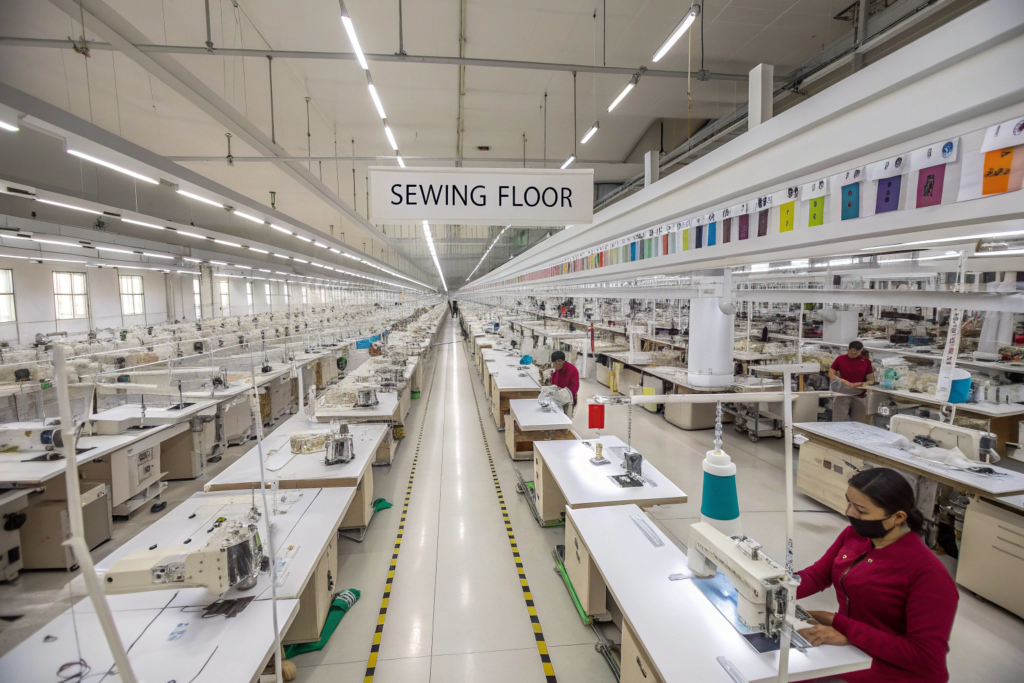
Focus on the organization, maintenance of equipment, and the visibility of quality checkpoints throughout the production flow.
How to evaluate the setup of in-line quality checkpoints?
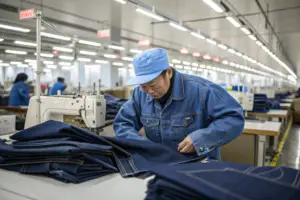
A reactive QC system only checks finished goods. A proactive system has checks woven into the line. Look for in-line inspection stations between major modules (e.g., after cutting, after sewing, before finishing). Ask how many QC staff are assigned per line. Observe if there is a designated space with proper lighting, measurement tools, and a clear pass/fail area. For instance, during a tour we facilitated for a U.S. client last year, they were particularly impressed by our "red tag" system at each station: any defective piece is immediately tagged and removed for repair, preventing defects from moving down the line. This in-process control is a hallmark of true quality management.
What do machinery and fabric handling tell you about quality?
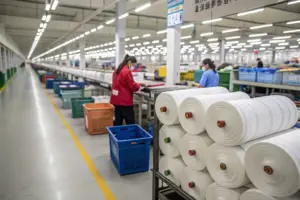
Examine the age and maintenance of key machines. Modern auto-cutting machines and programmable sewing units (like bartackers) offer more consistency than old, manual machines. Watch how fabric and cut pieces are handled. Are they kept in clean carts or bins, or are they piled on the floor? Check the fabric warehouse for proper storage (off the floor, climate control if needed) and a clear system for identifying and segregating approved vs. pending fabric rolls. Poor housekeeping often correlates with poor quality discipline.
How to test their actual quality control execution?
The most critical phase is witnessing QC in action. You must move from observation to validation by conducting your own mini-audit of their process and output.
This involves reviewing live inspection data, interviewing QC staff, and performing a spot-check on finished goods yourself.

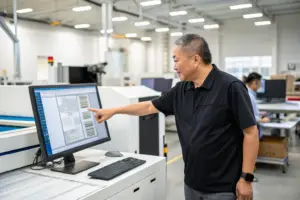
How to review their Defect Tracking and Corrective Action records?
Request to see recent Final Inspection Reports for past orders (with client names redacted). Look at the defect data: What were the most common issues? Was the batch accepted or rejected? More importantly, ask to see the Corrective and Preventive Action (CAPA) reports that were generated from those findings. A professional factory will have a closed-loop system. For example, if reports showed recurring issues with buttonhole strength, the CAPA should document the root cause (e.g., incorrect thread tension), the action taken (re-calibrating machines, retraining operators), and the verification of improvement. This demonstrates a culture of continuous improvement, not just inspection.
What is the best way to perform a live product spot-check?
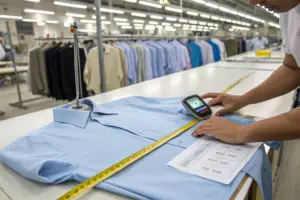
Ask the factory to pull a random batch of finished goods (even from another order, with permission) or cut pieces from an active line. Perform your own mini-AQL check. Use their tools and your own. Check for the critical 4Ms: Material (fabric weight, color), Make (stitches per inch, seam strength), Measurement (compare against their size spec sheet), and Marks (labeling, printing). During a visit from a sportswear brand CEO last spring, we encouraged him to randomly select 20 jackets from a finished pallet for measurement. His satisfaction with the consistency he found was the deciding factor in signing the contract. This hands-on verification is irreplaceable.
How to evaluate their long-term performance and reliability?
Quality isn't just about one batch; it's about consistency over time and the capacity to handle problems. You need to assess their track record and their commitment to the partnership.
This involves checking references, understanding their capacity planning, and seeing their lab testing capabilities.
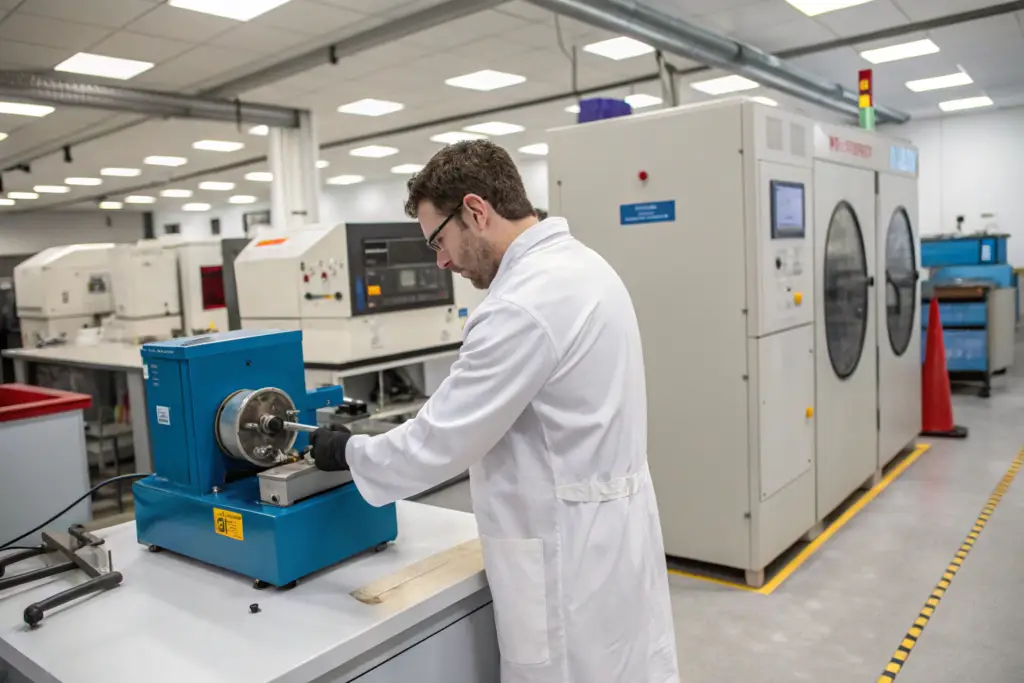
Why are in-house lab facilities a significant advantage?
A factory with a basic in-house lab can perform crucial pre-emptive tests without outsourcing, saving time and enabling faster corrections. Key equipment to look for includes: a color spectrophotometer for measuring color accuracy and fastness, a fabric strength tester, and a wash testing machine. Ask to see test reports. For example, we perform pre-production shrinkage tests on every new fabric lot at our Shanghai Fumao facility. This allows us to adjust pattern grading before cutting, preventing size issues after washing—a common and costly complaint. This proactive testing capability is a key differentiator.
How to verify their performance history and communication?
Ask for 2-3 references from clients in your region or of similar order complexity. Contact them. Ask specific questions: Was on-time delivery (OTD) consistent? How did the factory handle a quality crisis? Is communication direct and efficient? Also, discuss their production capacity and lead time planning. A factory operating at 120% capacity is a major red flag for quality slippage. A reliable partner will be transparent about their schedule and have a dedicated quality assurance team that communicates directly with you, not just through a sales agent. This transparency is the bedrock of a true B2B partnership.
Conclusion
Auditing a Chinese garment factory's QC is a deep dive into systems, practices, and culture. It requires looking beyond certificates to see the integration of quality into daily operations, from document control to defect tracking on the floor. A successful audit reveals a partner committed to consistency, transparency, and continuous improvement—a partner who protects your brand as fiercely as you do.
Invest the time in a comprehensive audit. It is the most important step you will take before placing a production order. At Shanghai Fumao, we open our doors and our books to this process because we are confident in the robust, living quality system we've built. We invite you to audit us. To schedule a virtual or in-person audit of our facilities and begin a partnership built on verified quality, contact our Business Director, Elaine, at: elaine@fumaoclothing.com.