You have a new collection. You have a launch date. You have marketing planned. You have influencers lined up. Then you get an email from your factory. They need more time. Your samples are not approved. The fabric is delayed. Your launch date is in jeopardy. You panic. You have to push everything back. You lose momentum. You lose sales. This happens again and again. You wonder why you cannot get the timing right.
To align your clothing brand release schedule with factory timelines, you must work backward from your desired launch date, building in realistic buffers for every stage of production, and communicate your critical deadlines to your factory months in advance. The key is not to ask the factory to work faster. The key is to give them enough visibility and lead time so they can plan their capacity around your needs. A successful release schedule is built on transparency, realistic timing, and a shared calendar that both sides commit to.
I have run a clothing factory for over a decade. I have seen brands who nail their timing every season. I have seen brands who are always late. The difference is not luck. It is planning. The brands who succeed treat their factory as a partner. They share their launch calendar early. They understand our production cycle. They build relationships that allow us to prioritize their work. The brands who struggle treat the factory as a vendor. They place orders late. They expect miracles. They get disappointed.
How to Build a Realistic Production Timeline for Your Collection?
A realistic timeline is the foundation of a successful release. Many brands create timelines that are based on hope, not reality. They underestimate how long each stage takes. They do not build in buffers. They assume everything will go perfectly. It never does. You need a timeline that reflects real-world production.
What are the key stages in garment production and how long do they take?
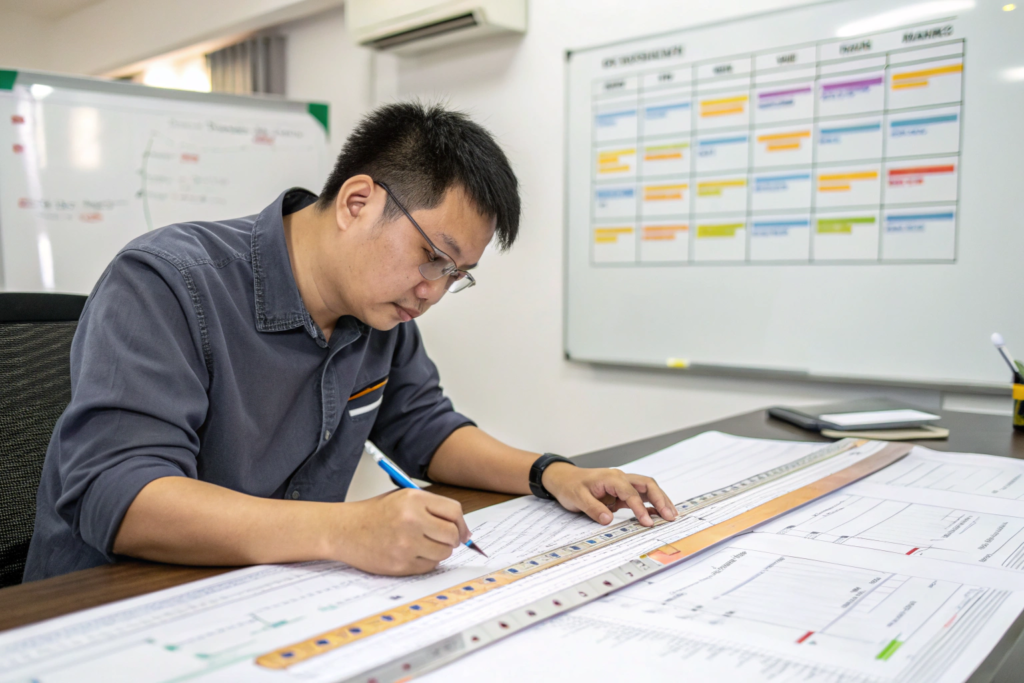
Garment production is a sequence of stages. Each stage takes time. You need to understand the duration of each stage to build an accurate timeline. Here is a typical breakdown for a standard woven garment produced in China:
| Stage | Typical Duration | Notes |
|---|---|---|
| Fabric Sourcing & Booking | 2-6 weeks | Longer for custom colors or special fabrics |
| Fabric Production & Delivery | 4-8 weeks | Can be longer for mills during peak season |
| Fabric Inspection | 3-5 days | Should be done before cutting |
| Trim Sourcing & Booking | 2-4 weeks | Custom hardware adds 4-8 weeks |
| Pattern Making & Grading | 1-2 weeks | Depends on complexity |
| Sample Development | 2-4 weeks | Multiple rounds may be needed |
| Sample Approval | 1-2 weeks | Depends on client response time |
| Fabric Cutting | 3-7 days | Depends on order size |
| Sewing Production | 2-4 weeks | Depends on order size and complexity |
| Finishing & Packing | 5-10 days | Includes washing, pressing, QC, packing |
| Final Inspection | 2-5 days | Third-party inspection if required |
| Shipping | 2-5 weeks | Sea freight to US, air freight is faster |
Total lead time from order placement to delivery is typically 12 to 20 weeks. That is 3 to 5 months. Many brands think they can get products in 8 weeks. Sometimes it is possible for simple reorders. But for new development, 8 weeks is unrealistic. You need to plan accordingly.
A client in Denver came to us with a launch date that was 10 weeks away. They wanted a new collection with custom fabric and custom labels. We told them it was not possible. They did not believe us. They pushed. We tried. The fabric was late. The samples needed three rounds. The launch was delayed by 6 weeks. They missed their season. They lost sales. They learned to trust our timeline after that.
You should ask your factory for their standard lead times. Every factory is different. Some are faster. Some are slower. Some have dedicated quick response lines. Understand their capabilities. Then build your timeline around their reality, not your desire.
How do I calculate backward from my desired launch date?
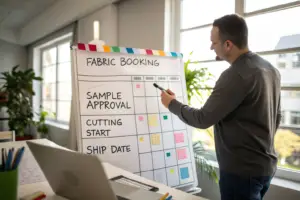
Working backward is the most effective way to build a timeline. Start with your launch date. Subtract the time for shipping. Subtract the time for production. Subtract the time for sampling. Subtract the time for fabric. This gives you the date when you need to start the process.
Here is a worked example. You want to launch on September 1:
- Shipping from China to US: 4 weeks (sea freight)
- Final inspection and packing: 1 week
- Sewing production: 3 weeks
- Fabric cutting: 1 week
- Sample approval: 2 weeks (allowing for revisions)
- Sample development: 3 weeks
- Fabric delivery: 6 weeks
- Fabric booking: 2 weeks
Add them up. You need to start fabric booking 22 weeks before your launch. That is mid-April. If you start later, you will miss your launch. This math is simple. But many brands ignore it. They start in June and expect to launch in September. It does not work.
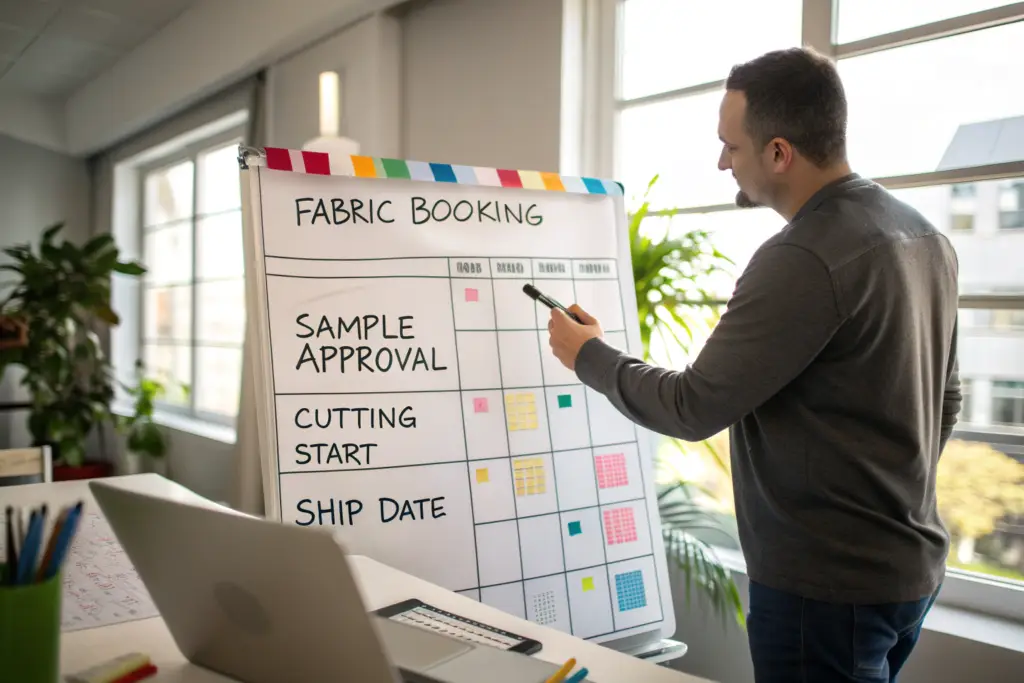
We had a client in Austin who used this backward planning method. They mapped out their entire year. They had a spreadsheet with launch dates for each collection. They worked backward to determine when they needed to place fabric orders. They shared this calendar with us in January. We could plan our capacity around their needs. They never missed a launch. Their business grew because they were reliable.
You should create a production calendar template for your business. Use it for every collection. Update it when things change. Share it with your factory. This tool will transform your planning.
How to Communicate Your Release Schedule to Your Factory?
Your factory cannot read your mind. They do not know your launch dates unless you tell them. Many brands assume the factory will just figure it out. They do not. They have dozens of clients. They prioritize based on who communicates clearly. If you want your orders on time, you need to communicate your schedule clearly and early.

Share everything. Do not hold back. Share your launch dates. Share your marketing calendar. Share your critical deadlines. The more the factory knows, the better they can plan. They can reserve capacity. They can order materials early. They can allocate their best workers to your orders.
The key information to share includes:
- Your collection name and season
- Launch date for each style
- Ship date you need to meet that launch
- Critical deadlines for sample approval
- Any dates that cannot move (like a celebrity endorsement or retail floor set)
Share this information in writing. Do not just say it on a call. Send an email. Create a shared calendar. Put it in your purchase order. Make it official. This creates accountability. The factory cannot say they did not know.
A client in Seattle sends us a "production roadmap" at the start of every season. It is a one-page document. It lists every style they plan to produce. It shows the launch date for each style. It shows the ship date they need. It shows the date they want samples. We use this roadmap to plan our capacity. We know which styles are most urgent. We know when we need to start. This simple document makes a huge difference.
You should also share your sales projections. If you expect to sell 10,000 units of a style, tell the factory. They can reserve materials. They can plan labor. If you only tell them the initial order of 1,000, they will plan for that. When you suddenly need 5,000 more, they may not have capacity. Sharing your projections helps them prepare.
How often should I check in on production status?
Communication frequency matters. Too little, and you lose visibility. Too much, and you become a nuisance. The right balance depends on where you are in the production cycle. A good rule is weekly updates during active production. More often when there are problems. Less often when things are on track.
A weekly status call or email works well. The factory should tell you:
- Current status of each style
- Any issues encountered
- What is on track for the coming week
- Any risks to the timeline
This weekly check-in creates a rhythm. It builds trust. It catches problems early. It prevents the last-minute surprises that ruin launches.
I remember a client in Chicago who called every day. It was too much. Our production manager dreaded their calls. It took time away from managing production. The client was anxious. The constant calls did not make things faster. They just created stress. Another client sends one email every Friday. They ask for a simple status update. We respond within 24 hours. That rhythm works. They get the information they need. We get to focus on production.
You should establish a communication protocol with your factory at the start of the relationship. Agree on how often you will communicate. Agree on who the contacts are. Agree on what information will be shared. This structure prevents misunderstandings and builds a professional partnership.
How to Build Buffer Time into Your Schedule Without Extending Your Launch Date?
Things go wrong. Fabric is late. Samples need revisions. A machine breaks. You cannot prevent all problems. But you can plan for them. Building buffer time into your schedule is essential. The key is to add buffers without making your launch date slip. This requires strategic thinking about where to add flexibility.
Where should I build buffer time in the production process?
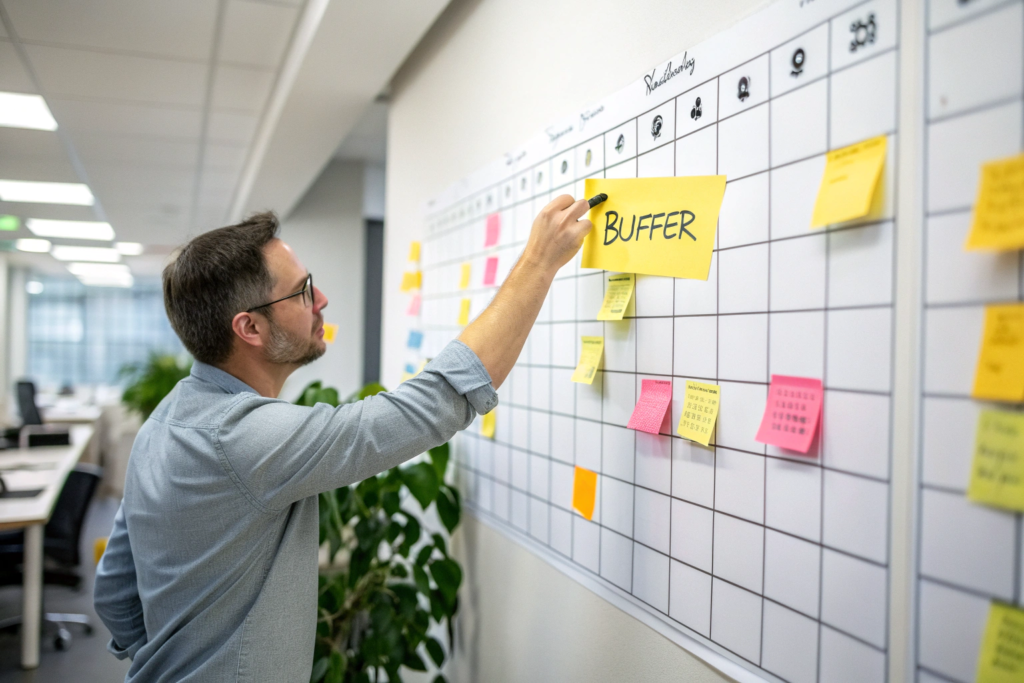
Not all stages of production are equal. Some stages have flexibility. Some do not. You should build buffers in the stages that have the most uncertainty. Fabric delivery is uncertain. Sample approval is uncertain. Shipping is relatively predictable. You should build buffers there.
Here is where to add buffer:
- Fabric booking to delivery: Add 2-3 weeks. Mills are often late.
- Sample development: Add 1-2 weeks for revisions.
- Sample approval: Add 1 week for client delays.
- Production: Add 1-2 weeks for unexpected issues.
Do not add buffer at the end. Do not assume you can ship faster. If you add buffer at the end, you will use it. If you add buffer earlier, you can absorb delays without impacting the ship date.
A client in Boston had a system that worked well. They added 2 weeks of buffer to fabric delivery. They added 1 week of buffer to sample approval. They added 1 week of buffer to production. Their total buffer was 4 weeks. They never missed a launch. When there were no delays, they shipped early. Their retail partners appreciated early deliveries. Their early buffer became a competitive advantage.
You should track actual performance against your timeline. After each collection, review where you used buffer. If you consistently use buffer in a certain area, add more buffer there. If you never use buffer in an area, reduce it. This data-driven approach improves your planning over time.
How do I handle urgent orders or last-minute changes?
Urgent orders and last-minute changes happen. You cannot always plan perfectly. The key is to understand the cost of speed. Faster production costs more. Faster shipping costs more. You need to decide if the cost is worth it.
When you need an urgent order, communicate clearly. Tell the factory it is urgent. Ask what they can do. They may be able to expedite. But there will be a cost. Expedited production may require overtime. Expedited shipping may require air freight. Be prepared to pay for speed.
I had a client in New York who needed a reorder of a style that was selling out. They gave us 4 weeks. Normal lead time was 8 weeks. We told them we could do it. But it would cost extra. We would have to stop other production. We would have to pay overtime. They agreed. We delivered in 3.5 weeks. They paid a premium. But they captured the demand. The extra sales covered the expedite cost. It was worth it for them.
You should have a conversation with your factory about expedite options before you need them. Understand what is possible. Understand the cost structure. This allows you to make quick decisions when urgent needs arise.
How to Align Multiple Product Categories with a Single Factory?
Many brands produce multiple categories. Knitwear, woven shirts, jackets, accessories. Each category has different production requirements. Different machines. Different workers. Different lead times. Aligning all of them to a single release schedule is challenging. But it is possible with good planning.
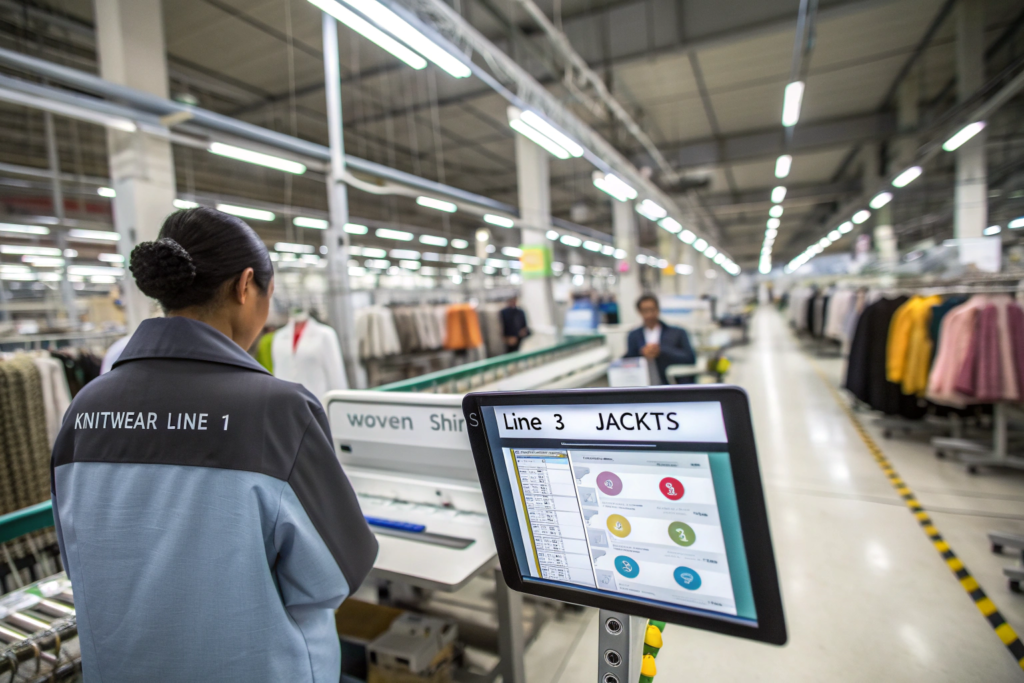
How do I prioritize across different product types?
Not all products are equally important. Some are core styles that sell year-round. Some are seasonal styles that have a narrow window. You need to prioritize. The factory needs to know what to focus on.
Create a priority ranking for your styles. Use a simple A-B-C system. A styles are critical. They must ship on time. B styles are important but have some flexibility. C styles can be delayed if necessary. Share this ranking with your factory. They will allocate resources accordingly.
A client in San Francisco used this priority system. They had a fall collection with 20 styles. They identified 5 styles as "A" priority. These were the ones with the biggest marketing push. They communicated this to us. We prioritized those styles. They shipped on time. The marketing campaign launched as planned. The other styles shipped a few weeks later. The release was a success. The priority system worked.
You should also consider production complexity. Simple styles can be produced faster. Complex styles take longer. You may need to start complex styles earlier. A simple t-shirt can be produced in 2 weeks. A complex jacket with 50 operations needs 4 weeks. Start the jacket earlier so both styles finish at the same time.
How do I manage sampling and production across multiple styles?
Sampling across multiple styles creates a bottleneck. The sample room has limited capacity. If you send 20 styles for sampling at the same time, they will be delayed. You need to stagger your sampling requests.
Start with your most complex or most important styles first. Get those samples approved. Then move to the next group. This staggered approach keeps the sample room moving. It prevents a pile-up.
We had a client in Los Angeles who sent us 15 styles for sampling at once. Our sample room was overwhelmed. Every style took longer. The client was frustrated. The next season, they sent styles in three batches. The first batch was the core styles. The second batch was the seasonal styles. The third batch was the accessories. Each batch moved through the sample room efficiently. The entire collection was sampled faster than the previous season. Staggering made the difference.
You should also use a sample tracking system. Know where each style is in the sampling process. Know what is pending. Know what is approved. Share this with your factory. This visibility helps both sides manage the flow.
Conclusion
Aligning your release schedule with factory timelines is not complicated. But it requires discipline. You need to build realistic timelines based on real production lead times. You need to communicate your schedule clearly and early. You need to build buffer time for the unexpected. You need to prioritize across multiple styles. And you need to treat your factory as a partner, not just a vendor.
The brands who do this well never miss a launch. They build trust with their retail partners. They build loyalty with their customers. They grow their business consistently. The brands who do this poorly are always scrambling. They miss opportunities. They lose money. They damage their reputation.
At Shanghai Fumao, we work with brands who understand this. They share their calendars with us. They communicate clearly. They build realistic timelines. We work together to make their launches successful. This partnership approach is the foundation of our business.
If you are planning your next collection and want to ensure your launch goes smoothly, we can help. Our Business Director, Elaine, can walk you through our production timeline and help you build a realistic schedule. You can reach her at elaine@fumaoclothing.com. Let us build a launch plan that works for both of us.