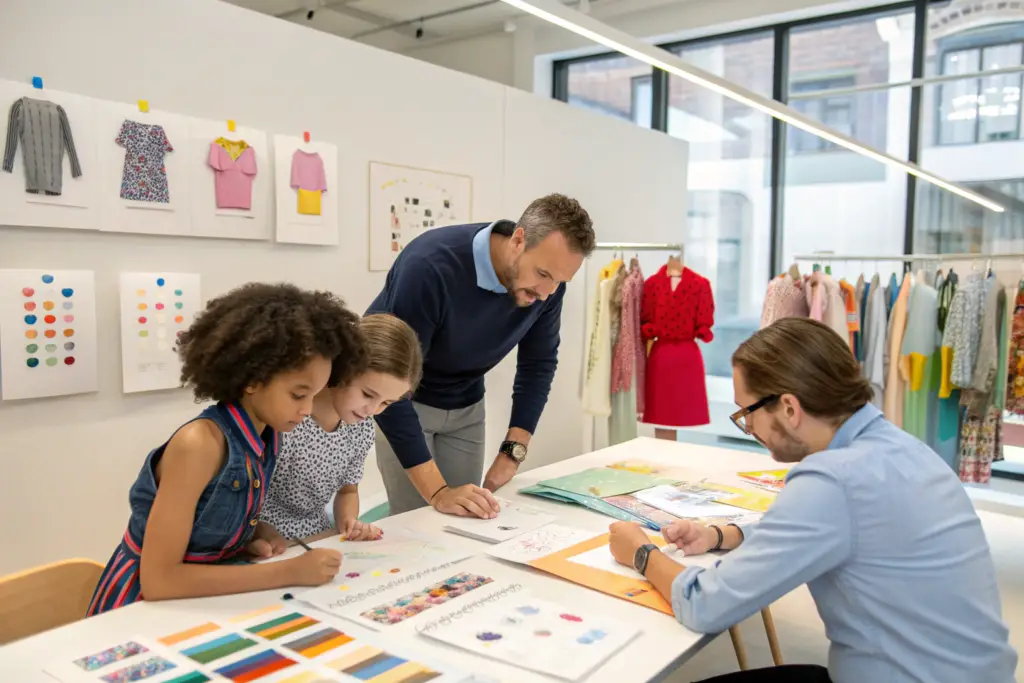
You're developing a kids' wear line with a fantastic concept, but a nagging doubt remains: Will it actually sell? The children's market is uniquely challenging, caught between the practical needs of parents and the playful desires of kids. A design that's cute but not durable, or trendy but uncomfortable, will fail on both fronts. So how do you bridge this gap consistently?
Our kids' wear design process meets market demands by systematically integrating safety, durability, and trend forecasting from the very first sketch. At Shanghai Fumao, we treat kids' wear not as miniature adult clothing, but as a specialized category requiring its own design rules, technical standards, and market intelligence. We balance the three core market forces: parental priorities, child comfort, and retail trends, to create commercially viable and beloved products.
The process is a funnel: starting with broad market and safety research, narrowing into parent-child-centric design, then rigorously testing for real-world use. This method ensures that what reaches the market isn't just a garment, but a solution that families are eager to buy. It's where compliance meets cuteness, and durability meets delight.
How Do We Embed Safety and Compliance Into the Design DNA?
For parents, safety is non-negotiable. Regulatory failures can lead to recalls, lawsuits, and irreparable brand damage. Therefore, safety isn't a final inspection checkpoint in our process; it's the foundational constraint that shapes every design decision from the outset.
Our design team works in lockstep with a dedicated compliance officer from Day One. Before a silhouette is finalized, we screen it against a comprehensive checklist of international safety standards (like CPSIA, EN 14682, and ASTM), ensuring the design is inherently compliant, not retrofitted to be safe.
Dive Deeper Paragraph: This proactive safety-by-design approach focuses on two high-risk areas: physical hazards and chemical compliance.
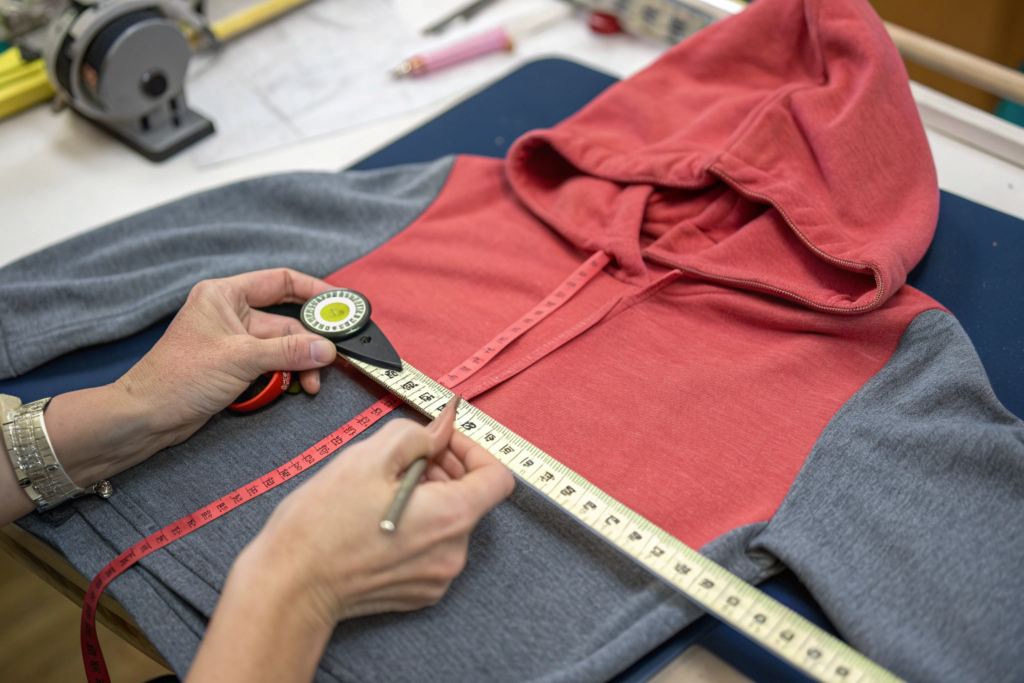
How Do We Design Out Physical Hazards?
We apply strict design protocols to eliminate common risks:
- Choking Hazards: Any embellishment (buttons, sequins, beads) must pass a "small parts test" and be securely attached with a pull-force exceeding 50N. For infants, we often recommend printed or embroidered alternatives.
- Strangulation Risks: Drawstrings in the hood and neck area of sizes 2T-12 are prohibited. We design with alternative closures like touch-fastening snaps, elasticated hoods, or non-functional decorative ties placed low on the garment.
- Entanglement & Scratching: We avoid long, loose threads, specify smooth, locked seams, and use soft, heat-transferred labels instead of scratchy woven ones.
Last year, a client proposed a beautiful fairy dress with delicate ribbon ties at the neck. Our compliance review flagged it immediately. We worked together to redesign it with a secure, elasticated smocked neckline and placed the decorative ribbons safely at the back waist, turning a potential hazard into a unique, sellable feature that gave parents peace of mind.
Why Is Chemical Compliance a Priority at the Fabric Selection Stage?
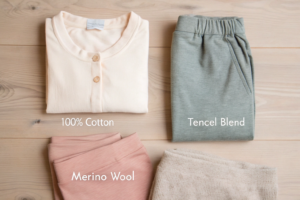
Safe design means safe materials. We mandate that all fabrics, prints, and trims for kids' wear come with valid OEKO-TEX® Standard 100 or similar certifications, proving they are free from harmful levels of substances like lead, phthalates, and AZO dyes. Our design library is pre-filtered with these compliant material options. This upfront filtering prevents the heartbreak of falling in love with a fabric that later fails lab tests—a costly delay that disrupts the entire product development timeline.
How Does Our Process Balance Durability with Playful Design?
Kids are tough on clothes. A design that can't survive playground adventures, frequent washes, and growth spurts will disappoint parents, no matter how stylish. Our process engineers durability into the very architecture of the garment, ensuring it remains a favorite in the wardrobe rotation.
We approach kids' wear as "performance apparel for everyday life." This means selecting fabrics and constructions based on stress-testing and real-world scenarios, not just aesthetic appeal. Durability and playfulness are not opposites; they are combined through intelligent design.
Dive Deeper Paragraph: This balance is struck through strategic fabric and construction choices.
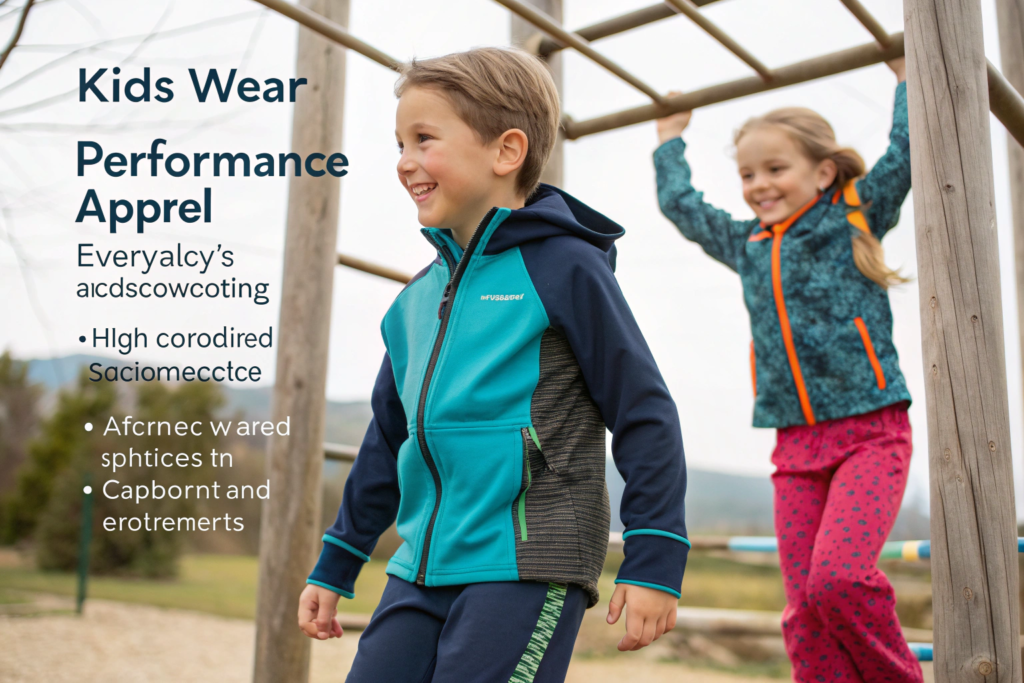
What Fabrics and Constructions Pass the "Play Test"?
Our design briefs include durability targets. We prioritize:
- High-Stretch & Recovery Fabrics: For active categories, we use cotton-spandex or polyester-spandex blends with excellent recovery to prevent bagging at the knees and elbows.
- Reinforced Stress Points: We automatically design with bar tacks at pocket corners, crotch points, and belt loops. For knees, we might integrate double-layer fabric or design a stylistic patch that also serves as reinforcement.
- Practical Design Features: Hidden elastic in waistbands for growth allowance, reinforced elbows on sweaters, and durable, smooth-zipping YKK zippers are standard specs.
For a school uniform client, we redesigned their standard trousers by adding a discreet, flexible gusset in the crotch and using a more abrasion-resistant twill. Parent complaints about worn-out knees and split seams dropped by over 60% in the first term, a direct result of design for manufacturing principles focused on longevity.
How Do We Make Durability Desirable to the Child?
Durability must be invisible or cool. We integrate reinforcements as part of the design language—like contrast color top-stitching that looks sporty, or knee patches shaped like dinosaurs. We also focus on tactile comfort; a durable but stiff fabric will be rejected by the child. Our fabric selection process includes "hand feel" tests to ensure durable materials are also soft and inviting to wear.
How Do We Integrate Real-Time Trend Analysis with Parental Practicality?
Kids want to wear what's cool, but parents buy what's practical. Missing the trend means missing sales; ignoring practicality means missing repeat customers. Our design process uses a dual-lens approach, filtering macro-trends through the practical realities of children's lives.
We don't just follow adult runway trends. We have dedicated researchers analyzing trends across children's media, animation, toy releases, and color institutes, then interpreting them for the kids' wear context with parental practicality as a core filter.
Dive Deeper Paragraph: This integration happens through a structured, two-step translation in our design sprints.
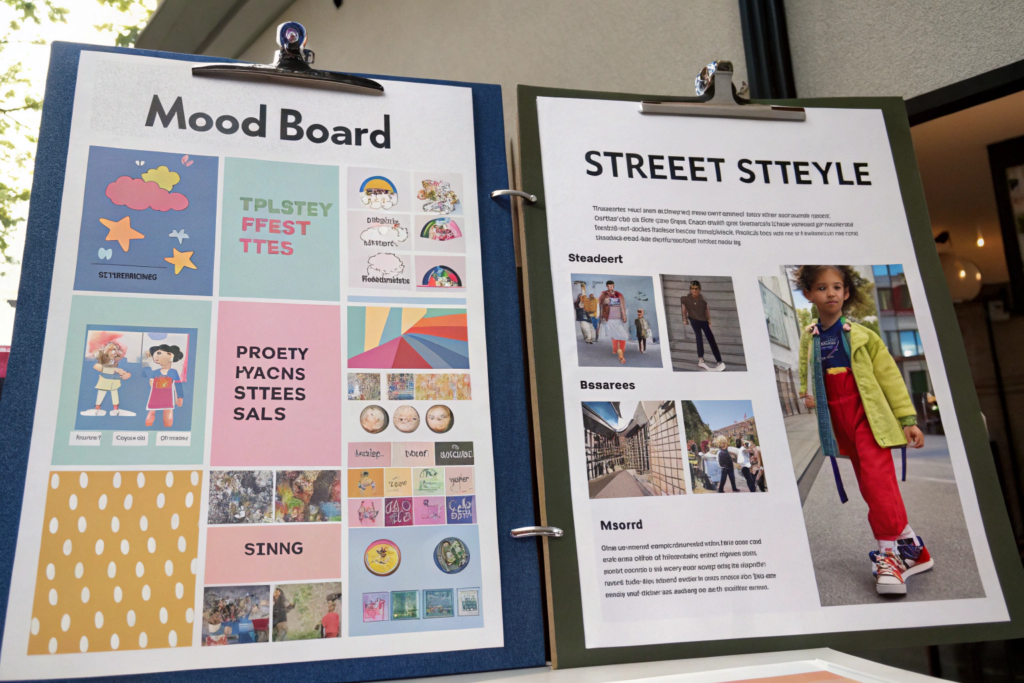
How Are Macro-Trends Translated into Kid-Appropriate Designs?
When a trend like "gorpcore" or "retro gaming" emerges, our team doesn't just apply it literally. We ask: What is the core appeal for a child? It might be the sense of adventure or the bright colors. For gorpcore, we designed a line of functional, water-resistant cargo pants and puff-sleeve jackets for toddlers, using fun, bright colors instead of just beige, and adding playful elements like animal-shaped toggle pulls. This captured the trend's spirit in a way that excited both kids and their style-conscious parents.
Where Does Parental Feedback Directly Influence the Design?
We incorporate parent feedback loops in two ways:
- Internal Parent Panels: Employees with young children are involved in prototype wear-tests, providing brutally honest feedback on washability, ease of dressing, and durability.
- Client Data Integration: We encourage brand partners to share their customer review data. For instance, if a brand's reviews frequently mention "difficult snaps," we will proactively suggest and prototype alternative closures like magnetic snaps or wider-loop buttons in our designs for them.
This data-informed approach ensures our designs solve real problems. After analyzing feedback for a client, we pioneered a line of "sensory-friendly" seams and tags for their spectrum, turning a practical need into a unique brand identity development and marketable feature.
How Does Prototyping and Testing Validate Market Fit Before Production?
A beautiful tech pack is just a hypothesis. The real test is how the garment performs on a moving, playing, growing child. Our prototyping phase is an iterative testing ground where designs are validated against three criteria: function, comfort, and cost-effectiveness for bulk production.
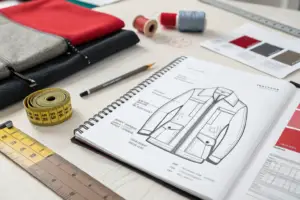
We move quickly from 2D sketches to 3D digital prototypes and then to physical "wear-test" samples. Each iteration is scrutinized not just by designers, but by technicians, cost engineers, and our internal parent panel.
Dive Deeper Paragraph: Validation is a multi-stage gate that ensures market readiness.
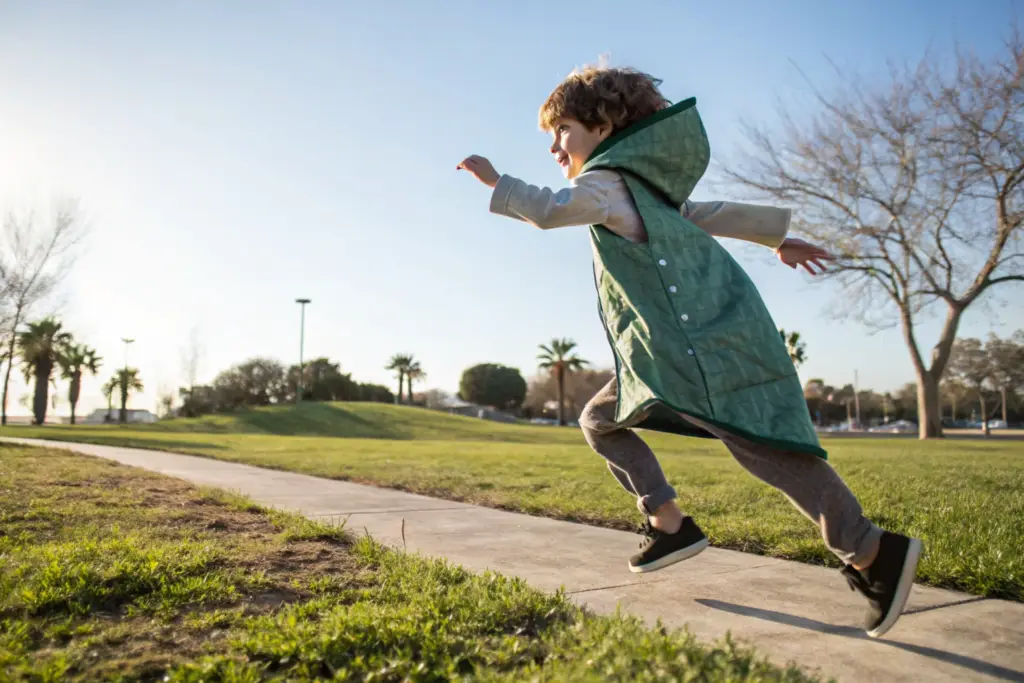
What Does the "Wear-Test" Prototype Phase Involve?
We produce prototypes in actual or similar intended fabrics and give them to children within our network for a defined period. We track:
- Ease of Dressing: Can a parent put it on a squirming toddler quickly? Can an older child manage it themselves?
- Freedom of Movement: Can the child run, climb, and sit cross-legged without restriction?
- Wash Test: The prototype is washed 5-10 times according to care instructions. We check for color fading, pilling, seam integrity, and shape retention.
A prototype for a stylish denim pinafore dress failed the "sit test"—it became too tight across the thighs when a child sat down. We went back and added a hidden elastic panel in the side seams, preserving the aesthetic while ensuring comfort, a classic example of user-centered design.
How Does Cost Engineering During Prototyping Protect Margins?
A design that is too costly to produce will either kill your margin or price you out of the market. Our costing team is involved at the prototype review. They might suggest: "This three-piece layered look is beautiful, but producing it as two separate pieces with a faux vest print would reduce cost by 25% with similar visual impact." This collaborative, front-loaded costing ensures the final design is not only desirable and safe but also commercially viable for bulk garment manufacturing. It prevents the painful scenario of approving a perfect sample only to get a shocking price quote for bulk.
Conclusion
Meeting the multifaceted demands of the kids' wear market requires a disciplined, integrated design process that respects the intelligence of both the parent and the child. By baking safety and compliance into the DNA, engineering durability into playful designs, intelligently filtering trends through a practical lens, and rigorously testing prototypes in real-world conditions, we create kids' wear that sells, lasts, and delights.
At Shanghai Fumao, our specialized kids' wear design process is built to de-risk your product development and maximize your market success. We understand that your brand's reputation is stitched into every seam. Let us be the partner that helps you navigate the exciting complexities of the children's market with confidence and creativity. To discuss how our process can bring your next kids' collection to life, contact our Business Director, Elaine, at elaine@fumaoclothing.com. Design for play, built to last.