You're planning your production order and wondering whether to start small or commit to larger quantities. The relationship between order volume and per-unit cost isn't always straightforward, but understanding this dynamic is crucial for maximizing your profitability and making informed production decisions.
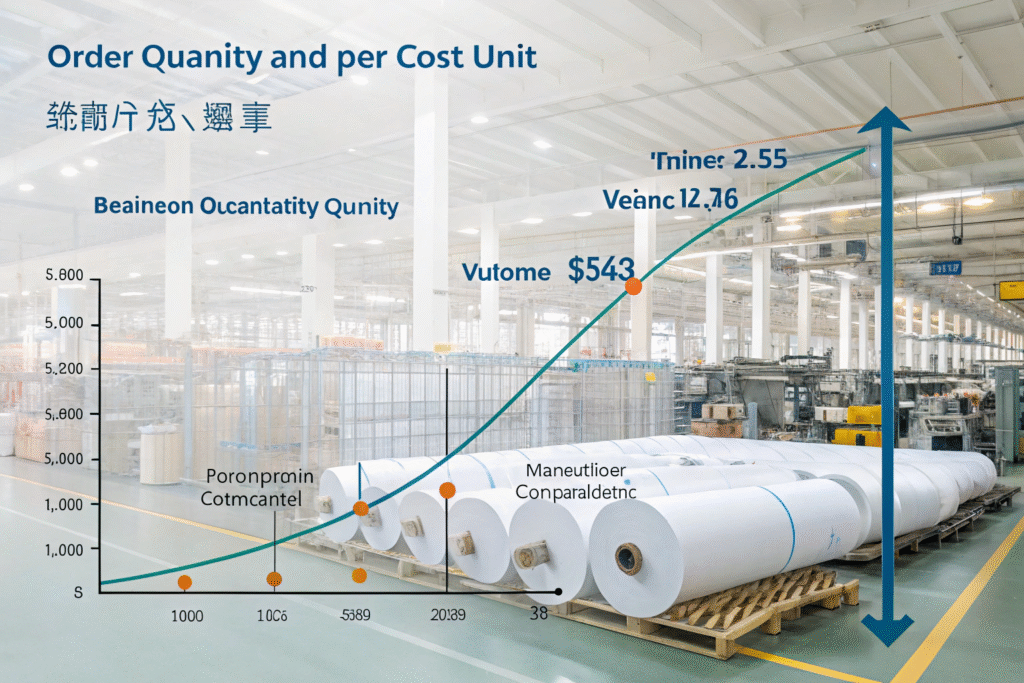
Order volume significantly impacts per-unit garment costs through economies of scale, with typical cost reductions of 15-40% when moving from small to medium quantities, and additional 10-25% savings when scaling to large production runs. However, these savings follow a nonlinear pattern where initial volume increases yield the most dramatic cost benefits before plateauing at very high quantities. The key is identifying your optimal order volume where cost efficiency meets your sales capacity and inventory risk tolerance.
This comprehensive analysis will guide you through exactly how different order volumes affect your costs across materials, labor, overhead, and operational efficiency.
What Are The Key Cost Components Affected By Order Volume?
Understanding how different cost elements respond to volume changes helps you predict your total cost structure at various production levels. Not all costs decrease at the same rate, and some may not decrease at all beyond certain thresholds.
The most significant cost savings typically come from material purchasing, followed by labor efficiency, with overhead allocation providing more modest per-unit reductions.
How do material costs decrease with volume?
Material costs typically show the most dramatic volume-based savings:
- Fabric pricing tiers with discounts at specific quantity thresholds
- Trim and component pricing based on purchase volumes
- Reduced waste percentage through optimized cutting efficiency
- Lower shipping costs per unit for raw materials
A recent case study showed a activewear brand achieving 28% fabric cost reduction when increasing from 500 to 5,000 units, as they reached their supplier's first major pricing tier. The textile volume pricing structure created significant per-unit savings. At Shanghai Fumao, we help clients identify these pricing breakpoints during planning.
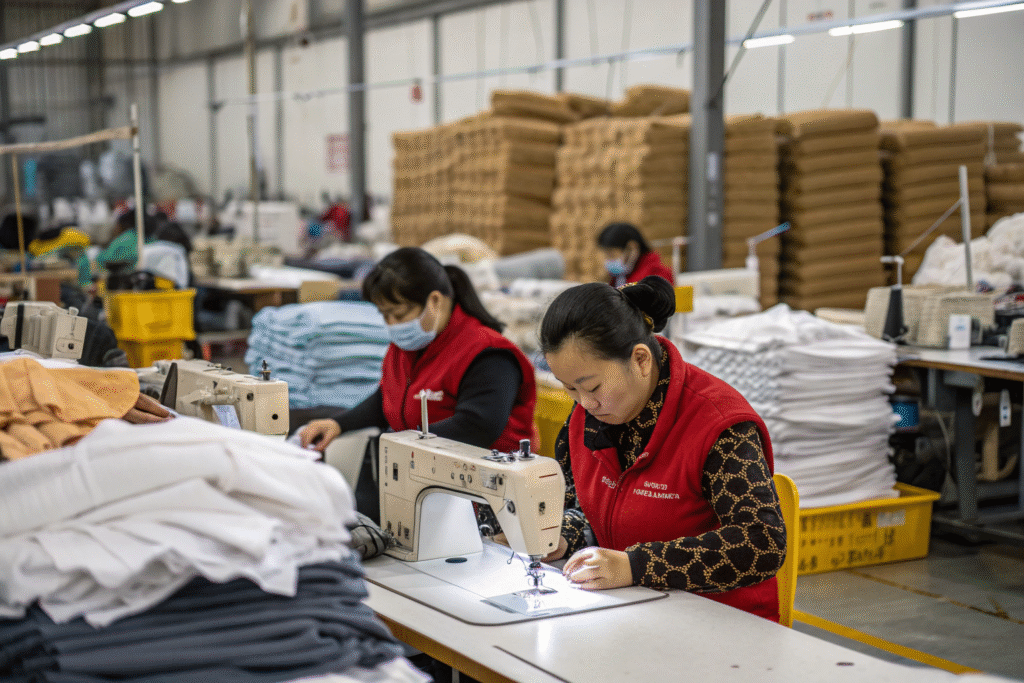
How does labor efficiency improve with scale?
Labor costs decrease through multiple efficiency factors:
- Learning curve benefits as workers repeat the same operations
- Reduced setup time allocation per unit across larger runs
- Specialized workstation organization for high-volume production
- Optimized production flow that only becomes possible at scale
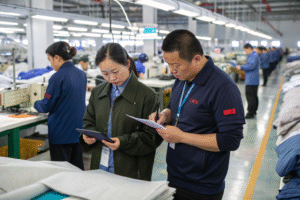
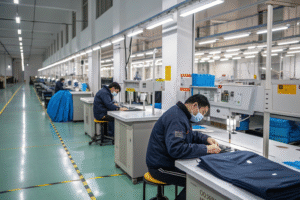
When a denim brand increased their order from 1,000 to 3,000 units, they observed a 22% reduction in sewing time per garment as operators mastered the specific construction techniques. This labor efficiency scaling demonstrates why medium-volume orders often offer the best balance of cost and flexibility.
What Are The Typical Volume Breakpoints For Cost Reduction?
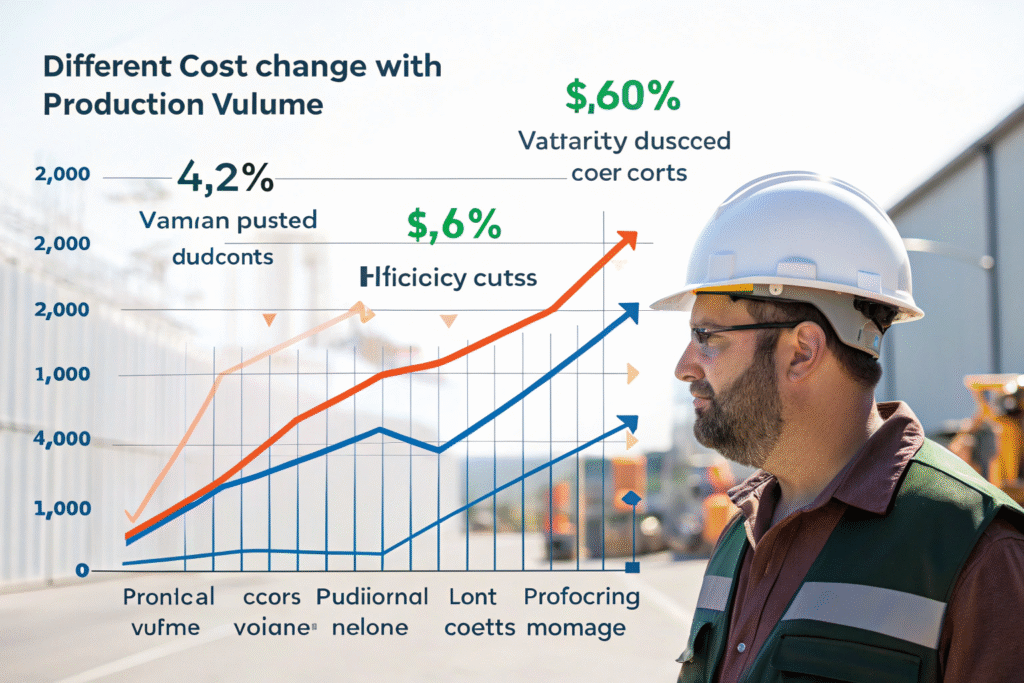
Cost reductions don't occur linearly with increasing volume. Instead, they happen at specific breakpoints where manufacturing processes can be optimized, and supplier pricing tiers are triggered.
Identifying these breakpoints helps you make strategic decisions about order quantities that maximize cost efficiency without overextending your inventory capacity.
Where are the most significant cost reduction thresholds?
Major cost reduction typically occurs at these volume ranges:
| Order Quantity Range | Typical Cost Reduction | Primary Drivers |
|---|---|---|
| 100-500 units | Baseline pricing | Minimum order economics |
| 500-2,000 units | 15-25% reduction | Material pricing tiers, basic labor efficiency |
| 2,000-5,000 units | Additional 10-15% | Optimized cutting, improved labor efficiency |
| 5,000-10,000 units | Additional 5-10% | Full production line optimization |
| 10,000+ units | Diminishing returns | Maximum efficiency reached |
A contemporary fashion brand strategically planned their production around the 2,500-unit threshold, achieving 32% lower per-unit costs compared to their initial 300-unit test run while maintaining manageable inventory levels. Understanding manufacturing volume breakpoints enables smarter production planning.
How do different product types affect volume economics?
The optimal volume varies significantly by product category:
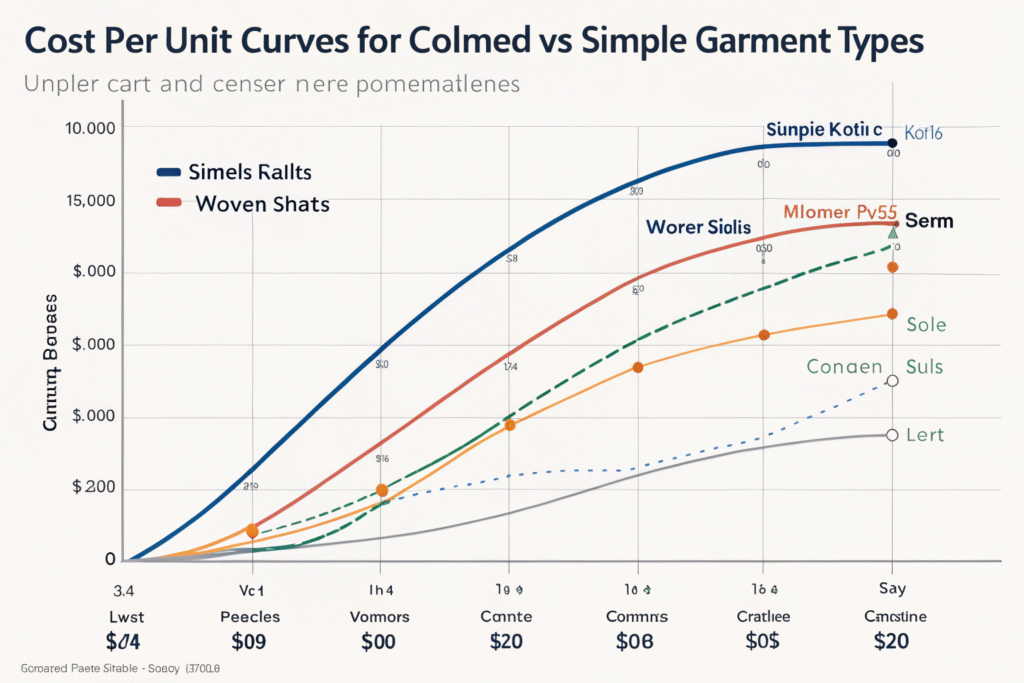
- Basic tees and simple garments show cost benefits at lower volumes
- Complex outerwear and tailored items require higher volumes for meaningful savings
- Items with extensive trims or embellishments have more component-based volume discounts
- Technical performance wear often has higher minimum efficient scales
A technical outerwear manufacturer needed 3,000 units to achieve meaningful cost reduction due to their complex construction, while a basic knitwear brand saw significant savings at just 1,000 units. This product-specific volume optimization knowledge is crucial for accurate planning.
What Are The Hidden Costs of Very Large Production Runs?
While large volumes typically reduce per-unit costs, they can introduce hidden expenses and risks that may offset some of the apparent savings. Understanding these potential drawbacks helps you evaluate the true cost of high-volume production.
The law of diminishing returns applies to manufacturing scale, and beyond certain points, additional volume may yield minimal cost benefits while increasing other risks.
What inventory and cash flow challenges emerge?
Large production quantities create significant business challenges:
- Substantial upfront investment in raw materials and production
- Storage costs for finished goods inventory
- Inventory management complexity and associated overhead
- Risk of obsolescence if products don't sell as projected
A sportswear brand learned this lesson when their 20,000-unit order achieved excellent per-unit pricing but tied up $380,000 in inventory for nine months, creating cash flow constraints that limited their marketing budget. The inventory management costs substantially offset their production savings.
How does quality control complexity increase at scale?
Maintaining consistent quality becomes more challenging with large runs:
- Higher potential defect counts even with the same defect rate
- More difficult problem identification and resolution across large batches
- Increased communication challenges across larger production teams
- Greater impact of any material or process issues
When a fast-fashion brand produced 25,000 units of a popular dress, a minor fabric flaw affected the entire production run, resulting in $45,000 in markdowns. This demonstrates why quality control at scale requires different approaches than smaller production.
How Can You Determine Your Optimal Production Volume?
Finding the right balance between cost efficiency and business risk requires careful analysis of multiple factors beyond simple per-unit pricing. Your optimal production volume considers your sales capacity, financial resources, and market position.
The most cost-effective quantity isn't always the largest possible order—it's the one that maximizes your overall business profitability and sustainability.

What factors should influence your volume decision?
Key considerations for determining optimal order quantity:
- Sales velocity data from previous seasons or similar products
- Storage capacity and associated costs
- Cash flow availability for production and inventory investment
- Market trend stability and product lifecycle expectations
- Reorder flexibility and production lead times
A sustainable apparel brand uses a sophisticated model that balances their 18% cost savings at 3,000 units against their storage costs and cash flow requirements, typically ordering 1,800-2,200 units as their sweet spot. This economic order quantity approach optimizes their total business efficiency.
How can you test volumes without overcommitting?
Strategic approaches to volume testing include:
- Phased production with initial smaller runs followed by reorders
- Pre-order programs to gauge demand before full production
- Multi-style collections with shared materials across different products
- Fabric banking where materials are purchased in volume but cut in smaller batches
A direct-to-consumer brand successfully uses pre-orders to determine their production quantities, reducing their inventory risk while still achieving volume pricing by combining multiple styles in single production runs. This strategic volume planning approach has increased their profitability by 27%.
What Negotiation Strategies Work Best at Different Volumes?
Your negotiating power with manufacturers changes significantly at different volume thresholds. Understanding what leverage you have at each production level helps you secure better terms and pricing.
Effective negotiation requires understanding what matters most to manufacturers at different production scales and aligning your requests with their operational priorities.

How should you approach negotiations at medium volumes (1,000-5,000 units)?
At medium production levels, focus on these negotiable elements:
- Material pricing by leveraging combined volume across multiple styles
- Payment terms that improve your cash flow
- Sample and development costs that can be reduced or eliminated
- Production timing and scheduling flexibility
A growing brand successfully negotiates by committing to 2,000 units across three colorways of the same style, achieving volume material pricing while maintaining production flexibility. This supplier negotiation strategy has helped them scale efficiently.
What additional leverage do you have at high volumes (10,000+ units)?
High-volume production enables negotiations around:
- Dedicated production lines and specialized equipment
- Custom material development and exclusive finishes
- Extended payment terms of 60-90 days
- Quality control enhancements and additional inspections
An established retailer uses their 15,000-unit orders to secure 90-day payment terms and dedicated quality control staff, significantly improving their cash flow and reducing quality issues. Their high-volume manufacturing partnership delivers value beyond simple per-unit cost reduction.
Conclusion
Order volume dramatically impacts your per-unit garment costs, but the relationship is nuanced and requires strategic analysis. While increasing quantity typically reduces costs, the most significant savings occur at moderate volumes, with diminishing returns at very high production levels. The optimal order quantity balances cost efficiency with inventory risk, cash flow requirements, and sales capacity.
Smart brands don't simply pursue the lowest possible per-unit cost—they identify the production volume that maximizes their overall business profitability and sustainability. If you're evaluating production volumes and want to determine your optimal order quantity, Shanghai Fumao provides detailed cost analysis at different volume levels to help you make informed decisions. Contact our Business Director, Elaine, at elaine@fumaoclothing.com to analyze how different order quantities will impact your specific production costs and business objectives.