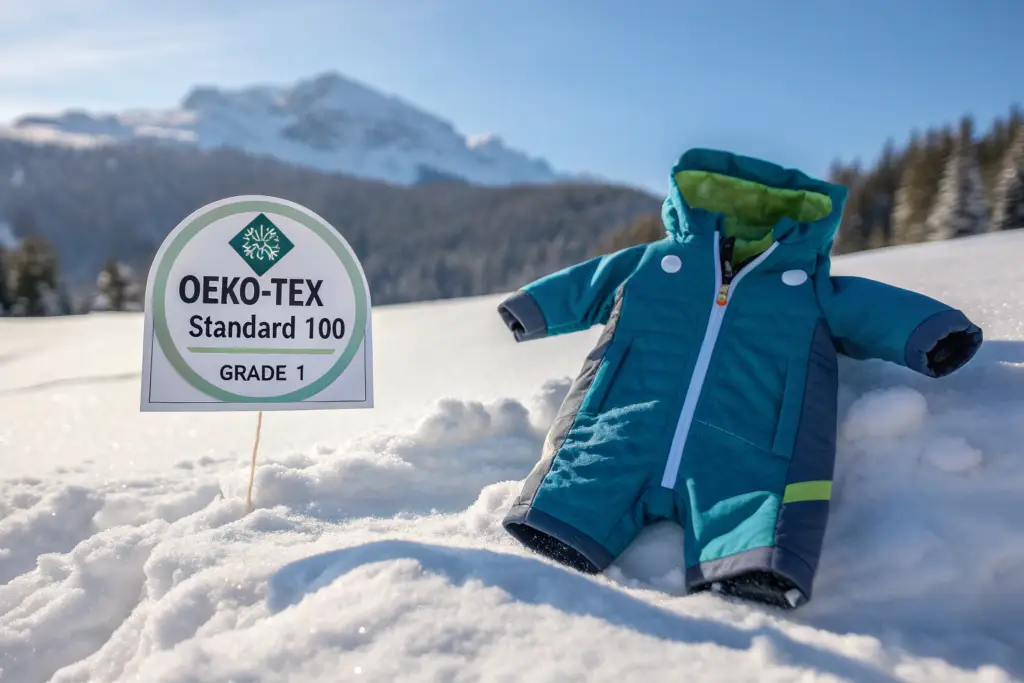
Sourcing technical ski wear involves high-stakes decisions. It's about performance, safety, and trust. A critical factor often overlooked by brands in their rush to market is the chemical safety of the fabrics next to a child's skin or an adult's during intense activity. This is where OEKO-TEX® certification, especially the stringent Class 1 standard, shifts from a nice-to-have to a non-negotiable pillar for a brand built to last.
OEKO-TEX® Grade 1 Certification future-proofs your ski brand by preemptively addressing the most stringent global consumer safety demands, building unshakable brand trust in a competitive market, and ensuring compliance with evolving international regulations, thereby protecting your brand from costly recalls and reputational damage. In today's market, consumers, especially parents investing in high-performance gear for their families, actively research product safety. They are not just buying a jacket; they are buying peace of mind. By integrating OEKO-TEX® Class 1 from the fabric stage, you are not merely making a product; you are making a promise that resonates deeply and builds loyalty.
At our company, Shanghai Fumao, we have seen this shift firsthand. Last year, a Colorado-based startup ski brand approached us with a clear vision: to create a premium children's ski suit line that would be their flagship product. Their primary concern wasn't just cost or style, but absolute, verifiable safety for sensitive skin. We guided them through the entire process, from selecting OEKO-TEX® Class 1 certified fabrics to ensuring every component, down to the threads and zippers, complied with the standard. The result was a product line that launched with a powerful marketing story, saw zero quality complaints related to skin irritation, and established the brand as a trusted name in family ski wear within its first season. This experience cemented our belief that true quality is invisible—it’s the safety you can't see but must be able to trust.
What is OEKO-TEX® Standard 100 and Why is Class 1 Unique?
Many brands know about OEKO-TEX® in passing but miss the crucial distinctions between its classes. Understanding this hierarchy is key to making an informed sourcing decision that aligns with your brand's price point and safety promises.
OEKO-TEX® Standard 100 is a globally uniform testing and certification system for textile raw materials, intermediate and end products at all stages of production. Its uniqueness lies in its product class system, with Class 1 representing the strictest human-ecological requirements for articles intended for babies and toddlers up to 36 months. The standard tests for over 100 harmful substances, including regulated ones like formaldehyde and azo dyes, as well as substances that are harmful to health but not yet legally regulated, such as pesticide residues and allergy-inducing colorants. The key differentiator is the product class:
- Class 1 (Products for Babies and Toddlers): Most stringent limits.
- Class 2 (Products with Direct Skin Contact): e.g., underwear, bedding.
- Class 3 (Products without Direct Skin Contact): e.g., jackets, linings.
- Class 4 (Decoration Materials): e.g., curtains, tablecloths.
For ski wear, this is critical. A typical adult ski jacket might only need Class 3 certification for its outer shell. However, the inner lining, which has direct and prolonged skin contact during high-exertion activity, should arguably meet Class 2 standards. If you are producing children's ski wear or base layers for any age, specifying Class 1 for all components is the ultimate demonstration of due diligence. It future-proofs your product against the most sensitive user and the most cautious regulator.
How Do OEKO-TEX® Testing Parameters Directly Impact Ski Wear Performance?
The certification isn't just about safety in a sterile lab; it directly correlates to real-world performance and user comfort in harsh mountain environments. The prohibition of certain substances ensures the fabric's integrity and the wearer's well-being under stress.
Consider phthalates, often used as softeners in plastics. They are restricted under OEKO-TEX®. In ski wear, phthalates might be found in printed designs or certain PVC components. During intense activity and over time, these substances can migrate to the surface. Besides health concerns, they can degrade the waterproof membrane of a garment, reducing its durability and effectiveness in keeping the wearer dry. Similarly, the strict limits on heavy metals like cadmium or lead, which could be used in dyes or coatings, prevent these toxins from being absorbed through the skin during prolonged wear or from leaching into the environment when the garment is eventually washed. For a ski brand, this means your product maintains its technical performance longer and aligns with the eco-conscious values of the outdoor community, who are deeply connected to preserving the natural environments they play in.
What Are the Common Misconceptions About Sourcing OEKO-TEX® Certified Fabrics?
A major hurdle for brands is misinformation about cost and process. Some believe OEKO-TEX® Class 1 fabric is prohibitively expensive or that certification is a paperwork formality handled at the end. This is a risky oversight.
The reality is more nuanced. Yes, certified fabrics carry a premium, but it is often marginal at the scale of a production run and is a direct investment in risk mitigation. The real cost lies in not having it. A recall or a single negative review about skin irritation can dwarf the initial fabric savings. Furthermore, certification is not a one-time stamp. It requires an integrated system. At Shanghai Fumao, we learned this through a challenging experience. A client provided their own fabric, claiming it was "OEKO-TEX® ready," but did not have the proper chain of custody documentation. We insisted on a third-party audit before production. The test revealed unacceptable levels of a surfactant not on the client's radar. This delayed the order by three weeks for sourcing new fabric, but it saved the client from a potential batch rejection and reputational disaster. The lesson? True certification requires a partner who understands the entire supply chain transparency, not just a factory that sews. It's about proactive quality control, not reactive inspection.
How Does Class 1 Certification Build Unshakeable Brand Trust and Marketing Edge?
In the crowded ski apparel market, technical specs often reach parity. The true differentiation moves from "what it does" to "what it means." Trust becomes your most valuable commodity, and it is built on transparent, verifiable actions.
Class 1 certification provides a concrete, third-party validated story that transcends technical jargon. It communicates care, responsibility, and premium quality directly to the end-consumer in a language they understand and seek out. You are no longer just selling a waterproof jacket; you are selling a garment safe enough for a baby's skin, engineered for an adult's adventure. This is a powerful narrative for marketing. It allows your brand to confidently use labels and marketing claims like "confidence in textiles" and "tested for harmful substances." For a 2023 winter line we developed for an eco-focused brand, we integrated the OEKO-TEX® label and certification number on the care label. The brand built their entire launch campaign around "Clean Performance," highlighting the certification. Their customer surveys indicated that over 60% of purchasers cited the OEKO-TEX® certification as a key factor in their decision, allowing them to command a 15% price premium over similar uncertified competitors.
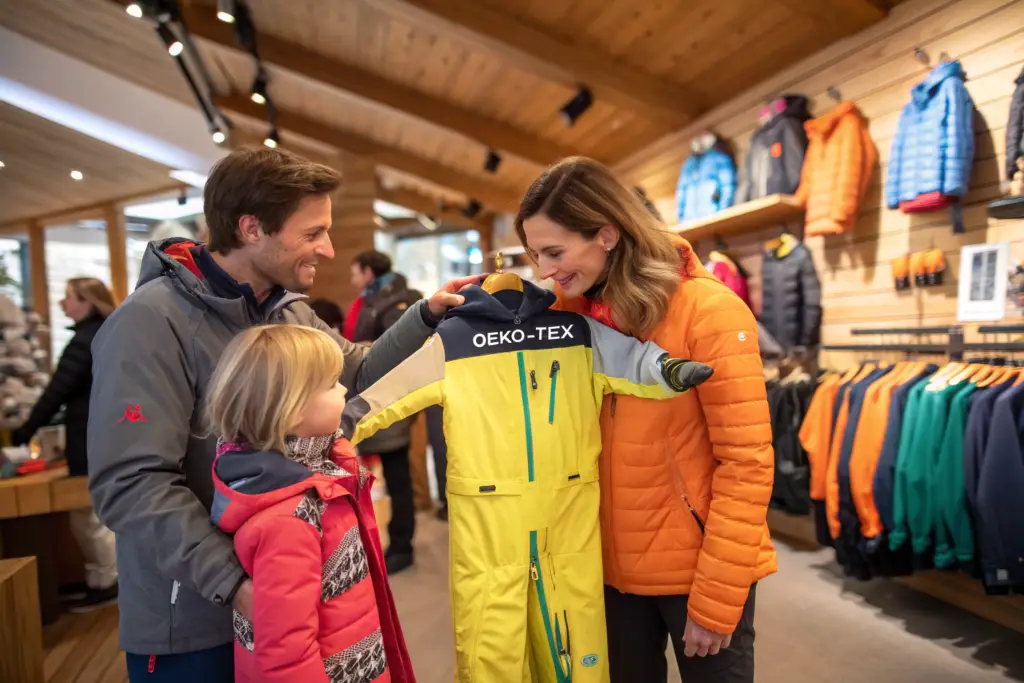
Can a Safety Standard Actually Drive Sales and Customer Loyalty?
Absolutely. The modern consumer, especially in the premium outdoor sector, is an investigator. They read labels, check websites, and look for independent validation. A certification like OEKO-TEX® Class 1 serves as a trusted shortcut in their decision-making process.
It reduces perceived risk. When faced with two similarly priced and styled ski jackets, the one with the independent safety credential will win, particularly with parents or individuals with sensitive skin. This transforms a one-time purchase into the beginning of loyalty. A customer who trusts that your brand prioritizes their well-being on a fundamental level is more likely to return for other products and become a brand advocate. This loyalty is a core component of brand equity. It's an asset that future-proofs your business against market fluctuations and new competitors. It’s not just about avoiding negative press; it’s about actively generating positive, trust-based engagement.
How Do You Communicate This Value in Your Brand Story Effectively?
The certification must be woven into your brand's narrative authentically, not just tacked on as a bullet point. It should be part of your "why."
Start with your product pages. Don't just list "OEKO-TEX® Certified." Explain what it means for the wearer: "Every layer of this jacket, from the outer shell to the inner mesh, is certified to the OEKO-TEX® Class 1 standard—the world's strictest for skin safety. This means it's free from over 100 harmful substances, so you can focus on the mountain, not on what's next to your skin." Use blog content to educate. Create comparison guides or explainers about fabric safety. Highlight this commitment in your "About Us" or "Our Ethics" page. Transparency about your sourcing philosophy builds a deeper connection. For instance, you can share insights into your manufacturing partnership, showing how standards are enforced from the ground up. At Shanghai Fumao, we provide our brand partners with detailed documentation and even visual content from our audit processes to help them tell this story credibly.
What Are the Logistical and Compliance Advantages for Your Supply Chain?
Beyond marketing, OEKO-TEX® Class 1 certification delivers concrete operational benefits. It simplifies compliance, de-risks your supply chain, and streamlines the import process, especially into strict markets like the U.S. and E.U.
Adopting OEKO-TEX® Class 1 as your baseline standard effectively future-proofs your products against a patchwork of evolving international regulations, such as REACH in the European Union or CPSIA in the United States. Because OEKO-TEX® standards are often updated ahead of legislation, your certified products are pre-compliant. This is a huge logistical advantage. It prevents last-minute, costly reformulations or failed border inspections. For example, if a new substance is added to the REACH Restricted Substances List, OEKO-TEX® likely already has it in its testing catalogue. Your certified supply chain is already aligned. This proactive approach prevents shipment delays at customs, which is a common pain point for brands importing from Asia. One of our long-term clients, a medium-sized ski apparel distributor, standardized all their orders with us on OEKO-TEX® Class 2 or higher three years ago. They have reported a consistent 100% clearance rate for their shipments into the Port of Los Angeles, while competitors using uncertified fabrics have faced holds and costly laboratory testing requests from Customs and Border Protection.
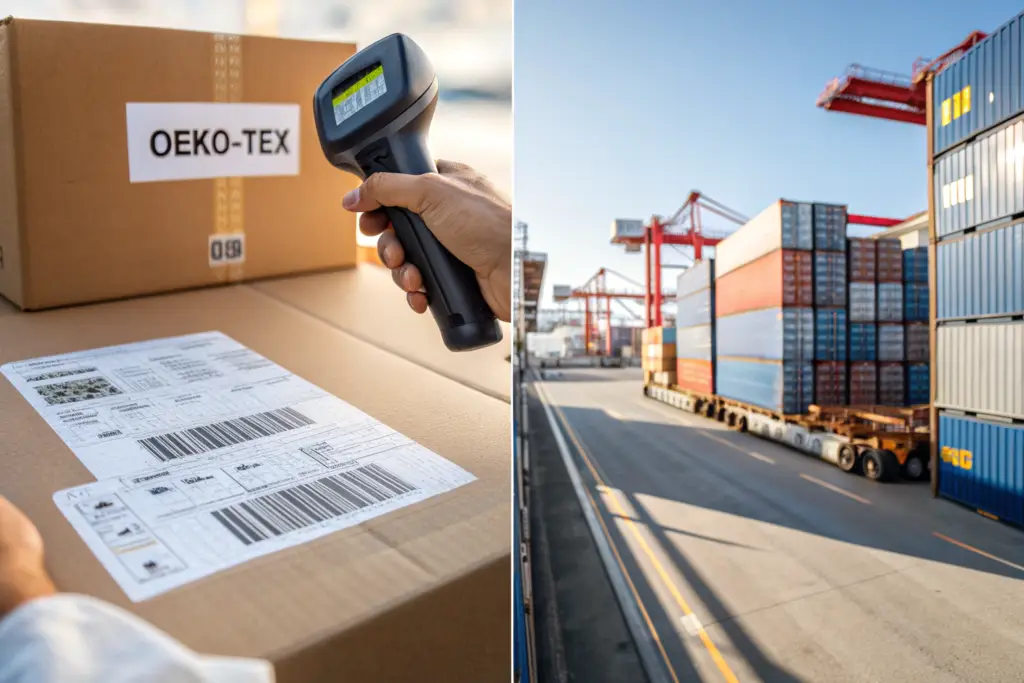
How Does Certification Mitigate Risk of Delays and Costly Recalls?
The financial and operational impact of a delayed shipment or, worse, a product recall can be catastrophic for a seasonal business like ski wear. Missing the key selling window of November to January can liquidate a year's profit.
OEKO-TEX® certification acts as a systemic risk management tool. By requiring certified materials from your manufacturer, you transfer part of the compliance burden upstream to your supplier and their fabric mills. They are responsible for ensuring the materials meet the standard. This is backed by the requirement for factory audits and sample testing. It creates a chain of accountability. If a problem is found later, the source can be traced and isolated more efficiently than with an uncertified, opaque supply chain. This structure directly addresses the common importer pain point of suppliers "occasionally falsifying certificates." With OEKO-TEX®, you can verify a certificate's authenticity via the OEKO-TEX® database using the unique license number. This verification capability is a powerful tool for buyers to ensure they are getting what they pay for.
What Should You Look for in a Manufacturing Partner Regarding Certification?
Not all factories that offer "OEKO-TEX® production" are equal. Your due diligence must go deeper.
| Key Partner Requirement | Why It Matters | Red Flag to Avoid |
|---|---|---|
| In-House Expertise | The factory should have a dedicated quality control manager who understands the standard's specifics, not just a general QA person. | The sales rep cannot explain the difference between Class 1 and Class 4. |
| Chain of Custody Documentation | They must provide valid OEKO-TEX® certificates for every component (fabric, thread, zipper, insulation) from their suppliers. | They say "the fabric is certified" but cannot produce the actual certificate with a valid license number. |
| Integration with QC Processes | The certification requirements should be integrated into their internal quality control checklist at each production stage. | Certification is treated as a final inspection step only, not a process. |
| Transparency and Verification | They should encourage you to verify their and their suppliers' certificates and be open to audit processes. | They are defensive or hesitant about sharing detailed supply chain information. |
Is the Investment in OEKO-TEX® Class 1 Truly Worth It for a Growing Brand?
The upfront cost question is inevitable, especially for brands watching every dollar. A purely cost-accounting view might see it as an expense. A strategic, brand-building view sees it as an investment with a measurable return.
For a growing ski brand aiming to establish a reputable, sustainable, and trusted presence, the investment in OEKO-TEX® Class 1 is not only worth it but can be a critical accelerant. It mitigates catastrophic risks, commands higher margins, and builds the brand equity necessary for long-term survival and saleability. Consider the total cost of ownership. The minor increase in cost per unit (often just a few percentage points) buys you insurance against a recall that could cost hundreds of thousands, marketing campaigns that resonate on safety and quality, and smoother logistics. More importantly, it future-proofs your brand's value. Should you ever seek investment or look to sell the company, a verifiable, ethical, and compliant supply chain backed by internationally recognized certifications is a tangible asset that significantly increases valuation. It shows sophisticated, responsible management.
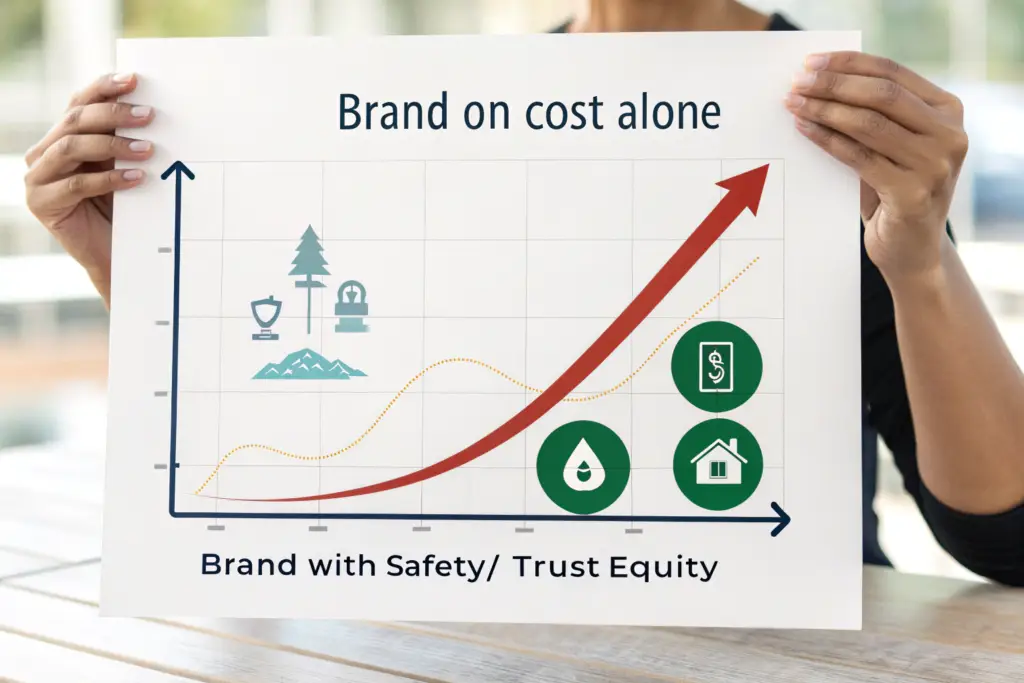
How Can You Calculate the Real ROI of This Certification?
Move beyond fabric cost. Build a simple model that accounts for:
- Risk Mitigation Value: Estimate the potential cost of a single product recall (logistics, replacement, PR, lost sales). Weigh this against the annual premium for certified fabrics.
- Margin Enhancement: Survey your target market. Can you attach a 5-10% price premium due to the certified quality? If so, calculate the additional revenue per unit and per collection.
- Efficiency Savings: Factor in reduced likelihood of customs delays, which can incur demurrage fees and miss sales seasons. Also, consider the internal administrative time saved by relying on a unified standard instead of monitoring multiple, changing regulations.
For a small brand, starting with a flagship product line (like children's wear or premium base layers) is a smart strategy. This limits the initial investment while allowing you to test the market response and build your story around your safest product.
What's the First Step to Implement This in Your Next Order?
The journey begins with a conversation with your manufacturing partner. You must shift the dialogue from just price and MOQ to standards and verification.
Be clear and upfront: "For our next order, we require all materials to be OEKO-TEX® Class 1 certified. Please provide a detailed cost breakdown that includes this and share the valid certificates for all proposed components from your suppliers." Observe their response. A partner like Shanghai Fumao, which is built around this level of integrated quality service, will have a clear process and supportive documentation ready. A factory only focused on cutting costs may push back or give vague assurances. This initial conversation itself is a powerful filter, helping you identify a true long-term partner invested in your brand's future, not just your next order.
Conclusion
In the high-performance world of ski apparel, where technology and nature meet, the foundation of a great brand is trust. OEKO-TEX® Grade 1 Certification is one of the most robust tools available to build that trust from the inside out. It transcends marketing to become a core operational philosophy that safeguards your customers, streamlines your supply chain, elevates your brand narrative, and protects your business from the volatile risks of non-compliance. It is a clear signal to the market that your brand is built for the long run, prioritizing enduring value over short-term cost savings.
Future-proofing is not about predicting every trend; it's about building a resilient, responsible, and credible foundation that can adapt and thrive. Choosing to manufacture with partners who embody this principle is the most important sourcing decision you can make.
If you are ready to build your ski brand on a foundation of verified safety and quality, let's talk. At Shanghai Fumao, we specialize in guiding apparel brands through the process of developing and manufacturing premium, certified technical wear. Contact our Business Director Elaine to discuss how we can help you bring your vision to market with confidence. Reach her at: elaine@fumaoclothing.com.