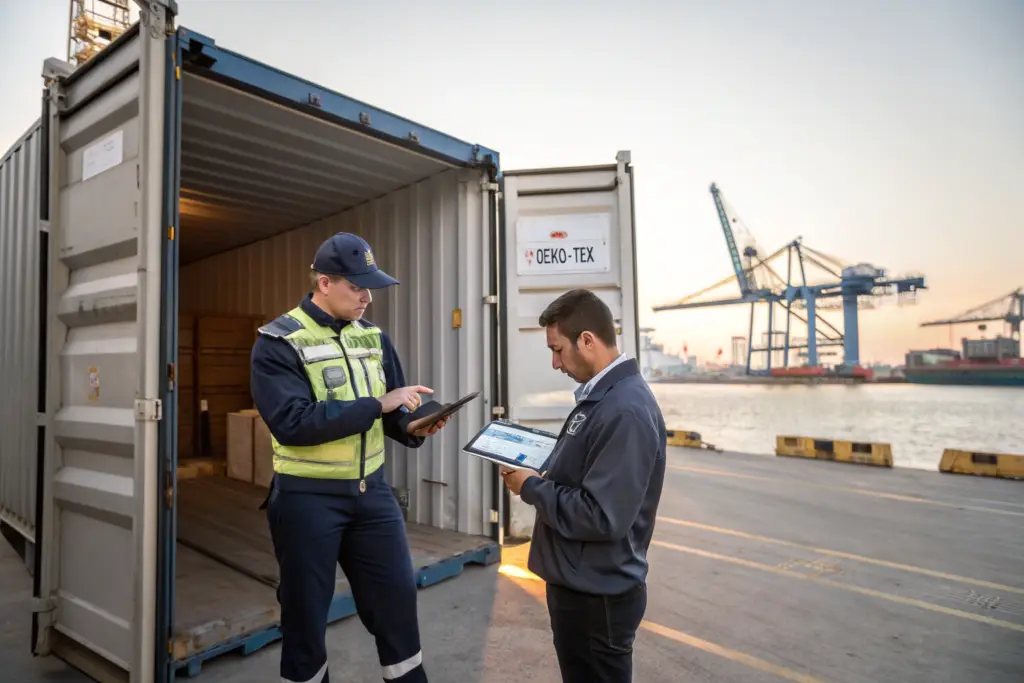
As the owner of Shanghai Fumao, I've seen countless shipments get delayed at U.S. ports. Last year, one of our distributor partners in Texas faced a 15-day hold on a container of kids' hoodies. The reason? Customs requested "proof of safety compliance," but their previous supplier only had scattered, non-standard lab reports. It took them days to compile documents, missing their planned store launch. This is where OEKO-TEX changes the game completely.
OEKO-TEX certification simplifies your import logistics by providing a single, globally recognized document that streamlines customs clearance, reduces inspection risks, and replaces multiple inconsistent test reports. It acts as a universal "passport" for your textile goods, cutting through bureaucratic delays and providing clear, verifiable proof of product safety to authorities.
Think of it this way: without a standardized certificate, every shipment is a potential argument. With it, you have a pre-negotiated agreement with border agencies about what "safe" means. For importers managing tight calendars, this isn't just convenient—it's critical for protecting your profit margins and market opportunities.
How Does OEKO-TEX Speed Up Customs Clearance?
Customs agencies worldwide are trained to recognize and trust the OEKO-TEX label. When your shipping documents include a valid certificate number, it gives inspectors immediate, verifiable proof that the products meet stringent international safety standards. We ship DDP (Delivered Duty Paid) to North America every week, and we include the OEKO-TEX certificate details in the commercial invoice and packing list. This proactive documentation has consistently resulted in faster green-lane clearance for our clients.
OEKO-TEX speeds up customs clearance by offering a pre-verified, digital checkpoint. Officers can quickly validate the certificate in their system or via the public OEKO-TEX database, eliminating the need for time-consuming manual reviews of complex technical files or subjective safety assessments. It translates product safety into a simple, administrative check.
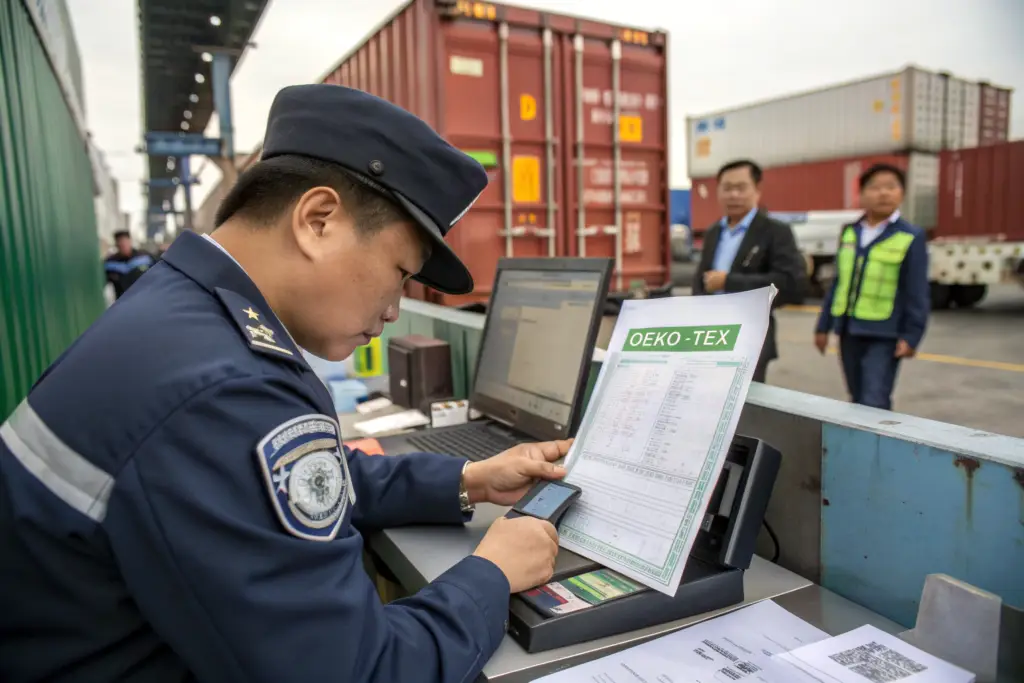
They need unambiguous proof that the goods adhere to the regulations of the importing country. For the U.S., this includes the Consumer Product Safety Improvement Act (CPSIA). An OEKO-TEX STANDARD 100 certificate, especially for Product Class I (children's items), is often accepted as strong evidence of CPSIA compliance regarding harmful substances. The key data points for customs are the unique certificate number, the certified company that must match the exporter, the product description and class, and the current issue date and validity.
How does it compare to using multiple supplier lab reports?
Using various lab reports from different factories or countries creates confusion. The formats, test standards, and languages differ. An inspector must interpret each one. OEKO-TEX provides a uniform standard. Last quarter, a client consolidated their apparel manufacturing from three Asian suppliers to just us at Shanghai Fumao. One major reason was logistics simplicity: they went from managing three different sets of inconsistent safety paperwork to one unified OEKO-TEX certification for their entire order, making their import process predictable.
Can OEKO-TEX Reduce Tariff-Related Inspections and Holds?
While OEKO-TEX doesn't directly affect tariff rates, it significantly lowers the risk of non-tariff barrier holds. Shipments flagged for safety checks are pulled aside for intensive examination, which can take weeks. These holds are often triggered by random sampling or profiling of high-risk product categories—like children's wear. Presenting an OEKO-TEX certificate at entry demonstrates due diligence, potentially reducing the likelihood of being selected for such lengthy physical inspections.
Yes, OEKO-TEX can reduce tariff-related inspections and holds by demonstrating proactive compliance. Customs authorities use risk assessment algorithms; documentation of recognized international certifications lowers the "risk score" of a shipment, making it less likely to be flagged for intensive, time-consuming physical inspections that delay delivery.
What is the real cost of a customs hold?
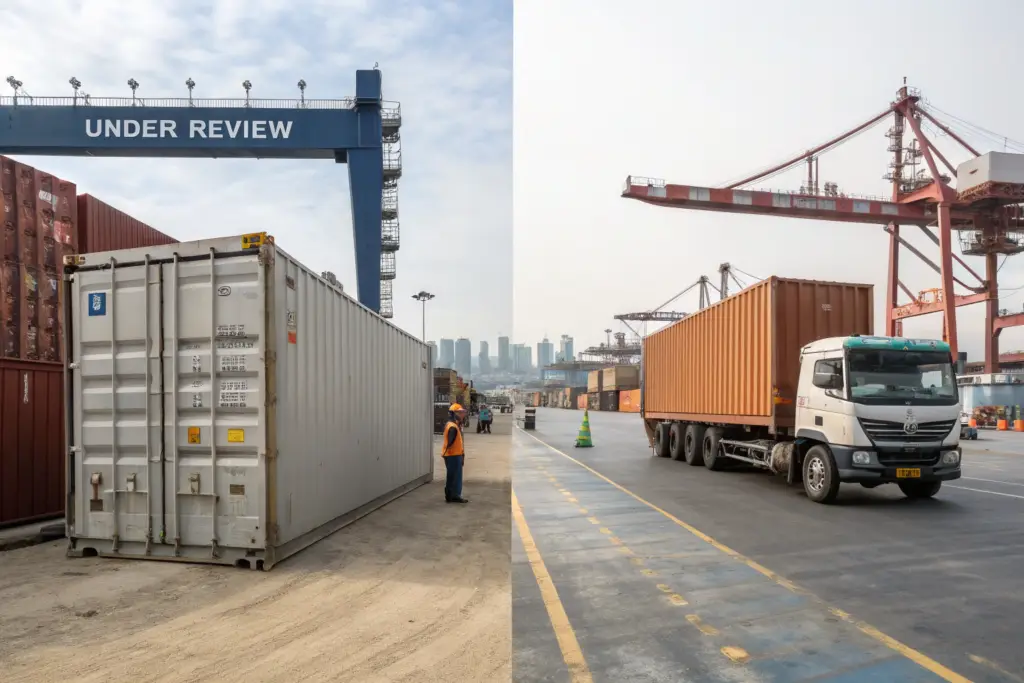
The costs are multi-layered and severe. Demurrage and detention fees from ports add up daily. Storage costs accumulate quickly. The biggest cost is missing a key sales season or retail launch, which can decimate a season's profitability. Additionally, your team spends hours coordinating with customs brokers and suppliers instead of selling. A client in the Midwest shared that a two-week hold on a holiday season order erased their entire profit margin for that line due to these combined costs and subsequent markdowns.
How does it integrate with DDP shipping terms?
For suppliers like us offering DDP shipping, OEKO-TEX is a cornerstone of our service reliability. Under DDP, we are responsible for all costs and risks until the goods arrive at your warehouse. Therefore, preventing delays is in our direct financial interest. We build OEKO-TEX compliance into our full-package production flow. By guaranteeing certified goods, we minimize the risk of unpredictable customs holds, ensuring the smooth, on-time delivery we promise. This makes Shanghai Fumao a lower-risk partner for your supply chain.
How Does It Streamline Supplier Auditing and Documentation Management?
Managing multiple suppliers across different regions is a documentation nightmare. You might get a Chinese GB standard report from one, a SGS test from another, and a self-declaration from a third. Verifying and archiving these is inefficient. OEKO-TEX creates a common benchmark. You can mandate it for all your garment manufacturing partners, turning a qualitative audit ("are your products safe?") into a simple, binary check ("show me your valid OEKO-TEX certificate").
OEKO-TEX streamlines supplier auditing and documentation management by providing a single, universally accepted standard. It eliminates the need to become an expert in every local testing protocol. Buyers can use the OEKO-TEX database to instantly verify any supplier's certificate, making due diligence faster, more transparent, and less prone to fraud.

What should you check during a supplier audit?
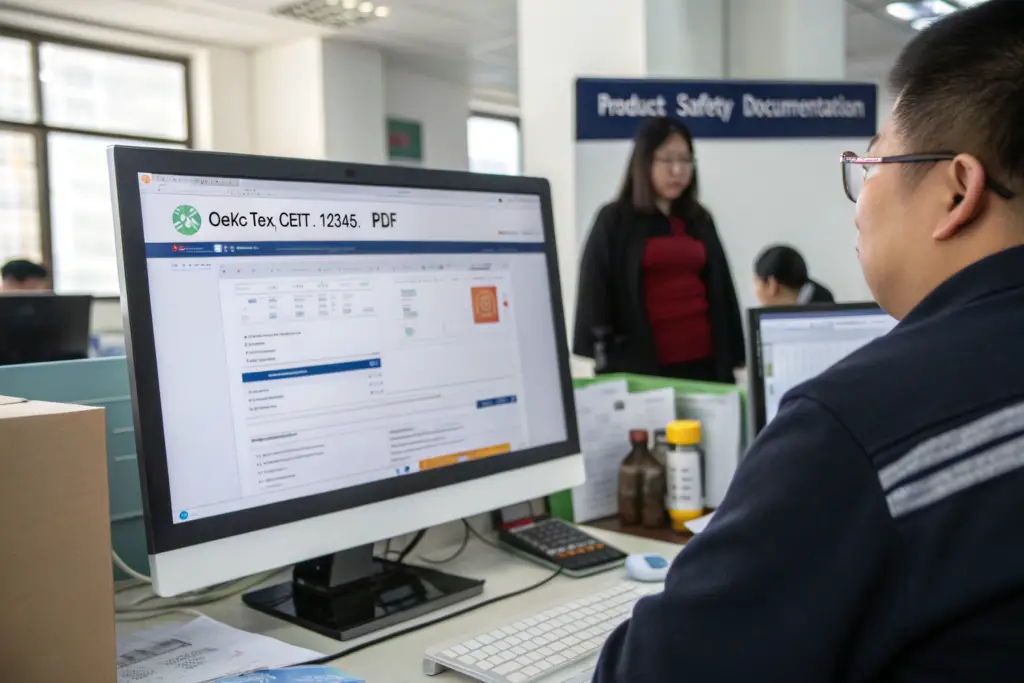
Your audit checklist becomes much simpler. First, request the OEKO-TEX STANDARD 100 PDF for the specific product category you're buying. Then, verify it online using the free OEKO-TEX certificate check. Confirm the holder name matches the factory, the product description is accurate, and it's valid. Finally, check the scope to ensure it covers the finished product, not just raw materials. This process takes 10 minutes per supplier versus days of back-and-forth requesting and translating various test reports.
Can it prevent certificate falsification?
Absolutely. The public database is the ultimate tool against fraud. A few years ago, a potential client sent us a certificate from a competing factory that undercut our price by 30%. The certificate number was valid, but the database showed it was issued to a completely different company for polyester fabric, not for finished children's jackets. This red flag saved the client from a major risk. At Shanghai Fumao, we encourage all buyers to verify our certificates directly, building a foundation of trust for our B2B partnership.
Does OEKO-TEX Align with Major U.S. Retailer Compliance Portals?
Major U.S. retailers like Amazon, Walmart, and Target have stringent vendor compliance requirements, often managed through their own online portals. These portals frequently ask for product safety documentation. An OEKO-TEX certificate is widely recognized and accepted by these systems as valid proof of product safety testing. Uploading one standardized document is far easier than mapping dozens of test parameters from various reports to a retailer's custom form.
Yes, OEKO-TEX aligns perfectly with major U.S. retailer compliance portals. Many retail portals have dedicated fields or accept OEKO-TEX as a preferred form of compliance documentation. It simplifies the vendor onboarding and product listing process, reducing the administrative burden for brands and distributors selling through these large channels.
How does this simplify scaling with retailers?
Once your product is certified, you can use the same OEKO-TEX documentation to apply for listing with multiple retailers. This is a huge efficiency gain when expanding your distribution. For example, a sportswear brand we worked with used the OEKO-TEX certification for their kids' line to efficiently onboard with two major online marketplaces and a regional brick-and-mortar chain, using the same core safety proof each time.
What about other regulations like CA Prop 65?
OEKO-TEX can be a strong component of your compliance strategy for regulations like California's Proposition 65. While not a legal guarantee, the thorough substance testing behind OEKO-TEX helps identify and restrict many Prop 65-listed chemicals. It demonstrates that you have taken scientific steps to assess and mitigate chemical risks, which is a key defense. We advise our partners at Shanghai Fumao to use OEKO-TEX as a foundation, supplemented by specific legal reviews for their target markets.
Conclusion
In the complex world of international apparel manufacturing and import logistics, OEKO-TEX certification is a powerful tool for simplification. It transforms product safety from a potential bottleneck into a smooth, predictable process. By accelerating customs clearance, reducing inspection risks, streamlining supplier management, and aligning with retailer requirements, it saves you critical time, reduces hidden costs, and protects your business from disruptive delays.
Ultimately, in a business where timing is everything, the paperwork should be the easiest part of the journey. Choosing a manufacturing partner that prioritizes and integrates globally recognized certifications like OEKO-TEX into their full-package service is a strategic decision for operational excellence. If you want to simplify your import logistics and focus more on selling than on shipping delays, let's connect. At Shanghai Fumao, we build compliance into our process so you don't have to worry about it. Contact our Business Director, Elaine, at elaine@fumaoclothing.com to discuss how we can make your next shipment your smoothest one yet.