You've found the perfect velour cardigan set design. The fabric feels soft, the style is on-trend for the upcoming season, and you're ready to place a bulk order. You request quotes from several suppliers. Then you notice a significant price difference. One supplier, like Shanghai Fumao, quotes a slightly higher price but prominently features OEKO-TEX certification. Another offers a much lower price with no such certification. As a savvy brand owner, you know every dollar counts, but so does consumer trust and product safety. This price gap can be confusing and frustrating. Is the higher price just a premium for a label, or does it represent a fundamentally different and safer product? Let's break down the real costs and value behind that certification.
OEKO-TEX certification directly influences velour cardigan set pricing by adding costs for rigorous material testing, factory audits, and ongoing compliance. These ensure the final product is free from harmful levels of over 100 regulated substances, such as lead, cadmium, or allergenic dyes. This process protects your brand from liability and meets growing consumer demand for verified safe textiles. The price increase isn't just for a label; it's an investment in risk mitigation, brand reputation, and marketability, especially for sensitive categories like loungewear and kids' wear.
Understanding this price difference is crucial for making an informed sourcing decision. The lower upfront cost from an uncertified supplier might seem attractive, but it can hide significant risks. Let's explore the specific components that build the price of an OEKO-TEX certified velour set, compare it to uncertified options, and examine the long-term financial impact on your business. This will help you see beyond the initial price tag.
What Are the Direct Cost Components of OEKO-TEX Certification?
When a supplier like Shanghai Fumao invests in OEKO-TEX certification for your velour cardigan sets, the price incorporates several concrete, non-negotiable expenses. These are not arbitrary markups but payments to independent third-party institutes for their work.
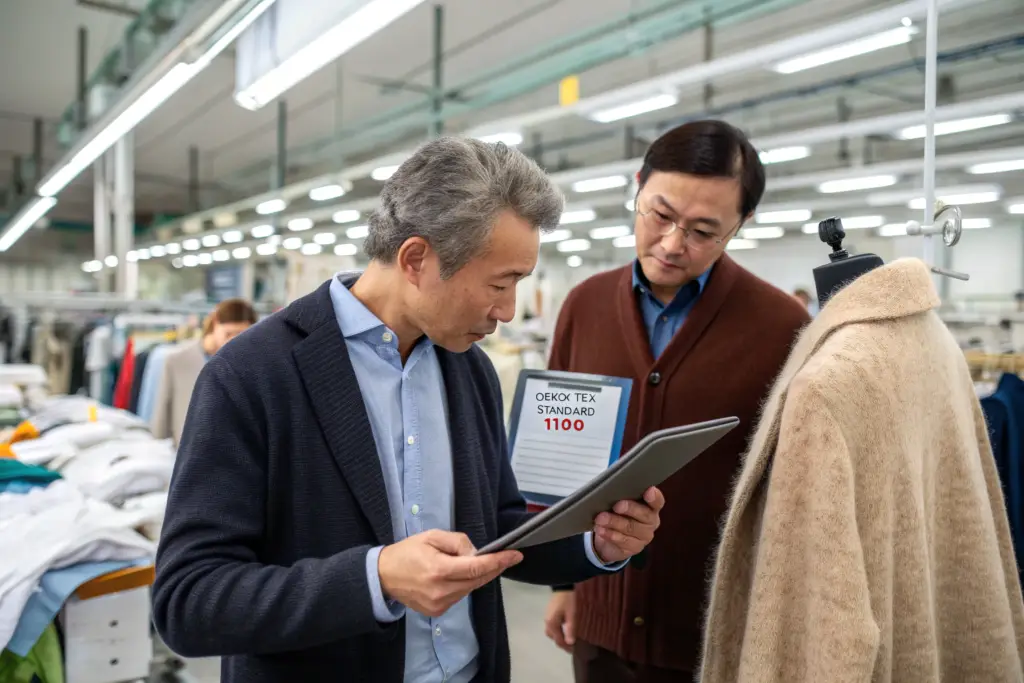
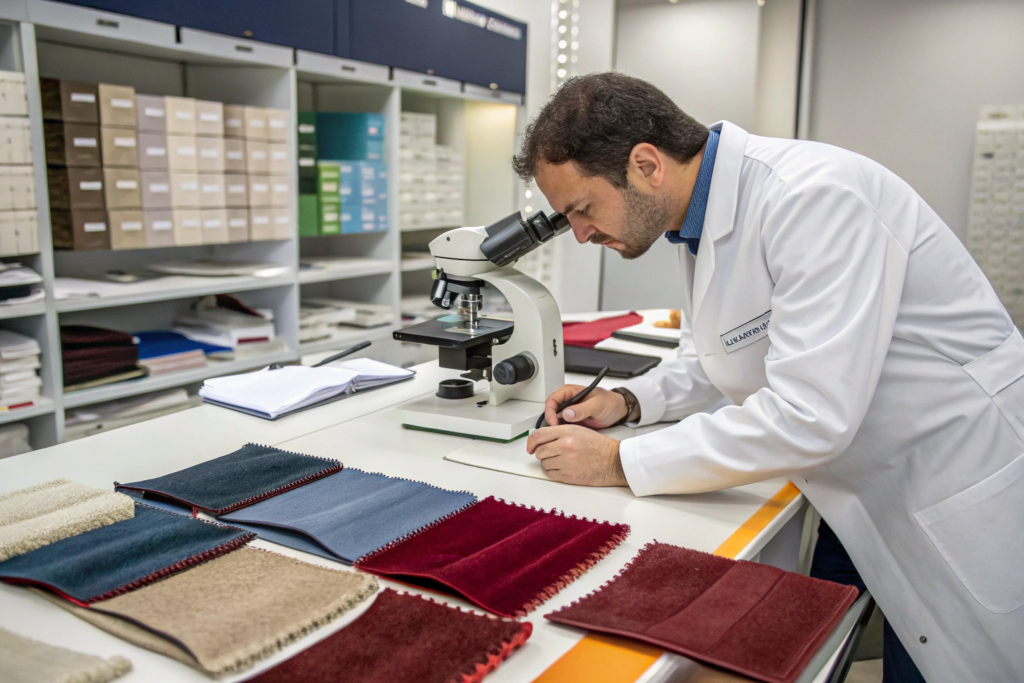
The first major component is the testing fee itself. For a velour set, both the velour fabric and any trims like zippers, drawcords, or prints must be tested. An accredited institute like Hohenstein or TESTEX scientifically analyzes samples for toxic substances. This testing is comprehensive. It checks for things like phthalates in plastics and allergenic disperse dyes that could be in the dyed velour. The cost depends on the number of material components and substance groups tested. A complex set with multiple fabric blends and trims costs more to certify than a simple one.
Another key cost is the factory audit and license fee. Obtaining certification isn't a one-time test. The production facility itself must meet OEKO-TEX criteria for responsible manufacturing processes. Auditors visit the factory to ensure controlled and clean production areas, which prevents cross-contamination. After passing, the manufacturer pays an annual license fee to use the OEKO-TEX label. This ongoing cost is factored into the per-unit price. For example, after we at Shanghai Fumao renewed our factory's OEKO-TEX STeP certification last year, we updated our internal quality management protocols. This strengthened our entire production line for certified activewear and loungewear, including velour sets.
How Does Testing Complexity Affect the Final Price per Unit?
The price impact per unit is not flat. It scales with order volume and product complexity. For a large order of 10,000 velour sets, the fixed costs of testing and licensing are spread thin across many units. This might add only a few cents to each set. For a small, custom order of 500 sets, the same fixed costs are distributed among fewer units, leading to a more noticeable price increase per piece. This is why we always discuss projected order volumes with our clients upfront. It allows us to provide the most accurate cost structure for their specific project, whether it's a small test run or full-scale production.
Furthermore, a basic two-piece velour set (cardigan and pants) is simpler to certify than a set that includes a third piece like a camisole made from a different fabric. Each additional, distinct material component requires separate testing. If you choose to add custom printed labels or specific lace trim, those items also need to be submitted and tested. We learned this in a project for a California-based boutique brand. Their initial design included five different trim elements. By consolidating to two approved, already-certified trim options from our vetted suppliers, we kept their certification costs manageable without compromising the design aesthetic.
Can Certification Actually Reduce Long-Term Production Risks?
Absolutely. While it adds to upfront cost, OEKO-TEX certification acts as a powerful risk mitigation tool. Consider the cost of a failed shipment. If a retailer or customs authority randomly tests your uncertified velour sets and finds prohibited substances, the entire shipment can be rejected, seized, or destroyed. The financial loss is total: lost goods, lost shipping fees, and missed selling seasons. The reputational damage can be fatal for a young brand. OEKO-TEX certification provides a globally recognized defense against this. It demonstrates due diligence.
Moreover, working with a certified manufacturer like Shanghai Fumao streamlines your own compliance. Many major U.S. retailers now require evidence of product safety testing. Having OEKO-TEX certification readily available can speed up your onboarding process with these retailers. It turns a potential barrier into a competitive advantage. Last fall, we helped a client win a contract with a mid-tier U.S. department store precisely because we could provide batch-specific OEKO-TEX certificates for their fleece lounge sets, while their competitor could not.
Uncertified vs. OEKO-TEX Certified: A Price Breakdown Analysis
Seeing a side-by-side comparison helps clarify where the money goes. The price difference isn't pure profit for the certified factory; it's allocated to specific, value-adding activities. Let's assume a basic women's velour cardigan set.
| Cost Component | Uncertified Supplier (Hypothetical) | OEKO-TEX Certified Supplier (e.g., Shanghai Fumao) |
|---|---|---|
| Fabric & Materials | Sourced for lowest cost. May use less regulated dyes/chemicals. | Sourced from OEKO-TEX certified mills or pre-tested batches. Higher material cost. |
| Testing & Certification | $0. No independent verification of substance safety. | $X per order (lab fees) + annual license fee (amortized per unit). |
| Production Process | Standard manufacturing. Risk of cross-contamination. | Audited, controlled processes. Separate storage for certified materials. Slightly higher labor/management cost. |
| Quality Control (QC) | Basic finish and stitch QC. | Enhanced QC includes checking for compliance documentation and label accuracy. |
| Risk Premium | High (hidden cost of potential failure). | Low (risk transferred to certification system). |
| Final Unit Price | Lower | Higher, but with verified safety and documentation. |
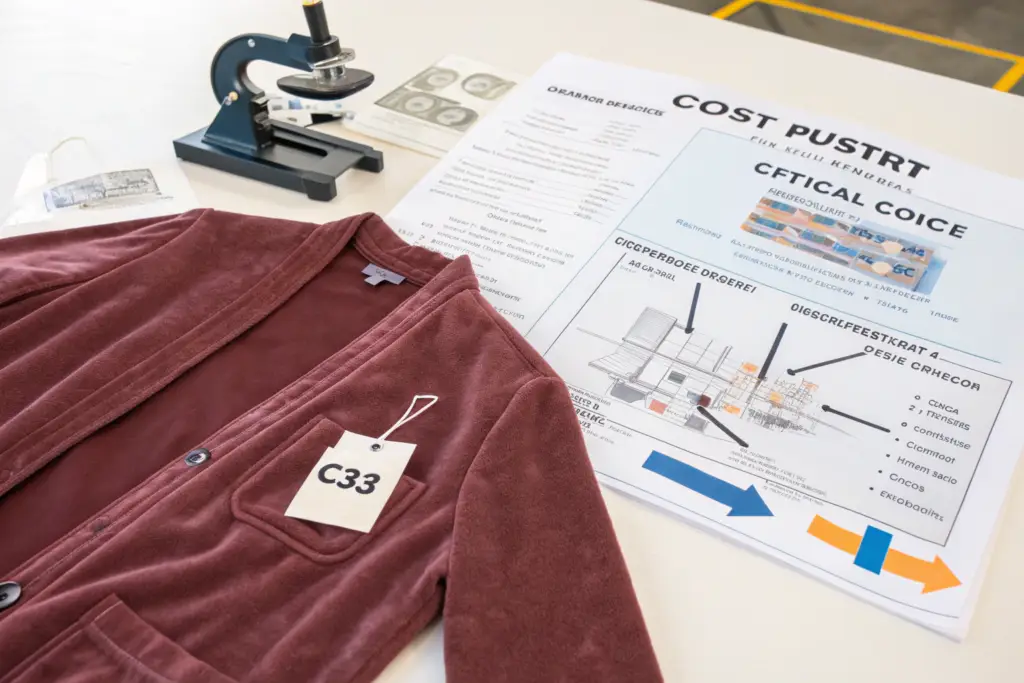
The critical insight is that the uncertified price often excludes the cost of ensuring safety. It's a lower price because it carries a higher, hidden risk. The certified price internalizes these risk management costs. For instance, the cost of using pre-certified yarn from a reputable mill is higher than sourcing untested yarn from an unknown supplier. This directly impacts the feel and durability of the velour, not just its safety.
Where Do Uncertified Suppliers Typically Cut Corners?
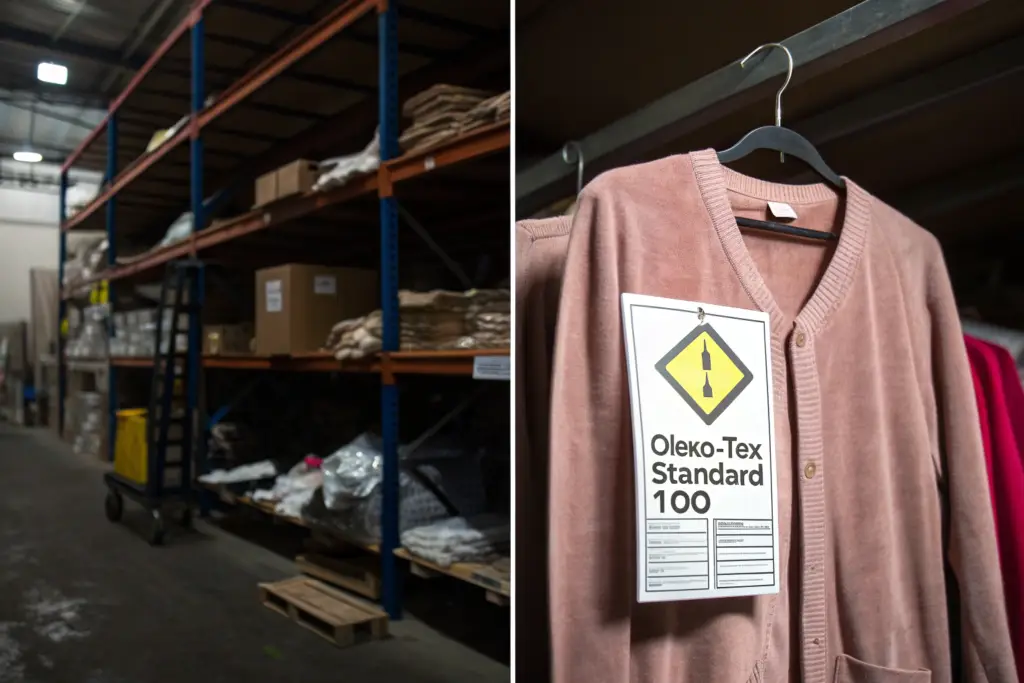
To achieve a rock-bottom price, uncertified suppliers often reduce costs in areas invisible to a standard inspection. The most common area is in the dyeing and finishing processes. Using cheaper, non-compliant dyes or formaldehyde-based resins for wrinkle resistance can significantly cut costs. These chemicals may not affect the initial look or hand-feel of the velour but can cause skin irritation or fail safety tests later. Another area is in the trimming. Inexpensive, uncertified zippers or drawcords might contain heavy metals like nickel or lead above safe limits.
Furthermore, their quality control is often focused solely on visual defects, not chemical compliance. Without a systematic, audited process, there is no guarantee that the fabric used in your order is the same batch that was initially sampled. We encountered this issue when auditing a new fabric mill for our knitwear production a few years ago. Their sample passed our in-house screening, but their bulk shipment paperwork showed a different chemical supplier. Only our strict procurement policy, aligned with OEKO-TEX standards, caught this discrepancy before production began.
Does Certification Guarantee Higher Overall Garment Quality?
Not directly, but it strongly correlates with it. A factory committed to the rigorous, documented process of maintaining OEKO-TEX certification is typically a more disciplined and professionally managed operation overall. Their investment in controlled processes reduces errors. For example, keeping certified fabrics in a separate, clean storage area prevents contamination from dust or unauthorized chemicals. This level of organization spills over into other areas like inventory management and stitch quality control.
However, certification specifically addresses harmful substance content, not physical quality parameters like stitch density, pilling resistance, or colorfastness to washing. That's why at Shanghai Fumao, we pair OEKO-TEX certification with our own stringent physical quality tests. For velour, this includes testing for colorfastness to crocking (rubbing) to ensure the rich color doesn't transfer, and pilling tests to maintain the plush feel after multiple washes. A trustworthy manufacturer will offer both chemical safety and physical durability assurances.
How Does This Pricing Impact Your Brand's Profitability?
Viewing the price premium for OEKO-TEX certification as a cost is a short-term perspective. For brand owners, it's better viewed as a strategic investment that can positively impact profitability through multiple channels: higher retail price potential, reduced liability costs, and stronger customer loyalty.
First, certification enables a higher retail price point. Consumers, especially in markets like North America and Europe, are increasingly willing to pay more for products they trust are safe and ethically produced. Marketing your velour sets as OEKO-TEX certified allows you to command a premium over uncertified competitors. This directly improves your gross margin. It transforms a cost at the manufacturing stage into a revenue-generating feature at the point of sale. You are not just absorbing the cost; you are potentially earning it back and more.
Second, it drastically reduces the risk of catastrophic financial loss. As mentioned, a rejected shipment or a product recall due to safety issues can destroy a brand's finances and reputation. The cost of a recall includes not just replacing the product, but also logistics, public relations, and legal fees. Investing in third-party certification is like buying insurance. It is a predictable, manageable cost that protects against an unpredictable, potentially business-ending disaster. This stability is crucial for long-term profitability planning.
Can You Market OEKO-TEX Certification to Boost Sales?
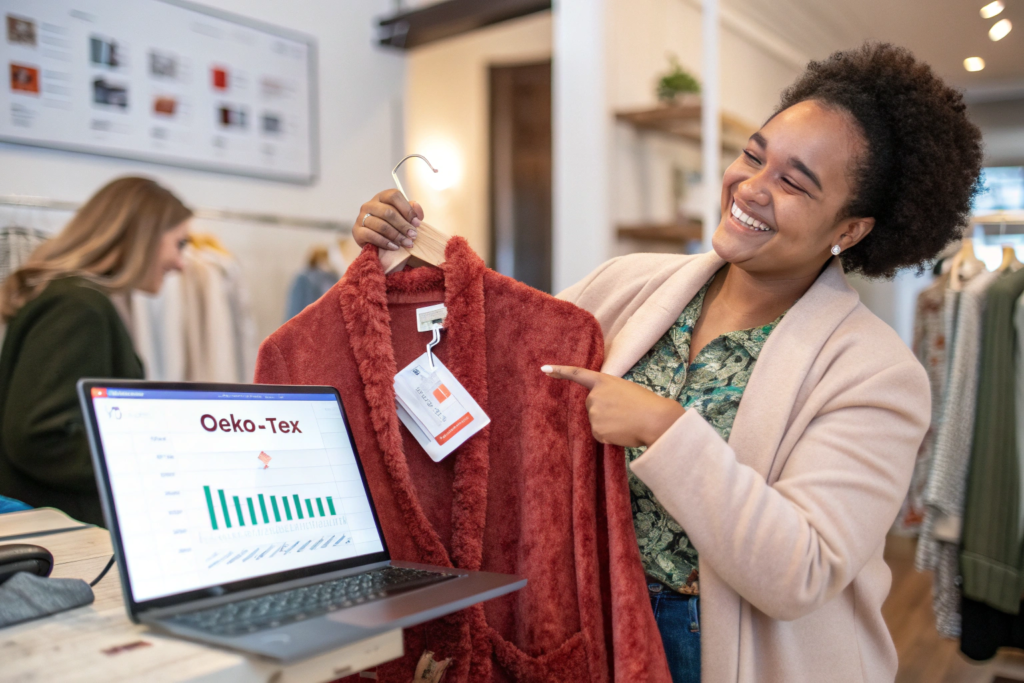
Yes, and effectively. Certification provides a clear, trustworthy message for your marketing. You can communicate concrete benefits like "Safe for Sensitive Skin," "Free from Harmful Substances," or "Independently Tested for Your Peace of Mind." This resonates with parents shopping for kids' wear and with health-conscious adults buying loungewear. Use the official OEKO-TEX label on your hangtags and in your online product images. This visible symbol builds immediate trust at the moment of purchase decision.
In your product descriptions and brand story, explain what OEKO-TEX means. Educate your customer that your higher price reflects real investment in their safety. This builds brand integrity. For example, you can create social media content or blog posts highlighting your commitment to safe manufacturing by partnering with certified factories like Shanghai Fumao. This transparent communication fosters customer loyalty and can justify a higher price point, improving your profit margins on each sale.
What Are the Hidden Costs of Choosing an Uncertified Supplier?
The hidden costs are primarily tied to risk and inefficiency. Without certification, you may need to conduct your own product testing. This is often more expensive per unit for a brand than the factory's bulk certification cost. You also bear the full burden of verifying every component's safety, which requires significant time and expertise.
Furthermore, communication with uncertified suppliers about compliance can be inefficient and fraught with misunderstandings. They may provide falsified or generic test reports, a major pain point for buyers. Verifying these documents takes time and resources. In contrast, working with a certified partner streamlines communication. At Shanghai Fumao, we provide easily verifiable, unique certificate numbers linked to specific production batches. This transparency saves our clients countless hours of back-and-forth and reduces administrative overhead, letting them focus on sales and marketing.
Finding a Reliable OEKO-TEX Certified Velour Manufacturer
Knowing the value of certification is one thing; finding a factory that genuinely integrates it into their process is another. The goal is to partner with a manufacturer where certification is part of a broader culture of quality and reliability, not just a marketing checkbox.
Start by verifying the certification's authenticity. Any legitimate manufacturer will provide their OEKO-TEX certificate number. Use the OEKO-TEX online certificate checker to confirm it's valid, current, and covers the product categories you need (e.g., Article Class I for babies, Class II for skin-contact items like velour loungewear). Check the company name and address match your supplier. This simple step filters out suppliers offering fake documents.
Next, assess their communication and transparency. A reliable certified manufacturer will proactively discuss certification requirements. They will ask about your target market and product end-use to determine the correct Article Class. They will explain their process for sourcing certified materials and maintaining chain of custody. If they are vague or avoid technical questions, consider it a red flag. Efficient, clear communication is a hallmark of a professional partner who understands the standards.
What Questions Should You Ask a Potential Supplier?
Go beyond asking, "Are you certified?" Ask specific, operational questions:
- "Can you provide the OEKO-TEX certificate number for your factory and for the specific velour fabric you propose?"
- "How do you manage and segregate certified fabrics in your warehouse to prevent contamination?"
- "What is your process if a batch of incoming fabric fails your internal substance check?"
- "For a velour set, will all components (thread, zipper, drawcord) be included under one certificate, or will they need separate testing?"
- "Can you handle the full documentation and labeling requirements for DDP shipping to the U.S.?"
Their answers will reveal their depth of knowledge. A factory like Shanghai Fumao, with years of experience in certified production for the U.S. market, will have clear, confident answers and documented procedures for each of these points. For instance, we have a dedicated section in our internal product development workflow that flags certification requirements from the first sample stage.
Why Might a Factory's Experience Outweigh a Slightly Lower Price?
Experience in producing certified goods for your target market is invaluable. An experienced factory has already navigated common pitfalls. They have established relationships with certified fabric mills and trim suppliers, ensuring material availability and stability. They understand the nuances of labeling and documentation required for smooth customs clearance in North America.
A less experienced factory offering a lower price might be learning on your order. Their inexperience could lead to delays if they fail an audit, source the wrong fabric, or make labeling errors that cause shipment holds. The cost of a missed selling season due to a delay often dwarfs any initial price savings. Last year, we took over an order for a client whose previous, cheaper supplier failed a mid-production audit. We had to help expedite re-sourcing of certified fabric and re-plan production. The client saved their season but learned that the lowest price isn't the lowest risk.
Conclusion
The influence of OEKO-TEX certification on velour cardigan set pricing is clear and justified. It represents the real cost of scientific testing, audited production, and ongoing compliance—all dedicated to ensuring product safety and mitigating your brand's risk. While the initial unit price from a certified manufacturer like us may be higher than an uncertified quote, this price reflects transparency and investment in your brand's long-term success. The alternative—a lower price from an uncertified source—often masks hidden risks that can lead to financial loss, reputational damage, and missed opportunities.
Making the sourcing decision ultimately comes down to your brand's values and business strategy. If you are building a brand based on trust, quality, and safety for the end-consumer, partnering with an OEKO-TEX certified manufacturer is a non-negotiable foundation. It allows you to market with confidence, price with justification, and scale your business with significantly reduced operational risk.
Ready to source velour cardigan sets that blend luxury, safety, and marketability? Partner with a manufacturer that builds certification into its core operations. Let us help you navigate the process smoothly. Contact our Business Director, Elaine, at elaine@fumaoclothing.com to discuss your next OEKO-TEX certified apparel project. Visit our website at Shanghai Fumao to learn more about our full-package manufacturing services and commitment to reliable, high-value production for U.S. brands.