As an apparel manufacturer, I've seen countless buyers focus on price and design first. But for products like baby clothes, the smartest buyers always ask about certifications first. This shift in priority marks a true professional who understands the modern market's demands.
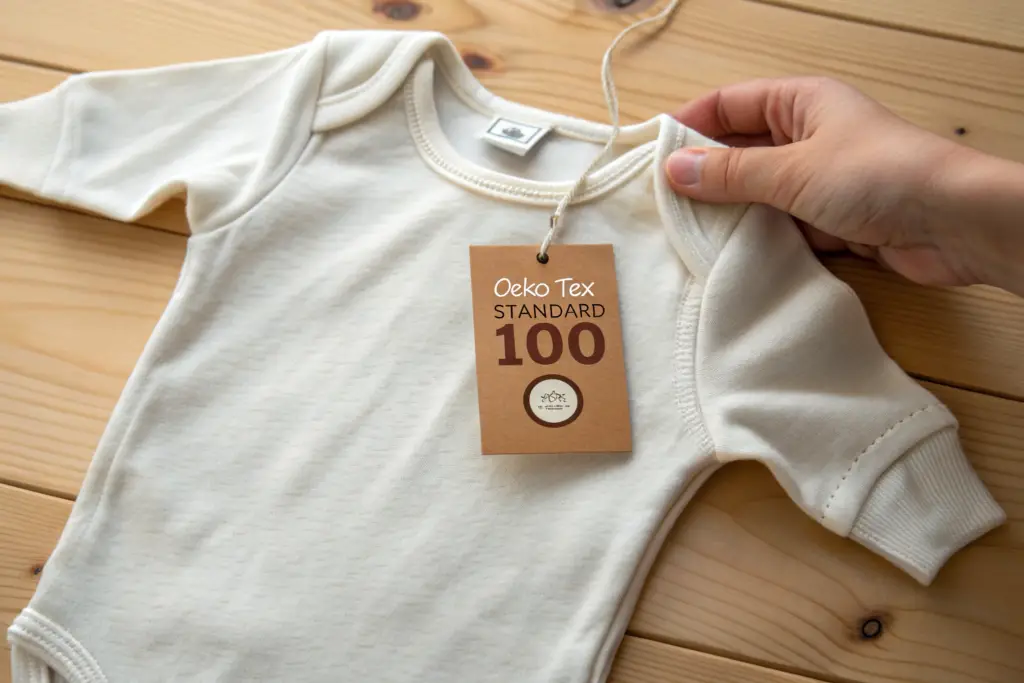
OEKO-TEX certification, particularly the STANDARD 100 label, directly and significantly impacts the quality of a baby boy French terry romper by guaranteeing the absence of harmful substances, which translates to superior safety, enhanced durability, and greater consumer trust. This isn't just a label; it's a comprehensive supply chain commitment that differentiates premium products in a crowded marketplace.
Let's explore why this certification is no longer a luxury but a necessity for brands that prioritize long-term success and customer loyalty.
Why is OEKO-TEX STANDARD 100 Non-Negotiable for Babywear?
You wouldn't compromise on your baby's food, so why compromise on what touches their skin 24/7? For newborn and infant apparel, safety is the foremost quality metric.
For baby boy French terry rompers, the OEKO-TEX STANDARD 100 certification is non-negotiable because it provides a scientific, independent verification that every component of the garment is free from levels of harmful substances deemed risky for a baby's sensitive skin and developing systems. This goes far beyond basic fabric checks, covering every thread, button, and print.

What Specific Substances Does This Certification Test For?
The STANDARD 100 test criteria are extensive and updated annually. It's not a one-time check. For baby products (Article Class I), the limits are the strictest. The tests look for regulated substances like formaldehyde, phthalates (often used in plastics), and heavy metals like lead and cadmium. More importantly, they also screen for many non-regulated but potentially harmful chemicals that responsible brands want to avoid. This includes azo dyes that can release carcinogenic amines and allergenic disperse dyes. Last year, we worked with a children's wear brand from Portland that was deeply concerned about pesticide residues in organic cotton. While their fabric was organically grown, the certification gave them and their customers the assurance that no harmful chemical residues survived the manufacturing process at our facility, Shanghai Fumao.
How Does This Testing Process Work in a Real Factory?
The process is rigorous and embedded into our production. It starts at the sourcing stage. We only work with fabric mills and trim suppliers who can provide compliant materials. For instance, when we produce a batch of French terry rompers, we submit samples of the core fabric, the ribbing, the sewing threads, the elastane in the cuffs, and even the ink used for any care labels to an approved OEKO-TEX laboratory. The entire article is tested. A common pain point we solve is the inconsistency of components. One brand came to us after facing issues where their main fabric passed, but the dyed threads from a sub-supplier failed, causing a full order recall. Our integrated, full-package approach at Shanghai Fumao ensures every element is sourced and verified under one controlled system, preventing such costly disruptions.
Does Certified Fabric Change the Feel and Performance of French Terry?
A major concern for buyers is whether stringent chemical rules make fabric feel stiff or less comfortable. The opposite is often true.
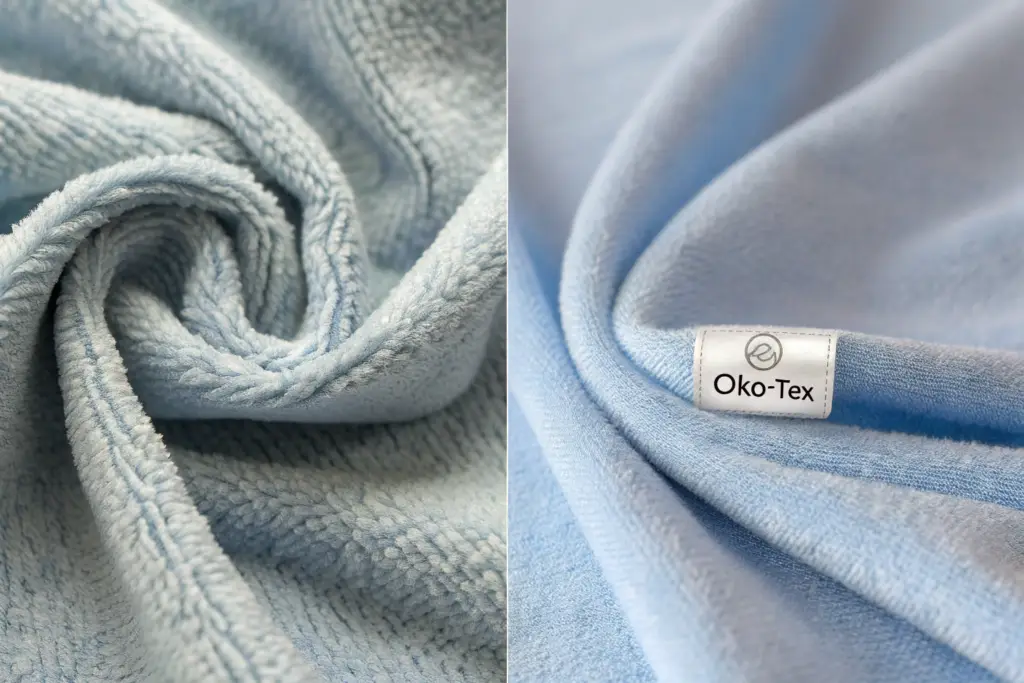
OEKO-TEX certified French terry fabric, when engineered correctly, often results in a softer, more durable, and higher-performing romper because the certification encourages the use of higher-purity, skin-friendly dyes and auxiliaries. It pushes manufacturers to adopt better chemistry from the start.
How Does Certification Lead to a Softer Hand Feel?
The "hand feel" of fabric is dramatically affected by the chemicals used in dyeing and finishing. Harsh surfactants, improper softeners, or residual salts can make fabric feel rough or sticky. OEKO-TEX compliance forces the use of approved, often milder, chemical agents. For example, to achieve bright colors without restricted azo dyes, mills must invest in superior pigment dyes or reactive dyes that bond more cleanly with the cotton fibers. This process, while sometimes more costly, leaves the natural softness of the organic cotton or high-grade cotton intact. In 2022, we developed a custom French terry for a brand focused on ultra-softness. By using OEKO-TEX certified dyes and a special enzyme wash process (also certified), we achieved a hand feel so soft it became their unique selling point, reducing product returns due to "scratchiness" by over 30%.
Does It Affect Color Fastness and Fabric Durability?
This is a critical performance point. There's a misconception that "safer" means less durable. In reality, color fastness—resistance to fading from washing, rubbing, and light—is a key part of the OEKO-TEX test criteria. The certification requires fabrics to meet strict levels for color fastness to perspiration, saliva (crucial for babywear), and washing. To pass, the dyes must properly penetrate and bond with the fiber. This results in colors that last longer. The table below summarizes key performance tests and how certification influences them:
| Performance Aspect | OEKO-TEX Requirement | Impact on Baby Romper Quality |
|---|---|---|
| Color Fastness to Saliva | Mandatory test for Article Class I | Ensures colors won't run if the baby mouths the fabric, a vital safety feature. |
| Dimensional Stability | Assessed during testing | Guarantees the romper won't shrink or distort excessively after washing, maintaining fit. |
| pH Value of Aqueous Extract | Must be skin-friendly (slightly acidic to neutral) | Prevents skin irritation by ensuring no alkaline or acidic residues remain in the fabric. |
| Tear Strength | Not directly mandated, but linked to fabric quality | Mills aiming for certification often use better base yarns, indirectly improving durability. |
How Does Certification Mitigate Supply Chain and Delivery Risks?
For an import manager, a delayed shipment due to a failed quality audit is a nightmare. OEKO-TEX provides a standardized framework that de-risks the supply chain.
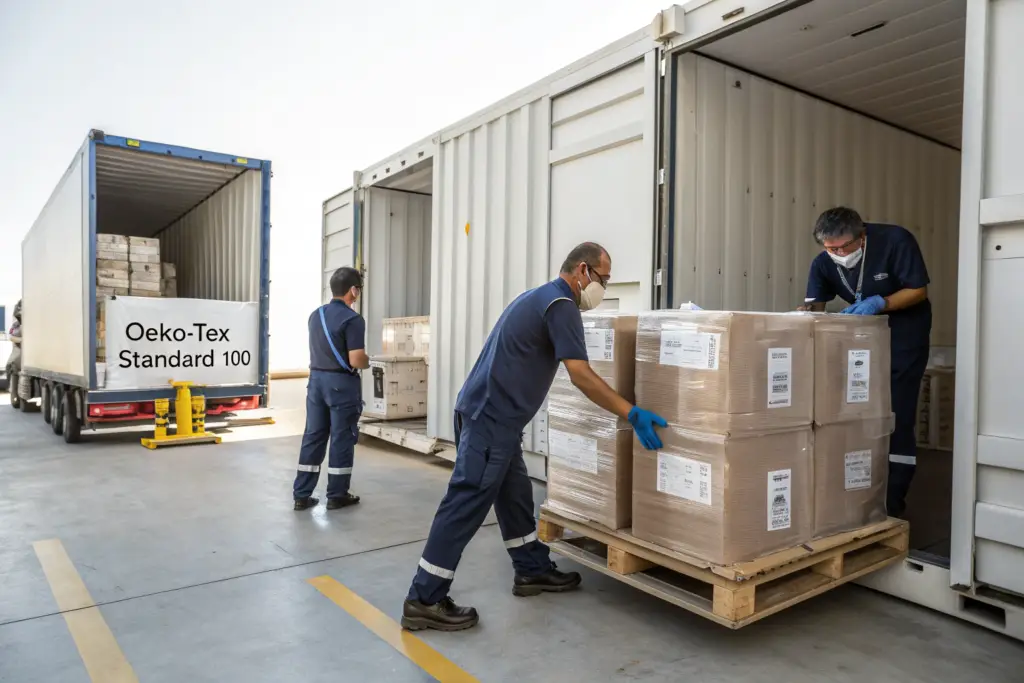
OEKO-TEX certification mitigates supply chain and delivery risks by establishing a clear, internationally recognized compliance benchmark that reduces inspection conflicts, prevents port rejections, and builds a foundation of trust that streamlines communication. It turns subjective quality arguments into objective pass/fail data.
Can It Prevent Customs or Compliance Delays?
Absolutely. While OEKO-TEX is a voluntary standard, its rigor is respected globally. Having this certification readily available with your shipment documentation can expedite customs clearance in many markets, including the European Union and North America. It serves as proof of due diligence regarding product safety. Regulatory bodies like the Consumer Product Safety Commission (CPSC) in the U.S. have strict rules on lead and phthalates in children's products. An OEKO-TEX certificate is strong supporting evidence that your baby rompers comply with these regulations, reducing the risk of costly inspections, holds, or rejections at the port. This reliability is a key reason many of our partners at Shanghai Fumao choose our full-package, DDP (Delivered Duty Paid) service—they know the compliance groundwork is meticulously handled.
How Does It Simplify Quality Assurance and Supplier Communication?
Inefficient communication with sales reps often stems from vague promises. OEKO-TEX replaces "trust me" with "here's the test report." It creates a common language. When a buyer specifies OEKO-TEX STANDARD 100 certification, every supplier understands the exact set of requirements. This eliminates misunderstandings about "good quality." Our internal process includes maintaining a digital library of certificates for all our core materials. When a client like you asks for verification, we can provide immediate, traceable proof for every component. This transparency builds trust and speeds up decision-making. It directly addresses the pain point of suppliers falsifying certificates, as the certification bodies have online databases where certificate numbers can be verified for authenticity.
Is the Investment in OEKO-TEX Certification Worth the Cost for My Brand?
The upfront cost of certified fabrics and the audit process can be 5-15% higher. The real question is about Return on Investment (ROI).
The investment in OEKO-TEX certification is unequivocally worth the cost for brands targeting the premium market, as it directly protects brand reputation, reduces liability risk, and serves as a powerful marketing tool that can command higher retail prices and foster unwavering customer loyalty.
How Does It Translate to Marketing and Consumer Trust?
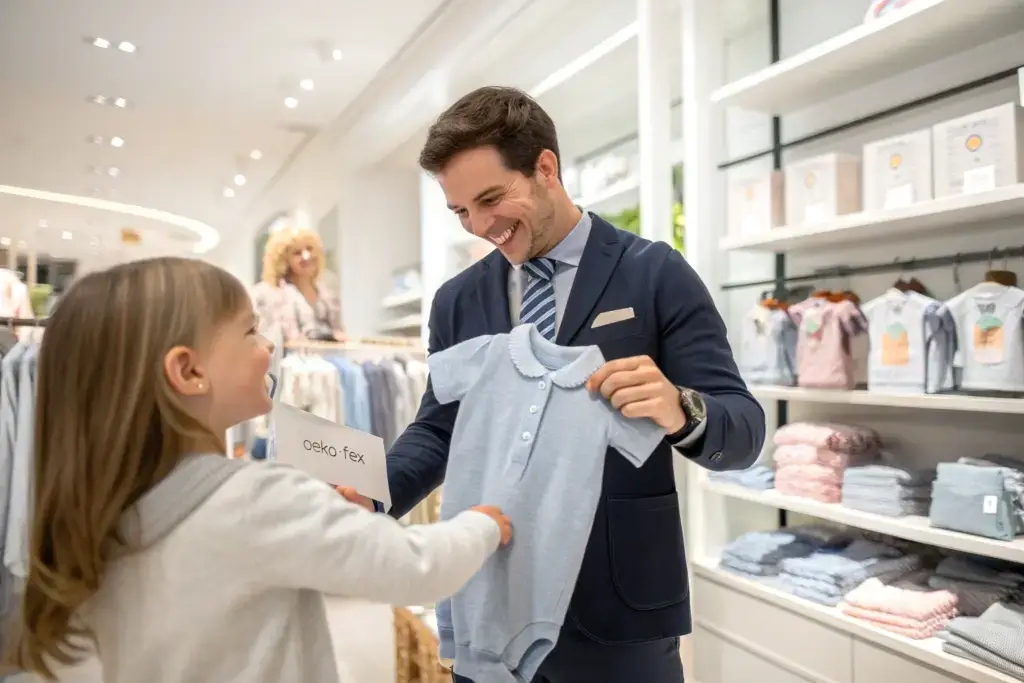
In today's market, parents are educated and cautious. The OEKO-TEX label is a recognizable symbol of safety. It’s a silent salesperson on the hangtag. You can use this certification in your digital marketing—on your website, social media campaigns, and product descriptions—to tell a story of care and responsibility. This builds brand equity. It's not just about avoiding negative reviews ("this romper gave my baby a rash"); it's about earning positive ones ("I always look for the OEKO-TEX label for peace of mind"). This trust converts to repeat purchases and brand advocacy. A brand we work with started highlighting their OEKO-TEX certification in their Instagram ads and saw a marked increase in engagement and a lower cost-per-click, as the message resonated strongly with their target audience of eco-conscious mothers.
What is the Long-Term Financial Impact vs. The Risk of Non-Certification?
Consider the cost of not having it. A single product recall due to a failed safety test can devastate a small brand. Legal liabilities, destroyed inventory, and shattered reputation far outweigh the certification premium. Furthermore, major retailers and distributors are increasingly requiring such certifications for shelf space. By investing early, you future-proof your supply chain and open doors to larger distribution channels. The certification cost should be viewed as insurance and a brand-building expense. It allows you to position your baby boy French terry rompers not as commodities, but as premium, safe, and responsibly made products, justifying a better margin that more than covers the initial investment.
Conclusion
Choosing an OEKO-TEX STANDARD 100 certified baby boy French terry romper is ultimately a decision about what kind of brand you want to build. It moves the conversation from simple cost-per-unit to value, safety, and long-term sustainability. This certification is the backbone of a quality promise you can make with confidence to your most discerning customers. It streamlines your operations, de-risks your supply chain, and elevates your product in a competitive marketplace.
The journey to bringing such a high-integrity product to market begins with a partner who understands this commitment at every level. If you are looking to develop or source premium, safe, and reliably certified babywear that stands out, let's talk. We can help you navigate every step from fabric selection to final delivery. For a detailed discussion on how to integrate OEKO-TEX certification into your next line of baby rompers, please contact our Business Director Elaine at elaine@fumaoclothing.com. Let Shanghai Fumao be your trusted foundation for quality that parents can see and feel.