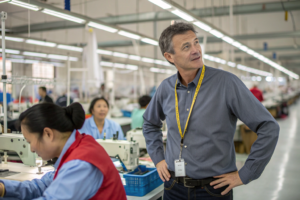
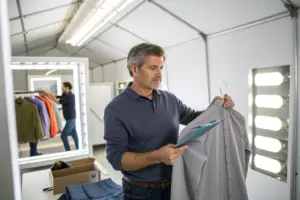
The fashion landscape is shifting. Big-box retailers no longer hold all the power. A new wave of independent designer brands is rising. They are built on values like transparency, storytelling, and deep customer connection. For these entrepreneurs, every decision about their supply chain is also a brand statement. They face a unique challenge: how to compete on trust, not just scale. In this environment, a technical certification becomes more than a compliance document—it becomes a core piece of the brand's identity.
OEKO-TEX certification, particularly Standard 100, aligns perfectly with the ethos and business needs of independent designer brands. It provides them with the third-party verification necessary to validate their quality and ethical claims, helps them differentiate in a crowded market, and builds the consumer trust that is essential for direct-to-consumer success. For a small brand, it’s a powerful tool to professionalize their offering and justify their price point.
Many emerging designers focus intensely on design, fabric hand-feel, and aesthetics. However, the conversation about what happens before the fabric reaches them can be vague. As a manufacturer partnering with many independents, I see a clear pattern. The most successful ones use certifications as proof points in their story. Let's break down why OEKO-TEX is becoming a secret weapon for the independent sector.
Why do value-driven consumers trust certified brands more?
Today's consumer, especially the one sought by independent brands, is an investigator. They read labels, research brands, and value authenticity over slick advertising. They are skeptical of greenwashing. Saying "my product is safe and sustainable" is not enough anymore. You need proof. OEKO-TEX certification acts as that independent, verifiable proof.
This trust directly translates to loyalty and sales. In early 2024, we worked with a small Los Angeles-based womenswear label started by a former architect. Their designs were stunning, but their initial launch struggled with conversion. We advised them to switch their core linen shirt fabric to an OEKO-TEX Standard 100 certified supply. They updated their product pages to feature the certification badge and explain its meaning. Within two months, their website conversion rate increased by 18%, and customer service inquiries about "skin safety" and "dyes" dropped to zero. The certification did the explaining for them, building instant credibility.

How does certification combat greenwashing fatigue?
Independent brands live and die by their reputation. Greenwashing accusations can be fatal.
- Specificity: Unlike vague terms like "eco-friendly," OEKO-TEX has a clear, published standard. Brands can say, "Certified free from over 100 harmful substances," which is specific and verifiable.
- Transparency: Each certificate has a number. This allows any customer or journalist to look up the exact scope of certification on the official website, creating radical transparency.
- Accountability: The certification is tied to the manufacturer (Shanghai Fumao in this case) and the specific product article, creating a chain of accountability that brands can confidently share.
Can a small brand afford the perceived cost of certification?
This is a crucial question. The cost is not just an expense; it's an investment in brand equity and risk mitigation. For a brand producing 500 units instead of 50,000, the per-unit cost impact is higher, but so is the value. It becomes a key part of their premium positioning. It's more affordable than dealing with a product recall or a social media scandal over a failed compliance test. Resources like the Fashion Revolution Transparency Index highlight how transparency is now a consumer demand, not a nice-to-have.
How does OEKO-TEX serve as a marketing cornerstone for DTC brands?
Direct-to-consumer (DTC) brands own their entire customer relationship. They don't have a retail salesperson to explain product benefits. Their website and packaging must do the talking. OEKO-TEX certification provides ready-made, trustworthy content that fills this gap. It answers the customer's unspoken question: "Why should I trust you?"
For a DTC brand, every element of the unboxing experience is marketing. The hangtag isn't just a price carrier; it's a brand messenger. I recall a sustainable knitwear brand from Portland that we partner with. They redesigned their hangtag to feature the OEKO-TEX logo alongside their story about sourcing. They included a short URL linking to a blog post we helped them create, explaining what the certification means. They told us this small change led to a noticeable increase in social media tags where customers specifically mentioned "feeling safe" about their purchase. The certification became a shareable symbol of the brand's values.
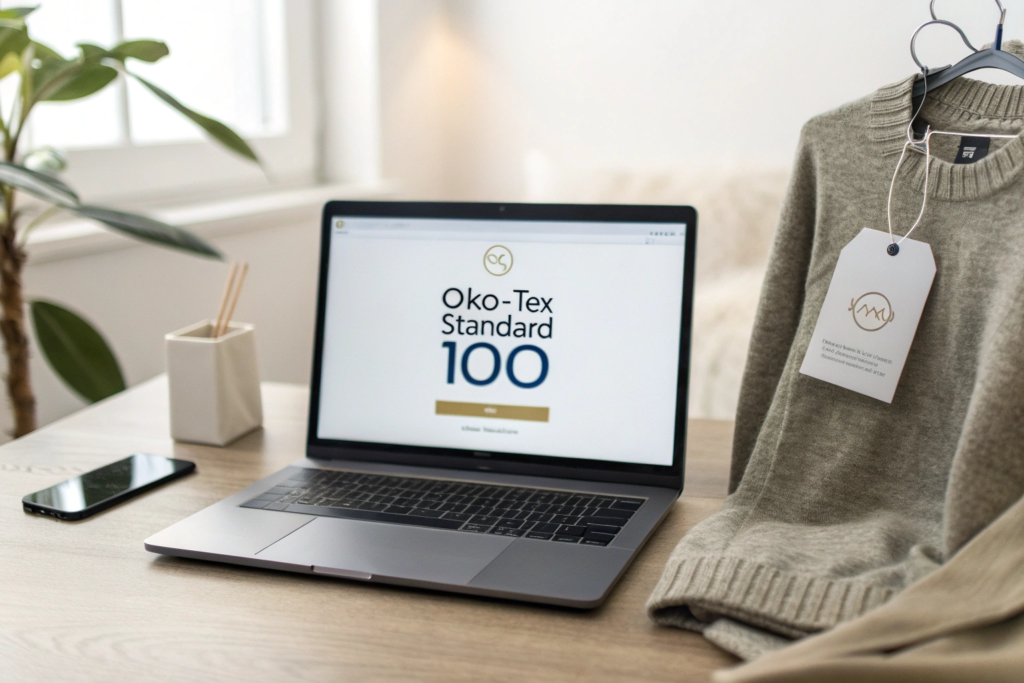
What content can be generated around this certification?
- "Behind the Seams" Blog Posts: Explain the certification process, perhaps with photos from your manufacturer’s facility.
- Social Media Infographics: Break down what "free from harmful substances" means in simple terms.
- Email Newsletters: Announce that your new collection is OEKO-TEX certified, framing it as an upgrade and a commitment.
- FAQ Section: Pre-emptively answer questions about product safety and testing.
Indie brands cannot compete on price with fast fashion. They compete on quality, ethics, and story. OEKO-TEX certification provides concrete evidence to support a higher price point. It allows a brand to say, "This garment costs more because it is independently verified to be safer and made with greater care." This aligns perfectly with the Business of Fashion's analysis on how DTC brands are evolving towards a quality-over-quantity model.
Can certification simplify sourcing for designers without technical teams?
Most independent designers are creative entrepreneurs. They may not have a dedicated technical director or quality control team. Navigating fabric sourcing, especially from overseas suppliers, is a major pain point. How do you know if a fabric mill's claims are true? OEKO-TEX certification acts as a reliable filter and shorthand for quality.
This simplification is invaluable. Last year, a designer in Chicago was developing a line of silk-blend dresses. She was overwhelmed by conflicting information from different fabric merchants about dye safety. We presented her with a selection of our OEKO-TEX certified silk fabrics. The existing certification gave her immediate confidence, cutting her sourcing decision time in half. She could focus on color and drape, knowing the base safety was pre-verified. For Shanghai Fumao, working with pre-certified materials means we can give our independent brand partners a faster, more reliable starting point.
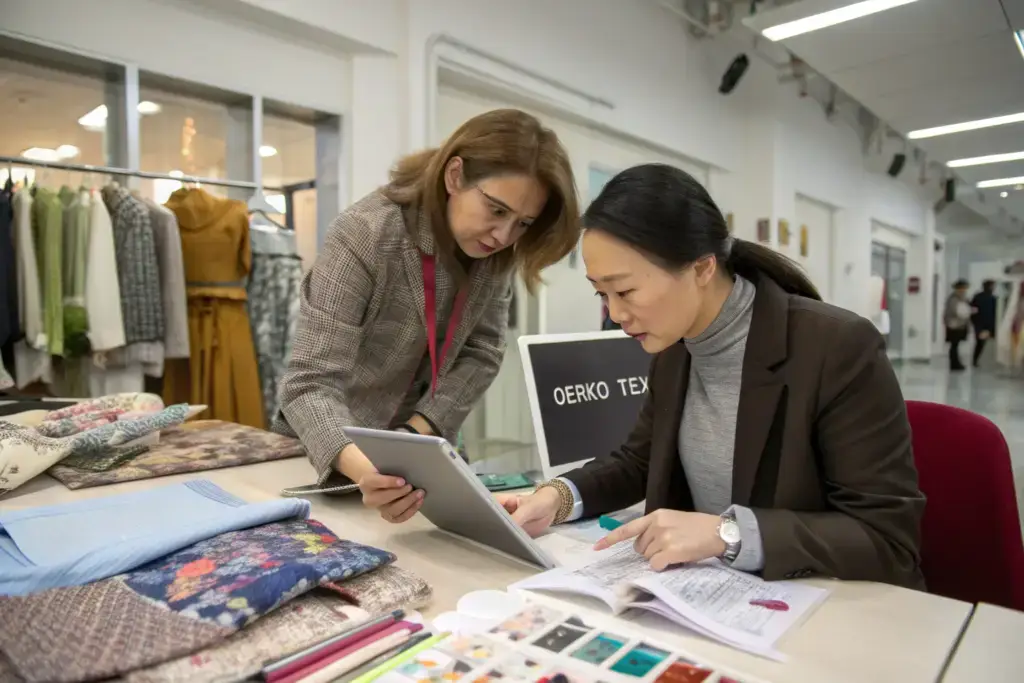
What key sourcing questions does it answer?
- Chemical Safety: Are regulated substances present? The certification answers this comprehensively.
- Supplier Reliability: A mill that invests in certification is generally more systematic and professional.
- Market Access: It pre-ensures compliance with various international regulations, simplifying your planning for sales in different regions.
How does it impact the designer-factory relationship?
It builds a foundation of trust. When a designer specifies OEKO-TEX certified fabrics with us, it sets a clear, objective benchmark. It reduces ambiguity in our communications. We both are aligned on a measurable quality standard from the very beginning, which makes the entire development and production process smoother and more professional.
How does it future-proof a brand against tightening regulations?
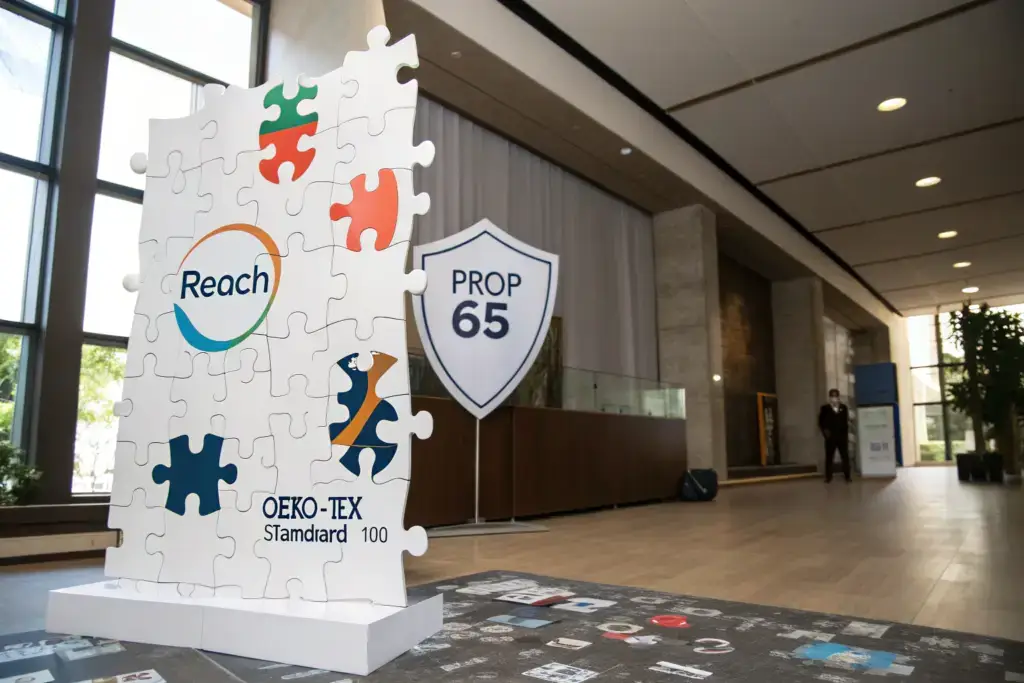
The regulatory landscape for consumer goods, especially in North America and Europe, is constantly evolving. Laws like California's Proposition 65 and the EU's REACH and now CSRD (Corporate Sustainability Reporting Directive) are becoming stricter. For a small brand, keeping up with these changes is a significant administrative burden.
OEKO-TEX certification is a proactive step. Its standards are often updated to meet or exceed new legal requirements. By choosing certified materials and production, independent brands are not just meeting today's rules; they are insulating themselves against tomorrow's. This is a critical risk management strategy. A brand built on certified production has a much stronger defense if regulations suddenly change or if they face a compliance audit. It demonstrates due diligence. Information on evolving regulations can be found through bodies like the American Apparel & Footwear Association (AAFA), which tracks these changes closely.
What is the cost of not being certified?
The potential costs are high and can threaten a small business:
- Recall Costs: If a product fails a regulatory test, the financial and reputational cost of a recall is devastating.
- Lost Market Access: Inability to sell in certain regions or on certain platforms that require proof of compliance.
- Legal Liability: Fines or legal action from regulatory bodies.
How does it aid in wholesale expansion?
Even for DTC-focused brands, wholesale can be an important channel. Boutiques and online marketplaces are increasingly requiring proof of compliance and sustainability. An OEKO-TEX certificate is a universally recognized document that can be easily added to a line sheet or wholesale portal, making the brand more attractive to selective retailers.
Conclusion
For the rising generation of independent designer brands, OEKO-TEX certification is far more than a technicality. It is a strategic ally. It builds the consumer trust that is their lifeblood, provides authentic content for their marketing, simplifies their complex sourcing journey, and protects their business from future risks. In a market where authenticity is currency, this independent verification offers a tangible way to prove a brand's claims and connect with values-driven customers on a deeper level.
Aligning with a certified manufacturer is the first, most impactful step. It embeds these values into the very fabric of your collection from the start.
If you are an independent designer looking to build a brand rooted in trust, quality, and long-term resilience, partnering with a certified manufacturer is crucial. Shanghai Fumao specializes in guiding emerging brands through this process, offering OEKO-TEX certified production that turns your ethical commitments into a verifiable market advantage. Let's build your brand's foundation on certified quality. Contact our Business Director Elaine to begin the conversation: elaine@fumaoclothing.com.