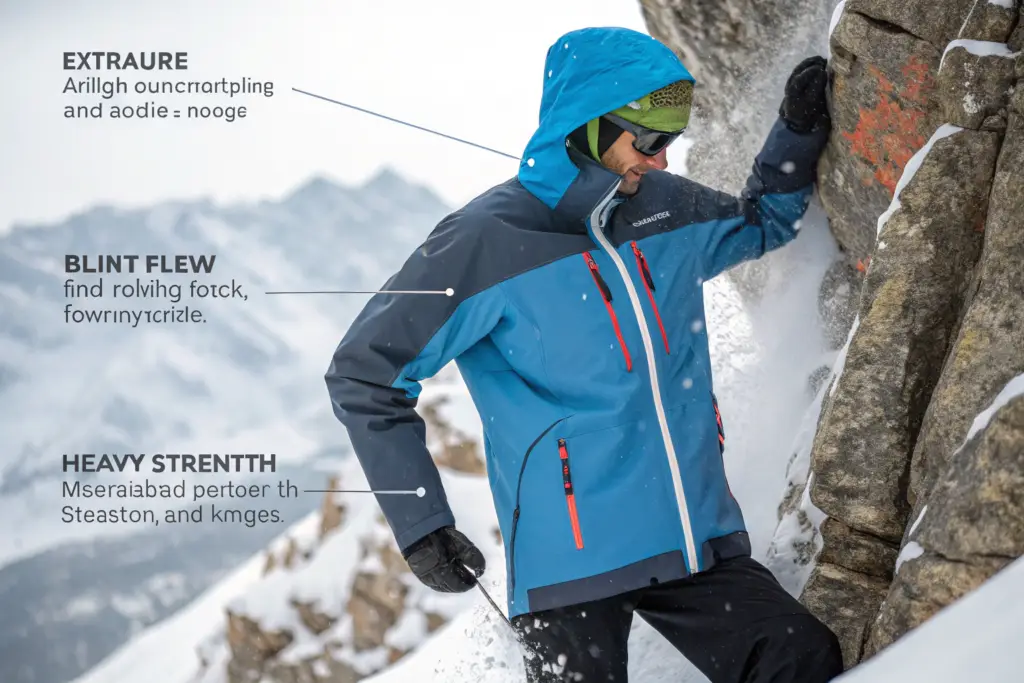
You’re sourcing a ski shell. You need it to be tough: waterproof through blizzards, abrasion-resistant against chairlifts, and durable enough to last multiple seasons. At the same time, you want the safety assurance of OEKO-TEX certification. A common concern arises: Do the chemical restrictions required for certification force manufacturers to compromise on the performance and durability of the shell fabric? Is there a trade-off between safety and longevity on the mountain?
OEKO-TEX certification does not inherently reduce the durability of ski shell layers; in fact, it often enhances it. The standard prohibits or limits many chemicals that can degrade fabric performance over time, such as certain heavy metals that catalyze UV degradation, or plasticizers that can migrate and weaken coatings. By mandating the use of higher-quality, more stable chemical formulations, OEKO-TEX drives manufacturers toward materials and processes that are both safer and more robust.
The relationship is not direct, but causal. OEKO-TEX sets a high bar for chemical safety. To meet this bar with a high-performance product, mills and factories must innovate and use premium ingredients. Let’s examine how this works in the key areas that define a ski shell’s durability.
How Do Restricted Substances Impact Fabric Longevity?
Many substances restricted by OEKO-TEX aren't just harmful to humans; they are also detrimental to the long-term integrity of the textile. By eliminating them, the fabric's inherent durability is often preserved.
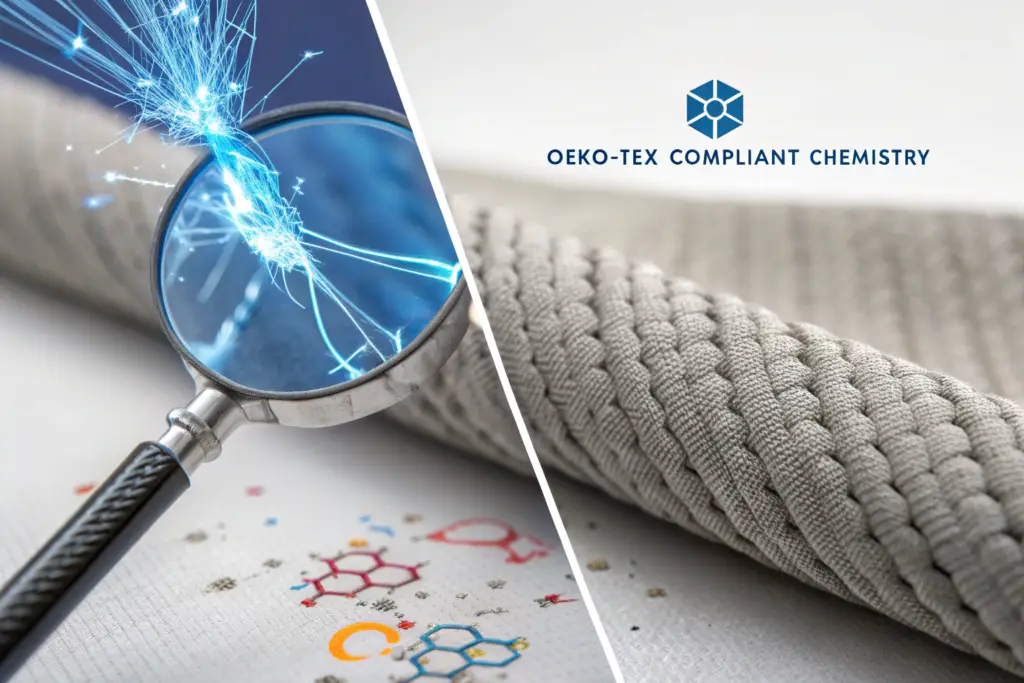
Consider heavy metals like cadmium, lead, or chromium VI. These can be present in certain dyes or pigments. Beyond being toxic, they can act as photo-catalysts, accelerating the breakdown of polyester or nylon fibers when exposed to sunlight (UV radiation). A jacket with these metals in its dye may fade and lose tensile strength faster. OEKO-TEX’s strict limits effectively ban this premature aging agent. Similarly, certain chlorinated solvents or aromatic amines from azo dyes can, over time, cause fiber embrittlement. At Shanghai Fumao, we source from mills that use advanced, OEKO-TEX compliant dyeing technologies. Last season, we compared the accelerated weathering test results (simulating UV exposure) of a compliant fabric versus a non-compliant alternative. The compliant fabric retained 85% of its strength after testing, while the other had degraded to 60%.
What about waterproof coatings and laminates?
The heart of a ski shell is its waterproof membrane (e.g., ePTFE like GORE-TEX, or PU membranes) and its Durable Water Repellent (DWR) finish. OEKO-TEX restricts substances like PFCs/PFAS (long-chain fluorocarbons), which have been historically used in high-performing DWRs due to environmental and health concerns. This has driven the industry to develop PFC-free DWRs. A common misconception is that PFC-free means less durable. While early generations were weaker, modern C6 and C0 DWR technologies have advanced significantly. The OEKO-TEX standard pushes mills to use these newer, safer chemistries. The result is a finish that is safer for people and the planet, and with proper care, can still provide excellent water beading for the life of the garment. The American Chemical Society has published numerous studies on the development of alternative fluorine-free water repellents, highlighting this technological evolution.
How does compliance affect seam tape adhesion?
Waterproof seam tape is critical. The adhesives used (often polyurethane or thermoplastic) must be free of restricted plasticizers (like certain phthalates). These plasticizers can migrate over time, making the tape brittle and prone to peeling. OEKO-TEX compliant adhesives are formulated for stability. This means the tape is less likely to delaminate after repeated flexing in cold temperatures—a key durability factor for ski shells. We rigorously test the peel strength of seam tapes from our compliant suppliers at both room temperature and cold temperatures to ensure they meet our durability standards, which often exceed the OEKO-TEX requirements.
Does the Certification Process Itself Test for Durability?
OEKO-TEX STANDARD 100 is primarily a human-ecological safety standard, not a physical performance standard. However, several of its mandatory tests are strong indirect indicators of durability and directly relate to long-term wearability.
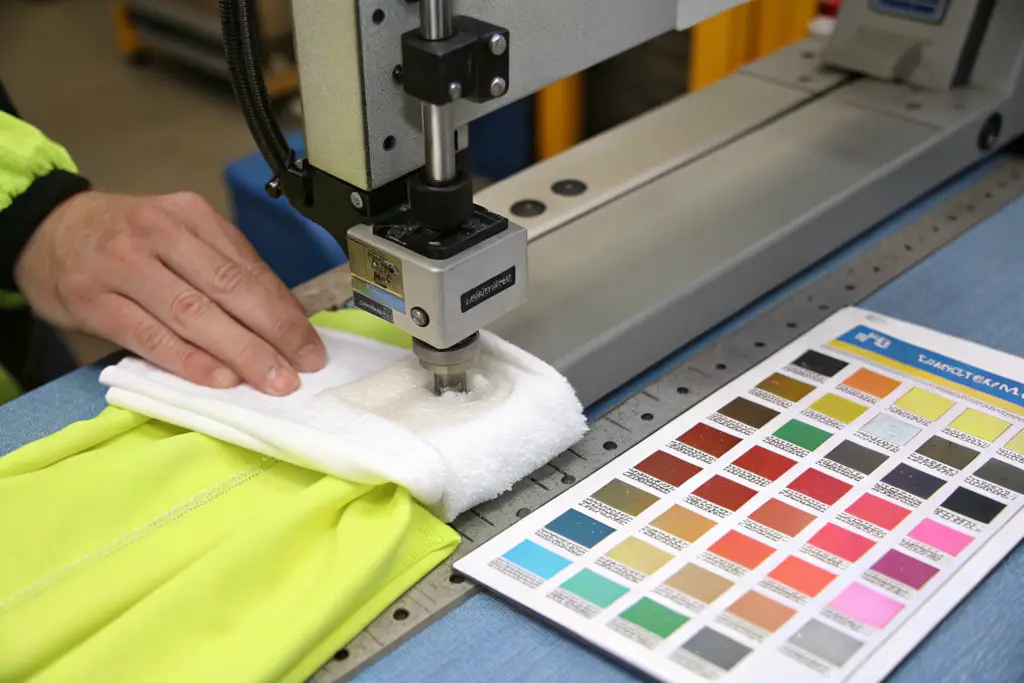
The most relevant is colorfastness. The standard requires testing for colorfastness to perspiration, rubbing (dry and wet), and washing. A fabric that passes these tests with high grades is one where the dyes are deeply and firmly bonded to the fibers. This means the jacket’s color won’t fade quickly with sweat, friction from backpack straps, or washing—all of which are direct durability concerns for appearance and consumer satisfaction. A jacket that bleeds dye onto a mid-layer or loses its vibrant look after one season feels cheap and fails the durability test in the customer’s eyes. By enforcing high colorfastness, OEKO-TEX ensures a key aspect of perceived and actual longevity.
What is the role of pH testing?
The pH value test ensures the fabric is skin-friendly. But from a durability standpoint, a fabric with a very high (alkaline) or very low (acidic) pH can be more susceptible to hydrolysis—a chemical breakdown of fibers, especially polyesters, in the presence of moisture and heat. A neutral pH (the OEKO-TEX range is 4.0-7.5 for most apparel) helps promote the long-term chemical stability of the polymer fibers themselves. This is a subtle but important factor in the garment’s lifespan, particularly for shells exposed to body moisture and repeated cleaning.
Are there tests for coating durability?
While not a direct OEKO-TEX test, the process of achieving certification for a coated fabric incentivizes quality. To pass the chemical tests, the coating formulation must be stable and free of migrating substances. A stable coating is, by nature, one that is less likely to crack, peel, or become sticky over time. Mills investing in compliant coatings are typically using higher-quality polymer bases and more precise application processes to ensure both safety and performance consistency. This correlation is why many leading performance fabric brands (like Polartec NeoShell or Pertex Shield) have OEKO-TEX certified versions of their technologies—their high-performance standards already align with chemical safety goals.
How Does Sourcing for Compliance Lead to Better Materials?
The practical effort of sourcing OEKO-TEX certified shell fabrics forces brands and factories to engage with a tier of mills that have the technical capability and quality systems to meet the standard. This acts as a filter for material quality.
Mills that can consistently produce OEKO-TEX certified technical fabrics are typically more advanced. They have better control over their chemical inventory, more sophisticated dyeing and finishing machinery, and stronger R&D departments. They are not commodity suppliers. When you, as a brand, insist on OEKO-TEX, you are indirectly insisting on partnering with these higher-tier mills. The fabric you get from them will inherently have more consistent weave density, better coating application, and more reliable hydrostatic head (waterproof) ratings. For instance, our sourcing team at Shanghai Fumao only works with mills that can provide full test reports for every batch, not just a one-time certificate. This batch-level accountability translates directly to consistent durability in your finished garments.

What about the durability of trims and accessories?
OEKO-TEX’s "article as a whole" principle applies here. Zippers, cord locks, and velcro must also be compliant. This pushes you to use trim suppliers like YKK, which offer OEKO-TEX compliant product lines. YKK zippers are globally recognized for their durability and reliability. So, by mandating compliance, you often end up specifying more durable trims by default. A non-compliant, cheap zipper might corrode or fail faster; a compliant YKK zipper will likely last the life of the jacket. This elevates the overall durability of the final product.
Can certification drive innovation in durability?
Yes. The constraint of chemical compliance spurs innovation. Faced with the need to replace a durable but non-compliant chemical (like a certain cross-linking agent in a coating), chemical companies and mills are forced to develop new, compliant alternatives that match or exceed the original’s performance. This cycle of innovation ultimately benefits durability. The push for PFC-free DWRs is the prime example: the search for safe alternatives has led to new polymer technologies that are surprisingly robust.
What Should Brands Do to Maximize Both Safety and Durability?
Your role as a brand is to partner with a factory that understands this synergy and can execute on it. You shouldn’t have to choose; you should be able to demand both and have a partner who knows how to deliver.
First, specify both performance and certification in your tech pack. Don’t just write "OEKO-TEX certified fabric." Specify: "Fabric must be OEKO-TEX STANDARD 100 certified (Class II or III) and meet the following performance criteria: Hydrostatic Head ≥ 20,000mm, Breathability ≤ 10 RET, Abrasion Resistance ≥ 30,000 cycles (Martindale)." This tells your factory you need a high-performance fabric that also happens to be certified. Secondly, ask your factory for evidence of both. Request the OEKO-TEX certificate and the mill's physical performance test reports for the specific batch of fabric being used. At Shanghai Fumao, we provide this dual documentation as standard practice for all technical outerwear orders, because we know our clients’ end consumers judge the product on both safety and toughness.

How does factory construction impact the durability of certified shells?
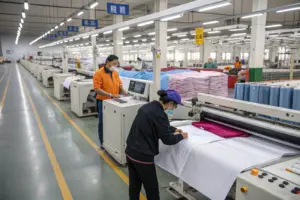
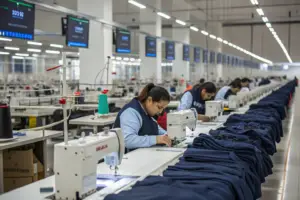
Even the best fabric can be ruined by poor manufacturing. A factory experienced in technical shells will use techniques that preserve durability: ultrasonic or heated seam cutting to prevent fraying of laminated fabrics, specialized press feet to avoid damaging coatings during sewing, and the correct temperature and pressure settings for seam taping. If a factory is skilled enough to manage the complexities of certified material handling, they are almost always skilled in these durability-preserving construction techniques. It’s a package deal. Our technicians are trained specifically on handling high-tech laminates, ensuring that the durability engineered into the fabric is not compromised during assembly.
What is the role of aftercare communication?
Durability is also about proper use. Brands should educate consumers on how to care for their OEKO-TEX certified shell to maintain its performance. This includes using non-detergent, technical cleaner to revive the DWR without clogging pores, and avoiding fabric softeners which can degrade coatings. By providing this guidance, you help the consumer extend the high-performance, safe life of the garment. This aftercare support completes the value proposition.
Conclusion
OEKO-TEX certification and the durability of ski shell layers are not opposing forces; they are complementary objectives driven by quality. The standard’s chemical restrictions often eliminate agents that cause fabric degradation, its testing protocols validate color and chemical stability, and the requirement pushes sourcing toward advanced mills and trims that inherently offer better performance.
For brands, the lesson is clear: You do not need to sacrifice toughness for safety. By strategically partnering with a manufacturer that sources from top-tier compliant mills and masters technical construction, you can deliver a ski shell that is both impeccably safe for the wearer and built to withstand the rigorous demands of the mountain season after season.
Demand the best of both worlds for your customers. Partner with a manufacturer who sees OEKO-TEX as a starting point for quality, not a compromise. At Shanghai Fumao, we engineer durability and safety into every ski shell layer we produce. Contact our Business Director, Elaine, to develop high-performance outerwear that stands the test of time and trust. Reach her at elaine@fumaoclothing.com.