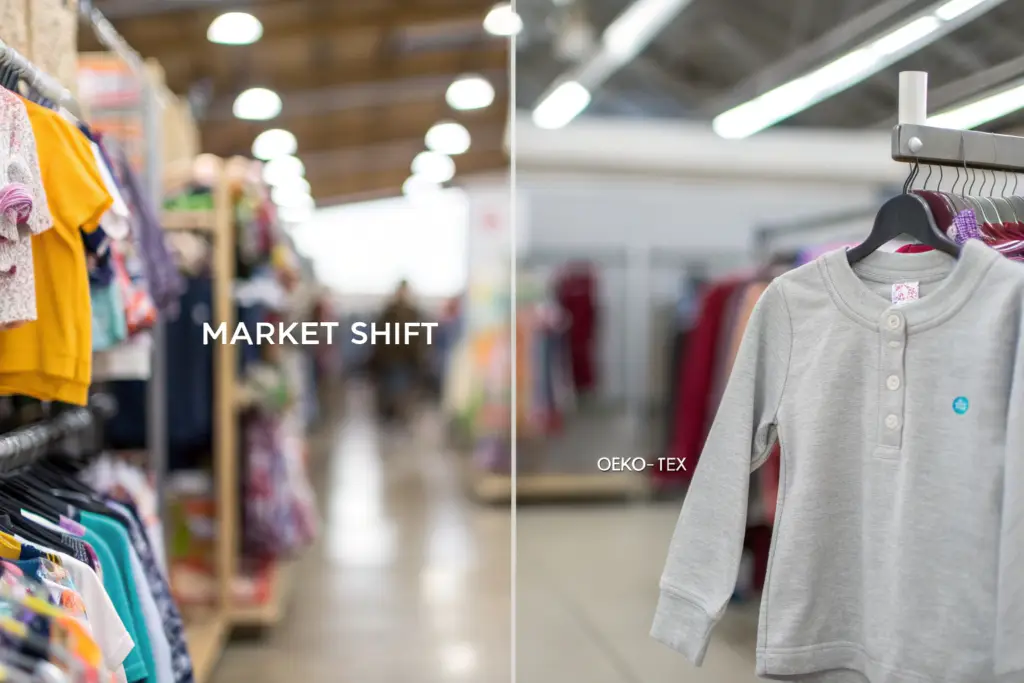
I recall a meeting two years ago with the founder of a small, design-focused children's brand from Seattle. She showed me beautiful, organic cotton dresses. "My customers love the prints," she said, "but more and more, their first question in emails is: 'Is it OEKO-TEX certified?'" She hadn't prioritized it, thinking her organic certification was enough. That season, she watched a competitor with similar designs but prominent OEKO-TEX labels gain significant market share in her key online channels. That was the moment she, and I, saw the landscape shift. Today, OEKO-TEX is no longer a niche differentiator; it's a powerful force reshaping the entire competitive battlefield in children's wear.
OEKO-TEX certification has fundamentally altered the children's wear competitive landscape by elevating verifiable safety from a behind-the-scenes manufacturing detail to a frontline consumer demand. It has created a new market hierarchy where certified brands command greater trust, justify premium pricing, and build stronger loyalty, while non-certified brands face increased scrutiny and competitive pressure, especially in mid-to-high market segments. This standard acts as both a barrier to entry for low-quality producers and a key growth lever for brands that embrace it authentically.
The effect is multi-layered. It changes how retailers curate their assortments, how buyers make sourcing decisions, and most importantly, how parents make purchasing decisions. This article will dissect exactly how this one certification is redefining the rules of competition in the children's apparel industry.
How Has OEKO-TEX Changed Consumer Expectations and Purchasing Behavior?
The core change is informational. Today's parents, especially millennials and Gen Z, are digitally-native researchers. They have instant access to information about chemical hazards, supply chain ethics, and certification meanings. A simple claim of "safe" or "non-toxic" on a tag is no longer sufficient; it is seen as a marketing claim requiring proof. OEKO-TEX provides that third-party, scientific proof.
This has created a new decision-making heuristic for parents. In a crowded online or in-store environment, the OEKO-TEX label acts as a quick, trusted filter. It reduces cognitive load. Faced with two similar-looking cotton pajamas, the certified pair wins the click or goes into the cart, often even at a 15-20% price premium. We've seen this directly with our clients. A brand we supply, which added OEKO-TEX certification to their core baby line and updated their Amazon listings to highlight it, saw a 35% increase in conversion rate for those SKUs within three months, with customer reviews frequently mentioning "trust the certification."

What specific parental concerns does OEKO-TEX directly address?
The certification tackles anxieties head-on:
- Chemical Exposure: Fear of formaldehyde, heavy metals, or allergenic dyes in fabrics.
- Skin Sensitivity: Concerns about eczema, rashes, or irritation from rough or chemically-treated fabrics.
- Oral Safety: The reality that babies and toddlers put clothing in their mouths, requiring colorfastness to saliva.
By providing a standardized answer to these universal concerns, OEKO-TEX allows brands to communicate safety efficiently and credibly, moving the conversation from risk to reassurance.
How does this shift brand loyalty dynamics?
Trust built on verification leads to sticky customer relationships. When a parent finds a brand that consistently delivers OEKO-TEX certified clothing that fits well and lasts, their incentive to switch diminishes. The certification becomes part of the brand's trust equity. It's harder for a competitor to lure that customer away with just a new print or a slight discount. The competing brand must first match or exceed the safety assurance, which is a higher barrier than matching style alone.
How Does OEKO-TEX Influence Retailer and Marketplace Buying Decisions?
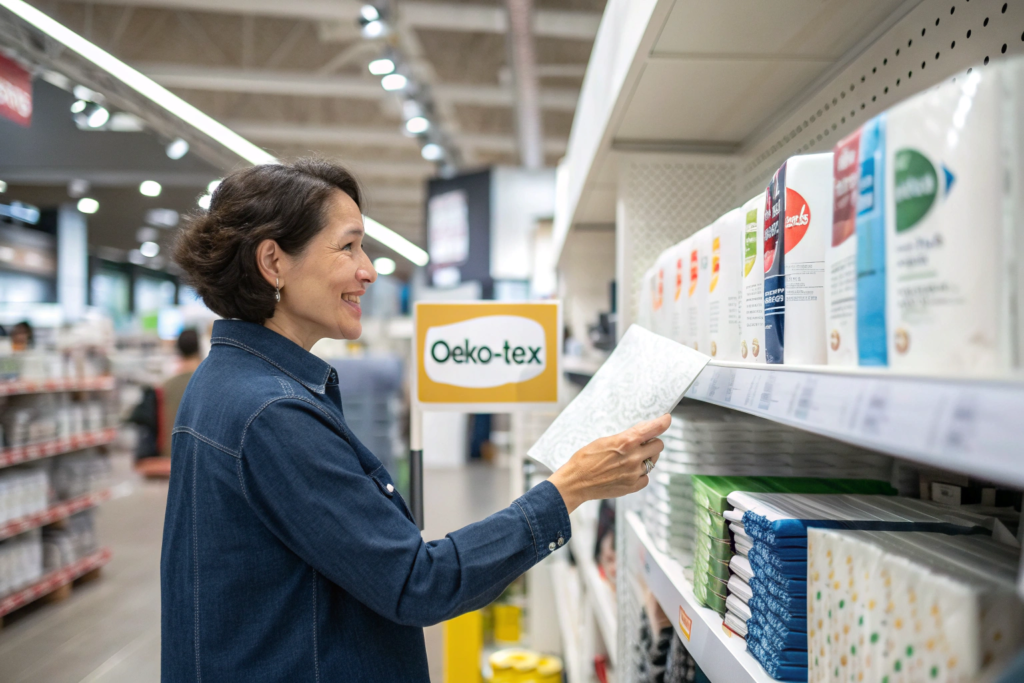
The shift isn't only consumer-driven; it's being enforced from the top down by retailers. Major department stores, specialty children's boutiques, and especially online marketplaces are increasingly incorporating OEKO-TEX into their vendor compliance or preferred supplier criteria.
For a retail buyer, stocking OEKO-TEX certified items is a risk mitigation strategy. It reduces the probability of customer complaints, returns due to skin reactions, or, worse, a product safety incident that could damage the retailer's reputation. It also simplifies their marketing. They can confidently feature these products in "Safe for Baby" or "Conscious Family" collections. We have a client whose line was selected for a major Nordstrom pop-up specifically because their full range was OEKO-TEX Class 1 certified, giving the retailer a clean, marketable story.
What is the "preferred vendor" advantage for certified manufacturers?
For a manufacturer like Shanghai Fumao, holding OEKO-TEX STeP (Sustainable Textile Production) certification for our facility and offering Standard 100 certification for products makes us a lower-risk, higher-value partner for brands. When a brand is evaluating factories, our certifications answer a slew of their due diligence questions about chemical management, quality control, and social responsibility upfront. It moves us to the top of the list. This is crucial in today's environment where brands, under pressure from their own customers, are deeply auditing their supply chain transparency.
How are marketplaces like Amazon using this standard?
Amazon's Climate Pledge Friendly badge and other marketplace filters are beginning to prioritize products with certain certifications. While not universal yet, OEKO-TEX is a recognized qualifier in many categories. This gives certified products a visibility boost in search results and a powerful trust signal in a crowded, anonymous marketplace environment. For a brand, this can mean the difference between being lost on page five and appearing on the first page for key search terms like "organic baby clothes safe."
What Competitive Advantages Does OEKO-TEX Certification Create?
The advantages extend across pricing power, market access, and brand narrative. It creates a tangible moat against competitors who cannot or choose not to meet the standard.
- Premium Pricing Justification: As discussed, safety has a monetary value. Certified products can sustain higher price points and healthier margins.
- Access to New Channels: Certification opens doors to green-focused retailers, premium marketplaces, and B2B clients (like corporate gift sets or hospital boutiques) that have strict material policies.
- Enhanced Brand Story: It provides the foundational truth for a broader narrative about care, responsibility, and science-backed quality. A brand can build an entire marketing campaign around the "why" behind their certification.
How does it impact product development and innovation?
Certification can actually drive innovation. To meet strict chemical limits without compromising on performance or hand-feel, manufacturers are forced to innovate. This might mean sourcing new, cleaner biodegradable fibers, developing innovative dyeing techniques that use less water and chemicals, or creating new fabric blends that naturally resist pests without harmful treatments. At our facility, developing a Class 1 certified velour pushed us to find a new finishing agent that provided superior softness while easily passing all chemical tests, which we now use across other sensitive product lines.
Can it provide a defense against greenwashing accusations?
In an era of skepticism, a hard-earned certification from a reputable third party is a brand's best defense. It moves claims from the subjective ("we care about safety") to the objective ("we meet this independent standard"). When a brand can point to its OEKO-TEX certificate number and the rigorous, annual audit process behind it, it inoculates itself against accusations of superficial or false marketing. This protects the brand's reputation capital.
What Are the Strategic Risks of NOT Pursuing Certification?
Choosing to forgo OEKO-TEX certification is a strategic decision with growing consequences. The risks are not merely about missing a sales opportunity; they are about gradual erosion of competitive position.
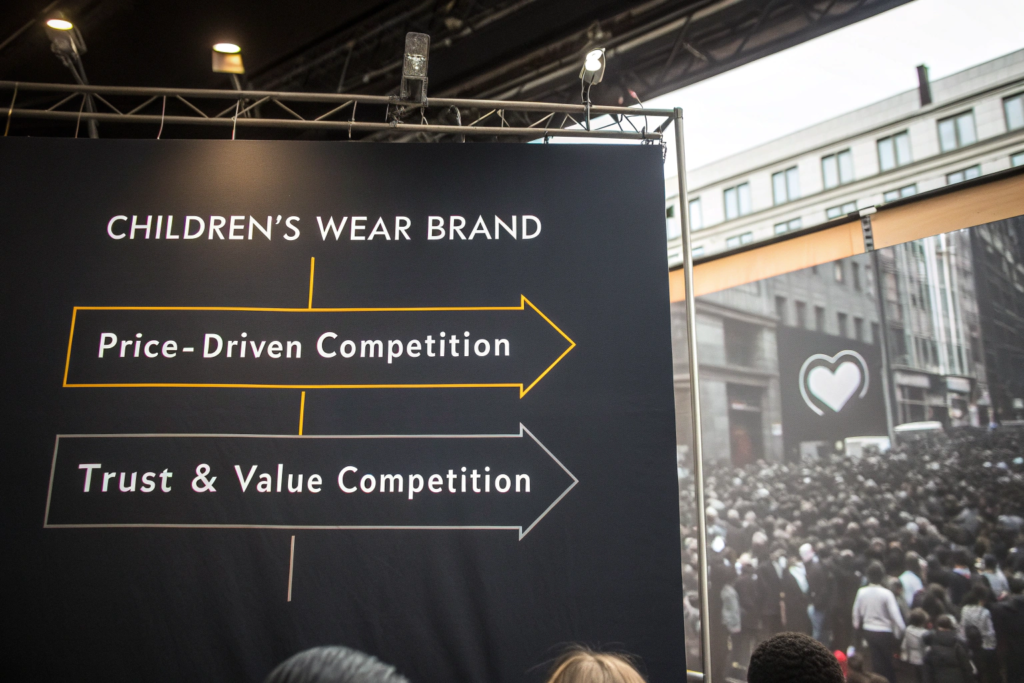
- Marginalization in Key Segments: A brand may find itself increasingly locked out of the premium and mid-premium segments of the market, where certification is becoming table stakes. Its products may be relegated to purely price-driven competition.
- Vulnerability to Market Shocks: If a safety scare (even unrelated) hits the children's wear news cycle, non-certified brands will face much sharper scrutiny and loss of sales, while certified brands can point to their verified protocols.
- Increased Cost of Customer Acquisition: Without the trust shortcut the label provides, a brand must spend more on marketing and education to convince customers of its safety, often a less efficient use of resources.

How does this affect relationships with sourcing partners like Fumao?
Brands that delay or avoid certification place their manufacturers in a difficult position. Factories like ours must maintain separate, controlled production lines and inventory for certified and non-certified materials. The non-certified path becomes a legacy operation with less strategic focus. Forward-thinking manufacturers will increasingly prioritize clients who align with certified, sustainable production because that is where the market growth and stability lie. For a brand, this means their access to top-tier manufacturing innovation and priority may diminish over time if they don't align with these standards.
Is there a scenario where certification is less critical?
Currently, certification exerts less pressure in the absolute lowest price point, commodity-driven segment of the market, where purchasing decisions are overwhelmingly based on cost alone. However, even there, regulatory trends and consumer awareness are slowly creating pressure. The strategic risk is that this segment offers the lowest margins and is most vulnerable to supply chain disruptions, making it a precarious long-term position for any brand.
Conclusion
OEKO-TEX certification has irrevocably changed the children's wear industry. It has introduced a new axis of competition—verified safety and transparency—that runs perpendicular to traditional axes of design, price, and brand marketing. This has created a winners-and-losers dynamic where brands that proactively integrate this standard into their core identity are building deeper trust, commanding better margins, and securing their future. Meanwhile, brands that treat it as an optional add-on risk gradual erosion of their market position and relevance, especially among the most valuable, informed customer segments.
The landscape is clear: in the competitive world of children's apparel, trust is the ultimate currency, and OEKO-TEX provides one of the most widely recognized and respected forms of it. For brands, the question is no longer if this standard affects them, but how decisively they will respond to its reshaping of the market.
Building a competitive, future-proof children's wear line requires a manufacturing partner who views these certifications not as a cost, but as a core competency. At Shanghai Fumao, we are built for this new landscape. Our integrated full-package manufacturing is designed to deliver OEKO-TEX certified quality efficiently and at scale, empowering our brand partners to compete and win on trust.
To discuss how to leverage OEKO-TEX certification to strengthen your competitive position in the children's wear market, contact our Business Director Elaine: elaine@fumaoclothing.com.