As an owner of Shanghai Fumao Clothing, a garment factory serving international brands, I often hear from American clients about their challenges in the kids' wear market. A major concern is the rapid turnover of inventory due to children's fast growth. Brands are constantly seeking designs that are not only safe and sustainable but also commercially viable by extending a product's lifecycle in the hands of a growing child. This leads us to a critical question: how do modern certification systems, specifically OEKO-TEX, approach this practical business and design problem?
OEKO-TEX standards, particularly the MADE IN GREEN by OEKO-TEX label, address child growth replacement cycles by promoting durable, high-quality materials and ethical production. This approach supports the creation of longer-lasting garments that can be resold or passed down, directly countering the fast-fashion model and reducing the pressure of constant replacement due to growth spurts.
Understanding the link between textile certification and product longevity is key for brands aiming to build value and sustainability. For buyers and brand owners, especially those sourcing from regions like China and Vietnam, aligning with factories that prioritize these certifications means investing in products that meet modern consumer demands for durability and responsibility. Let's explore how this works in detail.
What is the Connection Between Fabric Durability and Growth Cycles?
Parents face a constant cycle of buying new clothes as their children grow. If a garment wears out or shrinks before the child outgrows it, the replacement cycle speeds up. This hurts both the family budget and the environment. OEKO-TEX standards, while famous for testing harmful substances, also indirectly promote durability. Fabrics that pass rigorous chemical and physical tests tend to be of higher, more consistent quality. A strong, well-made garment survives more washes, playtime, and hand-me-downs. At Shanghai Fumao, we've seen this firsthand. Last year, a client from Texas wanted to develop a line of organic cotton toddler pants. They were specific about needing fabric that would maintain color and shape through at least 30 washes. By sourcing OEKO-TEX STANDARD 100 certified interlock knit and combining it with reinforced stitching techniques, we delivered a product that not only passed safety tests but also showed minimal pilling and shrinkage in our in-house wash tests. The client reported a 25% reduction in customer complaints about premature wear compared to their previous supplier.
Why is Physical Testing in OEKO-TEX Relevant for Longevity?
The OEKO-TEX STANDARD 100 certification includes tests for colorfastness to perspiration, saliva, and washing. Think about a child's clothes: they get washed frequently, chewed on, and exposed to sweat. Fabrics that perform poorly in these tests will fade, stain, or degrade quickly. When a fabric passes these tests, it signals durability. For brands, this means the product you sell will look good for longer, increasing customer satisfaction and the likelihood of the item being resold or passed to a younger sibling. This is a key consideration in apparel sourcing from high-volume regions. Using durable, certified fabrics is a strategic decision that impacts brand reputation over time.
How Does Material Choice Influence a Garment's Lifespan?
Certification pushes manufacturers toward better material choices. For instance, using high-quality combed cotton or robust polyester blends that can withstand certification testing often results in a more resilient fabric. In our production at Shanghai Fumao, we advise our kids' wear clients to consider fabric weight and construction alongside certification. A heavier, certified jersey knit will hold its shape through multiple growth seasons far better than a thin, uncertified one. This direct link between material integrity, as assured by standards like OEKO-TEX, and extended product use is a core part of designing for slower replacement cycles.
How Does MADE IN GREEN by OEKO-TEX Support a Circular Model?
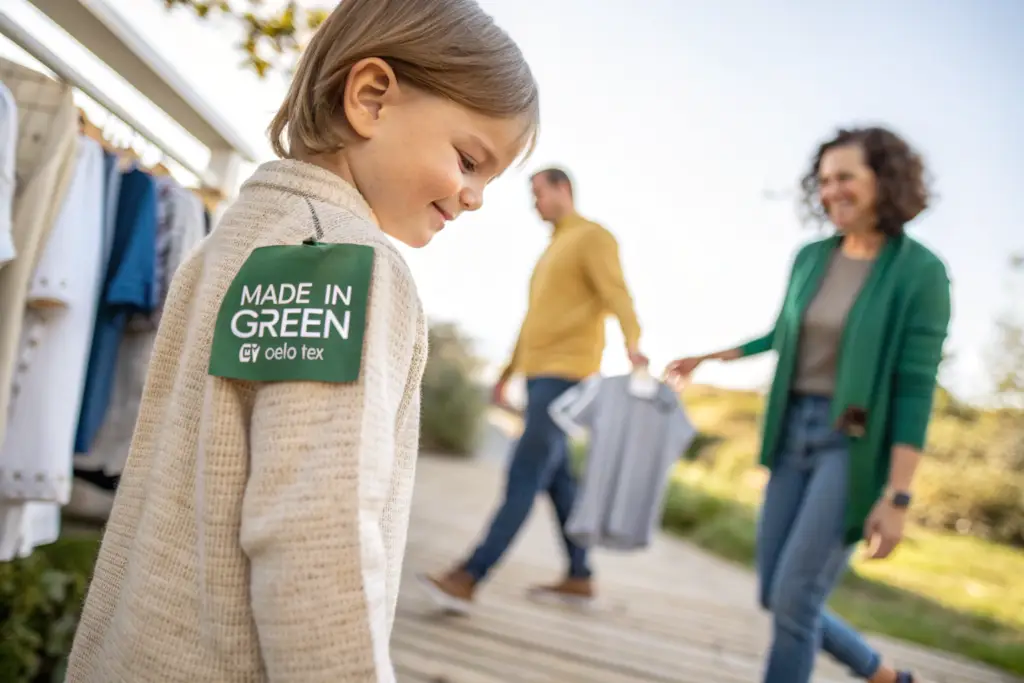
The MADE IN GREEN label goes a step further than STANDARD 100. It is a product label for textiles that have been tested for harmful substances AND manufactured in environmentally friendly facilities under safe, socially responsible working conditions. This holistic view is crucial for addressing growth cycles through a circular economy lens.
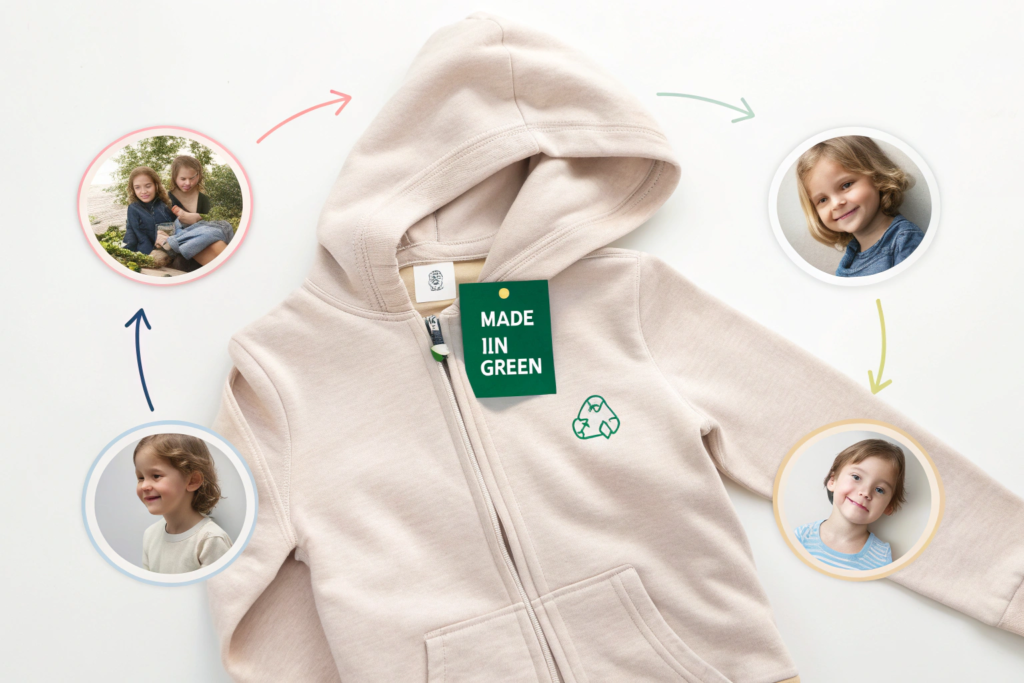
Can Transparency Extend a Product's Commercial Life?
Absolutely. The unique feature of MADE IN GREEN is its traceability via a QR code. Consumers can scan and see where the product was made and what tests it passed. This transparency builds immense trust. When a parent trusts a brand's ethics and safety, they value the garment more. They are more likely to care for it properly, sell it on a platform like Kidizen, or donate it, keeping it in use longer. For a brand, this transparency becomes a powerful marketing tool that justifies a higher price point for a longer-lasting product. We implemented this for a startup brand in Portland last spring. By producing their entire knitwear line in our OEKO-TEX-certified facility and securing MADE IN GREEN labels, they built a compelling brand story around "clothes made to last and made to matter," successfully launching into a premium boutique market.
How Do Ethical Practices Relate to Product Quality?
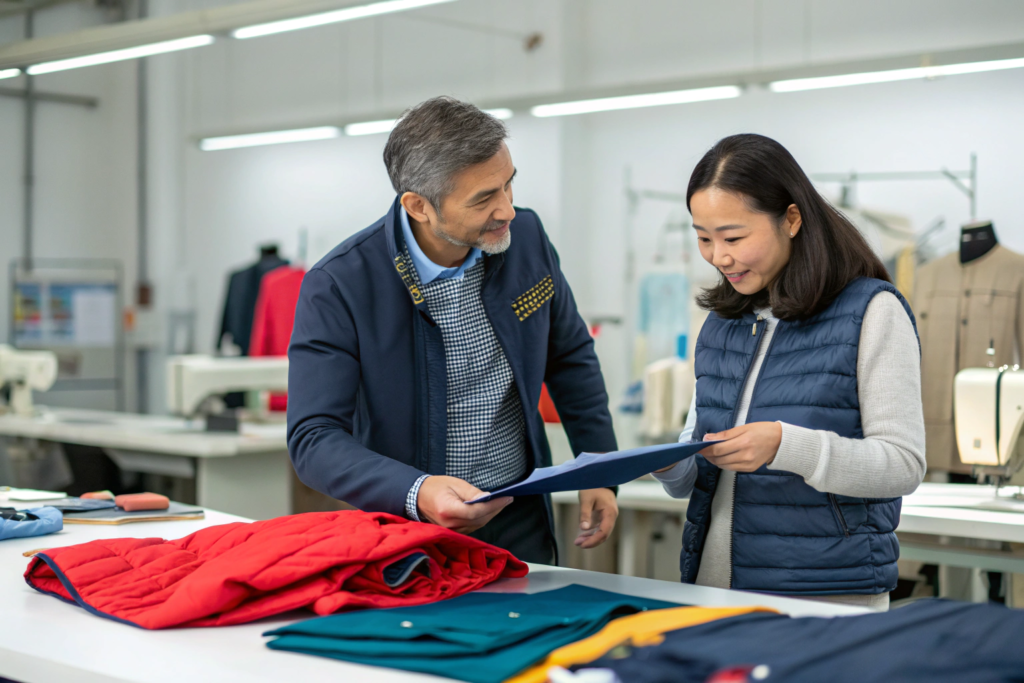
There is a direct correlation. Factories that invest in safe, fair working conditions and environmental management—as required for MADE IN GREEN—tend to have more disciplined, skilled workforces and better process controls. This results in fewer production defects, superior stitching, and better overall construction. A well-constructed garment lasts longer. It's that simple. Sourcing from a partner like Shanghai Fumao, which is committed to these standards, means you are indirectly investing in the extended lifecycle of your products through superior manufacturing quality.
What Design Strategies Complement OEKO-TEX for Growth Accommodation?
Certification sets a foundation of quality and responsibility, but smart design is the active tool for addressing growth. Combining OEKO-TEX-certified materials with growth-accommodating design creates a powerful product strategy.
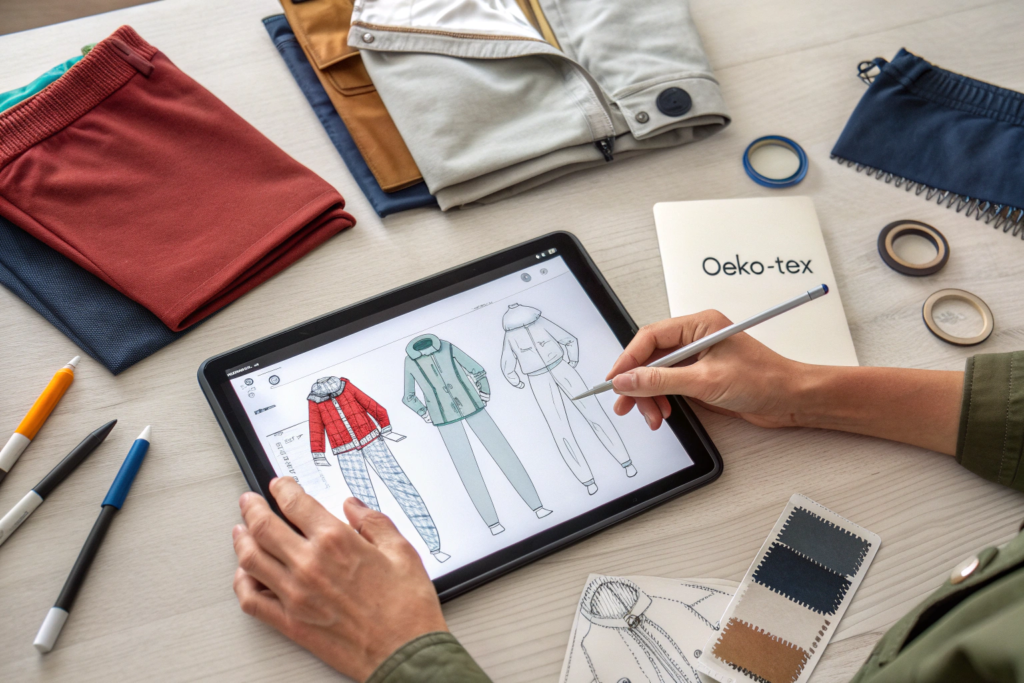
What are Key Adjustable Design Features?
Designers can integrate features that allow a garment to "grow" with the child. These features work best when paired with durable, certified fabrics. Key examples include:
- Adjustable Waistbands: Elastic with button extensions or drawcords.
- Roll-Up Cuffs: On sleeves and pants, secured with buttons or snaps.
- Expandable Seams: Using techniques like pleats or elastic panels.
- Transformable Hemlines: Hem tapes that can be let down as the child grows.
We worked with a Scandinavian brand to produce a line of OEKO-TEX-certified rain jackets with roll-up sleeves secured by sturdy snaps. The feedback was that the jackets were used for three seasons instead of two, directly impacting the brand's sustainability metrics and customer loyalty.
How Does Color and Pattern Selection Play a Role?
Durability isn't just physical; it's also aesthetic. Timeless colors and patterns (like classic stripes, neutral tones, or simple prints) have longer appeal than heavily themed, character-based designs. A garment that is not "outgrown" stylistically is more likely to be passed down. Using OEKO-TEX-certified dyes ensures these colors remain vibrant and safe through many washes, maintaining the garment's like-new appearance. This principle is fundamental in fashion design for children.
Why is This Approach a Competitive Advantage for Brands?
For business owners and buyers like Ron, who are sensitive to quality and price, this integrated approach is not just about ethics—it's a sharp commercial strategy. It addresses several core pain points in global sourcing.
How Does It Mitigate Sourcing Risks?
Choosing a factory like ours that is well-versed in OEKO-TEX certification mitigates key risks. First, it virtually eliminates the risk of certificate falsification—a stated pain point—as the certification is tied to our production facility and can be verified. Second, it ensures a baseline of quality control that prevents delays caused by rejected shipments for substandard materials. Our commitment to these standards streamlines communication because we operate on clear, internationally recognized benchmarks, solving the issue of inefficient supplier communication.
Does It Justify the Sourcing Price Point?
Yes. While OEKO-TEX-certified fabrics may have a slightly higher upfront cost, the total cost of ownership for the brand decreases. Consider the following comparison:
| Factor | Traditional Fast-Kids'-Wear | OEKO-TEX-Based + Thoughtful Design |
|---|---|---|
| Material Lifespan | Short; may degrade quickly | Long; withstands washing and wear |
| Customer Returns | Higher due to shrinkage/fading | Lower due to durability |
| Brand Story | Weak, price-driven | Strong, ethics & quality-driven |
| Potential for Resale | Low | High (extends brand reach) |
| Replacement Cycle Pressure | High | Reduced |
The data shows that investing in certified, durable production builds a brand that can command higher prices, foster loyalty, and ultimately improve profitability. This is the model successful American brands are adopting. Partnering with a reliable manufacturer like Shanghai Fumao that understands this balance is key to execution.
Conclusion
The challenge of children's growth replacement cycles cannot be solved by a single magic bullet. It requires a synergistic approach that combines responsible material sourcing, verified by standards like OEKO-TEX, with intelligent, adaptive design. This strategy moves beyond mere compliance to create real value: value for the child in a safe, long-lasting garment, value for the parent in extended use, and value for your brand in enhanced reputation, customer loyalty, and reduced long-term costs.
OEKO-TEX, particularly the MADE IN GREEN label, provides a trusted framework for this approach. It assures quality and durability at the material level, builds consumer trust through transparency, and aligns your supply chain with ethical and environmental responsibility. For brand owners and buyers looking to future-proof their kids' wear lines, this is no longer a niche consideration but a core component of competitive and sustainable business.
If you are looking to develop a kids' wear line that is built to last, safely and responsibly, let's talk. We at Shanghai Fumao are ready to be your manufacturing partner in this endeavor. Contact our Business Director Elaine to start a conversation about your next order: elaine@fumaoclothing.com.